Have you ever considered how a simple lip balm tube comes to be? Many people do not. The path from raw material to a finished PP lip balm tube is quite involved. It uses several specific manufacturing processes.
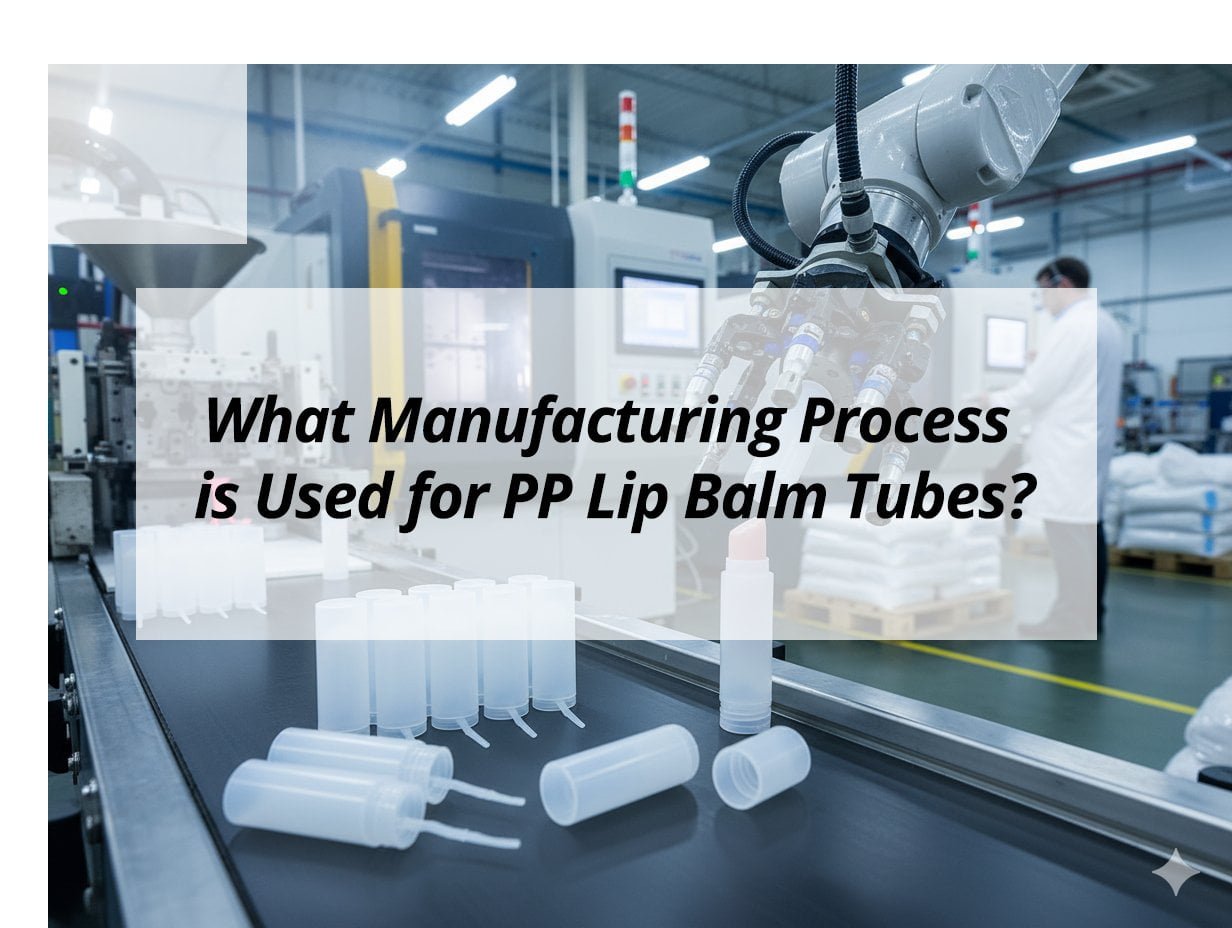
PP lip balm tubes are typically produced using injection molding. This method is common for making plastic parts. It allows for exact shapes and high production numbers. This means many tubes can be made fast and uniformly.
Understanding these processes is important. It shows the effort needed for each product. This knowledge helps in appreciating the quality of cosmetic packaging.
How is lip balm made in factories?
Do you know how lip balm is produced in large quantities within factories? Making lip balm in factories is a precise process. It requires careful control and cleanliness. This ensures a safe and high-quality product for consumers.
Factories make lip balm by melting and mixing raw ingredients. They use large, controlled spaces for this. The process begins with heating waxes and oils. These are the main parts of lip balm. After melting, other ingredients are added. These can include colors, flavors, and active compounds. The mixture is stirred until it is smooth and consistent. Then, it is cooled slightly. This prepares it for filling into tubes. The aim is a uniform product in every batch.
The filling process of the finished lip balm into tubes is a crucial stage. It requires specialized machinery to ensure accuracy and prevent contamination.
Key Stages of Lip Balm Production
Making lip balm involves several distinct steps. Each step is important for the final product.
- Melting: Waxes and oils are heated in large kettles. They melt at specific temperatures.
- Mixing: All ingredients are added to the melted base. They are mixed thoroughly. This ensures even distribution.
- Cooling (Partial): The mixture is cooled slightly. This makes it easier to pour. It also helps it set correctly.
- Filling: The liquid lip balm is poured into tubes. This is often done by automated machines. They fill many tubes at once.
- Solidifying: The filled tubes are cooled further. This makes the lip balm solid.
- Packaging: Tubes are capped, labeled, and put into boxes. This prepares them for distribution.
Important Considerations for Lip Balm Manufacturers
Manufacturers of lip balm must consider many factors. This helps them make high-quality products.
| Consideration | Description |
|---|---|
| Ingredient Quality | High-quality raw materials are essential. This impacts the lip balm's safety and effectiveness. |
| Hygiene | Production facilities must maintain strict cleanliness. This prevents contamination. |
| Temperature Control | Correct temperature management is vital. This affects ingredient blending and product consistency. |
| Mixing Uniformity | All ingredients must be evenly mixed. This ensures consistent color, flavor, and texture. |
| Filling Accuracy | Each tube must contain the correct amount of product. This reduces waste and ensures product consistency. |
| Quality Control | Regular checks are necessary throughout production. This helps identify any issues early. |
| Packaging Suitability | The chosen packaging must protect the lip balm. It also needs to be easy for the end-user. |
These points are important for product integrity. They help ensure the product meets market standards.
Which manufacturing processes are used for tubes?
Have you ever thought about how a simple tube is made? Tubes, especially for cosmetics, are not always simple. Several manufacturing processes are used. Each one helps make a specific type of tube.
The primary process for plastic tubes, such as PP lip balm tubes, is injection molding. This process creates precise plastic components. It starts with plastic pellets. These pellets are melted. Then, the liquid plastic is injected into a mold. The mold is shaped like the tube. After cooling, the plastic hardens. The mold opens, and the finished tube is removed. This method is effective for high volumes. It ensures that each tube is dimensionally consistent. Other processes, such as extrusion, are also used for different types of tubes. Extrusion creates long, continuous tubes that are then cut to size.
These manufacturing methods are fundamental in producing packaging components. Advanced machinery is used to ensure quality and efficiency in these processes.
Comparing Tube Manufacturing Methods
Different tubes require different manufacturing methods. Here are a few common ones.
-
Injection Molding:
- Process: Melted plastic is forced into a mold cavity. It cools and takes the mold's shape.
- Advantages: High precision, complex shapes possible, suitable for high volume.
- Disadvantages: Molds can be expensive to create initially.
- Common Use: Caps, closures, small intricate parts, PP lip balm tubes.
-
Extrusion:
- Process: Melted plastic is pushed through a die. This creates a continuous profile.
- Advantages: Suitable for long, continuous shapes, lower tooling cost compared to injection molds.
- Disadvantages: Less precise for complex shapes, requires cutting and sealing steps.
- Common Use: Toothpaste tubes, soft squeeze tubes, various pipes.
-
Blow Molding:
- Process: A plastic parison (preform) is heated. Air is blown into it. This expands the plastic against a mold.
- Advantages: Effective for hollow objects, can create various bottle shapes.
- Disadvantages: Limited to hollow shapes.
- Common Use: Bottles, jars, hollow containers.
Why Injection Molding for PP Lip Balm Tubes?
Injection molding is often selected for PP lip balm tubes. There are clear reasons for this choice.
| Reason | Explanation |
|---|---|
| Precision | Lip balm tubes require exact fit with caps and internal mechanisms. Injection molding creates parts with tight tolerances. This ensures proper assembly and function. |
| Complex Shapes | Tubes may have specific features. These include threads for caps or internal mechanisms for twisting the balm. Injection molding can produce these intricate designs. |
| Material Versatility | PP (polypropylene) is a widely used material. It is durable and cost-effective. Injection molding works very well with PP. |
| High Volume Production | Lip balm is a mass-market product. Factories need to produce millions of tubes. Injection molding machines can manufacture parts very quickly. This meets high demand efficiently. |
| Cost-Effectiveness | While molds represent an initial investment, the per-unit cost becomes low in high-volume production. This makes it economical for large-scale manufacturing. |
| Surface Finish | Injection molded parts can achieve a smooth, appealing surface finish. This is important for cosmetic packaging, enhancing product presentation. |
These factors contribute to the choice of manufacturing method. They help ensure the packaging meets performance and aesthetic requirements.
How are plastic tubes manufactured?
Have you ever considered how a plastic tube is made? The manufacturing of plastic tubes is a complex and precise industrial process. It transforms raw plastic into functional containers. This process requires specialized machinery and careful management.
The primary method for making plastic tubes for cosmetics is injection molding. For tubes that are designed to be squeezed, such as those for toothpaste, extrusion blow molding is more common. In injection molding, plastic pellets are heated until they melt. This molten plastic is then injected at high pressure into a mold. The mold cavity is shaped exactly like the required tube part. Once inside, the plastic cools and hardens. Then, the mold opens, and the finished part is ejected. This method is effective for creating parts with exact dimensions and intricate details, such as the twist-up mechanism of a lipstick or lip balm tube. For a soft squeeze tube, the plastic is extruded as a continuous tube, cut, and then a head is molded onto it.
These techniques are fundamental in the production of various plastic tubes. The use of advanced equipment ensures that each component meets specified standards.
Detailed Steps in Injection Molding
Injection molding involves several key stages. Each stage is important for producing a high-quality product.
- Clamping: The mold halves are securely closed and held together. This is done by a powerful clamping unit.
- Injection: Plastic pellets are fed into a heated barrel. They melt into a liquid. A screw then pushes this molten plastic into the mold cavity.
- Dwelling: The plastic remains under pressure within the mold. This ensures it completely fills all parts of the mold. It also helps prevent material shrinkage.
- Cooling: Coolant circulates through channels in the mold. This rapidly cools the plastic. The plastic hardens into the tube's shape.
- Ejection: The mold opens. Ejector pins push the finished tube out of the mold cavity. The cycle then restarts.
Common Materials for Plastic Tubes
Many different plastics are used for tubes. Each material has distinct advantages.
| Material | Characteristics | Common Uses |
|---|---|---|
| PP (Polypropylene) | Durable, heat resistant, good barrier properties, cost-effective. | Lip balm tubes, deodorant sticks, caps, closures, some bottles. |
| PE (Polyethylene) | Flexible, good chemical resistance, lightweight. Available as HDPE (high-density) and LDPE (low-density). | Squeeze tubes (toothpaste, lotions), bottles, film. |
| PET (Polyethylene Terephthalate) | Transparent, strong, good barrier to gases and moisture, recyclable. | Bottles for beverages, clear cosmetic jars, some rigid tubes. |
| SAN (Styrene Acrylonitrile) | Clear, rigid, scratch-resistant, good chemical resistance. | Clear cosmetic jars, compact cases, some rigid packaging. |
| ABS (Acrylonitrile Butadiene Styrene) | Strong, tough, impact resistant, good surface finish. | Cosmetic compacts, mascara tubes, component parts. |
| Acrylic (PMMA) | Very clear, rigid, luxurious feel, can be molded into various shapes. | High-end cosmetic jars, clear outer shells for packaging. |
Material selection is crucial for packaging performance. It must ensure product protection and meet aesthetic requirements.
How to manufacture a lip balm?
Have you ever considered how lip balm transitions from raw ingredients to a finished product? The manufacturing process for lip balm is quite detailed. It combines scientific principles and precision. This ensures the balm is safe, effective, and pleasant to use.
Making lip balm involves several stages. It begins with the careful selection of ingredients. These include various waxes, oils, and other additives. These ingredients are then melted and thoroughly mixed. They are heated to specific temperatures. This ensures a smooth and consistent blend. After mixing, the liquid balm is poured into tubes or containers. It then cools and solidifies. Finally, the tubes are capped, labeled, and prepared for distribution. This entire process occurs in a controlled environment. This is important for maintaining hygiene and product quality. It ensures consistency across all lip balm batches.
The entire production cycle, from ingredient preparation to final packaging, requires strict adherence to quality standards.
Essential Ingredients in Lip Balm
Lip balm typically contains a few main types of ingredients. Each one plays a vital role.
- Waxes:
- Purpose: Provide the lip balm's solid structure and help it adhere to the lips.
- Examples: Beeswax, Carnauba wax, Candelilla wax.
- Oils/Butters:
- Purpose: Deliver moisture, nourishment, and a smooth application feel.
- Examples: Coconut oil, Shea butter, Cocoa butter, Jojoba oil, Castor oil.
- Emollients/Protectants:
- Purpose: Create a barrier on the lips to help prevent moisture loss.
- Examples: Petrolatum, Lanolin, Dimethicone.
- Active Ingredients:
- Purpose: Address specific lip concerns such as dryness, sun protection, or healing.
- Examples: SPF (sun protection factor), Menthol, Salicylic acid.
- Flavor/Fragrance:
- Purpose: Enhance the sensory appeal of the lip balm for the user.
- Examples: Peppermint oil, Vanilla extract, Fruit essences.
- Colorants:
- Purpose: Impart a tint or color to the lip balm.
- Examples: Iron oxides, mica, cosmetic grade dyes.
Quality Control in Lip Balm Manufacturing
Ensuring product quality is paramount in lip balm manufacturing. It safeguards consumer safety and satisfaction.
| Aspect of Quality Control | Why it is Important |
|---|---|
| Ingredient Sourcing | Using reputable suppliers ensures raw materials are pure and safe. This prevents harmful substances from entering the product. |
| Purity Testing | Testing raw materials and finished products for contaminants (e.g., heavy metals, microbes). This protects consumer health. |
| Batch Consistency | Each batch of lip balm must exhibit uniform formulation and sensory properties. This builds brand reliability and meets customer expectations. |
| Temperature and pH Monitoring | Correct temperatures and pH levels are critical during mixing and filling. These affect ingredient stability and product effectiveness. |
| Filling Accuracy | Tubes must be filled with the precise amount of product. This ensures fair value and a consistent product experience. |
| Packaging Integrity | The packaging must protect the product. It needs to prevent leaks or damage. This maintains product freshness and extends shelf life. |
| Shelf Life Testing | Products are tested to confirm they remain stable and effective over their stated shelf life. This validates the expiration date. |
| Microbiological Testing | Regular checks for bacteria, yeasts, and molds. This prevents spoilage and potential infections. |
These rigorous quality control measures are vital. They ensure that the final product meets all safety and performance specifications.
My Insights: What Manufacturing Process is Used for PP Lip Balm Tubes?
Wondering how PP lip balm tubes are made? Discover the intricate processes behind their creation and how they impact quality and sustainability.
PP lip balm tubes are primarily manufactured using injection molding of polypropylene pellets. This process involves precision metal molds to form the tube components, followed by trimming, assembly, and decorative finishing to ensure functionality and aesthetic appeal.
Understanding the Injection Molding Process for PP Lip Balm Tubes
Injection Molding Basics
- Material: Polypropylene pellets are melted and injected into metal molds to create the tube components.
- Efficiency: Multi-cavity molds enable the production of multiple parts simultaneously, optimizing cost and time.
Additional Processes
- Surface Finishing: Techniques like spraying, electroplating, and printing enhance visual appeal.
- Assembly: Components are assembled with precision to ensure smooth operation and proper sealing.
| Process Stage | Description |
|---|---|
| Injection Molding | Melts and shapes polypropylene into tube components |
| Trimming/Deflashing | Ensures smooth operation of threads and closures |
| Surface Finishing | Enhances aesthetics through various decorative techniques |
Sustainability and Innovation
Manufacturers are increasingly incorporating recycled PP and precision tooling to reduce environmental impact and maintain consistent product quality. These advancements ensure that PP lip balm tubes meet both functional and aesthetic requirements while supporting sustainable practices.
Conclusion
Manufacturing PP lip balm tubes and the lip balm itself involves detailed processes. From injection molding of packaging to the precise mixing of ingredients, accuracy is crucial. Understanding these methods ensures the creation of high-quality and consistent products for the market.