Is product degradation after opening a concern for your brand? Many cosmetic products lose effectiveness when exposed to air. This impacts their shelf life.
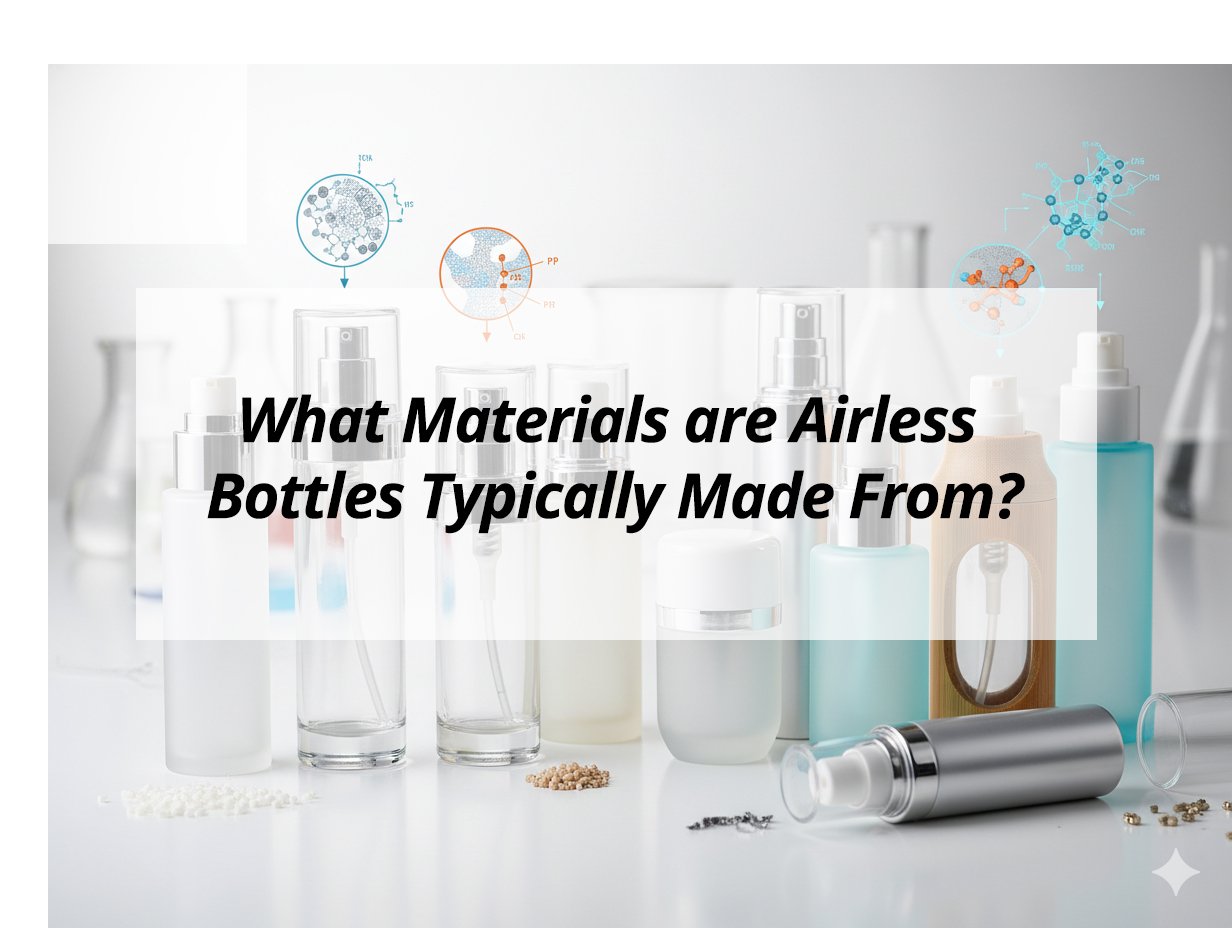
Airless bottles are typically made from plastics such as PP, SAN, PMMA, and PETG, sometimes including glass. These materials create an effective barrier against air. This design keeps cosmetic products fresh by protecting them from oxidation and contamination. This ensures the product's efficacy and extends its shelf life for consumers.
Selecting the right material for airless packaging is very important. This choice directly affects product stability and preservation. Understanding these materials helps in making informed decisions for cosmetic packaging.
What are airless bottles made of?
Does air exposure compromise your product's delicate formulations? Preserving product integrity is a key challenge in cosmetic packaging.
Airless bottles are constructed from materials like PP, SAN, PMMA, PETG, and sometimes glass. These materials are engineered to create a sealed environment. This protects the product from external air and contaminants.
For airless cosmetic bottles, material selection directly impacts performance. PP (polypropylene) is a strong choice. It offers chemical resistance and a lightweight profile. This makes it suitable for many formulations. SAN (styrene-acrylonitrile) provides clarity and scratch resistance. It enhances the visual appeal. PMMA (polymethyl methacrylate), also known as acrylic, gives a high-clarity, glass-like finish. This is preferred for premium products. PETG (polyethylene terephthalate glycol) is known for its clarity and durability. It suits a broad range of cosmetic applications. The right material ensures the packaging performs its protective function effectively.
Importance of Material Selection for Product Preservation
Material choice is fundamental for protecting product integrity.
- PP (Polypropylene): This plastic offers good chemical resistance. It is also lightweight. It is often chosen for products with active ingredients. It helps maintain formulation stability.
- SAN (Styrene-Acrylonitrile): SAN provides good clarity. It also has a rigid structure. It contributes to a high-quality appearance.
- PMMA (Polymethyl Methacrylate): This material is exceptionally clear. It mimics the look of glass but with less weight. It is frequently used for luxury cosmetic packaging.
- PETG (Polyethylene Terephthalate Glycol): PETG is clear and durable. It is also easy to process. It serves as a versatile option for various product types.
| Material | Key Benefits | Typical Applications |
|---|---|---|
| PP | Chemical resistance, light | Serums, lotions, creams with sensitive ingredients |
| SAN | Clarity, scratch resistance | Products requiring transparency, mid-tier cosmetics |
| PMMA | Glass-like appearance, light | High-end creams, foundations, premium skincare |
| PETG | Clear, durable | Wide range of cosmetics, known for material versatility |
Material Considerations for Wholesale Airless Pump Bottles
For wholesale supply, material quality and consistency are critical. Manufacturing processes must ensure high standards. This is important for clients sourcing large volumes. The integrity of the packaging must be reliable.
Materials in Airless Jars and Large Airless Pump Bottles
Airless jars utilize similar materials and principles. Large airless pump bottles, often used for body care products, also require robust materials. These materials must maintain the integrity of the pump mechanism and protect larger product volumes.
What materials are used in bottles typically made from?
Are you evaluating bottle material options for your product lines? Selecting the optimal material can be a complex decision.
Bottles are commonly manufactured from glass, PET, HDPE, and PP. Aluminum is also used. Each material possesses specific characteristics. These characteristics determine its suitability for different product categories.
Glass is valued for its luxurious feel and inert properties. It provides excellent chemical resistance. However, its weight and fragility can be drawbacks. PET (polyethylene terephthalate) is a clear, lightweight plastic. It is often chosen for transparent products. HDPE (high-density polyethylene) is opaque, strong, and impact-resistant. It is frequently used for larger containers. PP (polypropylene) offers good chemical resistance and versatility. Aluminum is lightweight, strong, and recyclable. It offers a sleek aesthetic. The selection of materials depends on factors such as product compatibility, brand positioning, and cost efficiency.
Plastic Materials in Airless Cosmetic Bottles
Plastic materials are prevalent in airless cosmetic bottles due to their functional benefits.
- PET (Polyethylene Terephthalate): This is a clear, strong, and lightweight plastic. It is often used for water-based products. It provides good barrier properties against gases.
- HDPE (High-Density Polyethylene): HDPE is opaque. It is very durable. It resists many chemicals. This makes it suitable for thicker formulations.
- PP (Polypropylene): PP is noted for its chemical resistance. It is also quite flexible. This makes it a versatile material choice across various components.
| Material | Common Uses | Advantages |
|---|---|---|
| PET | Beverages, clear cosmetics | Clarity, lightweight, good barrier properties |
| HDPE | Detergents, thick lotions, creams | Durability, chemical resistance, opaque |
| PP | Caps, jars, various bottles | Chemical resistance, heat resistance, versatile |
| Glass | Premium cosmetics, fragrances | Inert, luxurious feel, high clarity |
Strategic Selection for Wholesale Airless Pump Bottles
For wholesale procurement, careful consideration of material is essential. This impacts logistics, cost, and ultimately, product success. Choosing appropriate materials for wholesale airless pump bottles ensures performance and value.
Durability for Large Airless Pump Bottles
The durability of materials is especially important for large airless pump bottles. The chosen material must withstand the volume and provide sustained protection. Robust plastics are selected to ensure stability and functionality for these larger formats.
What is an airless bottle?
Is maintaining the stability of sensitive product formulations a priority? Effective packaging solutions are crucial for product longevity.
An airless bottle is a non-pressurized dispensing system. It incorporates a mechanical pump and a movable disk or piston within the container. This design isolates the product. It prevents air exposure. This maintains product integrity from the initial dispense to the final use.
The fundamental principle of an airless bottle lies in its dispensing mechanism. Unlike traditional pump bottles that draw external air into the product, airless systems utilize a piston that moves upwards. As the pump is activated, the piston rises. This creates a vacuum. It dispenses the product without introducing air. This design is particularly beneficial for formulations sensitive to oxygen. Examples include products containing antioxidants or active ingredients. The system ensures the product remains protected. It extends its viable shelf life. The mechanism guarantees consistent, reliable dispensing.
The Engineering of Airless Cosmetic Bottles
The design of airless cosmetic bottles is rooted in scientific principles. It focuses on formulation stability.
- No Air Entry: The primary function is to prevent air from entering the bottle. This minimizes oxidation. It preserves the efficacy of active ingredients.
- Complete Product Dispense: The internal piston or disk moves up. This pushes out nearly all the product. It reduces waste.
- Reduced Preservative Needs: By limiting air exposure, the product may require fewer preservatives. This supports "clean beauty" formulations.
| Feature | Traditional Pump Bottle | Airless Pump Bottle |
|---|---|---|
| Air Exposure | High | None (product sealed from external air) |
| Product Contact | Yes (with air) | No (product remains sealed) |
| Product Waste | Moderate | Minimal (piston ensures full evacuation) |
| Shelf Life Potential | Shorter | Longer |
Demand for Wholesale Airless Pump Bottles
The advantages of airless technology drive high demand for wholesale airless pump bottles. Cosmetic brands recognize these benefits. They see improved product performance and enhanced consumer satisfaction. This technology is widely adopted across various markets.
Airless Technology in Airless Jars and Large Airless Pump Bottles
The airless concept also applies to airless jars. These employ similar push-up mechanisms. This keeps creams and balms fresh. Large airless pump bottles benefit significantly. Greater product volumes are more susceptible to air exposure. Airless technology effectively protects these larger quantities.
What materials are bottles made of?
Are you selecting packaging materials for new product lines? The array of available bottle materials can be extensive.
Bottles are produced from various materials. These include glass, PET, HDPE, PP, and aluminum. The material choice is based on the product’s characteristics. It also considers brand aesthetics and budget constraints.
Glass provides a premium tactile experience. It is also chemically inert. This means it does not react with contents. However, its weight and fragility can increase shipping costs and breakage risk. PET (polyethylene terephthalate) is a clear, lightweight plastic. It is frequently selected for transparent formulations. HDPE (high-density polyethylene) is opaque, durable, and offers good impact resistance. It is often used for thicker emulsions. PP (polypropylene) is a versatile material. It shows good resistance to many chemicals. Aluminum is lightweight, strong, and recyclable. It offers a contemporary, sleek appearance. The optimal material selection balances functional requirements with market appeal.
Material Options for Airless Cosmetic Bottles
The range of bottle materials is broad. This is particularly true for airless cosmetic bottles.
- Glass: Offers a luxurious feel. It is also chemically inert. This makes it ideal for high-end skincare or foundations.
- PET (Polyethylene Terephthalate): Clear, strong, and lightweight. It is recyclable. It is a common choice for many cosmetic products.
- HDPE (High-Density Polyethylene): Opaque, durable, and chemically resistant. It is often used for lotions or cleansers.
- PP (Polypropylene): Versatile and resistant to many chemicals. It is used for various closures and containers.
- Aluminum: Lightweight, strong, and provides an excellent barrier. It imparts a modern, sophisticated look. It is often chosen for sprays or travel-sized items.
| Material | Key Characteristics | Ideal Applications |
|---|---|---|
| Glass | Premium, heavy, inert | Luxury skincare, fragrances, high-value products |
| PET | Clear, light, strong | Serums, clear lotions, general cosmetic liquids |
| HDPE | Opaque, durable, chemical res | Thick creams, body lotions, cleansers, opaque gels |
| PP | Versatile, chemical res | Wide range of cosmetics, often for components |
| Aluminum | Light, strong, sleek | Sprays, travel-size products, modern packaging |
Material Selection for Wholesale Airless Pump Bottles
For wholesale operations, material selection is a critical business decision. It affects supply chain efficiency and product performance. Careful material choice ensures that wholesale airless pump bottles meet both technical specifications and market demands.
Material Strength for Large Airless Pump Bottles
For large airless pump bottles, material strength is a primary concern. The material must support the increased volume. It also needs to maintain structural integrity. Robust materials like specific grades of PET or PP are chosen to provide the necessary durability.
My Insights: What Materials are Airless Bottles Typically Made From?
Concerned about packaging materials for airless bottles? Discover the key components that enhance durability and maintain product integrity.
Airless bottles are commonly made from materials like polypropylene (PP), PETG, acrylic, and sometimes glass or aluminum. These materials offer durability, chemical resistance, and premium aesthetics, while ensuring compatibility with a wide range of cosmetic products.
Understanding the Material Composition of Airless Bottles
Primary Plastics Used
Polypropylene (PP) is a popular choice for inner components due to its chemical resistance and light weight. PETG and PET are often used for clear, durable outer bottles that offer transparency and impact resistance. Acrylic provides a glass-like appearance, enhancing premium aesthetics without compromising durability.
Alternative Materials
Glass and aluminum are used in high-end airless bottles for their luxury feel and excellent barrier properties. Glass typically serves eco-friendly or luxury lines, while aluminum protects light-sensitive formulas. Post-consumer recycled plastics are increasingly employed for sustainable packaging designs.
Material Structure
Airless bottles typically consist of a multi-part system: a durable outer shell made from acrylic, PETG, glass, or aluminum, paired with PP-based inner containers, pistons, and pumps to ensure functionality and product preservation.
| Component | Material Type | Benefits |
|---|---|---|
| Inner Components | Polypropylene (PP) | Lightweight, chemical resistant |
| Outer Shell | PETG/Acrylic/Glass/Aluminum | Durability, aesthetic quality |
| Sustainability | PCR Plastics | Eco-friendly initiatives |
By selecting the right materials, airless bottles meet diverse needs, balancing aesthetics, functionality, and environmental considerations in the beauty industry.
Conclusion
Airless bottles primarily consist of plastics such as PP, SAN, PMMA, and PETG. These materials create an airtight seal. This protects product formulations from air and contaminants. Proper material selection is vital for product stability and effective delivery.