
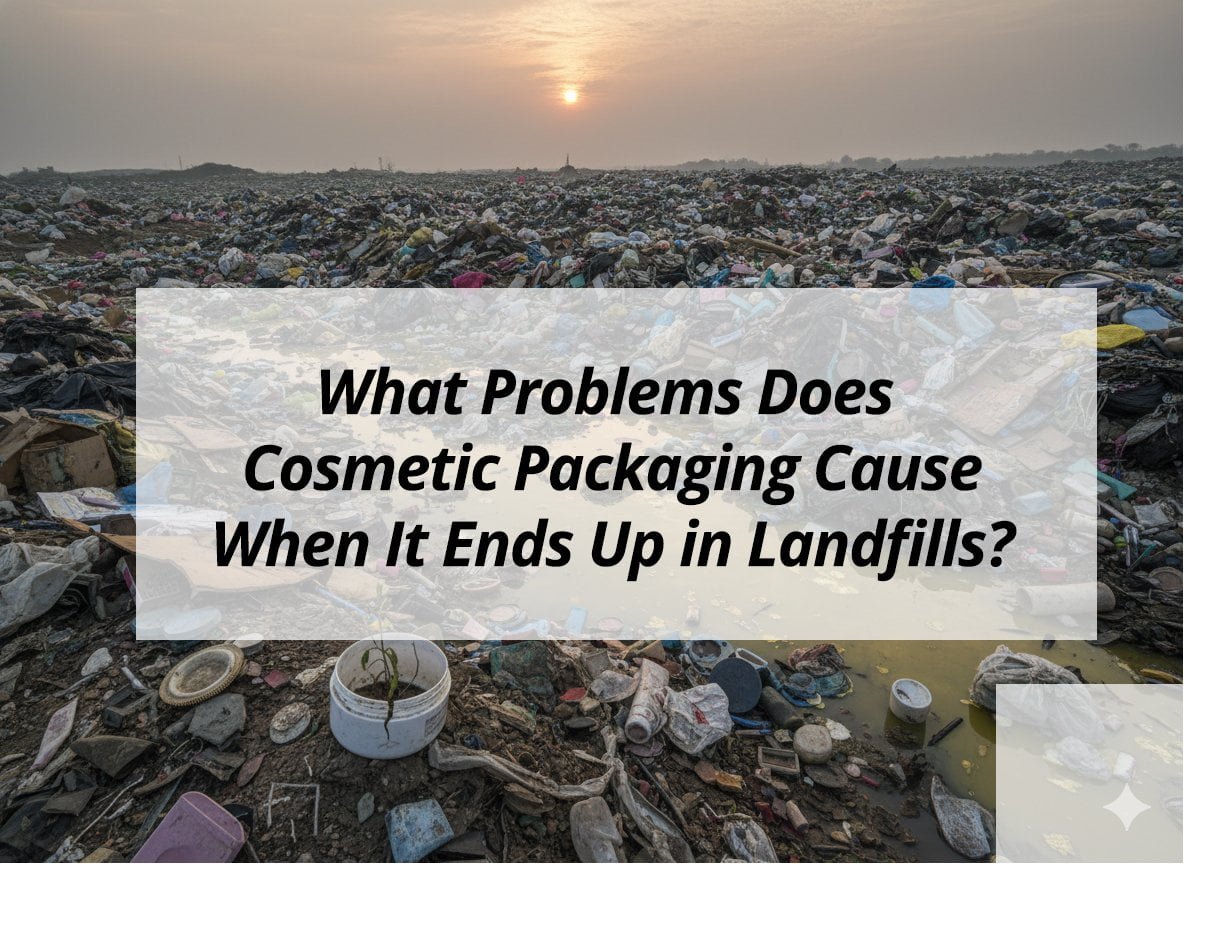
Cosmetic packaging waste is a major problem for landfills. It leads to severe environmental damage. This issue affects ecosystems and human health globally.
When cosmetic packaging enters landfills, it causes significant pollution of soil and water. It releases harmful chemicals that contaminate the environment. These impacts harm ecosystems and can affect human health. Understanding these consequences is crucial for developing and implementing effective sustainable packaging solutions.
This article will explore the problems that cosmetic packaging causes in landfills. It will also discuss the impact on the environment. We need to examine these issues closely.
What Impact Does Cosmetic Packaging Have on the Environment?
Have you considered the environmental journey of discarded cosmetic containers? A significant portion ends up in landfills. This has substantial environmental consequences.
Cosmetic packaging, particularly plastic, negatively affects the environment in several ways. It contributes to land and water pollution. This harms wildlife and ecosystems. Addressing this impact is crucial for environmental protection.
Once cosmetic packaging reaches landfills, it decomposes very slowly. Some materials, such as plastic, can last for hundreds of years. During this long period, these materials release harmful chemicals. These chemicals can seep into the soil and groundwater. This process can lead to widespread environmental contamination.
The Breakdown of Materials
Different packaging materials have varying decomposition rates. This table shows common cosmetic packaging materials and their approximate breakdown times.
| Material | Estimated Decomposition Time |
|---|---|
| Plastic | 400-1000 years |
| Glass | 1 million years |
| Aluminum | 80-200 years |
| Paper/Cardboard | 2-6 weeks |
| Bioplastics (PLA) | 6 months to 2 years |
Plastic and glass are particularly persistent. Their extended presence in landfills contributes significantly to long-term environmental issues.
Chemical Leaching
As packaging breaks down, it can release chemicals known as leachates. These chemicals can be toxic. They often include substances like phthalates and BPA. These chemicals pose risks to both environmental health and human well-being. Their release into the environment is a significant concern.
Resource Depletion
The production of new packaging consumes substantial resources. These include energy, water, and raw materials. When packaging is discarded, these invested resources are wasted. This unsustainable cycle highlights the need for increased reuse and recycling initiatives.
What Are the Negative Effects of Plastic in Landfills?
What happens to plastic items once they are discarded? A large volume of plastic waste ends up in landfills. This creates numerous environmental challenges.
Plastic in landfills has severe negative consequences. It persists for centuries. It releases toxins and fragments into microplastics. These processes pollute the planet extensively. Understanding these effects is vital for developing effective waste management strategies.
Plastic is a common material in cosmetic packaging, used for items like lipstick tubes and lotion bottles. When these plastic products are sent to a landfill, they do not biodegrade quickly. Instead, they remain intact for an extremely long time. This persistence contributes to the accumulation of waste and long-term environmental problems.
Persistence of Plastic
The durability of plastic, while beneficial for packaging, creates significant problems for waste management.
- Long Decomposition Time: Plastic can take hundreds of years to decompose. This contributes to the rapid expansion of landfills. Landfill space is a diminishing resource globally.
- Landfill Space: The rapid infilling of landfills is a pressing global issue. The demand for new waste disposal sites is constant. However, communities often resist the establishment of landfills nearby.
Microplastic Formation
Plastic does not disappear completely; instead, it breaks down into smaller fragments known as microplastics.
- Entering Ecosystems: Microplastics infiltrate soil and water systems. They are ingested by animals. They can enter the food chain, potentially affecting human health.
- Soil Contamination: Microplastics can alter soil composition. They can harm plant growth and disrupt soil ecosystems.
Toxic Release
Many plastic materials contain various chemicals. When plastic degrades in a landfill, these chemicals can migrate into the surrounding environment.
- Groundwater Contamination: These chemicals can enter groundwater systems. This contamination renders water unsafe for consumption. It also negatively impacts aquatic ecosystems.
- Air Pollution: Some chemicals can volatilize into the atmosphere. This contributes to air pollution.
How Does Cosmetic Packaging Waste End Up in the Ocean?
How do items like a discarded mascara wand or a shampoo bottle find their way into the marine environment? This journey causes extensive ecological damage.
Cosmetic packaging waste frequently reaches the ocean through multiple pathways. It can be transported by wind or water from landfill sites. Improper disposal practices also contribute significantly. This widespread pollution severely harms marine life.
The journey of packaging waste to the ocean is not always direct. Packaging in landfills can be dispersed. Strong winds can carry lightweight plastic packaging over considerable distances. Rainwater can wash items from inadequately secured landfills into rivers. These rivers then carry the waste downstream into the ocean. Even with advanced waste management, some leakage can occur.
Pathways to the Ocean
Packaging waste can travel from terrestrial environments to marine ecosystems through several routes.
- Runoff from Landfills: Landfills are not always perfectly contained. Rainwater can carry waste materials from these sites. This waste can then enter river systems and eventually flow into the ocean.
- Wind Action: Lightweight plastic packaging is susceptible to being picked up by strong winds. It can travel long distances before landing in water bodies.
- Improper Disposal: Littering contributes significantly to ocean pollution. Packaging discarded on streets can be washed into storm drains. These drains often lead directly to rivers and subsequently the ocean.
Impact on Marine Life
Once in the ocean, cosmetic packaging waste causes severe harm to marine ecosystems.
- Ingestion: Marine animals often mistake plastic fragments for food. Ingestion can lead to internal injuries, blockages, or starvation.
- Entanglement: Larger pieces of plastic waste can entangle marine animals. This restricts their movement, impairs their ability to hunt, and often results in mortality.
- Habitat Destruction: Plastic debris can cover and damage vital marine habitats, such as coral reefs. This disrupts the ecosystem and harms species reliant on these environments.
Chemical Transfer
Plastic in the ocean can absorb and concentrate environmental toxins. These toxins can then transfer to marine organisms.
- Bioaccumulation: Toxins accumulate in animal tissues over time. This can negatively affect their health. It also impacts the entire marine food chain.
- Food Chain Impact: When humans consume seafood contaminated with these toxins, the chemicals can transfer to them. This presents a serious public health concern.
In What Ways Does Discarded Packaging Cause Environmental Problems?
What are the comprehensive environmental problems resulting from discarded packaging? The impact extends far beyond mere aesthetic concerns.
Discarded cosmetic packaging generates a multitude of environmental issues. It pollutes ecosystems and poses threats to wildlife. It also depletes valuable natural resources. This collectively creates significant negative impacts on the planet.
The full life cycle of packaging, from its manufacture to its disposal, has an environmental footprint. Understanding these impacts is crucial for all stakeholders. Working collaboratively to identify and implement better solutions is essential.
Land Pollution
When packaging is disposed of, it frequently accumulates on land. This leads to various forms of pollution.
- Aesthetic Pollution: Litter degrades the visual quality of natural and urban landscapes. It diminishes the enjoyment of outdoor spaces.
- Soil Contamination: Hazardous chemicals from packaging can leach into the soil. This reduces soil fertility. It can also harm plant life and soil microorganisms.
- Habitat Disruption: Extensive accumulation of waste can destroy natural habitats. This displaces or endangers wildlife populations.
Water Pollution
Water bodies are particularly vulnerable to pollution from discarded packaging.
- River and Lake Contamination: Packaging discarded near rivers and lakes inevitably enters these water bodies. This harms aquatic life and compromises water quality.
- Groundwater Contamination: Chemicals from landfill sites can seep into groundwater. As groundwater is a primary source of drinking water for many, contamination poses a significant public health risk.
Air Pollution
The entire process of packaging production and disposal contributes to air pollution.
- Production Emissions: Manufacturing packaging is an energy-intensive process. This releases greenhouse gases into the atmosphere. These emissions contribute to global climate change.
- Incineration: The incineration of waste releases toxic fumes and particulate matter. These airborne pollutants can cause respiratory problems in humans and animals.
Resource Depletion and Energy Waste
Each piece of packaging represents a commitment of resources used for its creation.
- Virgin Material Use: Producing new packaging necessitates the use of raw materials. This includes petroleum for plastics and timber for paper. These natural resources are finite.
- Energy Consumption: Substantial energy is expended in the extraction of raw materials, manufacturing processes, and transportation of packaging. When packaging is discarded without recycling, this invested energy is wasted.
My Insights: Environmental Impact of Cosmetics Packaging in Landfills
Concerned about cosmetic waste? Packaging in landfills contributes to pollution, microplastics, and harmful chemical leakage, threatening ecosystems and sustainability efforts.
Cosmetics packaging in landfills causes long-term environmental issues, including pollution, microplastic creation, and toxic chemical leakage. These factors disrupt ecosystems, contribute to climate change, and pose threats to wildlife and human health.
Unpacking the Environmental Consequences of Cosmetics Packaging
Scale and Persistence:
- Volume: The beauty industry generates 120 billion units of packaging annually, 70% ending in landfills, straining waste management systems.
- Longevity: Plastics like PET and PVC persist for decades, creating enduring pollution due to mixed materials complicating recycling.
Microplastics and Chemical Leakage:
| Problem | Impact |
|---|---|
| Microplastics | Fragments spread via wind, water, adsorb pollutants, affecting ecosystems |
| Chemical Leachate | Rainwater creates leachate with parabens, heavy metals, risking contamination |
Wildlife and Ecosystem Harm:
- Physical Risks: Packaging entangles or is mistaken for food, harming wildlife.
- Chemical Risks: Microplastics entering food chains can disrupt reproductive functions in animals.
Climate Impacts:
Organic residue in packaging decomposes, releasing methane, while landfill reliance perpetuates emissions from virgin material production. Solutions include more sustainable packaging choices and enhancing recycling efforts to mitigate these impacts.
Conclusion
Cosmetic packaging in landfills contributes to a range of severe environmental problems. It pollutes land, water, and air. This adversely affects ecosystems, wildlife, and human health. Implementing sustainable packaging practices is therefore imperative.