Choosing the right cosmetic packaging is vital for business success. It's not just about aesthetics; it's about functionality and consumer appeal.
Selecting cosmetic packaging requires evaluating material quality, design, and cost to ensure product protection and consumer appeal. Environmental impact is crucial for brand perception and competitive market positioning. Choosing wisely enhances product safety, user experience, and brand reputation, catering to eco-conscious consumers, which is vital in today’s market landscape.
Understanding these elements ensures your products stand out. By considering key aspects, we can make informed decisions that benefit both the brand and the consumer.
What factors should be considered when choosing the type of packing for a product?
In the vast world of cosmetics, choosing the right type of packaging can make or break your product's success.
When selecting packaging, consider factors such as material durability1, compatibility with the product, user convenience2, and cost-effectiveness. These elements impact customer satisfaction and brand reputation, driving long-term success in a competitive market.
Let's dive into the specifics to better understand these crucial considerations.
Key Factors in Choosing Packaging
| Factor | Description |
|---|---|
| Durability | Ensures product integrity during transportation and shelf life, reducing damage and returns. |
| Compatibility | Must suit product's chemical composition to prevent contamination or spoilage. |
| User Convenience | Enhances user experience with easy-to-use designs, encouraging consumer loyalty. |
| Cost-Effectiveness | Balances quality and cost, optimizing profits while delivering value. |
| Environmental Impact | Eco-friendly options boost brand reputation and appeal to conscious consumers. |
| Design | Eye-catching designs enhance shelf presence and attract potential buyers. |
By weighing these factors, businesses can optimize their packaging strategy to support brand growth and consumer satisfaction.
What are the selection criteria for the selection of packaging material?
Selecting the right material is crucial. It affects product safety and environmental impact3.
Packaging materials should be chosen based on durability, environmental impact, cost, and suitability for the product. These criteria ensure the packaging meets practical needs while aligning with market trends and consumer preferences.
Consider the following aspects when choosing materials:
Material Selection Criteria
Durability and Safety:
| Material | Advantages | Disadvantages |
|---|---|---|
| Glass | Offers elegance and protection | Breakable |
| Plastic | Lightweight and durable | Environmental concerns |
| Metal | Strong protection; used in sprays | Heavier, can be costly |
Environmental Considerations:
- Biodegradable Options: Meets eco-conscious demands.
- Recyclability: Boosts sustainability efforts.
Cost and Availability:
- Accessibility of materials can affect overall production cost.
- Balancing cost with quality is essential.
Suitability:
- Certain materials might react with chemical components.
- Ensure that materials are safe for the specific cosmetic formulations.
Visual Appeal:
- Materials should allow for branding opportunities, like custom logos.
Regulatory Compliance:
- Meeting international safety and quality standards is non-negotiable.
By carefully evaluating these aspects, brands ensure their packaging supports product success and aligns with broader company values.
How to select a plastic bottle?
Plastic bottles are common in cosmetic packaging, offering versatility and affordability. But how do you choose the right one?
Selecting the correct plastic bottle involves considering material type, design, and compatibility with the product. These ensure protection, usability, and brand cohesion, enhancing consumer experience and satisfaction.
Understanding the intricacies of choosing plastic bottles can offer significant benefits:
Selecting the Right Plastic Bottle
Material Type:
- PET (Polyethylene Terephthalate): Clear, strong, and commonly used.
- HDPE (High-Density Polyethylene): Known for its durability and resistance.
- LDPE (Low-Density Polyethylene): Offers flexibility and affordability.
Design and Functionality:
- Ergonomic designs improve user experience.
- Choose closures that offer a secure seal.
Product Compatibility:
- Ensure the plastic type complements the product's chemical properties to avoid interactions.
Eco-Friendliness:
- Recycled plastics or bioplastics align with sustainable practices.
Brand Aesthetics:
- Allow for custom designs and colors that reflect brand identity.
Cost Implications:
- Balance between quality and cost, considering both production and environmental implications.
By evaluating these factors, businesses can select plastic bottles that align with their brand’s goals and consumer expectations.
How do you choose the right packaging?
The right packaging transforms a product, offering both protection and market appeal. So how do you select it?
Choosing the right packaging involves assessing product requirements, consumer preferences, environmental impact, and cost. These considerations ensure that the packaging enhances the product's appeal and performance in the market.
Here's a closer look at making the right packaging choice:
Steps to Choose the Right Packaging
Understand Your Product:
- Analyze the product's physical and chemical requirements.
- Assess potential packaging materials that meet these needs.
Consumer Preferences:
- Conduct market research to determine what appeals to your target audience.
- Balance aesthetics with functionality for consumer satisfaction.
Environmental Impact:
- Adopt sustainable materials to align with consumer trends.
- Consider lifecycle assessments to reduce environmental footprint.
Cost Considerations:
- Weigh the cost of materials against their benefits and desired quality.
- Factor in production, transportation, and recycling costs.
Regulatory Requirements:
- Ensure compliance with industry regulations and standards.
- Prioritize safety and quality in packaging materials and processes.
Brand Alignment:
- Use packaging that reflects your brand’s mission and values.
- Customize designs and labeling to enhance brand visibility.
By addressing these comprehensive factors, businesses can choose packaging that not only protects their product but also elevates it in an increasingly competitive market.
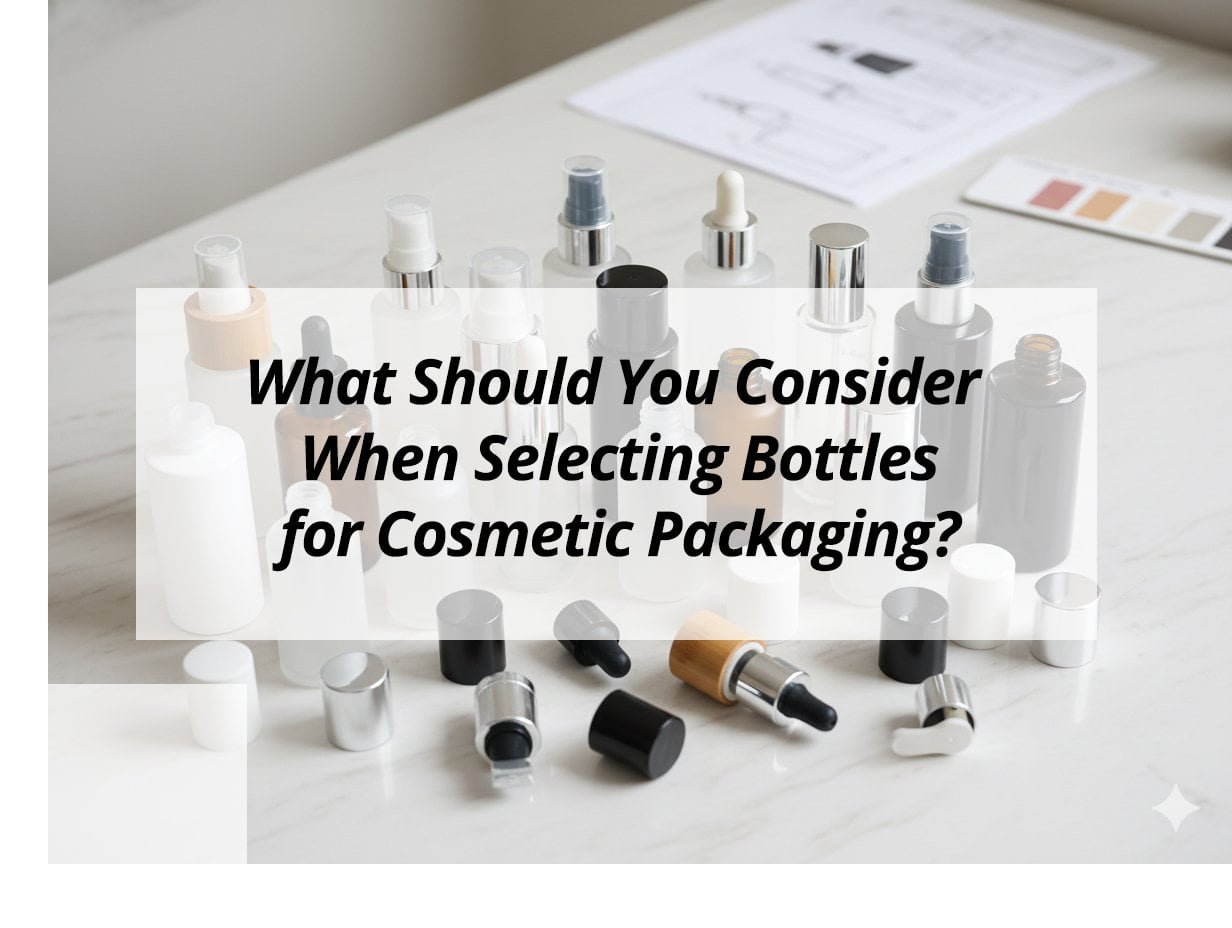
My insights: You Consider When Selecting Bottles for Cosmetic Packaging
Confused about choosing cosmetic packaging? Discover the key factors to ensure your products stay fresh, functional, and aligned with your brand.
When selecting bottles for cosmetic packaging, consider material compatibility, UV protection, dispensing systems, sustainability, and cost-effectiveness. These elements ensure product integrity, enhance user experience, and align with brand values.
Key Factors in Choosing Cosmetic Packaging
Product and Formula Needs:
- Formulation Demands: Watery serums need precise dispensing, while thick lotions require strong pumps or squeezable containers.
- Light and Air Sensitivity: Opaque or tinted packaging protects sensitive formulas from degradation.
Material and Protection:
- Glass: Premium look, strong chemical and UV protection, recyclable.
- PET: High clarity, lightweight, good barrier for toners.
- HDPE: Tough, flexible, chemically resistant for shampoos and lotions.
Dispensing Systems:
- Pumps: Suitable for lotions; ensure controlled dosing.
- Spray Pumps: Ideal for mists and perfumes.
- Droppers: Precise dosing for serums.
Brand and Sustainability:
- Use materials that reflect the brand image: glass for luxury, PET for everyday use.
- Consider eco-friendly options and recyclability to support sustainability goals.
Cost and Operations:
- Factor in order quantities, shipping, and production line compatibility to ensure smooth operations and cost efficiency.
These considerations help in choosing the best bottles for your cosmetic products, enhancing both performance and consumer appeal.
Conclusion
Choosing the right cosmetic packaging involves careful analysis of product needs, consumer preferences, cost, and environmental impact, ensuring both protection and appeal.
-
Understanding material durability is crucial for ensuring product safety and longevity during transport and storage. ↩
-
Exploring user convenience can reveal how packaging design influences customer satisfaction and loyalty. ↩
-
Investigating environmental impact can guide brands in making sustainable choices that appeal to eco-conscious consumers. ↩