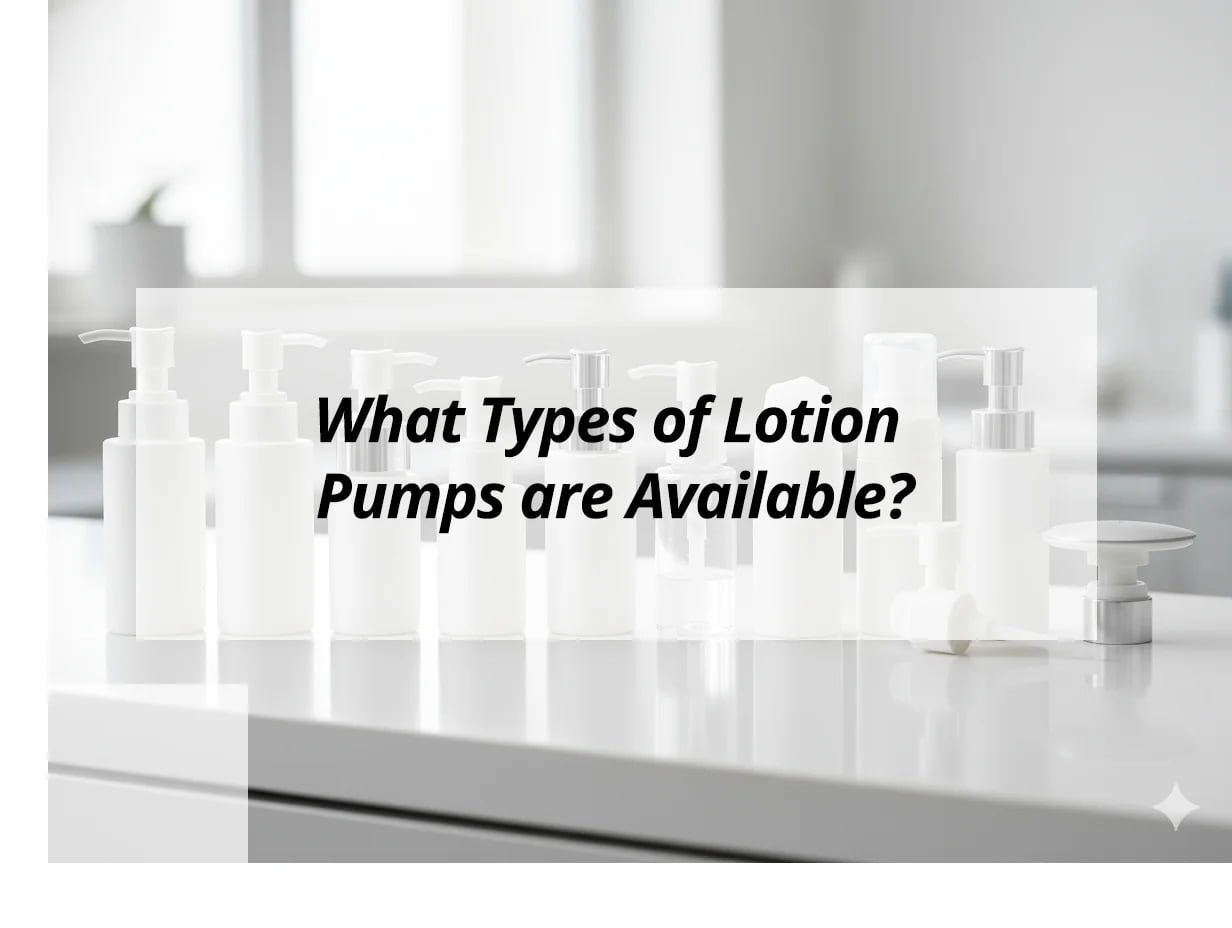
Choosing the right lotion pump is key for any product. The wrong one can hurt your brand. What types of lotion pumps can you choose from?
Many types of lotion pumps are available, each designed for specific product needs. Common types include dispensing pumps, treatment pumps, and airless pumps. Each offers different benefits in terms of dosage, product protection, and user experience. Selecting the correct pump ensures product effectiveness and customer satisfaction.
I know that packaging is vital. The pump is often the first thing a customer touches. It needs to work well every time.
What are the different types of lotion pumps?
Lotion pumps are not all the same. They come in many designs. Each one serves a different purpose for various products.
Different types of lotion pumps1 exist to suit various product consistencies and uses. Dispensing pumps are common for standard lotions. Treatment pumps deliver smaller, precise doses. Airless pumps protect sensitive formulas from air exposure. Each type offers specific functional advantages for different cosmetic and skincare products.
I have seen many different pump designs in my work. The right pump makes a big difference. It impacts how the product feels to use.
Dispensing pumps.
These are the most common pumps. You find them on many lotion bottles. They give a good amount of product with one press. They are good for thicker lotions and creams.
They have a simple mechanism. A spring and a ball valve create suction. This draws the product up the dip tube.
Treatment pumps.
Treatment pumps give smaller, more controlled doses. They are good for serums or eye creams. These products need precise amounts. This helps to avoid waste.
These pumps are often used for expensive products. They ensure that users get just enough. This makes the product last longer.
Airless pumps.
Airless pumps are special. They do not use a dip tube. Instead, a disc pushes the product up. This keeps air out of the bottle. They are great for sensitive formulas.
| Pump Type | Dosage Control | Air Exposure | Product Type |
|---|---|---|---|
| Dispensing Pump | Standard | High | Lotions, creams |
| Treatment Pump | High | High | Serums, precise doses |
| Airless Pump | Standard | None | Sensitive formulas |
Airless pumps protect ingredients from oxidation. They also make sure almost all the product is used. This reduces waste.
Foaming pumps.
Foaming pumps turn liquid soap into foam. They add air to the liquid. This makes a rich foam. These are good for hand soaps or facial cleansers.
They use a special chamber to mix air with the liquid. This creates a luxurious texture. It also helps conserve product.
Fine mist sprayers.
These are not traditional lotion pumps. But they are used for very thin liquids. They create a fine mist. They are good for toners or setting sprays.
They deliver a light, even layer of product. This is ideal for liquids that need to be spread broadly.
What are the different types of pumps?
Beyond lotion pumps, other types of pumps exist. They serve different needs in various industries. Understanding them helps in pump selection.
Pumps are devices that move fluids. They vary widely in design and function. Common types include positive displacement pumps and centrifugal pumps. Positive displacement pumps move a fixed amount of fluid per cycle. Centrifugal pumps use rotational energy to move fluids. Each type has specific applications in industries from cosmetics to heavy manufacturing.
I know that the world of pumps is large. From simple hand pumps to complex industrial ones, they all move liquids. Their basic principles are similar.
Positive displacement pumps.
These pumps move a fixed amount of liquid with each cycle. They trap a volume of fluid. Then they force it out. Lotion pumps are a type of positive displacement pump. Other examples include piston pumps and gear pumps.
They are good for high-pressure applications. They can also handle viscous liquids well.
Centrifugal pumps.
Centrifugal pumps use a spinning impeller. This creates centrifugal force. This force pushes the liquid outwards. This increases the liquid's speed and pressure. They are common for moving large volumes of low-viscosity fluids.
They are often used in water systems. They are known for their continuous flow.
Rotary lobe pumps.
These are another type of positive displacement pump. They have two rotating lobes. These lobes trap and move the fluid. They are good for viscous liquids and slurries.
| Pump Category | Sub-types | Key Feature | Common Use |
|---|---|---|---|
| Positive Displacement | Piston, Gear, Rotary Lobe | Fixed volume per cycle | Viscous liquids, dosing |
| Centrifugal | Radial, Axial, Mixed Flow | Rotational energy | Large volume fluid transfer |
| Specialized | Peristaltic, Diaphragm | Specific control/hygiene | Medical, laboratory |
They are used in food processing and pharmaceuticals. This is because they cause minimal damage to the product.
Peristaltic pumps.
These pumps move fluid through a tube. Rollers compress the tube. This creates a wave-like motion. This pushes the fluid forward. The fluid only touches the inside of the tube. This keeps it sterile.
They are often used in medical settings. They are also good for laboratories.
Diaphragm pumps.
Diaphragm pumps use a flexible diaphragm. This diaphragm moves back and forth. This creates suction and pressure. They are good for abrasive or corrosive liquids.
They are found in chemical processing. They are also used in spray applications.
What are the different types of infusion pumps?
Infusion pumps are a specialized type of pump. They are used in healthcare. They deliver fluids to patients.
Infusion pumps are medical devices that deliver fluids, nutrients, or medications into a patient's body in controlled amounts. The main types include volumetric pumps2, syringe pumps3, and elastomeric pumps4. Each type ensures precise and safe delivery. This is critical for patient care, preventing under or over-dosing of vital substances.
I understand the precision needed in medical applications. These pumps are life-saving tools. Their accuracy is vital.
Volumetric pumps.
These pumps deliver a specific volume of fluid over time. They are very accurate. They are used for large volumes of fluids. Examples include IV fluids or nutrition.
They typically use a cassette or tubing set. This is to control the flow. They are common in hospitals.
Syringe pumps.
Syringe pumps deliver very small, precise amounts of fluid. They use a syringe. They push the plunger at a controlled rate. They are good for powerful medicines. They are also good for babies.
They offer high accuracy for low flow rates. This is crucial for potent medications.
Elastomeric pumps.
These pumps use a balloon-like reservoir. This reservoir is filled with fluid. It squeezes the fluid out at a constant rate. They do not need electricity. They are good for home use.
| Infusion Pump Type | Delivery Method | Typical Use | Precision |
|---|---|---|---|
| Volumetric | Controlled flow rate | IV fluids, nutrition | High |
| Syringe | Plunger push | Potent drugs, neonates | Very High |
| Elastomeric | Balloon pressure | Home infusions, pain management | Moderate |
They are often used for pain management. They are also good for antibiotics at home.
Patient-controlled analgesia (PCA) pumps.
These pumps let patients control their pain medicine. They press a button to get a dose. The pump has limits to prevent too much medicine. This gives patients more comfort.
They provide a balance between patient comfort and safety. They are common in post-operative care.
Ambulatory pumps.
These are small, portable infusion pumps. Patients can carry them. This allows them to move around. They are good for ongoing treatments outside the hospital.
They enhance patient mobility and quality of life. They are used for various long-term therapies.
How many pumps of lotion?
The number of lotion pumps needed depends on many things. There is no single right answer. It varies greatly.
The ideal number of lotion pumps needed depends on the product's consistency, the area of application, and personal preference. Thicker lotions might need one or two pumps for a small area. Lighter lotions or larger areas may require more. User needs and the specific pump's dosage also influence the amount.
I know that users have different needs. What works for one person may not work for another. It is about finding the right balance.
Product consistency.
Thick lotions spread less easily. You might need one or two pumps for a small area. Thin lotions spread more. You might need less. Or you might need more to cover a larger area.
A very rich cream might only need a tiny dab. A light body milk will need more to cover the body.
Area of application.
Are you putting lotion on your face? Or your whole body? Your face needs less. Your body needs more. A small area needs fewer pumps. A large area needs more.
| Application Area | Lotion Consistency | Suggested Pumps (Approx.) |
|---|---|---|
| Face | Light Serum | 1-2 small pumps |
| Hands | Standard Lotion | 1-2 pumps |
| Arms/Legs | Body Cream | 3-5 pumps per limb |
| Whole Body | Body Milk | 5-10+ pumps |
This is why different pump dosages are useful. They allow for varied uses.
Personal preference.
Some people like a lot of lotion. Some like just a little. It is up to you how much feels right. The goal is enough to moisturize without feeling sticky.
Experimentation is key. Finding the amount that feels best for your skin is important.
Pump dosage.
Each pump delivers a certain amount. Some pumps give a tiny bit. Others give a lot. This dosage also changes how many pumps you need.
Manufacturers design pumps with specific dosages in mind. This helps guide usage.
Seasonal changes.
Your skin might be drier in winter. You might need more lotion then. In summer, you might need less. Adjust based on your skin's needs.
Environmental factors can affect skin hydration. Adjusting lotion use accordingly helps maintain skin health.
My Insights: Exploring Different Types of Lotion Pumps
Confused about which lotion pump best suits your needs? Discover various options tailored for different applications.
Lotion pumps come in diverse styles, including standard pumps for thicker liquids, airless pumps5 to prevent contamination, and treatment pumps for precise doses. Specialized features like lockable and showerproof designs cater to different dispensing needs.
Understanding Lotion Pump Varieties
Standard and Treatment Pumps:
- Standard Pumps: Suitable for creams, body washes, and shampoos, handling high viscosities with outputs from 1.2cc to 30cc.
- Treatment Pumps: Ideal for serums and facial products, offering precise doses from 0.13cc to 0.2cc.
Airless and Specialized Options:
- Airless Pumps: Preserve sensitive formulas by preventing air exposure, perfect for anti-aging creams.
- Specialized Features: Showerproof pumps prevent water entry, external spring pumps isolate contents for hygiene, and lockable designs ensure travel safety.
| Type | Output Range | Best For | Key Feature |
|---|---|---|---|
| Standard Lotion | 1.2-30cc | Lotions, shampoos | High viscosity handling |
| Treatment Pump | 0.13-0.2cc | Serums, creams | Precise small doses |
| Airless Pump | Varies | Serums, anti-aging | Air-free preservation |
| External Spring | Varies | Thick lotions | Hygienic spring isolation |
Choosing the right lotion pump enhances product functionality and user experience, ensuring effective and safe dispensing for various applications.
Conclusion
Lotion pumps vary by type and use. Dispensing, treatment, and airless pumps serve different needs. The number of pumps for lotion depends on many factors.
-
Explore the various designs of lotion pumps to find the best fit for your skincare needs. ↩
-
Discover how volumetric pumps ensure accurate delivery of IV fluids and nutrition. ↩
-
Learn about syringe pumps and their importance in delivering precise amounts of medication. ↩
-
Explore the advantages of elastomeric pumps for home infusions and pain management. ↩
-
Find out how airless pumps protect sensitive formulas from air exposure and oxidation. ↩