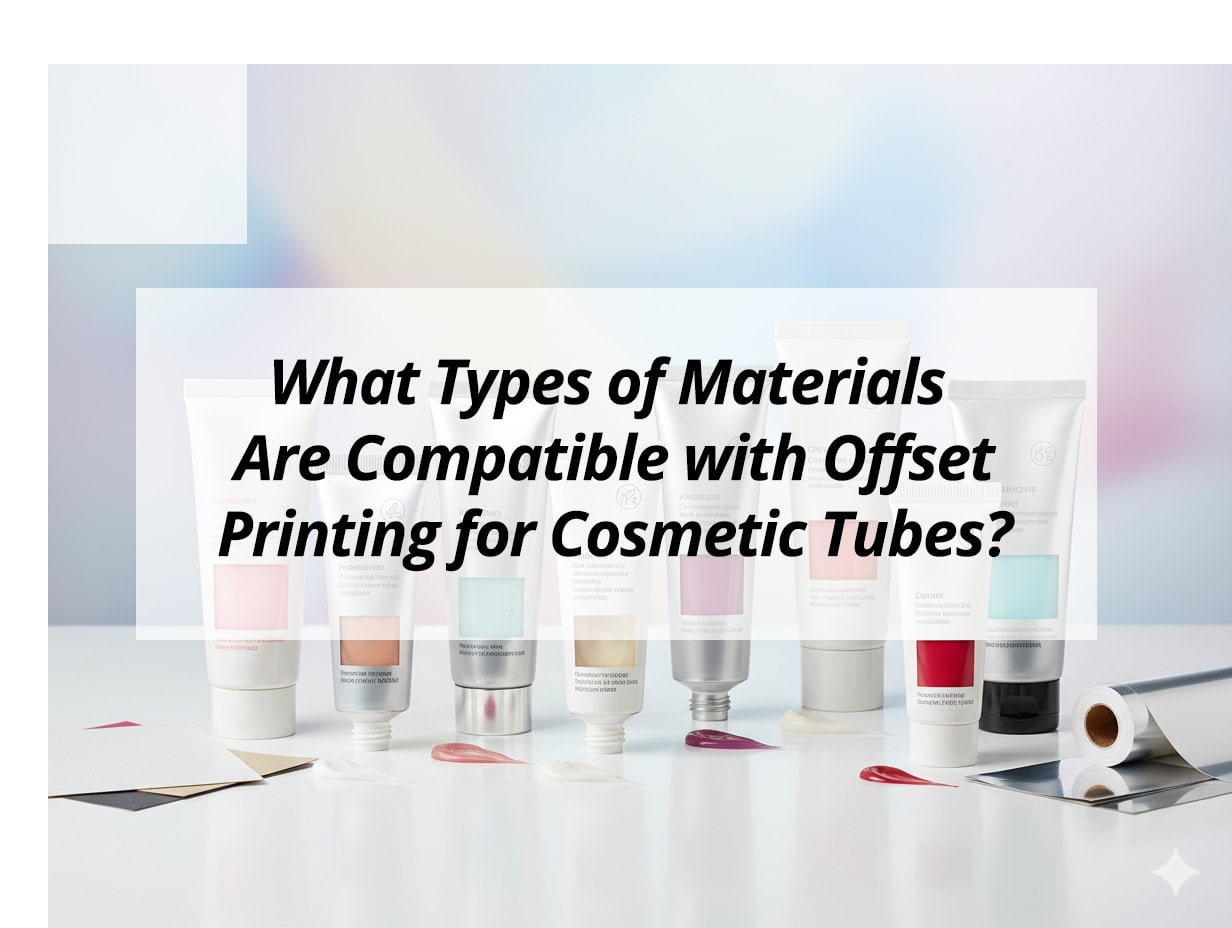
Selecting appropriate materials for cosmetic tubes is vital for effective offset printing. This choice impacts both visual appeal and product integrity. Understanding material compatibility is key for brands.
Polyethylene (PE), polypropylene (PP), and various plastic laminates are highly compatible with offset printing for cosmetic tubes. These materials ensure high-quality graphic reproduction, vibrant colors, and durable designs essential for market presence. Their surface properties allow for excellent ink adhesion and precise detailing.
The interaction between printing technology and material science defines the outcome. Careful material selection is a fundamental step in cosmetic packaging production.
What Materials Can Be Used in Offset Printing?
Effective offset printing on cosmetic tubes1 depends on selecting compatible materials. Various plastics and laminates are suitable for this process. Each material offers specific properties that influence print quality and tube performance.
Offset printing involves transferring an image from a plate to a rubber blanket, then to the tube surface. This requires materials with good ink receptivity and adhesion. For cosmetic tubes, common choices include polyethylene (PE) and polypropylene (PP). These plastics are known for their flexibility, durability, and cost-effectiveness. The surface characteristics of these polymers are crucial for successful ink transfer and curing.
Why is Polyethylene (PE) Suitable for Offset Printing?
Polyethylene is a widely used material in cosmetic tube manufacturing. It is available in various densities, such as low-density polyethylene (LDPE) and high-density polyethylene (HDPE). Both types are compatible with offset printing processes.
- Surface Energy: PE surfaces typically possess adequate surface energy. This allows for proper wetting by offset inks and strong adhesion.
- Flexibility: Tubes made from PE are squeezable. The printed graphics must withstand this deformation without cracking or flaking.
- Economic Viability: PE is an economical material choice. It provides a balance of performance and cost efficiency.
- Chemical Resistance: PE exhibits resistance to many chemicals found in cosmetic formulations. This helps maintain print integrity over time.
How Does Polypropylene (PP) Perform with Offset Printing?
Polypropylene is another frequently selected material for cosmetic tubes. It offers greater rigidity compared to PE. It also has good resistance to heat and various chemicals.
- Mechanical Strength: PP tubes are robust. They show good resistance to physical abrasions.
- Thermal Stability: PP can withstand higher temperatures. This is beneficial during tube filling and sealing operations.
- Surface Smoothness: The smooth surface of PP facilitates the creation of sharp and detailed prints.
- Sustainability Aspects: PP is often recyclable. This aligns with increasing industry demand for sustainable packaging solutions.
What About Laminates for Offset Printing?
Laminate tubes are constructed from multiple layers of different materials. They often feature a plastic outer layer for printing. The inner layers provide barrier properties. The outer layer is typically based on PE or PP.
| Laminate Type | Barrier Properties | Printing Surface Material | Typical Applications |
|---|---|---|---|
| ABL (Aluminum Barrier Laminate) | High barrier (oxygen, moisture) | PE/PP | Toothpaste, pharmaceutical creams |
| PBL (Plastic Barrier Laminate) | Moderate barrier (oxygen) | PE/PP | Skincare lotions, hair gels |
The specific design of laminate tubes allows for both product protection and high-quality graphic reproduction. The outer plastic layer is engineered to be receptive to offset inks, making laminates a versatile choice for a broad range of cosmetic products.
Is Offset Ink Oil Based?
Yes, offset printing inks are predominantly oil-based. This characteristic is fundamental to the lithographic principle of offset printing. The oil-based nature of the ink interacts specifically with the water-based dampening solution used on printing plates.
The mechanism relies on the immiscibility of oil and water. Image areas on the printing plate are oleophilic (ink-attracting). Non-image areas are hydrophilic (water-attracting). This ensures that ink adheres only to the designated image regions, facilitating precise transfer.
Why Use Oil-Based Ink for Cosmetic Tubes?
Oil-based inks offer several advantages when printing on cosmetic tubes. These benefits contribute to both visual quality and print longevity.
- Color Saturation: They yield rich and vibrant colors. This is a critical factor for appealing cosmetic packaging.
- Print Durability: Oil-based inks generally exhibit good resistance to scratching and fading. This maintains the aesthetic quality of the tube over time.
- Substrate Adhesion: These inks adhere effectively to various plastic surfaces. This ensures the printed image remains intact through handling and use.
- Curing Mechanisms: Drying occurs through oxidation or UV curing. Both methods result in a robust and long-lasting print.
Different Formulations of Oil-Based Inks
Oil-based inks are available in various formulations, each with distinct properties. The choice of ink depends on the specific printing requirements and desired outcomes.
- Conventional Offset Inks: These inks typically dry through an oxidative process. They are widely used and offer a balance of performance and cost.
- UV Offset Inks: These inks cure instantly upon exposure to ultraviolet light. They provide high gloss, excellent durability, and rapid production speeds.
| Ink Formulation | Drying Method | Advantages | Considerations |
|---|---|---|---|
| Conventional Inks | Oxidation | Broad application, economical | Longer drying times, potential for rub-off |
| UV-Curable Inks | UV Radiation | Fast curing, high gloss, superior adhesion | Higher material cost, specialized equipment |
The selection of ink type is crucial for optimizing printing results on cosmetic tube materials. This decision is guided by the specific demands of the product and production process.
What Type of Ink Is Used in Offset Printing?
Offset printing primarily utilizes paste inks. These inks possess a thick consistency and high viscosity. Their formulation is specifically designed to function within the offset printing process.
Ink transfer occurs in stages: from the ink rollers to the printing plate, then to the rubber blanket, and finally onto the cosmetic tube. The rheological properties of paste inks allow for precise control during this transfer. This results in the production of sharp and detailed images.
Compositional Elements of Offset Inks
Offset inks are composed of several key components. Each component contributes to the overall performance characteristics of the ink.
- Pigments: These supply the color. Pigments must be stable and resistant to chemical interaction with cosmetic ingredients.
- Binders: Binders encapsulate pigment particles. They promote adhesion of the ink to the substrate.
- Vehicles: Vehicles, often based on vegetable oils or resins, control ink viscosity and flow. They also facilitate drying.
- Additives: Various additives enhance specific ink properties. Examples include drying agents, waxes for scuff resistance, and slip agents.
Specific Ink Requirements for Cosmetic Tubes
Inks used for printing on cosmetic tubes must meet stringent requirements to ensure product quality and consumer safety.
- Chemical Compatibility: The ink must not react adversely with the cosmetic product or the tube material. This prevents undesirable changes in color or print degradation.
- Abrasion Resistance: Cosmetic tubes undergo frequent handling. The printed design must withstand abrasion and scratching.
- Flexibility: The ink must remain flexible as the tube is squeezed. This prevents cracking or delamination of the print.
- Lightfastness: Colors should retain their vibrancy when exposed to light. This is particularly important for products displayed in retail environments.
Ensuring the selected ink meets these criteria is essential for durable and appealing cosmetic packaging.
The Role of UV Inks for Plastic Tubes
UV-curable inks are particularly well-suited for printing on plastic cosmetic tubes. They offer several distinct advantages that benefit both print quality and manufacturing efficiency.
- Rapid Curing: UV inks polymerize instantly under UV light. This significantly accelerates production cycles.
- High Aesthetic Finish: They often provide a high-gloss finish. This enhances the visual appeal of the packaging.
- Strong Adhesion: UV inks form a robust bond with plastic surfaces.
- Environmental Profile: Many UV ink formulations have low or zero volatile organic compound (VOC) content. This aligns with environmental regulations and sustainability initiatives.
The use of UV offset printing contributes to high-quality, efficient production of cosmetic tubes with excellent graphic detail and durability.
What Are Cosmetic Tubes Made Of?
Cosmetic tubes are manufactured from a diverse range of materials. The selection of material depends on the internal product's characteristics, desired tactile feel, and printing requirements. Plastics are the primary materials used.
The fundamental function of a cosmetic tube is to protect the product effectively. It must also provide convenient product dispensing for the consumer. Material choice directly influences both protective capabilities and user experience.
Common Plastics Utilized for Cosmetic Tubes
- Polyethylene (PE)2: This is the most prevalent material. It offers flexibility and is available in various densities, such as LDPE (Low-Density Polyethylene) and HDPE (High-Density Polyethylene). It is commonly used for creams, lotions, and gels.
- Polypropylene (PP)3: PP is recognized for its greater rigidity and enhanced heat resistance compared to PE. It is often chosen for products requiring a more structured container.
- PET (Polyethylene Terephthalate)4: PET is known for its clarity and good barrier properties. It is frequently employed for transparent or translucent tube designs.
- EVOH (Ethylene Vinyl Alcohol)5: EVOH functions as a high-barrier layer. It is often co-extruded with PE or PP to protect oxygen-sensitive cosmetic formulations.
Multi-Layer and Laminate Tube Constructions
Many cosmetic tubes are not monochromatic. They incorporate multiple layers or are constructed as laminates. This approach combines the beneficial properties of different plastic types.
- Co-extruded Tubes: These tubes feature several plastic layers extruded simultaneously. For example, an outer PE layer might encase a central EVOH barrier layer. This configuration enhances product protection against external elements.
- Laminate Tubes: As previously mentioned, laminate tubes consist of various material layers bonded together. They offer superior barrier performance for sensitive cosmetic products.
Factors Influencing Tube Material Selection
Several critical factors guide the selection of material for a cosmetic tube. These considerations ensure optimal product performance and market appeal.
- Product Compatibility: The chosen tube material must be inert to the cosmetic formula. This prevents degradation of either the product or the packaging.
- Barrier Properties: Products requiring protection from oxygen, light, or moisture necessitate materials with appropriate barrier characteristics.
- Dispensing Functionality: The tube material must allow for easy and controlled dispensing of the product.
- Aesthetic Appeal: The material influences the visual and tactile qualities of the tube.
- Cost-Effectiveness: Material cost is a significant factor in overall packaging expenses.
- Sustainability: The recyclability or renewable sourcing of materials is increasingly important for brands.
| Material Type | Primary Characteristics | Barrier Properties (Typical) | Typical Cosmetic Applications |
|---|---|---|---|
| LDPE | Highly flexible, soft touch | Low | Hand creams, facial cleansers |
| HDPE | Moderate flexibility, durable | Low | Body lotions, sunscreens |
| PP | Rigid, good heat resistance | Low | Hair gels, specific ointments |
| PET | Clear, rigid | Moderate (oxygen) | Serums, clear liquid formulations |
| ABL/PBL | Flexible, excellent barrier | High (oxygen, moisture) | Toothpaste, high-end skincare |
Considering these factors enables informed material selection. This supports the production of high-quality cosmetic packaging suitable for offset printing.
My insights: Material Compatibility for Offset Printing on Cosmetic Tubes
Struggling with print quality on cosmetic tubes? Explore the materials optimized for offset printing to achieve crisp and vibrant designs.
Offset printing works well with materials like polyethylene, laminated plastics, and aluminum for cosmetic tubes. Proper surface treatment ensures ink adhesion, supporting high-resolution prints ideal for vibrant designs and branding.
Understanding Material Compatibility for High-Quality Offset Printing
1. Preferred Materials:
- Polyethylene (PE) and HDPE/LDPE Blends: Common for creams and lotions; require corona or flame treatment for ink adhesion.
- Laminated Tubes: Ideal for products needing barriers, such as hair dyes; offer smooth surfaces for full-color prints.
2. Specialty Materials:
- Aluminum: Used in premium skincare for excellent barrier properties; treated surfaces support detailed decoration.
- PET and PP Tubes: Offset printable with correct surface treatment and ink systems, chosen for rigidity and clarity.
3. Practical Selection Tips
| Aspect | Examples | Benefits |
|---|---|---|
| Barrier Needs | Aluminum for light-sensitive formulas | Ensures product protection and high-quality prints |
| Printability Confirmation | Adhesion and rub tests on specific substrates | Validates ink set and surface treatment compatibility |
Offset printing offers cosmetic tubes vibrant, high-resolution designs suitable for branding, prioritized through the appropriate selection and treatment of materials, ensuring durability and aesthetic appeal.
Conclusion
PE, PP, and laminates suit offset printing for cosmetic tubes. Oil-based inks ensure vibrant, durable designs. Material and ink choice are key.
-
Explore the best materials for cosmetic tubes to enhance product appeal and functionality. ↩
-
Discover the advantages of PE in cosmetic tubes, including flexibility and cost-effectiveness. ↩
-
Learn about PP's rigidity and heat resistance, making it ideal for structured containers. ↩
-
Explore PET's clarity and barrier properties, essential for transparent packaging. ↩
-
Understand how EVOH acts as a high-barrier layer, protecting sensitive formulations. ↩