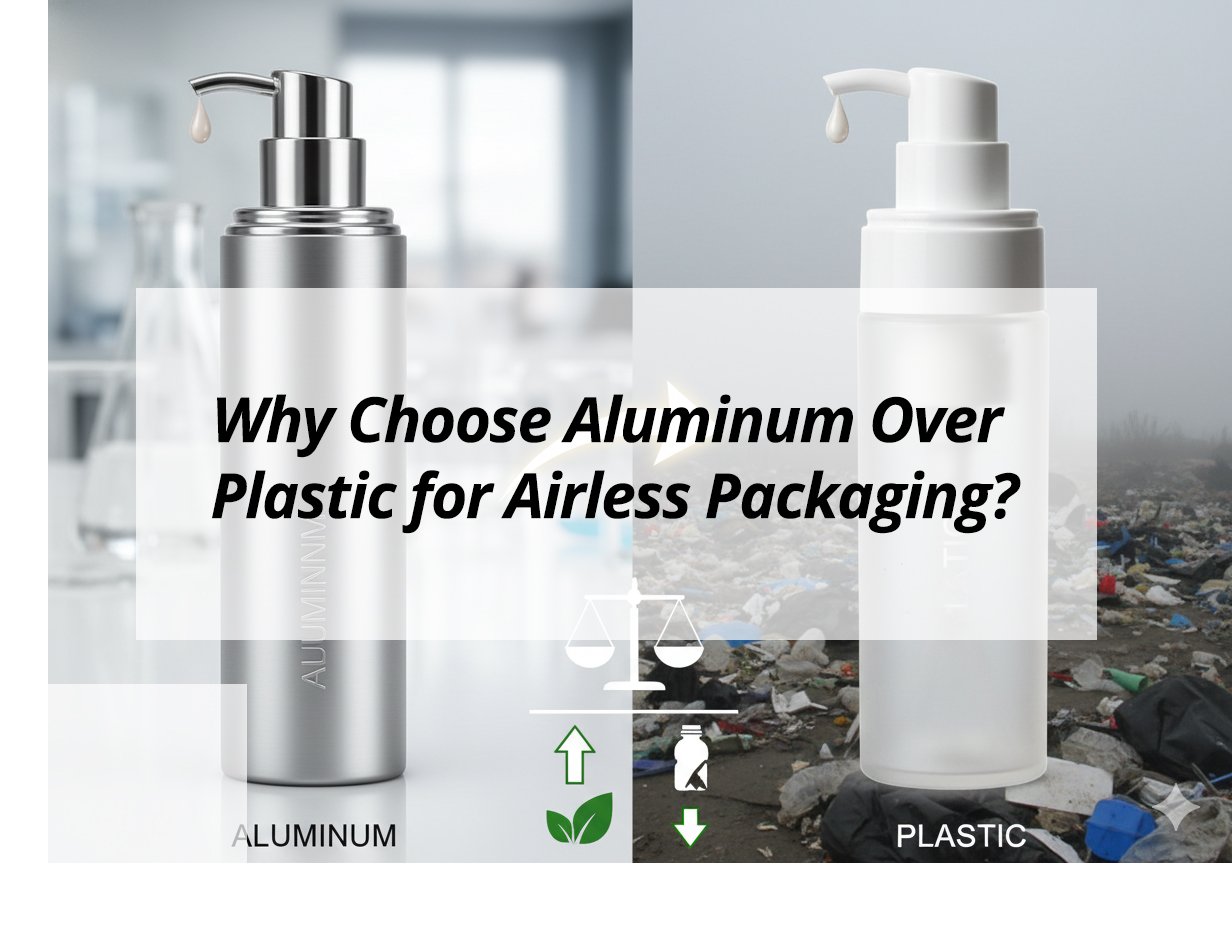
Are you evaluating material choices for your cosmetic packaging? Do you seek optimal protection and a distinct market presence for your products? The selection between aluminum and plastic for airless systems significantly impacts product integrity and brand perception.
Choosing aluminum over plastic for airless packaging provides enhanced barrier protection against oxygen, light, and moisture, thereby extending product shelf life and preserving ingredient efficacy. Aluminum also conveys a premium aesthetic, elevates brand image, and offers high recyclability, aligning with sustainability objectives. While typically incurring a higher initial cost, its benefits in product preservation and market differentiation often justify the investment for high-value cosmetic formulations.
The decision between aluminum and plastic is critical in the cosmetic industry. Both materials offer distinct advantages and disadvantages that influence product performance and market appeal. Understanding these differences is essential for informed packaging choices.
Is Aluminum Packaging Better Than Plastic?
Is product degradation or loss of potency a concern for your cosmetic formulations? Does the durability of your packaging material play a role in maintaining product quality? Plastic, while widely used, may not always offer the necessary protective qualities for sensitive ingredients, potentially compromising product efficacy and consumer satisfaction.
Aluminum packaging generally offers superior performance compared to plastic in key aspects, primarily providing an excellent barrier against external elements such as UV light, oxygen, and moisture. This significantly prolongs product shelf life and maintains the stability of active ingredients. Aluminum also contributes to a premium visual and tactile experience, enhancing brand perception, and demonstrates strong recyclability. While plastic can be lighter and more economical, aluminum's robust protective capabilities and environmental profile often make it a preferred choice for sensitive or high-value cosmetic products.
Aluminum's inherent properties provide a higher level of protection for delicate cosmetic ingredients. Its complete impermeability to light, oxygen, and moisture helps shield formulations from common degradation factors. These environmental elements can break down active ingredients, leading to changes in color, odor, and effectiveness over time. For airless systems, where preserving product integrity and maximizing shelf life are primary goals, aluminum's barrier properties are particularly advantageous. This ensures that the product remains stable and effective from manufacturing to the point of consumer use.
What Are the Key Advantages of Aluminum Over Plastic?
- Superior Barrier Properties: Aluminum provides an excellent barrier against environmental factors.
- Oxygen Barrier: It completely blocks oxygen, preventing the oxidation of sensitive ingredients.
- Light Barrier: Opaque aluminum shields light-sensitive formulas from UV degradation, which can alter product characteristics.
- Moisture Barrier: It prevents moisture ingress or egress, maintaining product consistency and stability.
- Enhanced Product Protection: This complete barrier ensures the product remains fresh and potent.
- Extended Shelf Life: Products packed in aluminum often benefit from a longer usable life.
- Preserved Efficacy: Active ingredients retain their potency, contributing to better product performance.
- Reduced Contamination: The robust barrier minimizes the risk of external contaminants affecting the product.
- Premium Aesthetic and Tactile Feel: Aluminum conveys a luxurious impression.
- High-End Appearance: Its metallic sheen and smooth finish contribute to a sophisticated look.
- Substantial Weight: A heavier feel often signals perceived quality and luxury to consumers.
- Customization Options: Aluminum can be anodized, printed, or embossed to achieve diverse design effects.
How Do Environmental Factors Impact Cosmetic Formulations?
- Oxidation: Exposure to oxygen can cause active ingredients to break down, leading to discoloration, odor changes, and reduced effectiveness. Aluminum's complete oxygen barrier is crucial here.
- Photodegradation: UV light can degrade light-sensitive ingredients, altering their chemical structure and reducing their benefits. Opaque aluminum packaging offers complete protection.
- Moisture Loss/Gain: Fluctuations in moisture can affect product texture, stability, and microbial growth. Aluminum helps maintain a stable internal environment.
What Are the Disadvantages of Aluminum Packaging?
Is aluminum packaging universally optimal, or does it present certain limitations? While offering numerous benefits, aluminum packaging does have specific drawbacks. Understanding these can prevent unexpected challenges in cost management and design execution.
Despite its advantages, aluminum packaging does possess some disadvantages, including a generally higher material cost compared to plastic, which can influence overall product pricing. It also offers less flexibility in terms of complex shapes and design intricacy, potentially limiting aesthetic options. Furthermore, aluminum can be susceptible to denting or scratching, and certain aggressive cosmetic formulations may necessitate internal coatings to prevent corrosion, which adds to manufacturing complexity.
Aluminum generally entails higher material and production costs compared to plastic. This can impact the overall cost structure of a cosmetic product. Its inherent rigidity also presents limitations in achieving highly complex or unique structural designs, a flexibility often found with plastic. While robust, aluminum packaging can be prone to denting if mishandled. Additionally, some highly acidic or alkaline cosmetic formulations may require specialized internal linings to prevent direct interaction with the metal, which introduces an additional step and cost in the manufacturing process.
What Are the Cost Implications of Aluminum Packaging?
- Higher Raw Material Cost: Aluminum is generally more expensive per unit than most cosmetic-grade plastics.
- Market Fluctuations: Aluminum prices can be influenced by global commodity market changes, impacting long-term costs.
- Sourcing and Transportation: Depending on the supply chain, logistics costs can add to the overall expense.
- Manufacturing and Processing Costs: The production of aluminum packaging can also be more involved.
- Forming Processes: Aluminum often requires specialized forming techniques such as deep drawing or extrusion.
- Finishing Treatments: Anodizing, coating, and printing processes can add to the manufacturing complexity and cost.
- Specialized Machinery: Investment in specific equipment for aluminum processing might be higher.
How Do Design Limitations Affect Packaging Options?
- Shape and Form Flexibility: Aluminum is less pliable than plastic.
- Rigid Structures: It is typically used for containers with relatively straightforward, often cylindrical or rectangular, shapes.
- Complex Geometries: Achieving highly intricate or organic shapes, common in plastic designs, is more challenging and costly with aluminum.
- Transparency: Aluminum is opaque, meaning it cannot provide the transparent or translucent options available with plastic, which some brands prefer for product visibility.
- Weight and Durability Concerns: While generally robust, aluminum has specific vulnerabilities.
- Denting: Aluminum packaging can dent upon impact, potentially affecting its aesthetic appeal.
- Scratching: The surface can be prone to scratches if not properly handled or finished.
- Internal Corrosion: For highly reactive formulations, an inner protective coating is essential to prevent the product from corroding the aluminum, adding an extra step to production.
Is Foil Packaging Better Than Plastic?
Have you considered the advantages of foil-based packaging for certain product applications? Does it offer a superior alternative to conventional plastic for specific needs? Foil, frequently utilized in sachets or laminate structures, possesses unique properties that can make it a preferred choice over plastic, particularly where high barrier protection is critical.
Foil packaging, especially aluminum foil laminates, often provides a superior barrier against oxygen, moisture, and light compared to many plastics. This makes it highly effective for preserving sensitive products and extending their shelf life. It is lightweight, offers good printability, and helps maintain product freshness. However, its multi-layer composition can complicate recycling, and it may not offer the same structural rigidity or aesthetic versatility as solid aluminum or thicker plastic containers.
Foil, particularly when incorporating aluminum, excels in providing high barrier protection. This is particularly advantageous for single-use applications or product samples, such as serum sachets or facial mask pouches. The complete barrier against oxygen and light offered by foil helps maintain the freshness and potency of active ingredients. However, foil packaging typically functions as a flexible solution and does not offer the inherent structural integrity found in solid aluminum bottles or rigid plastic jars. Additionally, the multi-layered construction of many foil packaging types can present challenges in conventional recycling processes compared to mono-material plastics or pure aluminum.
What Are the Unique Benefits of Foil Packaging?
- Exceptional Barrier Properties: Foil offers some of the highest protection available.
- Complete Light Blockage: Aluminum foil is entirely opaque, perfectly shielding light-sensitive ingredients.
- Oxygen and Moisture Impermeability: It forms an almost impenetrable barrier against gases and water vapor, critical for preserving freshness.
- Aroma Preservation: Foil can effectively seal in product aromas and prevent external odors from contaminating the product.
- Lightweight and Flexible: These characteristics make foil suitable for specific uses.
- Reduced Shipping Costs: Its light weight helps lower transportation expenses.
- Space Efficiency: Flexible foil packaging can conform to various shapes and save storage space.
Portion Control: Ideal for single-dose or travel-size packaging, like serum sachets or mask pouches.
What Are the Challenges with Foil Packaging?
- Recyclability Concerns: The multi-layered structure can be a problem.
- Material Separation: Many foil laminates combine aluminum with various plastics, making them difficult to separate and recycle effectively through standard processes.
- Specialized Facilities: Recycling often requires specialized facilities not widely available.
- Structural Integrity: Foil offers little inherent structure.
- Lack of Rigidity: It cannot stand alone as a primary container for most cosmetic products; it usually needs to be part of a laminate or placed inside a secondary container.
- Puncture Risk: Thin foil can be susceptible to tearing or puncturing.
- Design Limitations: While printable, foil has some aesthetic limitations.
- Crinkling: The material can crinkle, which some brands might find less appealing for a premium look.
- Transparency: Like pure aluminum, foil is opaque and cannot offer product visibility.
Why Don't We Use Aluminum Instead of Plastic?
If aluminum presents numerous advantages, particularly for airless packaging, why is it not the universal choice? What factors contribute to plastic's continued prevalence in the cosmetic industry? The selection process involves balancing cost, design flexibility, and specific product requirements.
The exclusive use of aluminum over plastic is not universal because plastic offers significant advantages in cost-effectiveness, production versatility, and design flexibility, enabling a broader array of shapes, sizes, and transparency options. While aluminum excels in barrier protection and recyclability, plastic remains a practical choice for many cosmetic products due to its lighter weight, lower manufacturing complexity, and suitability for mass-market applications where extreme barrier properties may not be strictly necessary, allowing brands to optimize for budget and market reach.
The cosmetic industry considers a range of factors when selecting packaging materials. Plastic often provides a more economical solution for large-scale production due to lower material costs and efficient manufacturing processes. Its versatility in molding allows for a vast array of designs, including complex shapes and transparent containers, which may be crucial for branding or product display. Additionally, plastic's lighter weight contributes to lower shipping costs, a significant factor in B2B wholesale. For many cosmetic products, particularly those without highly sensitive or volatile ingredients, plastic provides adequate protection at a more accessible price point. The decision between plastic and aluminum involves a strategic assessment of product needs, brand positioning, and budgetary constraints.
What Makes Plastic So Widely Used in Cosmetics?
- Cost-Effectiveness: Plastic offers a lower price point.
- Raw Material Price: Plastic resins are generally less expensive than aluminum.
Manufacturing Efficiency: Injection molding processes for plastic are highly efficient and cost-effective for mass production. - Tooling Costs: While initial mold costs can be significant, per-unit costs become very low with large volumes.
- Raw Material Price: Plastic resins are generally less expensive than aluminum.
- Design Flexibility and Versatility: Plastic is incredibly adaptable.
- Complex Shapes: Plastic can be molded into virtually any shape or size, offering vast design possibilities.
- Transparency Options: It can be clear, translucent, or opaque, allowing for product visibility.
- Color Range: Plastics can be easily colored to match any brand aesthetic.
- Lightweight Nature: This is a key logistical advantage.
- Reduced Shipping Costs: Lighter packaging means lower transportation expenses, especially for international shipping.
- Consumer Convenience: Lighter products are easier for consumers to handle and carry.
When is Plastic a Suitable Choice Over Aluminum?
- Products with Lower Barrier Needs: For formulations that are not highly sensitive to oxygen or light.
- Shampoos and Conditioners: These generally have lower barrier requirements.
- Body Lotions and Creams: Many formulations are stable in plastic.
- Makeup Products (non-airless): Such as mascara tubes or compacts, where primary protection is structural.
- Mass-Market Products: Where cost and broad appeal are critical.
- Affordable Price Points: Plastic helps keep product costs down for wider consumer access.
- High Volume Production: Easily scalable for large production runs.
- Specific Design Requirements: When visual or tactile design elements are paramount.
- Clear Packaging: To showcase the product itself.
- Unique Ergonomic Shapes: For user comfort or brand differentiation.
- Integrated Dispensers: Pumps or sprayers can be seamlessly integrated into plastic designs.
My Insights: Why Choose Aluminum Over Plastic for Airless Packaging?
Concerned about packaging sustainability and product longevity? Discover why aluminum might be the superior choice for airless cosmetic packaging.
Aluminum offers superior recyclability, premium aesthetics, and better protection against light and air compared to plastic. Its durability and ability to retain quality infinitely make it ideal for eco-conscious brands and premium product lines, supporting a circular economy.
Exploring the Benefits of Aluminum in Airless Packaging
Product Protection
Aluminum serves as a complete barrier to light, air, and moisture, preserving active ingredients and extending shelf life. This makes it ideal for sensitive formulas like vitamin C or retinol, ensuring stability and reducing oxidation.
Sustainability and Recyclability
Aluminum is infinitely recyclable without losing quality, aligning with circular economy principles. Recycling aluminum uses about 95% less energy compared to producing new material, setting it apart from plastics that often lose quality.
Premium Brand Positioning
The sleek metallic finish and high-end appearance of aluminum packaging signal luxury and “clean” formulations. Differentiating on the shelf, aluminum enhances brand prestige compared to standard plastic packs.
| Factor | Aluminum Airless | Plastic Airless |
|---|---|---|
| Barrier to Light/Air | Full barrier, excellent preservation | Moderate protection |
| Recyclability | Infinitely recyclable | Often downcycled or not recycled |
| Look & Feel | Premium metallic appearance | Common and less distinctive |
| Cost | Higher material cost | Lower, mass-market friendly |
| Weight & Transport | Lightweight with strong barrier | Very light for low-cost shipping |
By choosing aluminum, brands can enhance product protection, sustainability, and aesthetic appeal, making it an excellent option for luxury and environmentally conscious markets.
Conclusion
The selection between aluminum and plastic for airless packaging requires careful consideration. Aluminum provides superior protection and a premium feel, while plastic offers cost-effectiveness and greater design flexibility. The optimal choice depends on specific product requirements, brand objectives, and target market considerations.