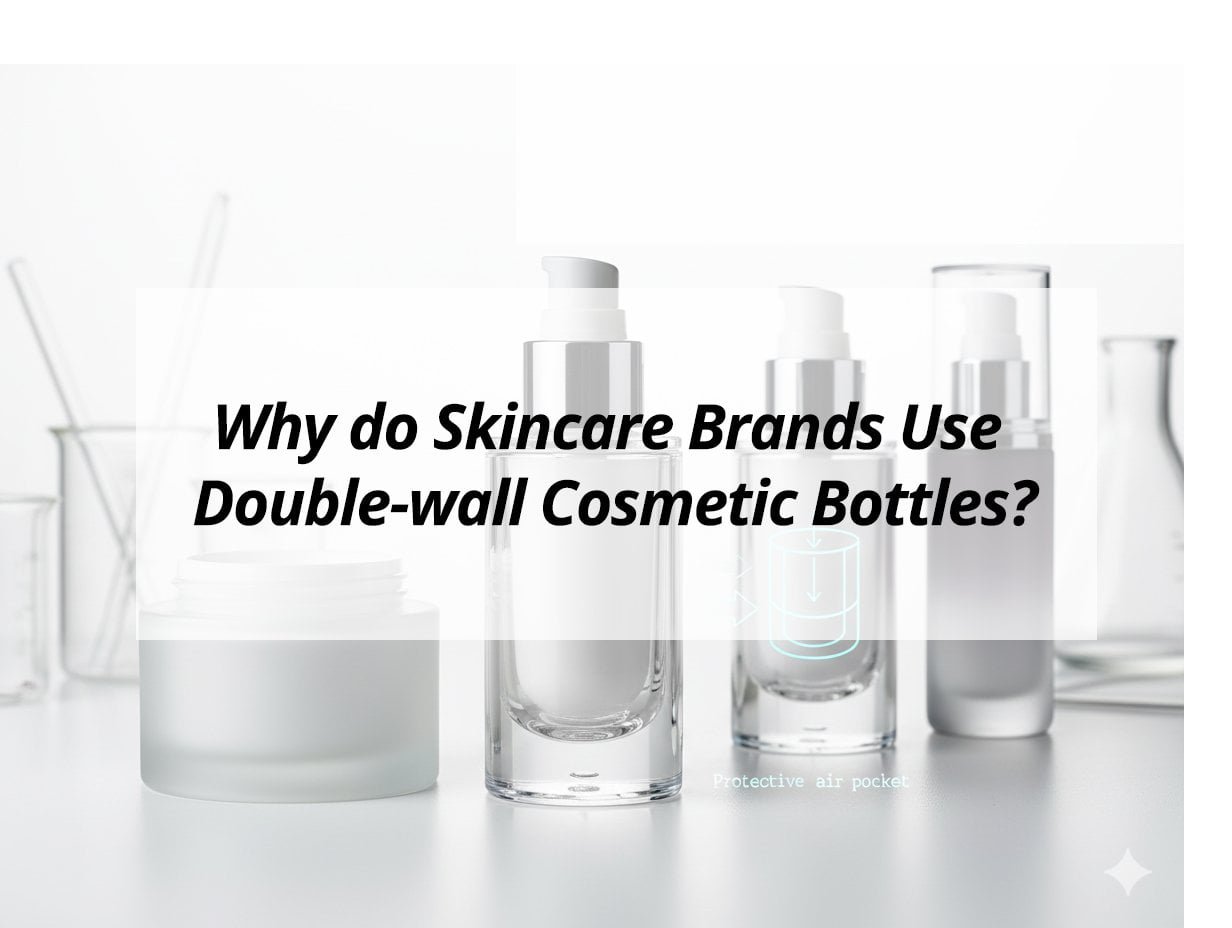
Have you noticed some skincare products come in thick, heavy bottles? They often look very luxurious. These are usually double-wall cosmetic bottles. Why do brands choose this specific type of packaging? What benefits does it offer for skincare?
Skincare brands use double-wall cosmetic bottles primarily for enhanced product protection, a premium aesthetic, and improved durability. The dual-layer construction offers better insulation against temperature changes and impact, preserving formula integrity. It also creates a substantial, high-end feel that communicates quality and luxury to consumers, justifying a higher perceived value for the product.
Packaging choice impacts product safety and brand. We explore double-wall bottles' benefits and market advantages.
What are the different types of skin care containers?
Skincare products come in many forms. So do their containers. Walk into any beauty store, and you will see a huge variety. But what are the main types of skincare containers1? And why do brands pick one over another for their products?
Different types of skincare containers serve various functions. Common options include jars, bottles (single-wall and double-wall), tubes, airless pumps, and dropper bottles. Each type is chosen based on the product's formula, viscosity, required protection from air or light, dispensing method, and desired aesthetic. The right container ensures product stability, hygiene, and user convenience.
Common Skincare Container Types
Each container type has unique features. These make it suitable for different kinds of skincare products.
- Jars: Often used for thick creams, balms, and masks. They allow easy access to the product.
- Bottles (Single-wall): Standard for toners, serums, or lotions. They are typically lighter and more cost-effective.
- Tubes: Great for lotions, cleansers, or eye creams. They are hygienic and allow for controlled dispensing.
- Airless Pumps: Ideal for sensitive formulas. They prevent air exposure, maintaining product freshness.
- Dropper Bottles: Used for serums or oils. They allow for precise application of small amounts.
Factors Influencing Container Choice
Brands consider several things when choosing packaging. This ensures the product stays effective and safe.
| Factor | Consideration | Container Type Example |
|---|---|---|
| Product Formula | Viscosity, sensitivity to air/light, active ingredients | Airless pump for Vitamin C serum |
| Hygiene | Minimizing contamination during use | Tubes and airless pumps |
| Dispensing Method | How the user will get the product out | Dropper for precise oil application |
| Aesthetics/Brand Image | Desired look and feel of the product | Double-wall bottle for luxury cream |
| Cost & Sustainability | Budget constraints and environmental impact | PET bottle for mass-market lotion |
The makeup bottle category also includes specific designs for foundations or primers. These might have pumps or unique applicators. The chosen container always aims to protect the formula.
Which skincare brand has the best packaging?
"Best" can mean many things. It can be about luxury, sustainability, or pure function. When we talk about skincare packaging, what makes it "the best"? Is there a brand that consistently excels in its packaging choices?
Determining the "best" skincare packaging depends on individual priorities, whether they are luxury aesthetics, sustainable practices, or optimal product protection. Brands often praised for packaging excellence include Aesop for minimalist, apothecary-inspired designs; Tatcha for elegant, culturally rich aesthetics; and Drunk Elephant for colorful, functional airless pumps. Each excels in different aspects, balancing visual appeal with practicality.
Defining "Best" in Skincare Packaging
What makes packaging stand out? It is often a mix of several key elements.
- Aesthetics: Does it look appealing? Does it match the brand's image?
- Functionality: Is it easy to use? Does it dispense the product well?
- Protection: Does it keep the product safe from light, air, or contamination?
- Sustainability: Is it refillable, recyclable, or made from recycled materials?
Examples of Noteworthy Packaging
Let us look at brands known for their packaging. They show different strengths.
| Brand Example | Packaging Highlight | Primary Benefit to Consumer |
|---|---|---|
| Aesop | Amber glass bottles, minimalist labels | Apothecary feel, protects from light, sophisticated |
| Tatcha | Elegant, heavy jars, unique dispensing tools | Luxurious experience, beautiful display |
| Drunk Elephant | Colorful airless pumps, bright designs | Hygienic, protects sensitive ingredients, playful |
| Kiehl's | Simple, utilitarian bottles and jars | Focus on product, clear labeling, functional |
These brands show how packaging is a key part of the product experience. Good packaging protects the formula. It also communicates brand values.
Is it better to use skincare products from the same brand?
Many skincare brands offer full lines of products. They have cleansers, serums, and moisturizers all under one name. Should you use products from only one brand? Or is it okay to mix and match items from different companies?
Using skincare products from the same brand is often recommended because products within a line are formulated to work synergistically. They share compatible ingredients and address specific concerns in a coordinated manner. However, it is not strictly necessary. Mixing and matching products from different brands is acceptable if individual products suit your skin's needs and their active ingredients do not conflict.
Benefits of Using a Single Brand Line
When products are from the same brand, they are often designed to complement each other.
- Ingredient Compatibility: Formulas are made to work together. This reduces the risk of irritation.
- Targeted Results: A full line usually targets specific skin concerns. Using all products can give better overall results.
- Simplified Routine: It can be easier to follow a routine when all products are from one brand.
When to Mix and Match
Sometimes, your skin needs different things. Mixing products can be a good strategy.
- Specific Needs: You might love one brand's cleanser but prefer another's serum.
- Ingredient Focus: You may seek a specific ingredient (e.g., salicylic acid) that one brand does better.
- Trial and Error: Finding what works best for your skin often involves trying different products.
Ultimately, the best approach is what works for your skin. Pay attention to how your skin reacts. This is more important than brand loyalty.
What is the best plastic for cosmetics?
Plastic is everywhere in cosmetic packaging. It is lightweight, versatile, and often affordable. But not all plastics are equal. For cosmetic packaging, some types are much better than others. What then is the best plastic for cosmetics?
The "best" plastic for cosmetics depends on the product formula, desired aesthetics, and sustainability goals. PET (polyethylene terephthalate) and PP (polypropylene) are widely used due to their barrier properties, chemical resistance, and recyclability. HDPE (high-density polyethylene) is common for squeezable bottles. SAN (styrene-acrylonitrile) and ABS (acrylonitrile butadiene styrene) offer clarity and rigidity for premium packaging.
Key Properties of Plastics for Cosmetics
Different plastics have different strengths. These properties guide packaging choices.
- Barrier Properties: How well does it stop air, light, or moisture from getting in or out? This protects the product.
- Chemical Resistance: Will the plastic react with the cosmetic formula? This is vital for product stability.
- Clarity: Is the plastic clear, opaque, or translucent? This affects how the product is presented.
- Durability: How strong is it? Will it break easily if dropped?
- Recyclability: Can it be easily recycled after use?
Common Plastics and Their Uses
Let us look at some common plastics used for makeup bottle and skincare packaging.
| Plastic Type | Key Characteristics | Common Cosmetic Uses |
|---|---|---|
| PET (Polyethylene Terephthalate) | Good barrier, clear, lightweight, widely recyclable | Bottles for lotions, shampoos, toners, serums |
| PP (Polypropylene) | Good chemical resistance, durable, opaque/translucent | Jars, caps, tubes, compacts |
| HDPE (High-Density Polyethylene) | Flexible, opaque, good chemical resistance | Squeezable bottles for cleansers, body lotions |
| SAN (Styrene-Acrylonitrile) | High clarity, rigidity, good impact resistance | Premium jars, clear bottles, outer shells |
| ABS (Acrylonitrile Butadiene Styrene) | Strong, rigid, good for plating/finishes | Compact cases, caps, decorative components |
The selection of plastic is a careful process. It balances cost, protection, and aesthetics.
My Insights: The Purpose of Double-wall Cosmetic Bottles in Skincare
Ever wonder why skincare brands opt for double-wall bottles? Discover how these designs protect products and enhance brand appeal.
Skincare brands use double-wall cosmetic bottles2 for enhanced protection and premium aesthetics. Their insulating structure shields products from light and air, preserving sensitive formulations, while offering a luxurious, appealing look that attracts consumers.
Benefits of Double-wall Cosmetic Bottles
Protection Benefits:
-
Insulation and Barrier: The double-wall design creates an air gap, protecting sensitive ingredients from light, air, and temperature fluctuations, crucial for maintaining the efficacy of active components like retinol.
-
Oxidation Prevention: This barrier reduces environmental contamination and oxidation, prolonging shelf life and reducing spoilage.
Aesthetic and Brand Appeal:
-
Luxurious Appearance: Double-wall bottles have a jewel-like quality, enhancing brand prestige and attracting consumers through customizable options in color and finish.
-
Quality Perception: The sturdy, premium feel enhances consumer trust and influences purchase decisions.
Practical Advantages:
| Feature | Benefits |
|---|---|
| Protection | Shields against light and air |
| Aesthetics | Luxurious, customizable design |
| Durability | Shock absorption and thermal insulation |
| Eco-friendly | Refillable and sustainable options |
By integrating these features, double-wall bottles not only protect products but also elevate brand image, aligning with consumer expectations for luxury and sustainability.
Conclusion
Skincare brands use double-wall bottles for protection and a premium feel. Container choice depends on formula, hygiene, and aesthetics. While single-brand use has benefits, mixing products is fine. PET and PP are common plastics, selected for specific cosmetic needs.