
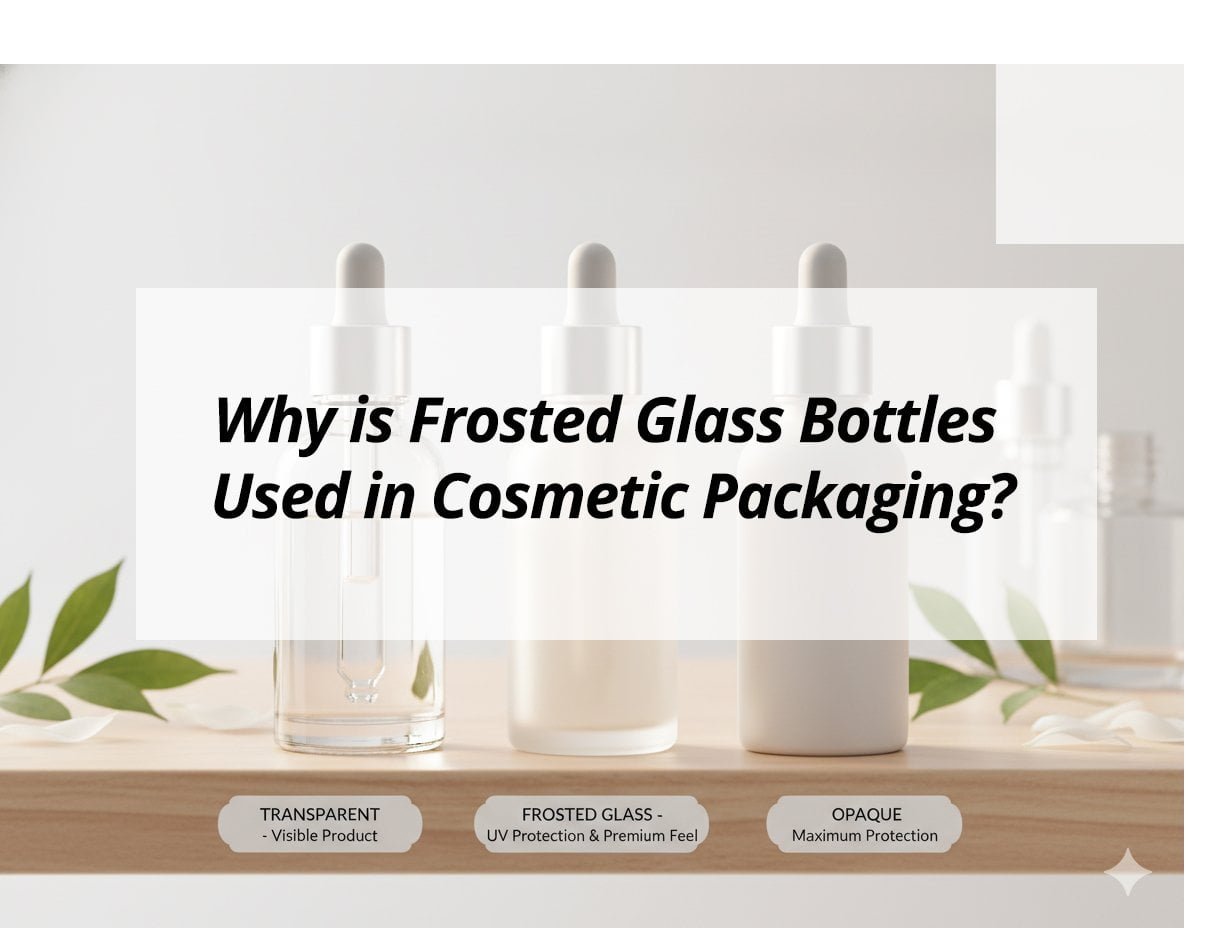
In the world of cosmetics, packaging is more than just a container. It plays a crucial role in user experience and product preservation.
Frosted glass bottles in cosmetic packaging prevent damage to light-sensitive formulations, ensuring product efficacy and longevity. Their elegant, matte appearance also boosts brand image, appealing to discerning consumers searching for high-quality products. This dual function makes them a top choice for premium cosmetic lines.
Choosing the right packaging can significantly affect the perception and longevity of cosmetics. Understanding why frosted glass bottles are so favored can guide better packaging decisions.
What is the purpose of frosted glass?
Frosted glass is more than just an aesthetic choice. It serves a functional purpose in protecting cosmetics, making it a top choice for many brands.
The purpose of frosted glass is to diffuse light, which reduces UV exposure and protects sensitive formulations. This ensures that the product remains effective and stable over time.
| Feature | Benefit |
|---|---|
| Stylish Design | Provides a sophisticated look that stands out on shelves |
| Functional Protection | Safeguards product efficacy by blocking degrading light |
| Light-Scattering Property | Achieves dual role of style and protection through texturing |
Key Benefits of Frosted Glass
- UV Protection: Limits light exposure to preserve the product.
- Aesthetic Appeal: Enhances product attractiveness with a luxurious finish.
- Durable Structure: Offers sturdiness and reduces the risk of breakage.
Frosted glass bottles are integral to luxury cosmetics because they provide these significant advantages.
What is a frosted glass bottle?
In cosmetics, the type of glass used can directly influence product quality and consumer perception. Frosted glass stands out for particular reasons.
A frosted glass bottle is a glass container with an etched surface that gives it a matte, opaque appearance. This design not only protects contents from light but also elevates the product's visual appeal.
- Creating the Frosted Finish: Achieved through sandblasting or acid etching, giving the glass a textured surface that scatters light and blocks UV rays.
- Enhanced Functionality: The textured finish protects product integrity, boosting both functionality and aesthetics.
- Marketing Advantage: The elegant appearance of frosted glass serves as a strong marketing tool, enhancing brand image while ensuring product preservation.
How Frosted Glass is Made
- Etching: Using acid or sand to create a matte surface.
- Coating: Applying materials to reinforce light diffusion.
These methods enhance the robustness and luxury quotient of the packaging.
Why are serums in glass bottles?
Serums are often high-value products that demand exceptional preservation and presentation. Glass is a top choice for these formulations.
Serums are packaged in glass bottles to ensure product stability and integrity. Glass is non-reactive, preventing contamination and preserving the serum's active ingredients.
Serums often contain potent active ingredients that require stability. Glass provides this stability by being non-porous and chemically inert, meaning it won’t react with the sensitive ingredients. This ensures no contamination occurs, maintaining the product's efficacy. Moreover, glass is impermeable, safeguarding the ingredients from external elements. Using glass also communicates quality and care, which is pivotal for a product like serum that often comes at a premium price point and promises tangible results to the consumer.
Considerations for Serum Packaging
- Chemical Inertness: Ensures no reactions with active ingredients.
- Transparency: Allows visibility while conveying purity.
- Perceived Value: Glass indicates a high-quality product.
Opting for glass in serum packaging emphasizes a commitment to quality and sustainability.
What are the benefits of glass bottle packaging?
Glass is not only a choice for luxury cosmetics but is also valued for practical reasons. Understanding these can aid in informed packaging decisions.
The benefits of glass bottle packaging include its inert nature, ability to maintain product integrity, and premium perception in the market. Glass is also recyclable, promoting sustainability.
Glass packaging offers unmatched protection due to its impermeable nature, which keeps products safe from external contaminants. Its durability ensures the contents are preserved over time, reducing waste from expired products. Additionally, glass's transparency allows consumers to see the product, enhancing trust. Beyond function, glass holds a premium appeal, often associated with quality and care. Importantly, its recyclability aligns with the growing consumer demand for sustainable practices.
Pros of Using Glass Bottles
- Product Integrity: Maintains freshness and potency.
- Environmental Impact: Highly recyclable, reducing carbon footprint.
- Market Appeal: Signals luxury and quality assurance.
Glass bottle packaging presents a comprehensive solution that meets multiple consumer and market needs.
My insights: The Frosted Glass Bottles Used in Cosmetic Packaging
Wondering why frosted glass is a popular choice in skincare packaging? Discover its protective and aesthetic benefits, elevating product appeal and ensuring formula longevity.
Frosted glass bottles are favored in cosmetic packaging for their UV protection, ensuring the stability of light-sensitive products. They offer a luxurious, non-reactive, and customizable design, enhancing brand perception while masking fingerprints for a clean look. Additionally, frosted glass is eco-friendly, being fully recyclable and reusable.
The Multifaceted Benefits of Frosted Glass Packaging
Protection and Durability:
-
UV Protection: Frosted glass acts as a barrier against UV rays, safeguarding light-sensitive ingredients, such as essential oils and serums, from degradation, which helps to extend product shelf life.
-
Formulation Integrity: Glass prevents chemical interactions and odor absorption, ensuring the stability of the product's formulation over time.
-
Durability: Withstood stresses from shipping and handling, frosted glass offers a robust packaging solution.
These combined benefits make frosted glass an ideal choice for maintaining the quality and longevity of cosmetic products.
Aesthetic and Branding Advantages:
Frosted glass provides a matte, sophisticated texture that enhances the perceived luxury of cosmetic products. It conceals fingerprints better than clear glass, maintaining a pristine appearance. Brands can customize frosted bottles with colors, printed designs, and logos to align with their identity, leveraging the bottle’s aesthetics to enhance shelf appeal and consumer attraction.
Sustainability and Versatility:
As a sustainable choice, frosted glass supports eco-conscious packaging trends. It is fully recyclable and reusable, offering a greener alternative to plastic. Its versatility accommodates various dispensing mechanisms, such as droppers, pumps, and sprays, making it suitable for different cosmetic products like lotions and fragrances.
| Feature | Benefits |
|---|---|
| UV Protection1 | Extends shelf life by preventing degradation |
| Aesthetic Appeal2 | Provides a premium, elegant, fingerprint-resistant look |
| Sustainability | Recyclable and reusable, supporting eco-friendliness |
| Versatility | Compatible with multiple dispensing methods |
Understanding the multifaceted benefits of frosted glass empowers brands to make informed choices, aligning packaging decisions with product protection, aesthetic appeal, and sustainability goals.
Conclusion
Frosted glass bottles combine functionality and aesthetics, making them ideal for cosmetic packaging. Their ability to protect, preserve, and enhance product appeal is unmatched.