Skincare packaging is harder to choose in 2026. Brands need lower-waste materials, reliable formula protection, and an attractive design, but every change brings new trade-offs.
The key skincare packaging trends for 2026 are recyclable mono-material designs, convenient refill systems, airless and precision dispensers, and minimalist premium packaging with better product information. Successful packaging must protect the formula, feel easy to use, meet market requirements, and support credible sustainability claims.
I see a clear shift from decoration alone toward packaging that performs well from factory filling to the customer's last use. Here is how I would assess the four trends before selecting bottles, pumps, and jars for a new skincare line.
Why Are Sustainable and Mono-Material Materials Becoming More Important in 2026?
Sustainable skincare packaging can look simple on a product page, but real improvements depend on the entire container, not just the resin used for its bottle.
In 2026, brands are moving toward lighter packaging, recycled-content options, and mono-material components that may be easier to sort and recycle. Yet a bottle marked PP or PET is not automatically recyclable as a complete pack. Pumps, labels, coatings, and local recycling systems still matter.
Design for Recycling, Not Just a Material Claim
I would start with a bill of materials for every component: bottle, cap, actuator, pump, gasket, label, and decoration.
A mono-material design reduces the variety of materials, but it does not remove the need to check how the finished package behaves in real recycling streams. A PP bottle with a mixed-material pump can pose a different challenge from a PP bottle with a compatible closure. The best choice depends on the recycling guidance and collection infrastructure in the target market.
Post-consumer recycled plastic, often called PCR, is another option. I would check its declared recycled content, consistency, color, odor, and suitability for the intended skincare formula.
PCR percentage alone does not prove a package is safer or environmentally better. Brands should evaluate supply consistency and use an environmental assessment when making comparative claims.
Why Regulation Is Moving Into Packaging Specifications
The EU Packaging and Packaging Waste Regulation began to apply on 12 August 2026. Its requirements have different implementation dates, including future recyclability and recycled-content provisions.
For brands selling into the EU, packaging selection now calls for stronger material records and market-specific compliance checks, not a blanket claim that every new rule took effect at once.
| Packaging Option | Potential Benefit | What I Would Verify |
|---|---|---|
| Mono-material PP or PE components | Simpler material composition | Full assembly and local recycling compatibility |
| PCR plastic bottles | Use of recycled feedstock | Recycled-content evidence and formula compatibility |
| Lightweight bottles and jars | Lower material use per unit | Drop resistance, sealing, and product protection |
| Reduced decoration and secondary packs | Fewer unnecessary components | Shelf presentation, labeling, and transport protection |
For me, the 2026 shift is toward measurable specifications. Claims such as "eco-friendly" are weaker than an accurate material list, verified content information, and clear disposal instructions.
How Are Refillable Skincare Packaging Systems Changing Product Design?
A refillable jar may look appealing, but buyers will not use it repeatedly if the replacement process feels messy, costly, or confusing.
Refillable skincare packaging is evolving from a decorative reusable container into a complete system. Brands are developing replaceable cream-jar inserts, refill pouches, and reusable pump bottles. Convenience, hygiene, stable product supply, and a clear price benefit determine whether customers return for another refill.
Refills Need to Work in Everyday Routines
The Sustainable Packaging Coalition published a skincare refill study in February 2026 based on responses from 1,344 US skincare users. It highlighted convenience, availability, and easy handling as major drivers.
In a separate European personal-care survey, Amcor reported that 66% of respondents had bought a refill pouch during the previous year. That survey covered products such as shower care, haircare, and handwash, so I would not treat its result as a skincare-only purchase rate.
I would choose the refill format to match the product's texture and expected purchase frequency.
A replacement inner cup can suit facial cream. A pouch may fit lotion or cleanser if consumers can transfer the liquid cleanly. A reusable pump bottle can be practical for products purchased often, provided that repeated use does not compromise the dispenser or product quality.
Test the Complete Refill Experience
Before approving production, I would check whether a consumer can open the main container, insert or pour the refill, close it correctly, and understand which part should be disposed of.
For a refillable airless system, I would also verify whether the product-contact pathway is replaced or reused and whether that arrangement is suitable for the formula.
A refill pack should be evaluated through repeated opening and closing, leak tests, hygiene assessment, compatibility testing, and appropriate instructions.
Brands should also compare the material and transport impacts of the original container plus its expected number of refills. A heavy reusable jar only delivers its intended waste benefit when customers actually keep using it.
My priority would be to make the second purchase easier than the first.
A familiar format, reliable availability, and a straightforward replacement process are more useful than an elaborate refill concept that looks impressive but is hard to operate.
Why Are Airless Pumps and Precision Dispensing Formats Growing in 2026?
An attractive bottle cannot rescue an unstable serum. Packaging must support the formula, deliver a predictable dose, and remain comfortable to use.
Airless dispensers and precision applicators are gaining attention because skincare products increasingly focus on targeted application and sensitive formulas. Airless systems can reduce routine exposure of the product to outside air, while measured pumps and specialized tips improve control. Their benefits must still be validated with the actual formula.
Match the Dispenser to the Formulation
I would start by discussing the formula with the development team.
Some serums include ingredients that are sensitive to air, light, or changes in storage conditions. An airless piston bottle or bag-based system may reduce exposure during normal use, but "airless" does not mean oxygen-free, sterile, or guaranteed to extend shelf life.
An opaque bottle may be more suitable than a clear one for certain light-sensitive ingredients, but a compatibility and stability program is still required.
A dropper offers a familiar premium experience for liquid serums, but opening it repeatedly can expose the product to air and user handling.
A metered pump may offer more consistent dispensing for lotions and creams. A narrow tip or controlled applicator can be useful for small treatment areas.
I would select the mechanism based on viscosity, intended dose, hygiene expectations, and consumer behavior rather than appearance alone.
Performance Checks Buyers Should Request
| Test Area | Practical Question |
|---|---|
| Formula compatibility | Does the formula affect the bottle, gasket, pump, or finish? |
| Dispensing accuracy | Is the delivered amount consistent across the pack's use? |
| Evacuation and priming | How easily does the pump start, and how much product remains? |
| Leak and transport resistance | Does the filled pack survive handling and shipping conditions? |
| Stability and light protection | Does the finished pack maintain required product quality? |
I also consider the sustainability trade-off.
A complex airless assembly can protect a valuable formula, yet it may use more parts than a simple bottle.
In 2026, suppliers are developing simpler and more mono-material dispensing structures, but actual recyclability depends on the final design.
I would avoid choosing a pump based only on its environmental description or visual style.
Which Minimalist, Premium, and Smart Packaging Designs Stand Out in 2026?
Premium skincare packaging is changing. Brands still need a strong shelf presence, but unnecessary weight and complicated decoration are harder to justify.
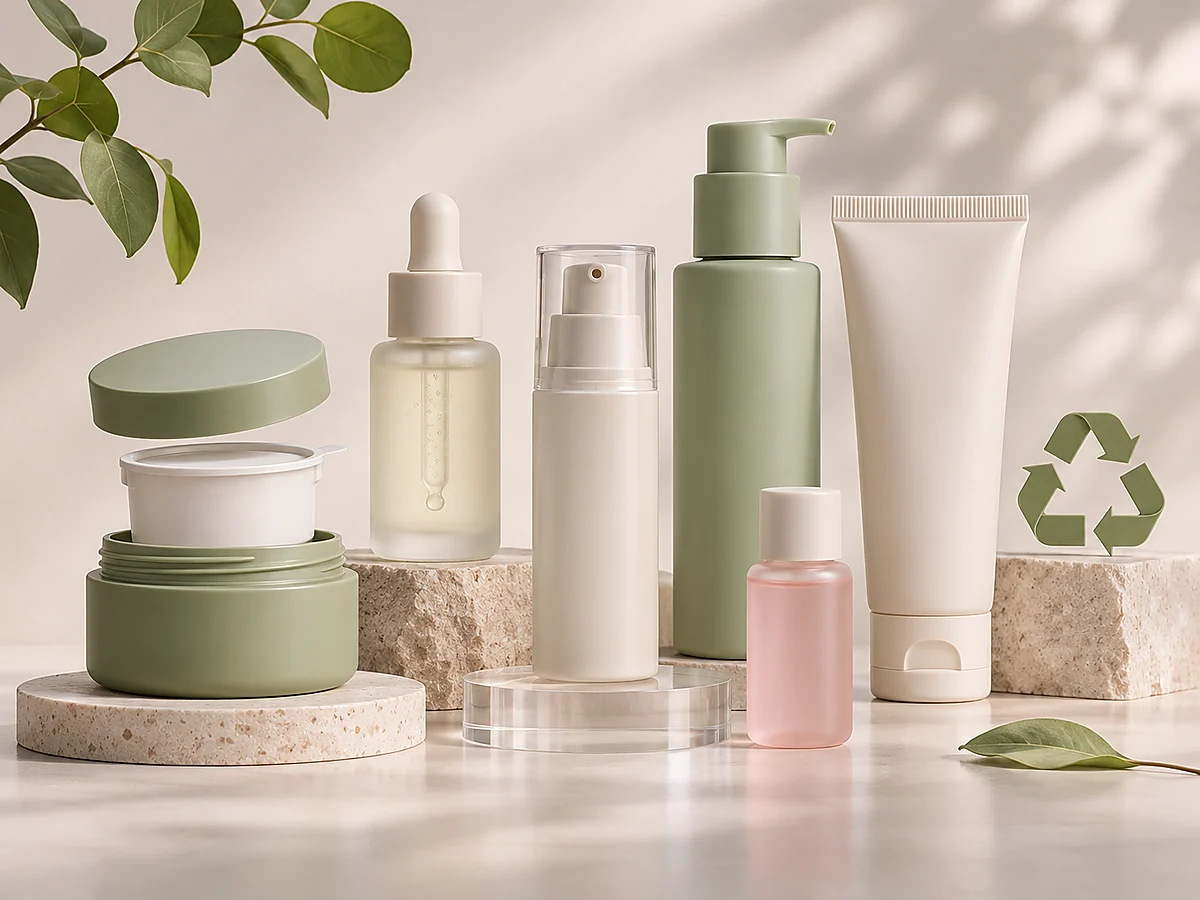
The 2026 design direction favors clean shapes, calming colors, tactile finishes, lighter premium packaging, and useful digital information. Brands can create a distinctive identity through proportions, surface texture, dispensing quality, and consistent labeling instead of relying on heavy multi-layer containers or excessive decoration.
Quiet Luxury With a Practical Purpose
I see a stronger case for restrained color palettes, elegant bottle shapes, and thoughtful surface finishes.
Soft green, warm neutrals, muted pink, and other calm shades can suit skincare products built around daily routines.
A consistent silhouette across cleanser, toner, serum, and cream packaging can make a product family easier to recognize. Consumers can also distinguish products through clear labels and simple color coding.
A premium impression does not always require thick walls, weighted caps, or extra boxes.
I would compare a heavier decorative pack with a lighter alternative that still feels stable in the hand.
Details such as a controlled pump action, a secure closure, a clean label, and a good grip often shape how the product feels during daily use.
Smart Details Should Help, Not Distract
QR codes and, for some products, NFC features can connect users with ingredient information, product instructions, traceability records, or recycling guidance.
These tools are useful when the content stays current and is accessible. They do not replace legally required labeling, and they should not turn a simple skincare routine into an unnecessary digital task.
I would also consider accessibility.
Readable typography, adequate contrast, caps that are easy to handle, and clear dispensing instructions can serve a wider group of users.
Travel-size or on-the-go formats can improve convenience, but smaller packs may increase packaging used per milliliter, so their environmental benefit should not be assumed.
For a 2026 product launch, I would invest in one or two distinctive design features, then check whether every finish, coating, and added component supports the brand's performance, cost, and recycling goals.
Minimalist packaging works best when simplicity is engineered into the structure, not applied as a visual trend alone.
My Insights: What Are the Trends in Skincare Packaging for 2026
Skincare brands face increasing pressure to balance sustainability, product protection, and premium design. Following packaging trends without proper testing can lead to unnecessary costs and performance problems.
I believe the most important skincare packaging trend in 2026 is the combination of sustainable materials, refillable systems, airless technology, and minimalist design. However, successful packaging must go beyond appearance. Brands should focus on formula compatibility, practical usability, verified environmental claims, and reliable manufacturing performance to achieve long-term value.
How I Evaluate the Most Important Skincare Packaging Trends
From my perspective, skincare packaging should be evaluated as a complete system rather than a collection of individual features. A lightweight plastic bottle may reduce material consumption, but its value becomes questionable if it cannot protect the formula or survive transportation. Similarly, refillable packaging may offer environmental benefits, but customers must find the refill process convenient enough to use repeatedly.
I also believe airless packaging deserves particular attention in 2026. It can reduce routine exposure to outside air and improve dispensing control for certain formulations. However, the effectiveness of an airless system depends on its internal structure, pump reliability, and compatibility with the skincare product. Brands should never assume that an airless design automatically guarantees longer shelf life.
When comparing packaging options, I would focus on four practical considerations:
| Packaging Trend | My Key Consideration |
|---|---|
| Sustainable Materials | Verify material composition, recyclability, and environmental claims. |
| Refillable Packaging | Evaluate refill convenience, hygiene, and repeated-use performance. |
| Airless Packaging | Test formula compatibility, dispensing consistency, and product protection. |
| Minimalist Premium Design | Balance visual appeal, manufacturing costs, and functional reliability. |
I would also recommend requesting production-intent samples, component specifications, relevant test reports, and realistic lead times before making a purchasing decision. These details are especially important for brands planning large-volume production or international distribution.
Ultimately, I believe the strongest skincare packaging solutions for 2026 will combine sustainability, functionality, and commercial practicality. The best packaging is not necessarily the most innovative-looking option. It is the solution that protects product quality, improves the customer experience, and supports the brand's long-term development.
Conclusion
In 2026, skincare packaging succeeds by combining recyclable design, convenient refills, reliable dispensing, and restrained aesthetics with tested performance and clear material documentation.