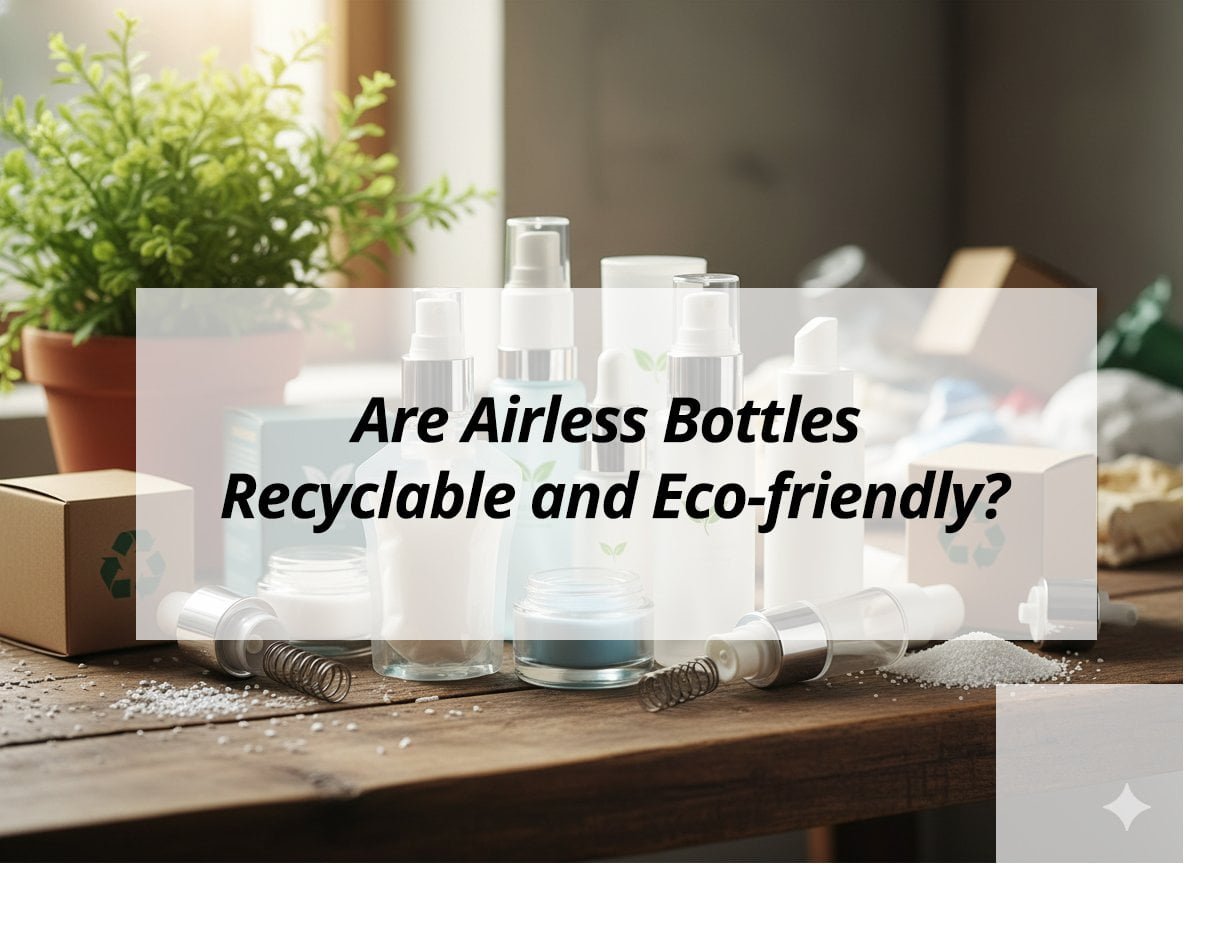
Are you a brand owner or a buyer looking for cosmetic packaging solutions? Do you consider the environmental impact of your packaging choices? Understanding the recyclability and eco-friendliness of airless bottles is a common concern in the industry.
Airless bottles are frequently chosen for cosmetic products. They protect sensitive formulas from air and contaminants. This design helps maintain product integrity and extend shelf life. However, their construction often involves multiple materials, such as different plastics, metals, and sometimes glass. This multi-material composition can complicate the recycling process through conventional methods.
Determining the true environmental footprint of packaging can be complex. The industry is continuously seeking sustainable options that also meet product protection and aesthetic requirements. This article explores the recyclability of airless bottles and discusses other eco-friendly packaging alternatives available today.
What is surprisingly not recyclable?
Are you working towards more sustainable packaging solutions? This is a key objective for many businesses today. However, some items commonly perceived as recyclable do not get recycled through standard processes. This can be an unexpected finding for many.
Many everyday items are often not recyclable in typical curbside programs. This is primarily due to their composite materials or small physical size. For example, disposable coffee cups contain a plastic lining. This lining provides waterproofing but makes the cups difficult to process in standard paper recycling. Similarly, plastic bags and films can clog and damage recycling machinery, making them problematic for most facilities.
Common Non-Recyclable Items
Understanding which items are generally not recycled helps in making more informed packaging decisions. Here is a table of common items and the reasons they are often rejected by recycling centers:
| Item | Reason for Non-Recyclability (Commonly) |
|---|---|
| Coffee Cups (disposable) | Internal plastic lining complicates paper pulp separation. |
| Plastic Bags and Film | Causes machinery jams and are made of low-value, difficult-to-process plastics. |
| Styrofoam | Lightweight and bulky, leading to high transportation costs and low market demand. |
| Pizza Boxes (greasy) | Food grease contaminates paper fibers, making them unsuitable for recycling. |
| Small Plastic Items (e.g., caps) | Too small for sorting equipment; often fall through screens into residue. |
| Multi-Material Packaging | Different material types (plastic, metal, paper) are difficult to separate for reprocessing. |
Challenges of Mixed Materials
Many cosmetic packaging components fall under the "mixed material" category. Consider a typical lotion pump. It consists of a plastic bottle, a metal spring, and various small plastic pump parts. These diverse materials are rarely separated before recycling. This design often renders the entire unit non-recyclable in most systems. Even items like toothpaste tubes, which combine plastic and aluminum, face similar recycling challenges.
The Importance of Size in Recycling
Small item size presents another significant recycling hurdle. Tiny plastic caps or miniature bottles are often too small for the automated sorting equipment in recycling facilities. They frequently fall through the sorting screens and end up in landfills, even if the material itself is technically recyclable. This issue is particularly relevant for travel-sized cosmetic packaging or product samples.
Contamination Concerns
Product residue can also pose a problem for recycling. A plastic container with significant product remaining inside can contaminate an entire batch of otherwise recyclable materials. For effective recycling, containers typically need to be rinsed clean. However, achieving complete cleanliness with some cosmetic product residues can be difficult, making these items unsuitable for recycling.
Are nasal spray bottles recyclable?
When considering packaging for nasal spray products, the question of recyclability frequently arises. This is an important consideration as businesses and consumers increasingly prioritize sustainable options.
Nasal spray bottles are generally challenging to recycle. Their construction typically involves multiple distinct components. A standard nasal spray bottle features a plastic bottle, a plastic pump mechanism, a metal spring, and a cap. In some cases, the bottle itself may be made of glass. This combination of different materials makes it difficult for standard recycling facilities to process effectively, as they lack the means to easily separate these components.
Components of a Nasal Spray Bottle
To understand the recycling challenges, it is helpful to identify the typical components:
- Bottle Body: Often composed of PET or HDPE plastic, which are generally recyclable when clean and separated. Glass bottles are also used and are recyclable.
- Pump Mechanism: This is the most intricate part, containing various small plastic elements, a metal spring, and sometimes a glass ball. These components are usually integrated and difficult to disassemble.
- Dip Tube: A thin plastic tube extending from the pump to the bottom of the bottle.
- Cap: Typically made from polypropylene (PP) plastic.
Why Recycling is Difficult
The primary obstacle to recycling nasal spray bottles is the pump assembly. The small, complex parts and the blend of plastic and metal make it nearly impossible to recycle as a single unit. Even if the bottle itself is made from a recyclable plastic like PET, the attached pump renders the entire item non-recyclable in most curbside collection programs.
Strategies for Environmental Responsibility
What options exist for addressing the environmental impact of nasal spray bottles?
- Consult Local Guidelines: Always verify recycling capabilities with local waste management services. Some specialized centers may accept certain components if they are fully separated.
- Manual Disassembly (Limited Applicability): For dedicated individuals, disassembling the bottle to separate the plastic body from the pump and cap might be possible. The plastic bottle could then be recycled if accepted locally. This approach is generally not practical for widespread application.
- Specialized Collection Programs: Explore specialized take-back programs or collection services, such as those offered by TerraCycle. These programs focus on recycling hard-to-process items, including complex cosmetic and healthcare packaging.
- Consider Mono-Material Designs: Manufacturers can seek suppliers who offer mono-material pumps. These are constructed from a single type of plastic. This design simplifies the recycling process for the entire packaging unit.
How to reuse an airless pump bottle?
Do you have empty airless pump bottles? Before discarding them, consider their potential for reuse. Reusing packaging is an effective strategy for reducing waste and extending the life cycle of materials.
Reusing airless pump bottles contributes to waste reduction. Their design, which protects products from air, makes them suitable for various applications, such as travel or dispensing small quantities of liquids. For effective reuse, thorough cleaning is essential. Once cleaned, these bottles can be refilled with homemade cosmetic products, travel-sized toiletries, or even craft materials like paints.
Step-by-Step Guide for Reusing
Here is a method for cleaning and preparing airless pump bottles for reuse:
- Empty Contents: Dispense any remaining product completely. For bottles with a visible inner plate, gently push it up to remove residual product.
- Disassemble: Carefully twist off the pump head and unscrew any caps. Separate all removable parts.
- Thorough Rinsing: Wash all components with warm, soapy water. Use a small brush, such as a bottle brush or straw cleaner, to clean the interior of the pump and the dip tube.
- Sterilization (Recommended for Cosmetics): For subsequent cosmetic use, sterilization is advisable. This can be achieved by soaking parts in a diluted bleach solution (1 part bleach to 10 parts water) for several minutes or by boiling them in water for a few minutes. Ensure the plastic material is heat-resistant if boiling.
- Complete Drying: Allow all parts to air dry completely. Any residual moisture can promote bacterial growth if new products are introduced. Place parts upside down on a clean surface.
Applications for Reused Airless Pump Bottles
Once cleaned and dried, airless bottles can serve various new purposes.
| Reuse Application | Description |
|---|---|
| Travel Containers | Ideal for carrying small amounts of shampoo, conditioner, lotions, or cleansers for travel. |
| DIY Cosmetic Storage | Suitable for homemade serums, facial mists, or lightweight lotions. |
| Craft Material Dispensers | Can dispense liquid glues, paints, or glitter solutions for crafting. |
| Hand Sanitizer Holders | Convenient for carrying hand sanitizer in bags or vehicles. |
| Kitchen Liquid Dispensers | Can be used for small quantities of cooking oils or specialty vinegars (ensure material compatibility for food contact). |
Important Considerations for Reuse
- Material Compatibility: Verify that the bottle's material is compatible with the new product being stored. Strong chemicals, for instance, could degrade certain plastics.
- Hygiene Practices: Maintain strict hygiene, especially when reusing bottles for cosmetics or food items. Proper cleaning and sterilization are crucial to prevent contamination.
- Product Viscosity: Airless pumps are most effective with liquids or thin cream formulations. Very thick products may not dispense efficiently.
What is an eco-friendly alternative to plastic bottles?
Are you seeking more sustainable packaging solutions for cosmetic products? Many businesses are actively exploring eco-friendly alternatives to traditional plastic bottles. The goal is to minimize plastic waste and reduce overall environmental impact.
Several effective eco-friendly alternatives to conventional plastic bottles exist. These options often utilize materials that are more readily recyclable, biodegradable, or derived from renewable sources. Glass bottles are a prominent choice, offering infinite recyclability and a premium aesthetic. Another significant alternative is post-consumer recycled (PCR) plastic, which repurposes existing plastic waste and reduces the demand for new virgin plastic.
Overview of Eco-Friendly Packaging Materials
Let's examine some widely adopted sustainable packaging alternatives:
-
Glass Bottles:
- Advantages: Can be recycled repeatedly without loss of quality. Conveys a high-end, luxurious product image. Chemically inert, ensuring no interaction with product formulations.
- Disadvantages: Heavier than plastic, which can increase shipping costs and associated carbon emissions. Fragile, presenting risks of breakage during transport and handling.
- Suitability: Skincare serums, high-quality lotions, essential oils.
-
Post-Consumer Recycled (PCR) Plastic:
- Advantages: Decreases reliance on virgin plastic resources. Supports a circular economy for plastics. Available in common plastic types (PET, HDPE, PP). Maintains similar durability to new plastic.
- Disadvantages: May have higher costs compared to virgin plastics. Sourcing consistent, high-quality PCR material can be complex. Slight variations in color or clarity may occur due to the recycled content.
- Suitability: A wide range of cosmetic products where the lightweight and durability of plastic are desired, combined with a reduced environmental footprint.
-
Aluminum Bottles:
- Advantages: Lightweight and robust. Infinitely recyclable, similar to glass. Provides excellent barrier properties against light and oxygen. Offers a modern and sleek visual appeal.
- Disadvantages: Can be more costly than certain plastic options. Prone to denting more easily than plastic. May require specific internal liners for compatibility with certain product formulations.
- Suitability: Hair care products, body sprays, some lotions, and creams.
-
Biodegradable/Compostable Materials:
- Advantages: Designed to break down naturally under specific conditions, often in industrial composting facilities. Aims to reduce long-term landfill waste. Frequently derived from plant-based renewable resources.
- Disadvantages: Requires access to specialized composting infrastructure, which is not universally available. Can be more expensive than traditional materials. Performance characteristics (e.g., shelf-life, barrier protection) may not match conventional plastics for all product types. Consumer disposal instructions must be very clear to ensure proper composting.
- Suitability: Best for single-use items, product samples, or formulations with shorter shelf lives, where clear and effective disposal guidance can be provided to the consumer.
My Insights: Are Airless Bottles Recyclable and Eco-friendly?
Curious about airless bottles' recyclability and eco-friendliness? Let’s explore their design, material use, and potential environmental impact.
Airless bottles can be recyclable and eco-friendly if designed with mono-materials like PP or PET. They minimize product waste and reduce chemical use, but recyclability varies by local facilities and design specifics.
Evaluating Airless Bottles for Sustainability
Recyclability
Airless bottles can be recyclable, especially when made from mono-materials like PP or PET. These bottles often avoid complex multi-material designs, improving recyclability. However, mixed materials and glued components complicate processing.
Eco-friendly Attributes
- Waste Reduction: The airless design allows nearly complete product usage, reducing waste and extending product shelf life by minimizing air exposure.
- Material Efficiency: Use of PCR (post-consumer recycled) materials enhances eco-friendliness, contributing to a circular economy.
- Refillable Options: Some airless bottles offer refill systems with replaceable inner cartridges, cutting packaging waste.
| Aspect | Airless Bottle Benefits | Challenges |
|---|---|---|
| Recyclability | Mono-material designs are recyclable | Mixed materials pose issues |
| Waste Reduction | Minimizes leftover product | Complex designs complicate reuse |
| Refill Options | Reduces packaging waste | Hygiene concerns with refill |
Conclusion
Airless bottles offer eco-friendly benefits through waste reduction and efficient material use, especially when made with recyclable materials. Choose products labeled as mono-material and consult local recycling guidelines to optimize environmental impact.
Conclusion
The recycling of airless bottles presents challenges due to their multi-material construction. Many everyday items share similar recycling complexities. Reusing these bottles offers a practical approach to waste reduction. For new packaging, alternatives like glass, PCR plastic, and aluminum provide more environmentally friendly options.