Finding the right sunscreen bottle supplier can be a complex task. Many brands face challenges with Minimum Order Quantity (MOQ), pricing structures, and customization needs. This guide aims to simplify the selection process.
Selecting a sunscreen bottle supplier requires a balanced evaluation of several key factors. These include Minimum Order Quantity (MOQ), overall pricing, and available customization options. An ideal supplier effectively combines these elements to meet specific brand requirements and market demands.
This article will explore the critical aspects of supplier selection. It provides a structured approach to making informed decisions for your cosmetic packaging needs. We will examine various considerations to help streamline your procurement process.
Who are the largest sunscreen manufacturers?
A common question in the cosmetics industry concerns the leading sunscreen manufacturers. Brands often seek to identify these major players to understand market dynamics.
The largest sunscreen manufacturers are typically global cosmetic and personal care corporations. Companies such as L'Oréal, Estée Lauder, and Johnson & Johnson hold significant market shares. They possess extensive production capabilities and wide distribution networks.
These large entities primarily focus on the formulation and branding of sunscreen products. Their packaging requirements are often met by specialized suppliers. Understanding this distinction is crucial for identifying the correct type of partner for packaging needs versus product formulation.
Understanding Major Players in Sunscreen Production
Major sunscreen manufacturers are primarily brand owners. They often outsource the production of their packaging components. This outsourcing strategy allows them to focus on core competencies like product development and marketing.
- Key Global Brands:
- L'Oréal: A dominant force in the beauty industry with a wide range of sunscreen offerings.
- Estée Lauder: Another prominent beauty conglomerate that includes various sunscreen lines.
- Johnson & Johnson: A significant player in consumer health, manufacturing numerous sunscreen products.
These companies influence market trends and demand high standards for both product formulation and packaging quality. Their choice of packaging suppliers reflects a need for reliability and innovation.
The Specialization of Packaging Manufacturing
Sunscreen formulation and packaging manufacturing are distinct fields. Each requires specialized expertise and infrastructure.
Packaging suppliers focus on material science, design, and efficient production.
| Aspect | Sunscreen Manufacturer (Brand Owner) | Packaging Supplier (B2B) |
|---|---|---|
| Primary Role | Product Development, Marketing | Container Design, Production |
| Expertise | Chemistry, Consumer Trends | Material Engineering, Molding |
| Output | Finished Sunscreen Products | Empty Cosmetic Containers |
This division of labor allows each type of company to excel in its specific area. Packaging suppliers provide the necessary containers for finished products.
Strategic Sourcing for Packaging
Brands, regardless of their size, must strategically source packaging. This involves finding suppliers that can meet specific design, quality, and volume requirements. A clear understanding of the market helps in this process.
What is the typical cost to manufacture sunscreen?
Determining the manufacturing cost of sunscreen involves multiple variables. The overall cost is influenced by ingredients, packaging, labor, and operational overheads.
The cost to manufacture sunscreen can vary significantly based on several factors. These include the complexity of the formulation, the quality of ingredients, packaging choices, and production volume. Unit costs are generally higher for smaller batches and decrease with larger production runs.
A thorough understanding of these cost drivers is essential for effective budget planning. Packaging often represents a substantial portion of the total manufacturing expense, making supplier selection critical for cost management.
Deconstructing Sunscreen Manufacturing Costs
Manufacturing sunscreen involves several direct and indirect cost components.
Each element contributes to the final unit price.
- Raw Material Costs:
- Active Ingredients: Such as zinc oxide, titanium dioxide, and various chemical filters, which provide UV protection.
- Inactive Ingredients: Including water, emollients, emulsifiers, and preservatives, forming the product base.
- Specialty Additives: Vitamins, antioxidants, or specific extracts that enhance product features.
The price of these ingredients can fluctuate based on market availability, purity, and sourcing.
The Impact of Packaging on Overall Cost
Packaging is a significant cost factor in cosmetic production. It serves both functional and aesthetic purposes.
- Packaging Material & Type:
- Standard Plastic Bottles (PET/PP): Generally more economical.
- Airless Pump Bottles: Offer enhanced product protection but at a higher cost.
- Specialty Materials (e.g., Glass): Can convey a premium image but incur greater expense.
- Customization Features:
- Decoration Techniques: Printing, hot stamping, or labeling adds to unit costs.
- Unique Designs: Custom molds or complex structures increase initial investment.
Choosing packaging that balances cost-effectiveness with brand image is a key decision for product managers. Suppliers offering a range of customization at competitive prices are valuable partners.
Economies of Scale in Production
Production volume directly impacts the unit cost of manufacturing. Larger orders typically benefit from economies of scale.
| Production Volume | Estimated Unit Cost | Strategic Consideration |
|---|---|---|
| Low (e.g., 1,000) | Higher | Focus on specialized options |
| Medium (e.g., 10,000) | Moderate | Balance cost and flexibility |
| High (e.g., 50,000+) | Lower | Optimize for bulk pricing |
Understanding these cost dynamics helps businesses plan their production runs and negotiate effectively with suppliers. Suppliers offering wholesale pricing often provide better value for larger orders.
What are considered the top 3 sunscreens?
Consumers frequently seek information on highly-rated sunscreens. The definition of a "top" sunscreen often combines efficacy, user experience, and brand reputation.
Identifying the "top 3" sunscreens is subjective and depends on individual criteria. However, widely recognized and highly-rated brands often include EltaMD, Supergoop!, and La Roche-Posay. These brands are frequently cited for their broad-spectrum protection, favorable textures, and consistent performance.
The success of these products is often supported by effective packaging. Packaging plays a vital role in preserving formula integrity and enhancing consumer appeal.
Key Attributes of Top-Tier Sunscreens
Several attributes contribute to a sunscreen's reputation and popularity. It goes beyond mere sun protection factor (SPF).
- Comprehensive UV Protection:
- Broad-Spectrum: Essential for guarding against both UVA (aging) and UVB (burning) rays.
- Recommended SPF: Typically SPF 30 or higher, as advised by dermatologists.
- Sensory Experience:
- Non-Greasy/Lightweight: A comfortable feel is crucial for regular use.
- Invisible Finish: Minimizes white cast, especially important for diverse skin tones.
- Additional Benefits:
- Water-Resistance: Necessary for active lifestyles or humid conditions.
- Formulation for Sensitive Skin: Hypoallergenic or non-comedogenic options.
These product attributes directly influence consumer purchasing decisions and market success.
Packaging Strategies of Leading Sunscreen Brands
Successful sunscreen brands often utilize thoughtful packaging strategies. This includes selecting materials and designs that protect the product and align with brand identity.
- EltaMD: Frequently employs airless pump bottles or simple squeeze tubes. This packaging choice helps maintain the stability of their often sensitive formulations.
- Supergoop!: Known for innovative product textures and diverse packaging formats, including various tubes and pump dispensers. Their packaging often features modern and vibrant aesthetics.
- La Roche-Posay: A brand with a dermocosmetic focus. They typically use functional, clean-designed packaging, often in white or blue, featuring pumps or secure caps.
These examples illustrate how packaging can reinforce product benefits and brand image. Specialized packaging suppliers can replicate or adapt these successful design elements.
How Packaging Supports Brand Excellence
Effective packaging is an integral part of product quality and brand perception. It ensures product integrity and enhances the user experience.
- Product Preservation: Shields the formulation from external factors like air, light, and contamination.
- Consumer Convenience: Designed for ease of use, accurate dispensing, and portability.
- Brand Communication: Visually conveys brand values, product benefits, and premium quality.
Selecting appropriate packaging is a strategic decision that contributes significantly to a product's market acceptance and longevity.
What sunscreens are manufactured in the USA?
The demand for products manufactured domestically, particularly in the USA, is strong among certain consumer segments. This preference is often driven by perceived quality standards and a desire to support local economies.
Numerous reputable sunscreen brands produce their products within the USA. These brands often emphasize their domestic manufacturing processes as a testament to quality control and transparency. Prominent examples include Supergoop!, Blue Lizard, and Coola, alongside a growing number of smaller, independent brands.
While the formulation and filling may occur in the USA, packaging components are frequently sourced globally. Packaging suppliers from various countries offer competitive pricing and a broad range of customization options.
Consumer Motivations for "Made in USA" Products
The "Made in USA" label holds significant appeal for many consumers. This label often implies adherence to higher manufacturing standards and ethical practices.
- Perceived Quality and Safety:
- Regulatory Compliance: Belief in stringent domestic manufacturing regulations.
- Ingredient Traceability: Greater trust in the origin and quality of raw materials.
- Economic Support:
- Job Creation: Desire to contribute to domestic employment.
- Local Industry Growth: Supporting the national economy.
However, the global nature of supply chains means that even domestically manufactured products may contain components sourced internationally.
Examples of USA-Manufactured Sunscreen Brands
Several notable brands produce their sunscreen formulations within the United States.
- Supergoop!: A brand exclusively focused on sun protection, known for its diverse product range and domestic production.
- Blue Lizard: Recognized for its mineral-based sunscreens, with manufacturing operations both in Australia and the USA.
- Coola: Specializing in organic and natural sun care, this brand also maintains manufacturing facilities in the USA.
These brands still require a robust supply chain for their packaging needs, which may extend beyond national borders.
The Global Landscape of Packaging Sourcing
Even for brands committed to domestic product manufacturing, sourcing packaging globally is a common and strategic practice. This approach offers several advantages.
- Cost Efficiency: International suppliers can often provide more competitive pricing due to different production costs.
- Diverse Options: Access to a wider array of design aesthetics, material innovations, and manufacturing techniques.
- Specialized Expertise: Certain regions or suppliers may excel in specific types of cosmetic packaging production.
For instance, manufacturers with extensive injection molding capabilities can efficiently produce a variety of cosmetic containers, from lotion bottles to airless bottles. They can offer customized branding options at scale, serving clients worldwide.
| Sourcing Factor | Product Formulation (e.g., USA) | Packaging Components (Global) |
|---|---|---|
| Primary Driver | Regulatory, Consumer Trust | Cost, Variety, Efficiency |
| Focus | Ingredient Quality, Formulation | Design, Material, Production |
| Benefit | Market Appeal | Supply Chain Optimization |
Global sourcing for packaging allows brands to achieve an optimal balance of cost, quality, and design flexibility, regardless of their product's manufacturing origin.
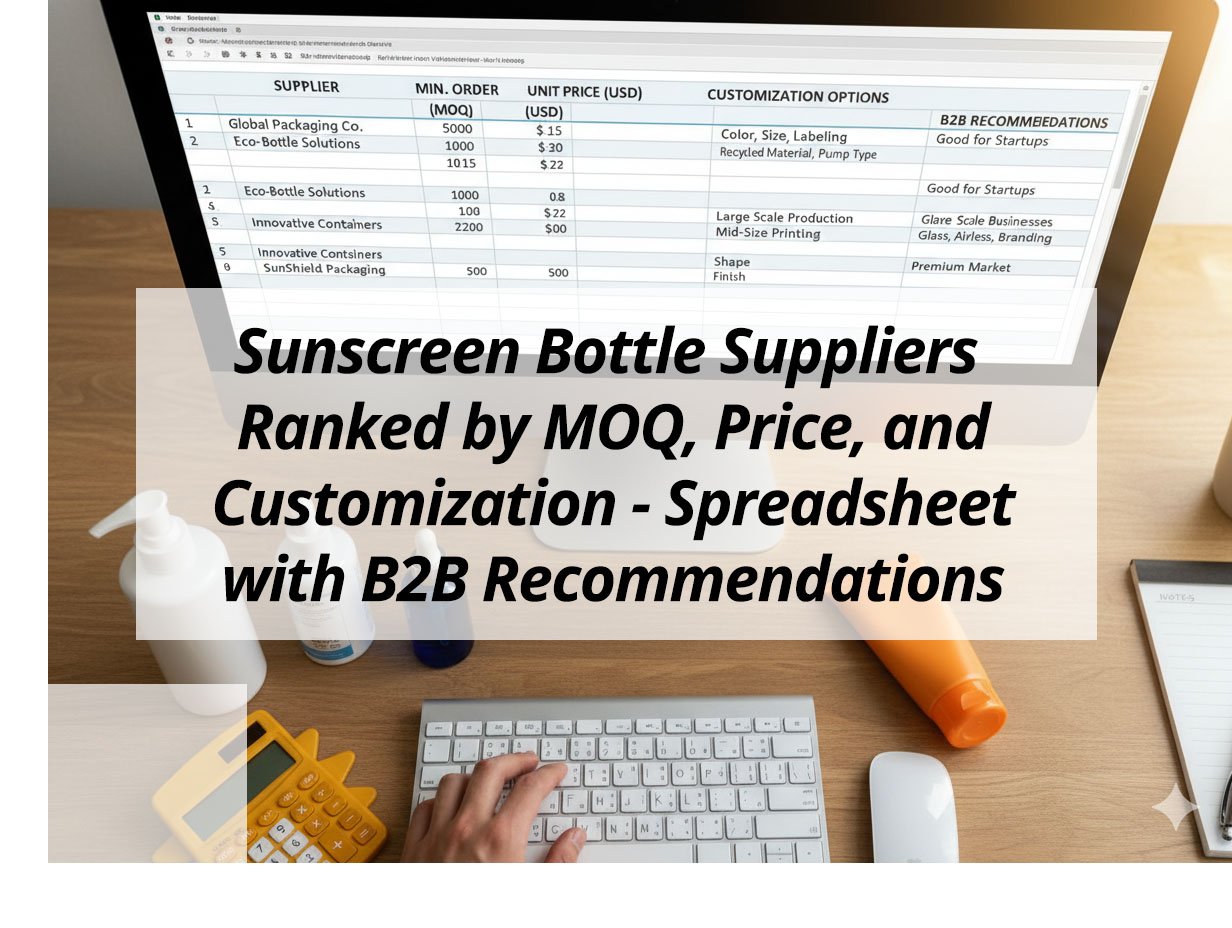
My Insights: Sunscreen Bottle Suppliers Ranked by MOQ, Price, and Customization
Are you struggling to find a sunscreen bottle supplier that matches your MOQ, budget, and branding needs? Ranked suppliers simplify your search for bulk-buy packaging tailored to your business goals.
Top sunscreen bottle suppliers include SamHwa Plastic, Taizhou Bright Plastic, and HCP Packaging. Their rankings are based on MOQ, pricing, and customization capabilities, making it easier for businesses to choose the right fit.
Choosing the Best Sunscreen Bottle Suppliers
1. Low MOQ for Startup Testing
For businesses launching small product batches, suppliers like SamHwa Plastic (MOQ: 500 pcs) and ABC Packaging Direct (MOQ: 500 pcs) provide affordable, high-quality solutions. These options allow startups to validate packaging without committing to large orders.
2. Robust Customization for Branding Needs
Providers such as HCP Packaging and The Packaging Company excel in premium customization, offering luxury features like embossing, UV coating, and airless pump technology. These suppliers target established brands prioritizing high design value.
3. Budget-Friendly Bulk Pricing
For scaling operations, Taizhou Bright Plastic and Shenzhen Zhenghao Plastic deliver affordable options starting at 1,000 pieces with practical customizations, ideal for balancing quality and cost.
4. Premium Options for Large Projects
Suppliers like Yonwoo/PKG Group and Ningbo Gidea Packaging cater to high-volume orders with MOQs of 10,000+ units. They offer innovative packaging formats like multi-layered airless bottles and branded designs for high-capacity production runs.
| Supplier | MOQ | Price | Customization Features | Best Fit |
|---|---|---|---|---|
| SamHwa Plastic | 500 pcs | Moderate | High (UV coating, embossing) | Startups & small tests |
| Taizhou Bright Plastic | 1,000 pcs | Affordable | Medium (variety of shapes) | Medium-scale production |
| HCP Packaging | 10,000 pcs | Premium | Very High (luxury design) | Luxury brands |
| Yonwoo/PKG Group | 5,000 pcs | Moderate | Very High (airless tech) | Established cosmetic brands |
| ABC Packaging Direct | 500 pcs | Affordable | Medium | Affordable startup solutions |
Conclusion
Selecting the right sunscreen bottle supplier depends on your MOQ, price sensitivity, and customization needs. From startup-friendly suppliers like SamHwa Plastic to premium providers like HCP Packaging, this ranked list ensures businesses find the ideal fit, whether launching small batches or scaling operations.
Choosing the Right Sunscreen Bottle Supplier for Your Business Needs
When evaluating sunscreen bottle suppliers, MOQ, price, customization, and scale requirements play a critical role in decision-making. Here's a breakdown:
1. Small-Scale and Startup Solutions
For startups, SamHwa Plastic and ABC Packaging Direct offer low minimum order quantities (starting at 500 pcs) and affordable pricing. These suppliers are excellent for prototyping new products and testing market demand.
2. Balanced Pricing and Customization Options
Suppliers like Taizhou Bright Plastic and Shenzhen Zhenghao Plastic provide affordable pricing with moderate customization options such as logo printing and color variety. Their MOQ figure (1,000 pcs) makes them ideal for small to medium-sized operations scaling early-stage brands.
3. Premium Customization for Established Brands
Luxury brands often benefit from working with HCP Packaging and Yonwoo/PKG Group due to their advanced customization options. These suppliers cater to higher MOQs (5,000–10,000 pcs) and deliver enhanced features like bespoke airless technology, multi-layer designs, and eco-friendly solutions. These are best suited for high-value branding projects and large production capacities.
4. Cost-Efficiency at Scale
High-volume operations should consider Ningbo Gidea Packaging, known for innovative and premium solutions. While these suppliers require MOQs exceeding 10,000 pcs, the per-unit price becomes highly competitive for large-scale production runs.
Here’s a summary of recommendations based on business goals:
| Supplier | MOQ | Estimated Price | Customization Level | Ideal For |
|---|---|---|---|---|
| SamHwa Plastic | 500 pcs | Moderate | High (UV coating, printing, embossing) | Startups and prototyping |
| Taizhou Bright Plastic | 1,000 pcs | Affordable | Medium (design flexibility) | Growing small businesses |
| HCP Packaging | 10,000 pcs | Premium | Very High (luxury finishes, material innovation) | Luxury or premium brands |
| Ningbo Gidea Packaging | 15,000 pcs | Premium | Very High (branded designs, multi-layer packaging) | High-volume productions |
Finding sunscreen bottle suppliers depends on your scale, budget, and branding ambitions. Small MOQs are ideal for startups. For established brands or high-volume productions, investment in premium customization pays off significantly. With careful selection, businesses can enhance sustainability, branding, and product functionality for competitive advantage.
Conclusion
Selecting an appropriate sunscreen bottle supplier demands a comprehensive evaluation. Key considerations include Minimum Order Quantity, pricing structures, and customization capabilities. A strategic choice in packaging partners is vital for product success and market positioning.