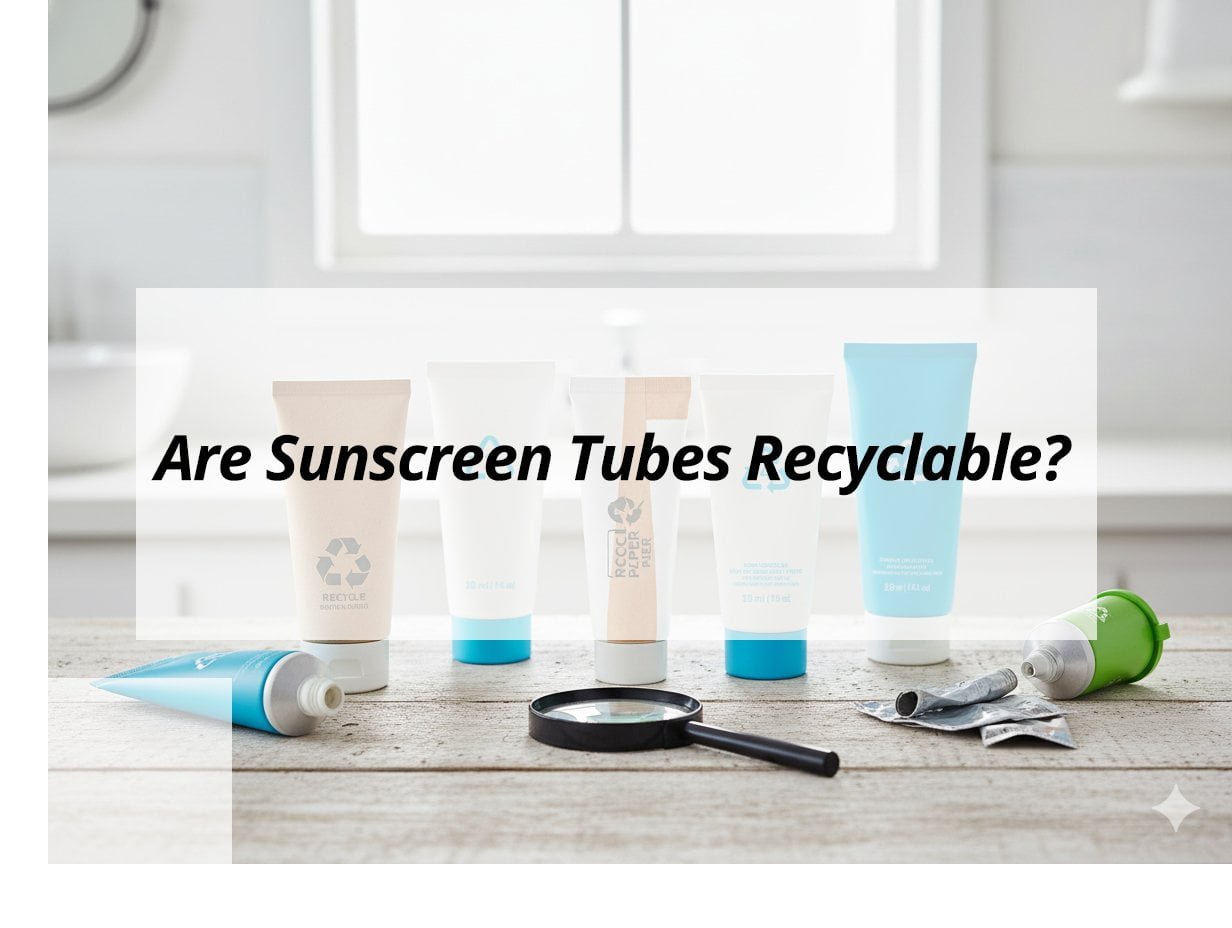
Sunscreen tubes are a staple in many skincare routines, but their recyclability remains a mystery for most consumers. Understanding the environmental impact of these tubes is crucial for making informed choices.
Sunscreen tubes typically contain mixed materials, complicating recycling efforts. While certain components like caps might be recyclable, most tubes end up in landfills due to their composite nature. To ensure proper disposal, check local recycling guidelines and explore specialized facilities that handle complex packaging waste.
Navigating the complexities of recycling sunscreen tubes can guide eco-friendly decisions. Let’s delve deeper into this topic to unravel the complexities of cosmetic packaging sustainability.
Can you recycle a sunscreen tube?
The convenience of sunscreen tubes1 is undeniable, but their environmental footprint can be significant. Knowing whether they can be recycled is a step towards responsible consumer behavior.
Sunscreen tubes are typically mixed-material products. While some parts may be recyclable, the combination often complicates processing, leading to increased landfill waste. Local recycling protocols provide guidance for disposal.
Understanding Recycling Challenges
Material Composition
Sunscreen tubes often combine plastic, metal, and other components, which can hinder recycling. The complex material composition2 requires specialized facilities to separate and process each element. This makes widespread recycling efforts challenging.
- Plastic Parts: Commonly used for durability and flexibility
- Metal Components: Provides structural strength
- Other Materials: Labels and adhesives complicate recycling
Understanding the material breakdown can help identify recyclable elements and determine processing methods that could lead to more sustainable practices.
Local Recycling Protocols
Recycling guidelines vary widely, impacting consumers’ ability to dispose of sunscreen tubes responsibly. Local facilities might offer specialized services for mixed materials, providing an avenue for sustainable disposal.
- Research Local Guidelines: Determine accepted materials and processes
- Contact Recycling Centers: Inquire about specialized facilities
- Participate in Environmental Initiatives: Engage in community efforts for better recycling solutions
By staying informed about local protocols, consumers can navigate recyclability issues more effectively, ensuring that their environmental footprint remains minimal.
What is surprisingly not recyclable?
Recycling often seems straightforward, but many items that appear recyclable end up being problematic. Recognizing these challenges reveals hidden environmental hurdles in everyday disposables.
Certain packaging components, like adhesive labels, impede recycling. Mixed-material packages, often seen in cosmetics, present significant recycling obstacles, causing confusion and increased waste. Awareness and adaptability to these issues can improve waste management efforts.
Recycling Obstacles
Adhesive Labels
Labels and adhesives are prevalent on skincare and cosmetic packaging, complicating recycling efforts. These materials often require separation from the main packaging, adding to processing burdens.
Key Obstacles: Adhesive Components
| Obstacle | Description |
|---|---|
| Gumming Effect | Sticks to machinery, clogging lines |
| Material Contamination | Degrades quality of recycled materials |
| Additional Processing Steps | Increases resource use |
Addressing label-related issues could streamline recycling processes, reducing delays and environmental impact.
Mixed-Material Packages
Cosmetic packages incorporate various materials that complicate recycling. Understanding which pieces can be processed is vital for ensuring effective waste disposal.
Simplifying Recycling
| Approach | Benefit |
|---|---|
| Mono-Material Options | Easier to recycle and process |
| Design Innovations | Encourage separation of materials |
| Consumer Education | Guides responsible disposal practices |
By advocating for design innovations, brands can reduce recycling challenges and make sustainable choices easier for consumers.
What to do with empty lotion tubes?
Empty lotion tubes often end up discarded, but creative solutions can guide their reuse and reduce environmental waste.
Repurposing lotion tubes extends their lifecycle and minimizes waste. Ideas include DIY projects or using tubes for travel containers. Such creativity fosters sustainability and diverts items from landfills.
Creative Reuse
DIY Projects
Repurposing empty tubes into household items can be a creative and environmentally friendly endeavor. Simple alterations breathe new life into these containers, promoting resourcefulness and sustainability.
Creative Transformation Ideas
| DIY Idea | Description |
|---|---|
| Travel Containers | Refill with personal care items |
| Art Supplies | Use as paint or glue dispensers |
| Organizational Tools | Store small items like beads or pins |
Repurposing items not only supports environmental efforts but also sparks creativity in everyday life.
Community Initiatives
Engaging with community-led sustainability projects can offer collective efforts to manage empty packaging waste. These initiatives create localized recycling solutions, fostering awareness and collaboration.
| Initiative Type | Description |
|---|---|
| Community Recycling Programs | Offer collection and processing services |
| Educational Workshops | Encourage DIY and reuse practices |
| Local Collaborations | Unite businesses and residents in sustainable efforts |
Participating in community initiatives3 enhances collective responsibility and provides alternative waste management solutions.
Can you recycle metal cream tubes?
Metal cream tubes are durable but pose specific recycling challenges. Understanding their recyclability can promote environmental responsibility.
Metal cream tubes are typically recyclable, but residual product can interfere with processing. Proper cleaning and separation ensure effective recycling, aligning with sustainable practices and minimizing waste.
Metal Tube Recycling
Processing Metal Tubes
Metal tubes have a straightforward recycling path, yet require proper preparation. Ensuring tubes are empty and clean maximizes their recyclability and reduces waste processing difficulties.
Steps for Recycling Metal Tubes
- Cleaning Procedures: Rinse thoroughly to remove product residues
- Material Separation: Dismantle any non-metal parts
- Proper Disposal: Follow local recycling guidelines
Adequate preparation supports efficient recycling, reducing environmental impact.
Local Recycling Facilities
Local facilities commonly accept metal, providing straightforward avenues for recycling. Their processes are generally established, making metal tube disposal simpler compared to mixed-material options.
- Contacting Recycling Providers: Confirm metal acceptance and guidelines
- Exploring Scrap Yards: Consider alternative recycling for unused tubes
- Community Collection Drives: Participate in local recycling events
Utilizing local resources maximizes recycling efforts and encourages environmentally responsible actions.
My insights: Sunscreen Tubes Recyclable
Wondering if your sunscreen tubes are recyclable? Here’s what you need to know to make eco-friendly choices in skincare disposal.
Sunscreen tubes are recyclable if made from hard plastic, emptied, and cleaned. Flexible tubes often require specialized programs like TerraCycle. Removing caps and residues improves recyclability, though retail drop-offs offer alternative solutions.
Understanding Sunscreen Tube Recycling
Key Factors in Recycling:
-
Material Type:
- Hard Plastic: Generally accepted in curbside programs if clean and dry.
- Flexible/Multi-layered: Often not accepted curbside; needs programs like TerraCycle.
-
Preparation for Recycling:
- Cleaning: Tubes must be empty and rinsed to avoid contamination.
- Cap Removal: Caps and nozzles should be separated to improve recycling acceptance.
-
Specialized Programs:
- TerraCycle: Partners with brands to recycle hard-to-process tubes.
- Retail Drop-offs: Stores like Ulta offer accessible recycling locations.
Steps to Enhance Recycling:
- Advocate for Better Instructions: Clearer recycling guidelines on packaging.
- Support Mono-material Use: Encourages use of single materials for easier recycling.
- Participate in Take-back Programs: Brands are increasingly offering these to consumers.
Quick Reference Table:
| Issue | Solution |
|---|---|
| Material Type | Use specialized programs for flexible tubes |
| Cleaning | Ensure tubes are emptied and rinsed |
| Cap Removal | Separate caps to enhance recyclability |
| Take-back | Utilize brand-specific programs to recycle easily |
Understanding these aspects helps consumers make informed choices, supporting sustainability in skincare packaging.
Conclusion
Understanding the recyclability of cosmetic packaging enables more sustainable decisions. By knowing what can be processed, consumers reduce environmental impacts and promote awareness in their purchases.
-
Explore this link to understand the recyclability of sunscreen tubes and how to dispose of them responsibly. ↩
-
Understanding the material composition can help you identify recyclable elements in sunscreen tubes. ↩
-
Explore community initiatives that promote recycling and sustainability in your area. ↩