Beauty packaging needs branding that stays clear after filling, shipping, retail handling, and daily use. Weak printing can quickly reduce the perceived quality of a product.
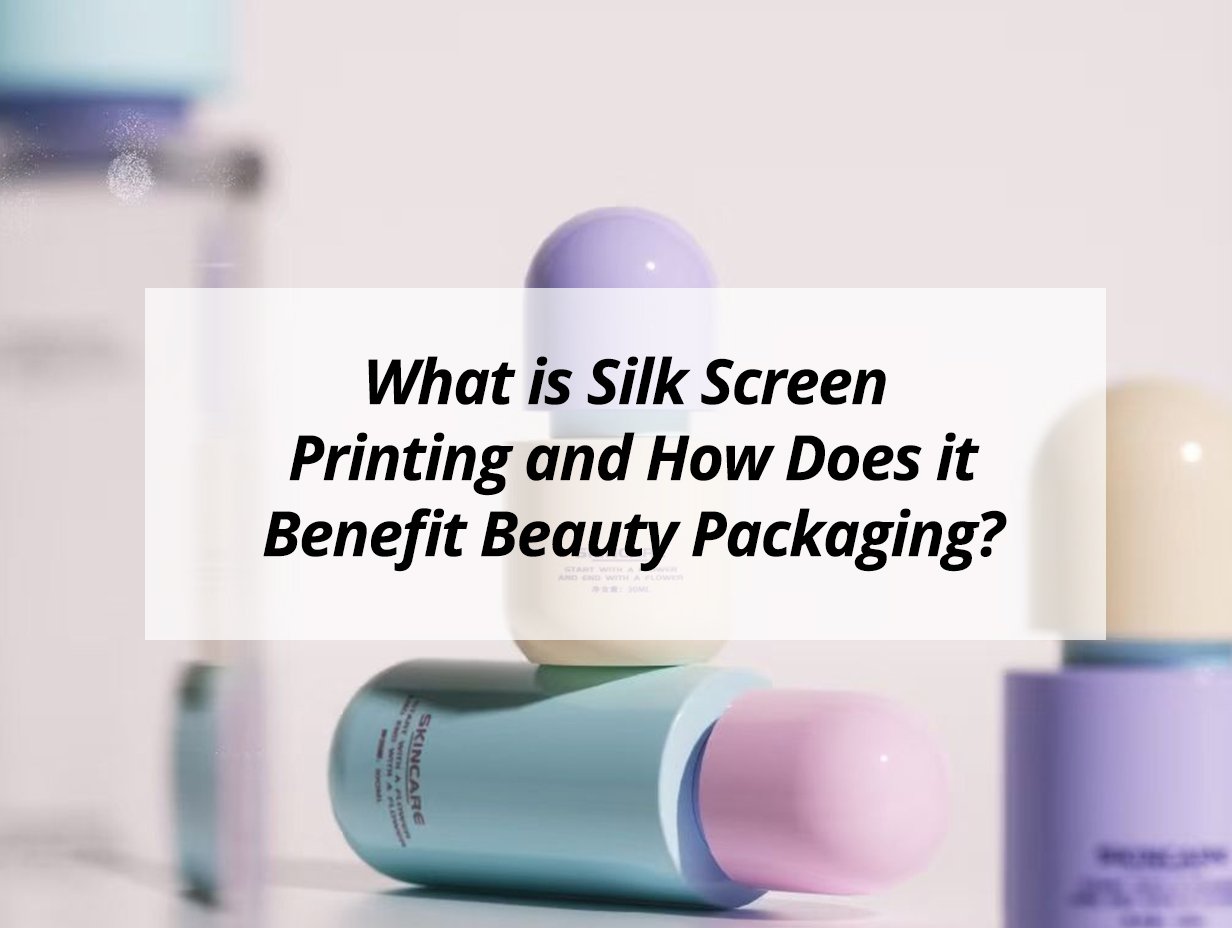
Silk screen printing is a direct decoration process that pushes ink through a patterned mesh screen onto cosmetic packaging. It benefits beauty packaging by creating strong solid colors, sharp logos, durable text, good ink coverage, and a clean label-free appearance on bottles, jars, tubes, caps, and many curved packaging surfaces.
Silk screen printing works best when brands balance artwork, material, ink, color, curing, surface treatment, package shape, durability, production volume, and total decoration cost.
What Is Silk Screen Printing in Cosmetic Packaging and How Does It Work?
Silk screen printing transfers ink directly onto packaging through a mesh screen. The open areas of the stencil determine where the ink reaches the container.
In cosmetic packaging, silk screen printing works by placing a prepared mesh screen over or beside the package, adding ink, and using a squeegee to push ink through the open image areas. The ink transfers onto the bottle, jar, tube, cap, or component and is then cured or dried to create permanent decoration.
1. Artwork Is Converted Into a Screen
The process begins with artwork.
Typical designs include:
- logos;
- brand names;
- product names;
- simple icons;
- ingredient highlights;
- short instructions;
- decorative lines.
The artwork is converted into a stencil on a fine mesh screen.
Only selected areas allow ink to pass.
This makes silk screen printing especially strong for simple, high-contrast graphics.
A solid white logo on a dark bottle, for example, is a classic screen-printing application.
2. Ink Is Pushed Through the Screen
A squeegee moves across the mesh.
Pressure pushes the ink through open sections and onto the package.
For a flat surface, the movement is simple.
For cylindrical cosmetic packaging, the bottle can rotate as the screen moves so the image wraps around part of the container. Packaging manufacturers also describe specialized curved or bend silk-screen printing for bottle surfaces.
This allows screen printing on:
- serum bottles;
- lotion bottles;
- perfume bottles;
- tubes;
- jars;
- mascara packaging;
- lip gloss tubes.
3. Each Color Usually Needs Its Own Screen
A one-color logo may need only one screen.
A three-color design may need:
- first screen;
- first ink;
- curing;
- second screen;
- second ink;
- registration;
- third screen;
- final curing.
This creates more production complexity as color count increases.
Registration becomes especially important.
If one color moves slightly, outlines and text may no longer align.
For this reason, silk screen printing is strongest for designs with:
- one to three solid colors;
- clear shapes;
- limited gradients;
- controlled registration.
For photographic or complex multicolor artwork, offset, digital printing, or labels may be more suitable. Cosmetic tube manufacturers commonly position silk screen printing for solid logos and text, while offset printing is used more often for gradients and detailed multicolor graphics.
4. The Ink Must Be Cured
After printing, the ink must become stable.
Depending on the ink system, curing may involve:
- air drying;
- heat;
- UV energy.
UV curing can provide fast processing because the coating or ink reacts quickly under UV energy.
However, the fastest curing method is not automatically the best.
The ink and curing process must fit:
- package material;
- surface coating;
- decoration requirement;
- chemical exposure;
- production line.
The finished print should be tested rather than approved only by the ink specification.
Why Is Silk Screen Printing Useful for Beauty Packaging?
Silk screen printing combines strong color coverage with direct-to-container decoration, making it useful for both mass beauty packaging and premium minimalist designs.
Silk screen printing benefits beauty packaging by producing opaque colors, sharp text, durable logos, and an integrated appearance without visible label edges. It works especially well for strong brand colors and simple graphics and can be used across skincare, makeup, fragrance, tubes, jars, and bottles when the ink and surface are properly matched.
1. Strong Ink Coverage
One major advantage is opacity.
A white screen-printed logo can remain visible on:
- black plastic;
- dark glass;
- colored PET;
- matte bottles.
The ink layer can provide stronger visual coverage than some lighter printing methods.
This is useful when the packaging background is already a strong color.
2. Clean Label-Free Appearance
A label adds another visible element to the package.
Customers may see:
- label edges;
- transparent film;
- adhesive lines;
- lifting corners.
Silk screen printing places the graphic directly on the container.
The package can therefore feel cleaner and more integrated.
This works particularly well with minimalist skincare.
For example:
frosted glass bottle + black screen-printed logo
creates a simple, modern appearance without adding another label layer.
3. Strong Brand Color Control
Beauty brands often rely heavily on color.
A brand may use one distinctive:
- blue;
- pink;
- red;
- green;
- orange.
Silk screen printing can reproduce strong solid colors.
Brands can specify physical color references or Pantone-style targets and approve the actual printed sample.
However, color should always be reviewed on the final substrate.
The same white ink can look different on:
- transparent PET;
- amber glass;
- beige PP;
- frosted coating.
4. Good for Small and Large Logos
Screen printing can handle many logo sizes.
It can print:
- a small centered logo;
- vertical brand name;
- wider product name;
- larger graphic panel.
The actual print area depends on package shape, machine capability, curvature, and artwork.
5. Durable When Correctly Applied
Durability is another reason screen printing is used in cosmetic packaging.
Manufacturers that describe cosmetic packaging QC commonly include print adhesion and abrasion-resistance testing among surface tests.
That matters because beauty packaging can face:
- oily hands;
- wet bathrooms;
- handbags;
- carton friction;
- repeated touching;
- makeup residue.
A logo should remain readable throughout the customer's normal use.
Which Cosmetic Packaging Materials Work Best With Silk Screen Printing?
Silk screen printing can decorate many cosmetic packaging materials, but no single ink system performs equally well on every surface.
Silk screen printing can work on PET, PETG, PP, PE, ABS, glass, coated glass, aluminum, and cosmetic tubes. The best result depends on surface energy, coating, ink chemistry, curing, and pretreatment. Brands should test the actual molded or coated component because material names alone do not guarantee print adhesion.
1. PET and PETG
PET is widely used for:
- toner bottles;
- lotion bottles;
- serum bottles;
- body-care packaging.
PETG is often used when brands want greater clarity or a thicker premium appearance.
Both materials can support screen printing.
Brands should still check:
- ink adhesion;
- scratching;
- alcohol exposure;
- color accuracy.
Transparent packaging also creates a design issue.
A dark formula inside the bottle can change how the printed logo looks.
Always approve the filled package when possible.
2. PP
PP is widely used for:
- jars;
- caps;
- airless packaging;
- makeup components.
It can be more difficult to print because its surface energy may be low.
Pretreatment can improve adhesion.
Possible processes include:
- flame treatment;
- corona treatment;
- primer.
The exact method depends on the supplier and ink system.
The buyer should not need to choose the technical process alone.
The supplier should recommend and prove the process through samples and adhesion testing.
3. PE
PE is commonly used for:
- squeeze tubes;
- flexible bottles.
Like PP, it may require surface treatment before printing.
Cosmetic tube manufacturers commonly offer silk screen printing because it provides strong logo and text coverage on tube surfaces.
4. Glass
Glass can create a strong combination with silk screen printing.
Common examples include:
- perfume bottles;
- serum bottles;
- foundation bottles;
- cream jars.
Glass may be:
- clear;
- amber;
- frosted;
- spray coated.
Each surface can affect ink performance.
A print that works on plain glass may need different ink or curing when the glass has another coating.
5. Coated Packaging
Many beauty containers receive surface treatments before printing.
Examples include:
- matte spray;
- glossy spray;
- UV coating;
- metallic coating;
- soft-touch coating.
One packaging manufacturer describes plastic bottles with UV coating and silk-screen printing, with the UV-cured surface providing abrasion and waterproof performance.
The key point is that the print and coating need to be treated as one decoration system.
Material Comparison
| Material | Screen Printing Potential | Main Check |
|---|---|---|
| PET | High | Ink adhesion and color |
| PETG | High | Adhesion and chemical exposure |
| PP | High with correct treatment | Surface energy |
| PE | High with correct treatment | Pretreatment |
| ABS | High | Ink and solvent compatibility |
| Glass | Very high with correct ink | Curing and adhesion |
| Coated glass | High | Coating-to-ink compatibility |
| Cosmetic tubes | High | Flexing and adhesion |
| Aluminum | Possible | Ink system and surface treatment |
The final sample should use the exact production material.
What Should Brands Test Before Approving Silk Screen Printed Packaging?
A print sample should survive more than a visual inspection. Cosmetic packaging faces friction, formula contact, humidity, handling, and transport after production.
Before approving silk screen printed beauty packaging, brands should test ink adhesion, abrasion, scratching, water, oil, alcohol, formula exposure, curing, color, registration, and transport durability. The approved sample should use the final substrate, coating, ink, artwork, package shape, and printing process planned for mass production.
1. Adhesion Test
The ink should remain attached to the package.
Check:
- edges;
- fine letters;
- large solid areas;
- overlapping colors.
Weak adhesion may appear as:
- peeling;
- flaking;
- missing text;
- ink transfer.
Some cosmetic packaging QC systems specifically include print adhesion testing alongside leakage, chemical compatibility, and surface abrasion checks.
2. Abrasion and Rub Test
Beauty packaging rubs against:
- cartons;
- other containers;
- handbags;
- shelves;
- fingers.
A print that scratches easily can make a new product look old.
Pay special attention to frequently handled products such as:
- lipstick;
- mascara;
- lip gloss;
- travel bottles.
3. Formula Exposure
The finished formula may reach the decoration.
For example:
- facial oil can run down a serum bottle;
- sunscreen can remain on the customer's hand;
- alcohol can contact fragrance packaging;
- foundation can touch the neck and logo.
The print should be tested for realistic exposure.
4. Water and Humidity
Bathroom packaging may face water and humidity repeatedly.
This matters for:
- cleanser;
- shampoo;
- body care;
- skincare jars.
The ink should not soften or transfer under normal use.
5. Registration
Multi-color printing needs accurate alignment.
Brands should define acceptable tolerance for:
- logo position;
- text position;
- overlap;
- color alignment.
A small registration error can make premium packaging look unprofessional.
6. Golden Sample Approval
The final approved package should become the production standard.
It should show:
- exact logo size;
- exact location;
- final ink color;
- opacity;
- surface gloss;
- correct registration;
- acceptable edge quality.
Both supplier and buyer should keep a matching sample.
How Does Silk Screen Printing Compare With Other Beauty Packaging Decoration Methods?
Silk screen printing is not the best decoration method for every artwork. Its value becomes clearer when brands compare it with labels, offset printing, hot stamping, and digital printing.
Silk screen printing is strongest for solid colors, logos, and simple text with good ink coverage. Offset or digital printing is usually better for complex multicolor graphics and gradients, while hot stamping is better for highly reflective metallic accents. Labels provide broad artwork flexibility but add a separate material layer and visible edges.
Silk Screen vs Hot Stamping
Hot stamping creates:
- metallic shine;
- reflective gold;
- silver;
- holographic effects.
Silk screen creates:
- solid ink color;
- matte or gloss print;
- strong opaque text.
A package can combine both.
For example:
white silk screen text + gold hot stamped logo
creates a strong visual hierarchy.
Silk Screen vs Labels
Labels are useful when brands need:
- many colors;
- detailed regulatory text;
- variable artwork;
- smaller production quantities.
Screen printing creates a cleaner integrated appearance.
However, changing screen-printed artwork can require new screens and setup.
Silk Screen vs Offset Printing
Cosmetic tube manufacturers often use offset for:
- detailed artwork;
- gradients;
- multiple colors.
Silk screen is often preferred for:
- solid logo;
- simple graphic;
- strong ink layer.
Decoration Comparison
| Decoration | Strongest Benefit | Common Limitation |
|---|---|---|
| Silk screen | Strong solid colors and direct print | More setup for multiple colors |
| Hot stamping | Metallic premium effect | Die and foil cost |
| Offset printing | Detailed multicolor graphics | Best suited to specific package formats |
| Digital printing | Flexible complex artwork | Cost and durability vary |
| Label | Artwork flexibility | Adds label material and visible edge |
| Spray coating | Full-surface color | Adds another decoration layer |
The best decoration method should follow the artwork and packaging structure.
My insights: What Is Silk Screen Printing and How Does It Benefit Beauty Packaging
Silk screen printing creates its strongest value when beauty brands use simple artwork, strong colors, and materials that can support reliable ink adhesion through real product use.
Silk screen printing benefits beauty packaging because it combines direct decoration, strong color coverage, clean branding, and durable performance across many bottles, jars, tubes, and cosmetic components. Its real value depends on matching the ink to the material, limiting unnecessary color complexity, testing adhesion, and controlling registration and curing during mass production.
1. Keep the Artwork Simple
I would use silk screen printing for:
- logo;
- product name;
- short text;
- simple icon;
- single-color graphic.
I would not choose it first for:
- photographs;
- smooth gradients;
- highly detailed illustrations;
- designs using many overlapping colors.
Simple artwork usually creates stronger production consistency.
2. Let the Packaging Surface Guide the Ink
The same artwork may need different technical solutions on:
- PET bottle;
- PP jar;
- PE tube;
- glass serum bottle.
I would approve printing only after confirming the final material and surface coating.
3. Limit Color Count When Possible
Each added color can increase:
- screen preparation;
- setup;
- registration;
- curing;
- production time;
- reject risk.
A strong two-color design can sometimes perform better than a six-color design.
4. Use Contrast Strategically
High contrast helps screen printing stand out.
Examples include:
- white ink on matte black;
- navy ink on frosted glass;
- black ink on beige PP;
- bright pink ink on clear PET.
The goal is not to print as much as possible.
The goal is to make the important information easy to see.
5. Approve the Filled Package
A transparent bottle can change appearance after filling.
For example, amber serum can change the perceived color of:
- white ink;
- gold ink;
- pastel graphics.
I would therefore approve transparent packaging both empty and filled.
6. Test Real Customer Conditions
The package should survive the way customers actually use it.
A sunscreen bottle may contact oily hands.
A cleanser may stay in a wet bathroom.
A lipstick may travel in a bag.
Testing should reflect the actual product.
7. Compare Decoration Cost as a System
I would compare:
- screen cost;
- ink;
- number of colors;
- pretreatment;
- curing;
- sampling;
- rejects.
A one-color screen print can be very practical at volume.
A highly complex five-color design may make another printing method more efficient.
8. Define Printing Quality Before Production
I would set standards for:
- logo position;
- color;
- ink coverage;
- opacity;
- edge quality;
- scratches;
- missing print;
- registration.
This makes inspection more objective.
9. Combine Methods Carefully
Silk screen printing works well with other finishes.
For example:
matte coating + white silk screen + small gold hot stamp
can create a premium package without excessive decoration.
The strongest designs use each method for a clear purpose.
10. Use a Silk Screen Printing Approval Checklist
Before mass production, I would confirm:
- Final packaging material confirmed
- Final coating confirmed
- Ink matched to substrate
- Surface pretreatment confirmed where needed
- Artwork size approved
- Print position approved
- Color standard approved
- Opacity checked
- Registration checked
- Adhesion tested
- Abrasion tested
- Scratch resistance tested
- Water exposure tested where relevant
- Oil or formula exposure tested
- Alcohol exposure tested where relevant
- Filled sample reviewed
- Golden sample retained
- Defect standards documented
- Mass-production process locked
Silk screen printing should be selected because it fits the artwork, packaging material, durability requirement, and production volume—not simply because it is a common cosmetic decoration process.
Conclusion
Silk screen printing benefits beauty packaging through strong colors, sharp branding, direct decoration, and durability when brands match the ink, material, artwork, testing, and production process correctly.