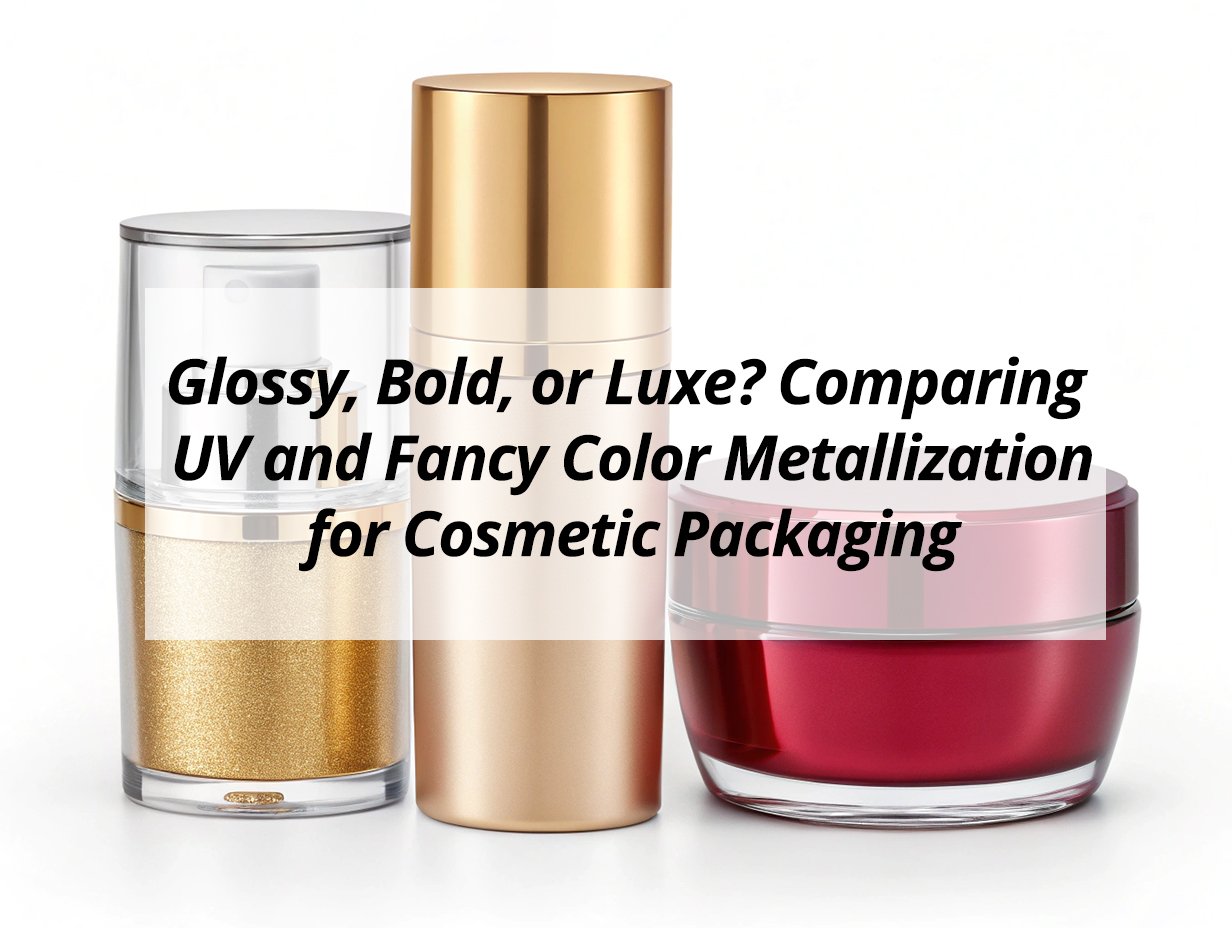
Choosing the right finish for cosmetic packaging poses unique challenges. Differentiating between UV and fancy metallization is key to making informed decisions.
UV coating provides a durable and glossy finish, ideal for high-impact visual effects on packaging. It enhances appearance while offering protection from scratches and fading. Fancy color metallization adds a luxurious and eye-catching appeal, transforming regular packaging into statement pieces that attract customer interest.
Explore how these finishes impact cosmetic packaging aesthetics and functionality, helping brands stand out.
What is the difference between gloss and UV coating?
Confusion often arises when selecting finishes for packaging. Clarifying differences helps guide choices.
Gloss coatings provide a simple, shiny finish, whereas UV coatings offer enhanced durability and scratch resistance. UV coatings cure under ultraviolet light, creating a more resistant and vibrant surface compared to regular gloss.
Let’s dive deeper into how gloss and UV coatings1 differ for optimal packaging:
Comparing Gloss and UV Coatings
Understanding these coatings helps brands decide based on needs and desired effects.
Basic Gloss Finishes
Gloss coatings2 offer fundamental shine with easy application.
- Application Ease: Simple to apply for a standard glossy look
- Visual Impact: Provides elegance but limited durability
UV Enhanced Surfaces
UV coating offers resilience and vibrant presentation.
- Durability: Resistant to scratches and environmental damage
- Visual Appeal3: High gloss and deeper color vibrancy
Gloss vs UV Coating Comparison Table
| Coating Type | Features |
|---|---|
| Basic Gloss | Simple shine, less durability. |
| UV Coating | Enhanced durability, vibrant gloss. |
What are the disadvantages of UV coating?
Despite the appeals, UV coatings have drawbacks that must be considered for specific applications.
UV coating can be costlier and may sometimes emit volatile organic compounds (VOCs), affecting environmental safety. It requires specialized equipment for application, increasing production complexity and cost for manufacturers.
Let’s explore the potential downsides of using UV coatings1:
Assessing UV Coating Limitations
Knowing UV coating limitations helps navigate potential challenges in packaging processes.
Cost Implications4
UV coatings can be expensive due to equipment needs.
- Investment: Requires UV curing equipment, increasing setup costs
- Operating Expenses: Higher material costs increase production expense
Environmental Concerns
Potential emission of VOCs raises ecological considerations.
- VOCs Impact: Possible release during application process
- Eco Compliance: Need for cautious use to align with green standards
UV Coating Limitations Overview Table
| Limitation | Description |
|---|---|
| Cost | Requires specialized UV curing equipment. |
| Environmental | May emit VOCs, affecting sustainability. |
What is the difference between UV gloss and gloss lamination?
Comparing these finishes provides insights into their unique applications in packaging.
UV gloss involves curing under UV light for heightened durability, while gloss lamination involves adding a layer of plastic film for protection. Both enhance shine but differ in application techniques and environmental impact.
Delving into differences between UV gloss and gloss lamination reveals crucial distinctions:
Understanding UV Gloss vs. Gloss Lamination
These techniques offer distinct benefits; choosing depends on packaging goals and environmental considerations.
UV Gloss Characteristics
Provides a hard, glossy surface that heightens visual appeal.
- Durability: UV curing creates a resilient surface
- Protection Level: Enhanced resistance to damage
Gloss Lamination Benefits
Involves an additional protective plastic layer.
- Application Method: Uses adhesive film for protection
- Environment Impact: More intensive plastic usage
UV Gloss vs Gloss Lamination Comparison Table
| Aspect | Description |
|---|---|
| UV Gloss | Curing process for heightened durability. |
| Gloss Lamination | Protective plastic film with high shine. |
What is the best UV resistant coating for plastic?
Identifying optimal coatings ensures longevity and protection in diverse environmental conditions.
Acrylic and urethane coatings offer superior UV resistance, safeguarding plastic surfaces from sun damage. They extend lifespan by preventing yellowing and degradation, essential for maintaining quality in outdoor applications.
Exploring UV resistant coatings reveals reliable options for protecting plastic packaging:
Selecting Optimal UV Resistant Coatings
Choosing the right coating ensures lasting protection and aesthetic preservation.
Acrylic Coating5 Advantages
Promotes robust protection against UV-induced damage.
- Impact Resistance: Reduces yellowing and surface degradation
- Longevity: Prolongs lifespan under sunlight exposure
Urethane Coating6 Features
Known for high durability in resistant applications.
- Durability: Exceptional resistance to weathering elements
- Application Versatility: Suitable for various plastics
Optimal UV Resistant Coatings Table
| Coating Type | Benefits |
|---|---|
| Acrylic | Reduces yellowing, enhances longevity. |
| Urethane | Exceptional durability, versatile application. |
My insights: Glossy, Bold, or Luxe? Comparing UV and Fancy Color Metallization for Cosmetic Packaging
Elevate your cosmetic brand's image by choosing between UV glossiness and luxe metallization. Which finish will define your products?
UV coatings provide a glossy, vibrant finish with excellent scratch resistance, while fancy color metallization offers a luxe, metallic look with versatile hues. Both methods enhance durability and elevate brand aesthetics.
Understanding UV Coating and Metallization
Both techniques offer distinct visual effects and functional benefits:
| Aspect | UV Coating | Fancy Color Metallization |
|---|---|---|
| Visual Effect | High gloss, enhances vivid colors | Reflective metallic shine, color versatility |
| Durability | Scratch and UV resistant | Scratch resistant, moisture barrier |
| Design Flexibility | Supports vibrant designs | Enables metallic hues and textured finishes |
| Luxury Perception | Modern, bold aesthetics | Prestigious, high-end appeal |
| Sustainability | Efficient and eco-friendly options available | Minimal material use, eco-substrate compatibility |
| Common Uses | Boxes, labels, tubes | Tubes, caps, containers, perfume closures |
Strategic Considerations
-
Impact and Perception: UV coating delivers a modern, vibrant look, perfect for brands seeking bold visual impact. In contrast, metallization offers a classic, luxe appearance for premium brands.
-
Customization and Versatility: Metallization allows for unique textures and dual tones, while UV supports vivid, detailed designs.
Choosing between these finishes depends on brand goals—whether aiming for shiny boldness or sophisticated luxury. Both methods can be integrated into sustainable practices, balancing aesthetic appeal with environmental responsibility.
Conclusion
UV and fancy color metallization offer distinct advantages and considerations for cosmetic packaging. Each finish serves unique aesthetics and functional needs, enabling brands to cater to diverse market demands.
-
Learn about the durability and vibrant finish that UV coatings provide, making them ideal for high-quality packaging. ↩ ↩
-
Explore how Gloss coatings can enhance the visual appeal of your packaging while being easy to apply. ↩
-
Discover the impact of visual appeal on consumer behavior and how it can influence purchasing decisions. ↩
-
Understanding the costs associated with UV coatings can help you budget effectively for your packaging needs. ↩
-
Explore the advantages of Acrylic Coating in protecting surfaces from UV damage, ensuring longevity. ↩
-
Discover why Urethane Coating is favored for its exceptional durability in various applications. ↩