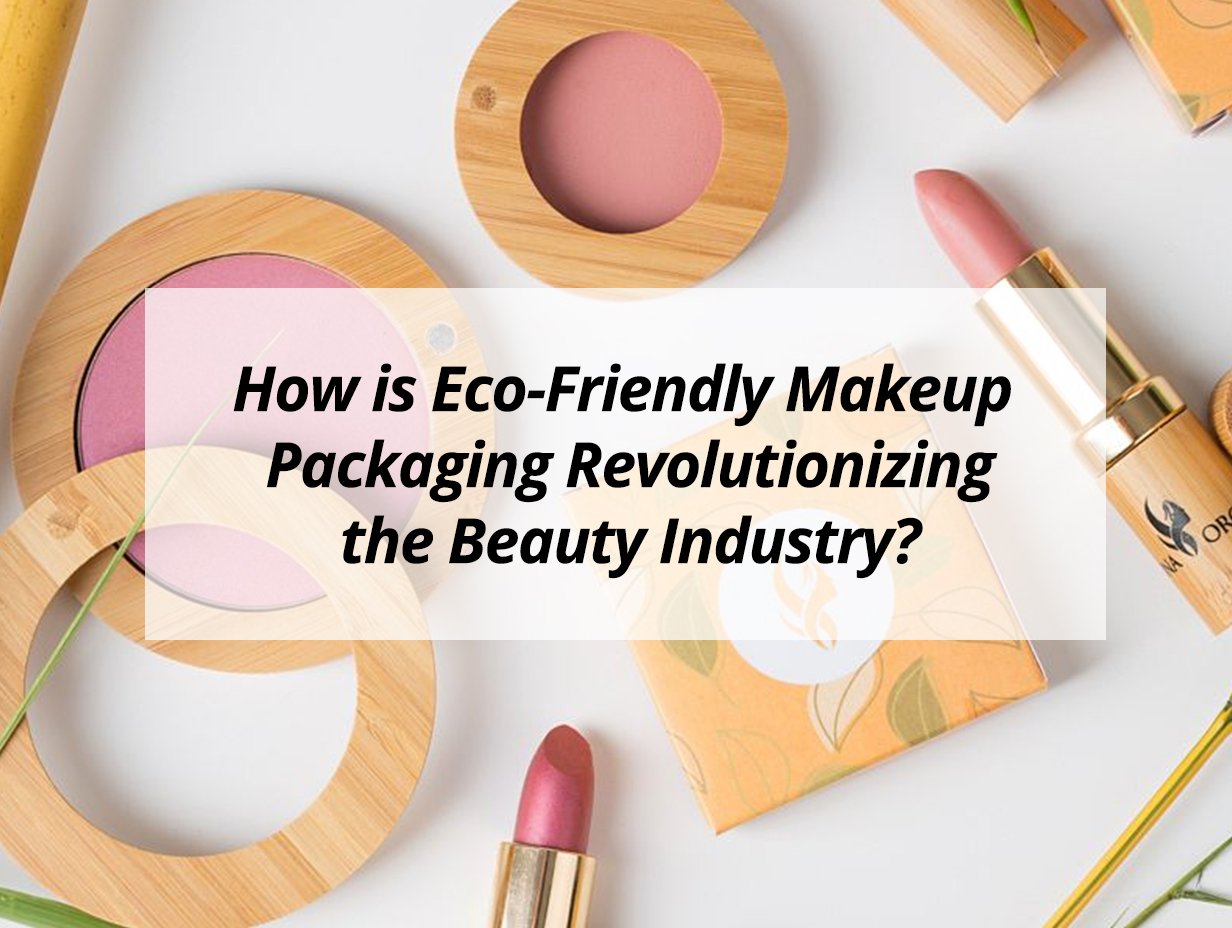
Makeup packaging is changing from disposable decoration into a circular system that must combine beauty, performance, sustainability, convenience, compliance, and repeat purchase.
Eco-friendly makeup packaging is revolutionizing the beauty industry through mono-material designs, PCR plastics, refillable systems, recycled aluminum, lightweight structures, paper-based secondary packaging, and smarter environmental communication. These changes reduce dependence on virgin materials while pushing brands to rethink luxury, customer loyalty, packaging development, recycling, and long-term product strategy.
Eco-friendly makeup packaging must reduce waste without sacrificing formula protection, beauty, usability, branding, or production. The strongest designs make sustainability part of how the product works.
What Makes Makeup Packaging Truly Eco-Friendly?
A package becomes more sustainable through measurable design improvements, not simply because it uses green colors, paper textures, or environmental words.
Truly eco-friendly makeup packaging uses fewer resources, protects the formula, reduces incompatible components, increases verified recycled content where appropriate, supports recycling or refill, and provides clear disposal information. Brands should evaluate the complete package, including caps, pumps, applicators, labels, coatings, inserts, and secondary packaging.
1. Start With Material Reduction
The simplest sustainability strategy is often reduction.
A makeup brand can reduce:
- bottle wall thickness;
- compact weight;
- decorative shells;
- oversized caps;
- unnecessary cartons;
- plastic windows;
- foam inserts;
- excessive empty space.
This reduces material before recycling is even needed.
For example, a lighter PP compact that still protects the powder may create a more straightforward improvement than replacing the compact with several new “eco” materials.
2. Simplify the Material Structure
A package becomes difficult to recycle when it combines too many incompatible materials.
Consider a luxury lipstick containing:
- ABS outer shell;
- PP inner mechanism;
- aluminum sleeve;
- steel magnet;
- PET insert;
- decorative coating.
Each component may perform well, but the total system becomes complex.
Mono-material design attempts to reduce that complexity.
Useful directions include:
| Makeup Format | Sustainable Material Direction |
|---|---|
| Lipstick | Mostly PP refillable mechanism |
| Mascara | Simplified PP bottle, cap, rod, and compatible components |
| Lip gloss | PP-focused rigid packaging |
| Foundation tube | Mono-material PE |
| Compact | PP with replaceable pan |
| Cream makeup | Lightweight PP jar |
| Secondary carton | FSC-certified paperboard |
The package still needs recyclability assessment because “mono-material” does not automatically mean it will be collected or recycled everywhere.
3. Protect the Formula
Sustainability cannot damage product performance.
Makeup formulas may contain:
- oils;
- pigments;
- alcohol;
- waxes;
- solvents;
- fragrance;
- volatile ingredients;
- preservatives.
Packaging must continue to prevent:
- leakage;
- evaporation;
- formula drying;
- contamination;
- color change;
- compatibility problems.
A package that saves material but causes more product waste is not automatically a better solution.
How Are Sustainable Materials Changing Makeup Packaging Design?
Sustainable materials are pushing packaging designers to consider material recovery and formula protection at the same time as appearance and customer experience.
Sustainable makeup packaging increasingly uses mono-material PE and PP, PCR plastics, recycled aluminum, lightweight glass, responsibly sourced paperboard, and refillable structures. These materials change package weight, appearance, decoration, manufacturing, and recycling, so brands need to choose them according to the product format rather than searching for one universal green material.
1. PCR Plastic Is Becoming More Important
PCR plastic allows recovered plastic to return to packaging production.
Common options include:
- PCR PET;
- PCR PP;
- PCR PE;
- PCR HDPE.
It can reduce the need for virgin resin while allowing brands to keep familiar packaging processes.
However, PCR may create:
- slightly gray resin;
- small color variation;
- lower transparency;
- odor variation;
- production differences.
Brands should treat those differences as technical specifications rather than immediately covering them with more coatings.
2. Mono-Material Plastics Support Simpler Systems
Mono-material PE can be useful for flexible makeup tubes.
PP can support:
- lipstick;
- mascara;
- lip gloss;
- compacts;
- jars;
- closures.
The objective is not to remove plastic at any cost.
The objective is to make the plastic that remains easier to identify, collect, and process.
3. Aluminum Creates a Different Sustainability Route
Aluminum works well for selected:
- lipstick shells;
- cosmetic tubes;
- tins;
- refillable outer cases.
It has strong recycling value and can create premium shelf appeal.
However, brands must still evaluate:
- recycled content;
- internal coatings;
- plastic closures;
- decoration;
- shipping weight;
- denting;
- local collection.
Metal is not automatically greener than plastic in every application.
4. Paper Works Best Where It Makes Sense
Paperboard is particularly useful for:
- cartons;
- sleeves;
- inserts;
- refill boxes;
- shipping materials.
Paper-based packaging is also becoming more visible across beauty as brands look for ways to reduce plastic in suitable applications.
But foundation, mascara, gloss, eyeliner, and other wet formulas still require reliable barriers and precise primary packages.
Replacing plastic with complex paper-plastic laminates may not always simplify the system.
Why Are Refillable Makeup Packages Changing Beauty Business Models?
Refillable packaging changes the relationship between the customer, the product, and the package. The container can become a long-term asset instead of disposable waste.
Refillable makeup packaging is changing beauty business models by separating the durable package from the consumable formula. Customers can keep lipstick cases, compacts, jars, or bottles and purchase smaller replacements. This can reduce repeated packaging, support premium design, strengthen brand loyalty, and create predictable repeat purchases when refills are convenient and affordable.
1. Lipstick Is Ideal for Refill
Lipstick is one of the clearest refill opportunities because the customer can keep a premium outer case and replace the inner bullet.
The outer case can become:
- decorative;
- personalized;
- collectible;
- engraved;
- durable.
This gives brands more reason to invest in better construction.
2. Compacts Can Become Long-Term Products
Powder, blush, bronzer, eyeshadow, and cushion compacts can also use refill pans or cartridges.
The user keeps:
- mirror;
- hinge;
- outer shell;
- closure;
- brand decoration.
Only the product pan is replaced.
This changes the design objective from surviving one product cycle to surviving several.
3. Refill Can Increase Loyalty
A consumer who owns a premium case already has a reason to return to the same brand.
Industry analysis in 2026 describes refillable packaging as increasingly tied to loyalty, value, premium positioning, and retailer interest.
However, refill is not automatic success.
4. Refill Must Be Easier Than Replacement
Refill systems can fail because of:
- limited retail availability;
- confusing replacement methods;
- high refill prices;
- hygiene concerns;
- incompatible generations;
- little actual material reduction.
Recent reporting on refillable beauty emphasizes that adoption still depends heavily on convenience, education, price, infrastructure, and consumer behavior.
| Strong Refill System | Weak Refill System |
|---|---|
| Easy one-step replacement | Difficult disassembly |
| Refill widely available | Online-only or frequently unavailable |
| Lower refill price | Almost same price as full product |
| Less packaging material | Refill nearly as heavy as original |
| Durable outer case | Outer case breaks early |
| Clear instructions | Customer does not understand replacement |
| Stable format | Frequent design changes make old case obsolete |
The strongest refill system creates both environmental and customer value.
How Is Eco-Friendly Packaging Redefining Luxury Makeup?
Sustainable makeup packaging is weakening the old assumption that luxury must depend on heavy materials, oversized boxes, and unnecessary decorative components.
Eco-friendly packaging is redefining luxury makeup by shifting value from material weight toward durability, refillability, precision engineering, tactile experience, distinctive shapes, and thoughtful details. A lighter refillable lipstick or compact can feel more premium than a disposable heavy package when its mechanism, decoration, and customer experience are designed well.
1. Less Can Still Feel Premium
Premium packaging can use:
- precise cap clicks;
- smooth twisting mechanisms;
- controlled gloss;
- custom colors;
- embossing;
- clean typography;
- tactile texture;
- elegant proportions.
These design details do not require excessive material.
2. Reuse Can Increase Emotional Value
A disposable compact is packaging.
A refillable compact that remains with a customer for years can become a personal object.
That creates opportunities for:
- engraving;
- limited-edition cases;
- interchangeable refills;
- collectible colors;
- personalized designs.
Sustainability and luxury can therefore reinforce each other.
3. Material Honesty Can Become Part of the Aesthetic
PCR plastic does not always look identical to virgin plastic. Recycled aluminum and recycled paper can also show natural variation.
Instead of hiding every variation, brands can make the material story visible.
This changes sustainability from a back-label claim into part of the visual identity.
How Are Regulations Changing Eco-Friendly Makeup Packaging?
Environmental packaging rules are making sustainability more technical. Brands increasingly need data and documentation before making packaging decisions.
Packaging regulations are pushing beauty brands toward measurable recyclability, recycled content, waste prevention, reuse, and stronger material documentation. In the EU, PPWR began applying generally from August 12, 2026. Brands selling internationally should increasingly treat sustainability data as part of normal packaging development rather than an optional marketing project.
1. PPWR Changes the Packaging Discussion
The European Commission says PPWR applies across packaging materials and establishes a harmonized framework covering packaging design and waste. Its rules began applying on a phased basis from August 12, 2026.
The regulation creates stronger focus on:
- recyclable packaging;
- recycled plastic;
- waste prevention;
- reuse;
- collection;
- secondary raw materials.
PPWR also establishes recycled-content requirements for plastic packaging beginning from 2030 under defined categories and conditions.
This means cosmetic packaging development increasingly needs regulatory forecasting.
2. Suppliers Need to Provide More Data
Future packaging files should include:
| Required Data | Why It Matters |
|---|---|
| Main material | Identifies recycling route |
| Component weight | Supports packaging calculations |
| PCR percentage | Supports recycled-content claims |
| Material certificates | Supports traceability |
| Pump components | Identifies mixed-material risks |
| Decoration structure | Reviews recycling compatibility |
| Refill weight | Measures material reduction |
| Carton specification | Supports paper sourcing claims |
| Recyclability evidence | Supports environmental communication |
A supplier that only provides a visual catalog and unit quotation may no longer provide enough information for international brands.
How Is Eco-Friendly Packaging Changing Beauty Marketing?
Environmental communication is moving away from broad green language toward specific claims that customers and regulators can understand.
Eco-friendly makeup packaging is changing beauty marketing by replacing broad sustainability slogans with specific information about recycled content, refillability, material reduction, sourcing, and recyclability. Brands can also use QR codes to explain materials, disposal, and refill instructions, creating more transparency without overcrowding small cosmetic packaging.
1. Avoid Vague Claims
FTC guidance cautions against broad unqualified environmental claims such as “green” or “eco-friendly.”
Instead of:
Eco-friendly lipstick packaging
a brand can say:
Outer case designed for reuse with replaceable lipstick refills.
Instead of:
Sustainable plastic bottle
it can say:
Bottle made with 50% post-consumer recycled PET.
Specific claims are easier to verify.
2. QR Codes Can Extend Small Packaging
Makeup packaging has limited label space.
A QR code can connect customers with:
- recycling instructions;
- refill videos;
- material composition;
- product authentication;
- sourcing information;
- refill purchase links.
Smart packaging technologies including QR codes, NFC, and RFID are becoming more relevant as beauty packaging combines transparency, compliance, and customer experience.
3. Sustainability Becomes Part of Branding
Packaging can communicate environmental decisions visually through:
- compact structures;
- visible refill mechanisms;
- reduced cartons;
- natural recycled materials;
- clear material labels;
- fewer decorative layers.
Sustainability becomes more credible when customers can see how the package has changed.
What Should Beauty Brands Prepare for as Eco-Friendly Packaging Becomes the New Standard?
Brands should treat sustainability as an early packaging-development requirement rather than a final claim added after the design is finished.
Beauty brands should prepare by reducing unnecessary packaging, simplifying materials, evaluating PCR options, developing realistic refill systems, documenting every component, testing recyclability, reviewing environmental claims, and collecting supplier data. Sustainable packaging should be evaluated together with formula compatibility, cost, MOQ, decoration, customer use, manufacturing, and market regulations.
1. Start With a Packaging Audit
Brands should examine every component:
- Is it necessary?
- Can it be lighter?
- Can it use recycled material?
- Can two parts use the same resin?
- Can a refill replace it?
- Can decoration be reduced?
- Can customers recycle it?
2. Build a Sustainable Packaging Scorecard
| Area | Questions to Ask |
|---|---|
| Reduction | Can packaging weight be reduced? |
| Material | Is the material appropriate for the formula? |
| PCR | Can verified recycled content be added? |
| Recyclability | Are components compatible with a recycling stream? |
| Refill | Does the refill use substantially less packaging? |
| Customer use | Is the system convenient? |
| Decoration | Does decoration affect recovery? |
| Claims | Can every environmental statement be proven? |
| Supplier | Can the supplier provide documentation? |
| Cost | Can the design scale commercially? |
3. Balance Sustainability With Performance
The package still has to work.
A makeup pack must:
- protect the formula;
- prevent leakage;
- survive shipping;
- dispense correctly;
- look attractive;
- meet labeling requirements;
- stay within budget.
A “green” package that leaks, breaks, dries out the formula, or creates excessive returns can generate more waste.
4. Measure Progress
Brands should compare new packaging against previous designs.
Useful measurements include:
- grams of packaging per unit;
- PCR percentage;
- number of material families;
- refill-to-original weight ratio;
- percentage reduction in virgin plastic;
- carton-size reduction;
- components eliminated.
This makes sustainability easier to communicate and improve.
5. Think in Systems, Not Materials
The beauty industry's packaging revolution will not come from replacing all plastic with one alternative.
It will come from better systems.
| Old Beauty Packaging Model | Emerging Eco-Friendly Model |
|---|---|
| Single-use | Refill and reuse |
| Heavy packaging | Lightweight performance |
| Virgin materials | PCR and recycled materials |
| Mixed structures | Mono-material direction |
| Decoration first | Recovery considered during design |
| Disposal ignored | End-of-life planned |
| Generic green claims | Measurable claims |
| Package sells one product | Durable pack supports repeat refills |
| Supplier provides price | Supplier provides data |
| Sustainability as trend | Sustainability as product requirement |
Eco-friendly makeup packaging is therefore revolutionizing much more than the package itself. It is changing how beauty companies design products, select suppliers, define luxury, communicate environmental benefits, retain customers, and prepare for future regulation.
My insights: How Is Eco-Friendly Makeup Packaging Revolutionizing the Beauty Industry
Eco-friendly makeup packaging is changing more than materials. It is changing how beauty products are designed, purchased, refilled, marketed, regulated, and valued.
Eco-friendly makeup packaging is revolutionizing the beauty industry by replacing disposable, material-heavy designs with lighter, recyclable, recycled-content, mono-material, and refillable systems. It is also changing luxury aesthetics, supplier requirements, environmental claims, customer loyalty, and product development as sustainability becomes a measurable packaging requirement rather than a simple marketing story.
1. Packaging Is Moving From Disposable to Circular
Traditional makeup packaging usually follows a simple path:
produce → fill → sell → use → discard
Eco-friendly packaging is introducing a different model:
reduce → use → refill → reuse → collect → recycle
This shift is important because makeup packaging can be surprisingly complex.
A mascara package may include:
- bottle;
- cap;
- rod;
- brush;
- wiper;
- neck insert;
- label;
- decorative coating.
A lipstick can contain an outer shell, inner mechanism, cup, bullet holder, cap, decoration, and sometimes magnets or metal parts.
Sustainability is forcing packaging developers to ask whether all those components are necessary.
2. Sustainable Design Is Becoming Simpler
One of the biggest changes is the move toward simpler structures.
Brands are increasingly reviewing:
- mono-material PP compacts;
- PP lipstick mechanisms;
- PE cosmetic tubes;
- lighter PET bottles;
- simplified pumps;
- removable refill cartridges;
- reduced decorative shells.
2026 beauty packaging analysis points to mono-material formats, aluminum, transparency, and smarter packaging systems as important directions.
This changes the designer's question.
The old question was:
“How can we make this package look more luxurious?”
The new question is:
“How can we create the same value with fewer and more compatible materials?”
3. Refill Is Changing the Business Model
Refillable packaging does more than reduce packaging.
It can change how brands sell makeup.
Instead of selling another complete lipstick, compact, or cosmetic jar, the brand can sell:
- one durable outer package;
- one initial product;
- several replacement refills.
This can create repeat purchasing while keeping the same premium outer case.
Industry reporting in 2026 describes refillable and minimalist packaging as an increasingly important growth strategy in color cosmetics, with major beauty companies expanding these systems.
The business relationship changes from:
buy → finish → discard → switch brand
toward:
buy → keep → refill → repeat
That can make packaging part of customer retention.
4. Luxury Is Being Redefined
Luxury makeup packaging traditionally relied on:
- heavy glass;
- thick plastic walls;
- metal decoration;
- magnets;
- oversized cartons;
- multiple coatings;
- large decorative bases.
Eco-friendly design challenges this idea.
Premium value can instead come from:
- smooth refill mechanisms;
- precise closures;
- elegant shapes;
- tactile finishes;
- controlled dispensing;
- durable outer cases;
- thoughtful color systems;
- personalized refill experiences.
This creates an important shift:
Luxury no longer has to mean more material. Luxury can mean better engineering and longer use.
5. Packaging Claims Are Becoming More Measurable
Another major change is communication.
Brands can no longer rely comfortably on vague phrases such as:
- environmentally friendly;
- planet-friendly;
- green packaging;
- sustainable container.
FTC Green Guides caution against broad, unqualified environmental benefit claims because they can communicate benefits that are difficult to substantiate.
More useful statements include:
- bottle made with 50% PCR PET;
- refillable PP compact;
- FSC-certified paperboard carton;
- packaging weight reduced by 25%;
- mono-material PE tube;
- refill uses 60% less packaging material than the complete pack.
This is turning sustainability from a visual marketing theme into a packaging specification.
6. Regulation Is Becoming Part of Packaging Design
Packaging designers can no longer think only about:
- appearance;
- price;
- MOQ;
- decoration;
- formula compatibility.
They increasingly need to consider:
- recyclability;
- recycled content;
- packaging weight;
- documentation;
- waste prevention;
- labeling;
- reuse and refill;
- extended producer responsibility.
The EU PPWR began applying generally from August 12, 2026. The European Commission says the regulation is intended to reduce packaging waste, increase circularity, require recycled plastic in certain packaging, and move packaging toward recyclability.
7. Sustainability Is Changing the Whole Beauty Value Chain
| Old Packaging Priority | New Packaging Priority |
|---|---|
| Attractive color | Attractive + recyclable design |
| Heavy luxury feel | Durable premium experience |
| Virgin resin consistency | PCR content + acceptable variation |
| Complex decoration | Decoration compatible with recovery |
| Single-use package | Refill or reuse potential |
| Lowest unit cost | Total packaging and compliance cost |
| Supplier quotation | Supplier data and traceability |
| “Eco-friendly” claim | Specific measurable claim |
| Disposal after use | Planned end-of-life route |
| Package as container | Package as circular system |
The biggest revolution is therefore not one packaging material.
It is a change in how the beauty industry defines good packaging.
Conclusion
Eco-friendly makeup packaging is reshaping beauty through lighter materials, circular design, refills, measurable claims, better supplier data, and premium experiences that use resources more intelligently.