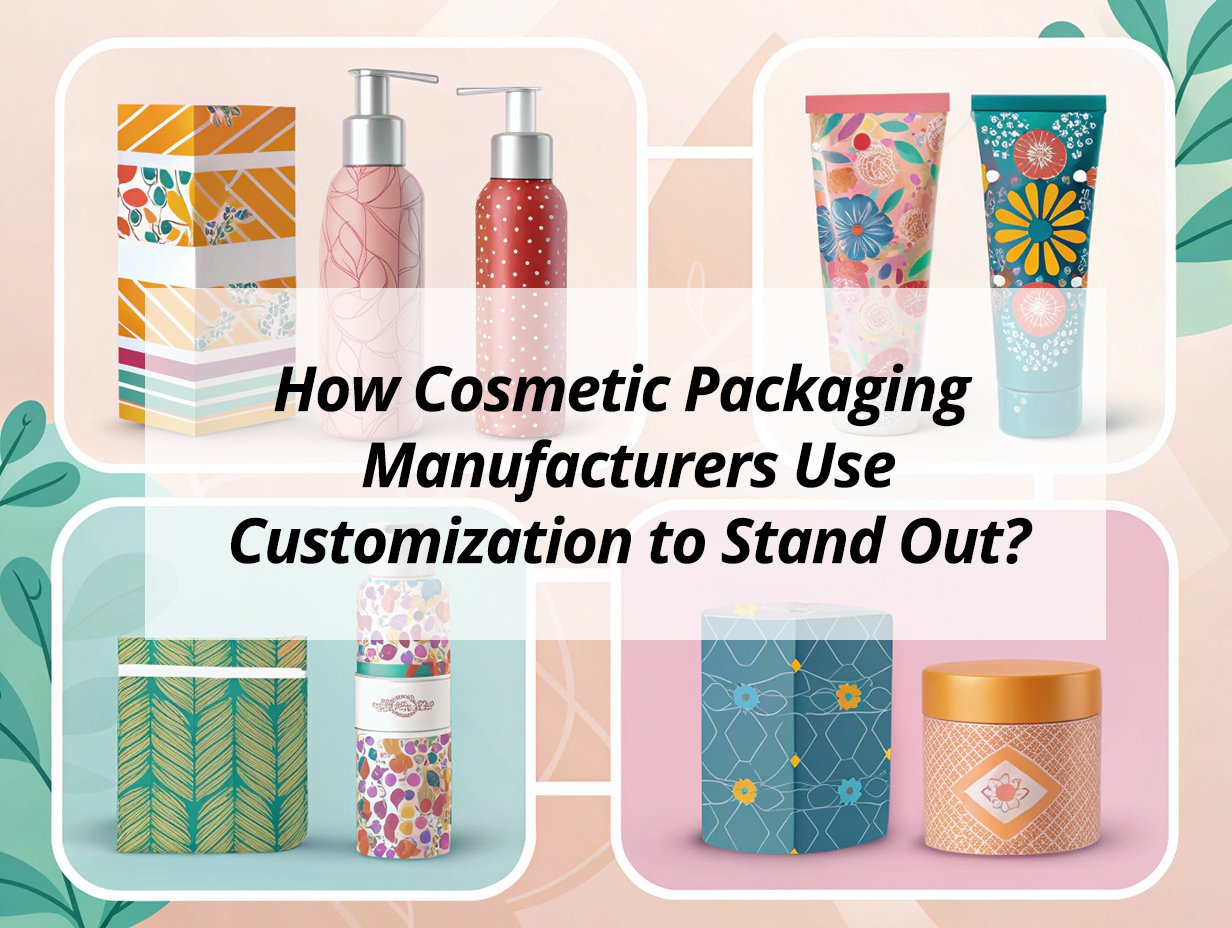
Beauty shelves are crowded with similar bottles, jars, tubes, and compacts. Simply changing a logo may not create enough differentiation for consumers to remember a product.
Cosmetic packaging manufacturers use customization to stand out through unique shapes, custom colors, materials, molds, applicators, dispensing systems, surface finishes, printing, metallization, hot stamping, refill mechanisms, and tactile experiences. The strongest customization connects visual identity with product function, consumer experience, manufacturability, sustainability, and repeat-production consistency.
Customization does not always require completely new packaging. Manufacturers can create brand differentiation at several levels, from decorating a stock component to engineering a unique package from the ground up.
What Types of Customization Can Cosmetic Packaging Manufacturers Offer?
Customization can begin with simple color changes and extend all the way to unique molds, mechanisms, materials, applicators, and dispensing experiences.
Cosmetic packaging manufacturers can customize package shape, size, capacity, resin, color, mold texture, cap, applicator, pump, refill mechanism, surface finish, printing, hot stamping, metallization, laser engraving, and assembly. Brands can choose between stock decoration, modular customization, modified tooling, or fully bespoke development depending on budget, volume, launch timing, and differentiation goals.
1. Color Customization
Color is one of the simplest ways to create a recognizable package.
Manufacturers can customize:
- molded resin color;
- translucent color;
- opaque color;
- spray coating;
- metallic color;
- soft-touch color;
- gradient finishes.
A skincare brand might use:
warm beige bottle + dark brown cap
while a color-cosmetics brand could choose:
transparent pink tube + silver cap
Aptar describes color matching as a major part of its customization service and says more than 50% of its production involves customized colors. It also offers colored samples for shelf and line review before launch.
Color approval should use a physical package.
The same color can appear different on:
- PP;
- PET;
- PETG;
- ABS;
- aluminum;
- matte coatings.
Lighting and formula color can also change the result.
2. Shape Customization
Shape creates stronger structural differentiation.
Manufacturers can alter:
- bottle profile;
- cap geometry;
- jar silhouette;
- compact shape;
- actuator;
- decorative window.
A unique silhouette can help consumers recognize a product even before reading the logo.
Full custom development may involve:
concept → 3D design → engineering → prototype → tooling → trial → production
HCP describes its custom-development process as including ideation, 2D and 3D visualization, functional models, prototypes, engineering, and commercial manufacturing.
Structural customization creates strong brand ownership.
But it also requires more investment than changing decoration.
3. Surface Decoration
A standard package can look completely different after decoration.
Available technologies may include:
- silk screen printing;
- offset printing;
- hot stamping;
- digital printing;
- pad printing;
- metallization;
- spray coating;
- heat transfer;
- laser engraving;
- anodizing.
Quadpack describes these as major personalization techniques for transforming standard beauty packs into differentiated designs.
A single container might combine:
matte spray + white screen print + gold hot stamping
This can create premium contrast without developing a new mold.
4. Material Customization
Materials influence appearance, touch, weight, durability, and sustainability.
Manufacturers may offer:
- PP;
- PET;
- PETG;
- PE;
- glass;
- aluminum;
- PCR plastic;
- specialty resins.
The material decision should not be made only for appearance.
It also affects:
- formula compatibility;
- molding;
- recycling;
- decoration;
- freight.
5. Functional Customization
Beauty packaging can differentiate through the way it works.
Examples include:
- different pump outputs;
- airless dispensing;
- custom applicator shapes;
- wipers;
- refill mechanisms;
- twist-up systems;
- airtight closures;
- unusual dispensing shapes.
Quadpack's ShapeUp Stick is a good example. It can dispense the formula in a customized logo, symbol, or geometric shape while using a refillable mono-material PP system.
That turns packaging customization into part of product use.
How Does Customized Cosmetic Packaging Strengthen Brand Identity?
Packaging becomes more memorable when visual and functional elements repeat the same brand message across shape, color, texture, decoration, and product use.
Customized cosmetic packaging strengthens brand identity by translating a brand's visual language into recognizable colors, shapes, finishes, materials, graphics, applicators, and opening or dispensing experiences. When these elements remain consistent across a product family, consumers can recognize the brand more quickly while the package communicates whether it is luxurious, clinical, playful, natural, minimalist, or performance-focused.
1. Shape Can Become a Brand Signature
Think about a package without its printed logo.
Can a consumer still recognize it?
That is one of the strongest forms of packaging differentiation.
A custom profile can become a repeatable design language across:
- serum;
- moisturizer;
- foundation;
- lipstick;
- fragrance.
This gives the brand a distinctive silhouette.
2. Color Builds Recognition
A brand may repeatedly use one signature:
- pink;
- green;
- blue;
- black;
- beige.
The product name may change, but the core color stays.
Manufacturers can manage custom color standards across several package components to help build that consistency.
3. Texture Adds Another Brand Signal
Packaging is touched before or during every use.
Manufacturers can create:
- high gloss;
- matte;
- soft touch;
- frosted surfaces;
- raised textures;
- metallic effects;
- tactile top plates.
HCP's 2026 customization trends include pearlescent surfaces, tactile details, multi-layer graphics, padded textures, optical effects, and combinations of matte and glossy finishes.
These finishes communicate personality before the consumer opens the package.
4. Customization Can Reflect Brand Positioning
Different combinations can communicate very different values.
| Brand Position | Customization Direction |
|---|---|
| Clinical skincare | White + minimal print + controlled pump |
| Luxury skincare | Heavy-looking shape + metallic detail |
| Natural beauty | Soft colors + reduced decoration |
| Gen Z makeup | Bright color + unusual applicator |
| Prestige makeup | Custom silhouette + premium finish |
| Sustainable beauty | Simplified materials + refill/PCR |
| Professional cosmetics | Functional applicator + clear information |
Customization should reinforce positioning rather than simply add visual complexity.
5. Application Can Become Part of Brand Identity
This is especially powerful in:
- mascara;
- lip gloss;
- eyebrow products;
- eyeliner.
HCP develops flocked lip-gloss applicators and works with brands on applicator, rod, and wiper combinations.
GEKA similarly offers customer-specific applicator and packaging development, including adaptation of manufacturing processes for unique designs.
A distinctive applicator can change:
- formula pickup;
- dosage;
- precision;
- sensation.
This makes customization functional rather than merely decorative.
Is Fully Custom Packaging Better Than Customized Stock Packaging?
Fully custom packaging provides the greatest exclusivity, but customized stock packaging can achieve strong differentiation with lower tooling investment and shorter development time.
Fully custom cosmetic packaging is best when a brand needs exclusive structure, mechanism, size, or intellectual-property value and has enough budget, volume, and development time. Customized stock packaging is often better for faster launches because manufacturers can transform proven components through color, decoration, caps, applicators, and modular combinations without creating every mold from zero.
1. Stock Customization Is Faster
A stock package already has:
- mold;
- manufacturing process;
- dimensions;
- assembly method.
A brand may only need to select:
- color;
- finish;
- logo;
- applicator.
This reduces technical development.
GEKA's Ready-to-Go platform contains more than 1,200 items that can be combined across bottles, caps, and applicators and then individualized through decoration.
That can provide substantial variation without building an entirely new package.
2. Stock Components Can Still Look Unique
Imagine five brands using the same jar.
Brand A: white jar + black screen print.
Brand B: dusty-pink matte spray + gold foil.
Brand C: translucent blue + silver cap.
Brand D: black package + glossy logo.
Brand E: beige jar + textured top plate.
The underlying mold may be identical.
The shelf appearance can be completely different.
Quadpack specifically notes that decoration can transform a standard pack so it aligns closely with an individual brand identity.
3. Fully Custom Creates Stronger Exclusivity
Full custom development allows control over:
- silhouette;
- dimensions;
- volume;
- mechanism;
- user gesture;
- material distribution.
This may be appropriate for:
- global hero products;
- prestige launches;
- patented mechanisms;
- large-volume brands.
Aptar's BTY business supports standard, hybrid, and fully custom packaging with design, tooling, molding, aluminum manufacturing, finishing, and assembly.
4. Custom Tooling Adds More Responsibility
Custom molds require decisions about:
- tooling ownership;
- maintenance;
- modification;
- storage;
- production location;
- mold lifetime.
The brand should document these points before paying for tooling.
5. A Hybrid Strategy Often Works Well
Brands do not need to choose only between:
completely stock
and
completely custom
A hybrid design may use:
stock bottle + custom cap
or:
stock compact + unique top plate
or:
stock lip gloss bottle + customized applicator
This can concentrate development money on the component customers notice most.
Stock vs Custom Comparison
| Factor | Customized Stock | Fully Custom |
|---|---|---|
| Development speed | Faster | Slower |
| Tooling investment | Lower | Higher |
| Structural uniqueness | Moderate | Very high |
| Technical risk | Lower | Higher |
| Decoration freedom | High | High |
| MOQ flexibility | Usually better | Depends on tooling economics |
| Brand exclusivity | Moderate-high | Highest |
| Suitable for test launch | Strong | Less efficient |
| Suitable for hero product | Good | Excellent |
The best route depends on commercial strategy.
How Can Brands Balance Customization, Cost, Sustainability, and Mass Production?
Customization should create enough brand value to justify the additional tooling, decoration, materials, production steps, and quality-control requirements it introduces.
Brands can balance customization, cost, sustainability, and mass production by prioritizing one or two distinctive features, using proven platforms where possible, minimizing unnecessary material and decoration, selecting recycling-compatible materials, approving production samples, and calculating total cost rather than unit price alone. Customization should simplify brand recognition without making manufacturing unnecessarily complicated.
1. Customize What Customers Notice
Not every component needs to be unique.
I would ask:
Which part does the customer see and touch first?
It may be:
- cap;
- applicator;
- pump;
- top plate;
- bottle silhouette.
Focus customization there.
A standard hidden internal component usually does not need expensive custom engineering.
2. Avoid Over-Decoration
Consider:
spray + metallization + screen print + foil + label + top plate
The package may look impressive.
But every process adds:
- setup;
- transportation;
- inspection;
- reject risk;
- cost.
More decoration is not always more premium.
One precise metallic accent can be stronger than five competing effects.
3. Sustainability Can Be Customized Too
Customization can include:
- PCR;
- mono-material structure;
- refill;
- lightweighting.
Quadpack's Linea PP Panstick, launched in 2026, combines a refillable mechanism, mono-material PP structure, and extensive customization options.
Its ShapeUp family similarly combines personalized functional shapes with mono-material construction and PCR possibilities.
This demonstrates that differentiation and circular design do not always need to conflict.
4. Design Decoration Around Recyclability
Sustainable packaging does not mean decoration must disappear.
But brands should consider:
- metallic coverage;
- labels;
- coatings;
- mixed-material ornaments;
- oversized decorative shells.
Sometimes the strongest sustainable customization comes from:
unique molded shape + controlled color + small direct logo
rather than adding several materials.
5. Test Before Mass Production
A customized package should be tested for:
- dimensions;
- function;
- decoration adhesion;
- drop resistance;
- formula compatibility;
- assembly;
- transport.
Custom materials and finishes can introduce new failure modes.
For example:
- soft-touch coating may scratch;
- metallization may wear;
- hot stamping may fail on a curve;
- custom cap geometry may affect closure fit.
Physical approval is essential.
How Do Manufacturers Use Decoration to Differentiate Standard Packaging?
Decoration is one of the fastest ways to make an existing mold feel exclusive because it changes the consumer-facing surface without rebuilding the structural package.
Manufacturers differentiate standard cosmetic packaging through custom color matching, silk screen printing, hot stamping, spray coating, metallization, digital printing, laser engraving, anodizing, tactile effects, top plates, and combined finishes. A carefully chosen decoration strategy can give a proven stock container a completely different premium, clinical, playful, or sustainable visual identity.
Hot Stamping
Best for:
- metallic logos;
- borders;
- premium accents.
Silk Screen Printing
Best for:
- solid colors;
- strong text;
- opaque logos.
Metallization
Best for:
- chrome;
- gold;
- rose gold;
- full metallic components.
Digital Printing
Useful for:
- detailed multicolor artwork;
- complex patterns;
- customization flexibility.
Laser Engraving
Useful for:
- permanent markings;
- subtle premium details;
- metal components.
Aptar's current custom platform offers all of these kinds of processes across plastics and metal.
GEKA also operates in-house metallization, lacquering, silk screening, and hot foil stamping to align packaging with individual brand aesthetics.
Decoration Selection Table
| Brand Goal | Strong Option |
|---|---|
| Metallic luxury | Hot stamping / metallization |
| Minimal clinical | Screen print / engraving |
| Bright playful identity | Custom resin + digital graphics |
| Soft premium | Matte spray + foil |
| High-color artwork | Digital printing |
| Metal component | Anodizing / engraving |
| Quick stock differentiation | Color + printing |
| Limited edition | Special top plate / custom finish |
The decoration method should follow the brand message.
How Can Functional Customization Make Cosmetic Packaging More Memorable?
Consumers may forget a color but remember an unusual application or opening experience. Functional customization gives packaging a recognizable behavior.
Functional customization can differentiate cosmetic packaging through applicator shape, wiper design, pump dosage, actuator geometry, refill systems, airtight mechanisms, opening gestures, and formula-dispensing patterns. These features make the package part of the product experience, creating differentiation that is harder for competitors to reproduce through graphics alone.
1. Applicators Change Product Performance
A lip gloss applicator can be customized for:
- higher formula pickup;
- precise lip contour;
- soft application;
- large surface coverage.
Mascara brushes can affect:
- volume;
- separation;
- curl;
- definition.
This means applicator development must consider the formula.
HCP notes that its applicator, rod, and wiper technologies are optimized together according to product requirements.
2. Pumps Can Create a Signature Experience
A skincare pump may be customized for:
- dose;
- actuator shape;
- locking method;
- output feel.
Premium dispensing can communicate quality every time the customer uses the product.
Aptar's current skincare and color-cosmetics platforms specifically connect customization with formula protection, dispensing performance, and brand differentiation.
3. Refill Mechanisms Create Interaction
A good refill system can create a recognizable:
- twist;
- click;
- slide;
- push-release.
That physical gesture can become part of the brand experience.
4. Customized Dispensing Can Be Highly Visible
Quadpack's ShapeUp concept goes further by changing the shape of the dispensed formula itself.
The product can emerge as:
- logo;
- symbol;
- geometric pattern.
The packaging and formula become one visual experience.
My insights: How Cosmetic Packaging Manufacturers Use Customization to Stand Out
Customization creates the most value when manufacturers help a brand identify the smallest number of changes that produce the strongest visual or functional recognition.
Cosmetic packaging manufacturers stand out through customization when they combine recognizable shape, color, decoration, applicators, dispensing, and sustainable design into one repeatable package system. I would not customize every possible component. I would concentrate investment on the features consumers notice, touch, remember, and associate directly with the brand.
1. Create One Hero Signal
I would ask:
What should customers remember after seeing this package for three seconds?
Possible answers:
- unusual cap;
- signature pink;
- square silhouette;
- gold ring;
- special applicator.
Choose one hero element first.
2. Add One Supporting Signal
Then add a secondary feature.
For example:
custom bottle shape + signature color
or:
standard bottle + unique cap
or:
clear gloss tube + custom applicator
Two coordinated signals can be more memorable than ten decorative effects.
3. Use Stock Packaging Strategically
For a new brand, I would rarely start by customizing every mold.
A better first step may be:
proven stock package + custom color + distinctive decoration
This preserves budget for:
- formula;
- marketing;
- inventory.
Once volume grows, structural customization becomes easier to justify.
4. Spend Tooling Money Where It Creates Ownership
If I invest in a custom mold, I want it to create something competitors cannot easily reproduce.
Good candidates include:
- distinctive silhouette;
- custom closure;
- unique refill mechanism;
- custom applicator.
I would avoid expensive custom tooling for a feature consumers barely notice.
5. Make Function Part of the Brand
For mascara, lip gloss, skincare, and foundation, I would consider the application experience just as important as decoration.
Ask:
- How does it open?
- How much product comes out?
- How does it feel?
- How precisely does it apply?
Functional customization can create longer-lasting differentiation than a temporary visual trend.
6. Use Decoration With Hierarchy
I would give every finish a job.
For example:
matte black = base identity
white screen print = product information
gold foil = logo emphasis
That is clearer than applying effects everywhere.
7. Design Customization as a Product Family
One custom language should work across several SKUs.
For example:
| Packaging Element | Brand Rule |
|---|---|
| Shape | Same rounded shoulder |
| Logo | Same centered position |
| Cap | Same champagne gold |
| SKU color | Changes by formula |
| Typography | Consistent |
| Refill cue | Same icon |
This makes future launches easier.
8. Include Sustainability Before Tooling
I would make decisions about:
- PCR;
- mono-material design;
- refill;
- lightweighting;
before custom molds are approved.
Changing these later may require another engineering cycle.
Current products from Quadpack demonstrate that mono-material and refillable structures can still support strong brand customization.
9. Lock the Custom Specification
Customization increases the number of details that can change.
I would document:
- mold number;
- resin;
- Pantone reference;
- masterbatch;
- surface finish;
- print artwork;
- foil color;
- decoration location;
- applicator;
- wiper;
- pump;
- assembly.
Repeat-order consistency depends on these details.
10. Use a Custom Cosmetic Packaging Checklist
Before approving customized packaging, I would confirm:
- Brand positioning defined
- Hero customization feature identified
- Stock vs custom route compared
- Custom tooling requirement confirmed
- Mold ownership documented
- Final resin selected
- PCR or sustainability options reviewed
- Custom color physically approved
- Package shape approved
- Applicator or pump selected
- Formula compatibility tested
- Decoration methods confirmed
- Decoration adhesion tested
- Drop performance checked
- Assembly verified
- MOQ confirmed
- Tooling cost confirmed
- Total unit cost calculated
- Production lead time confirmed
- Golden sample approved
- Repeat-order specification locked
The best customization is not the package with the most special effects. It is the package where consumers can see, touch, or use one distinctive feature and immediately connect it with the brand.
Conclusion
Cosmetic packaging manufacturers stand out through purposeful customization of shape, color, decoration, applicators, functionality, and sustainable design while keeping the final package practical for reliable mass production.