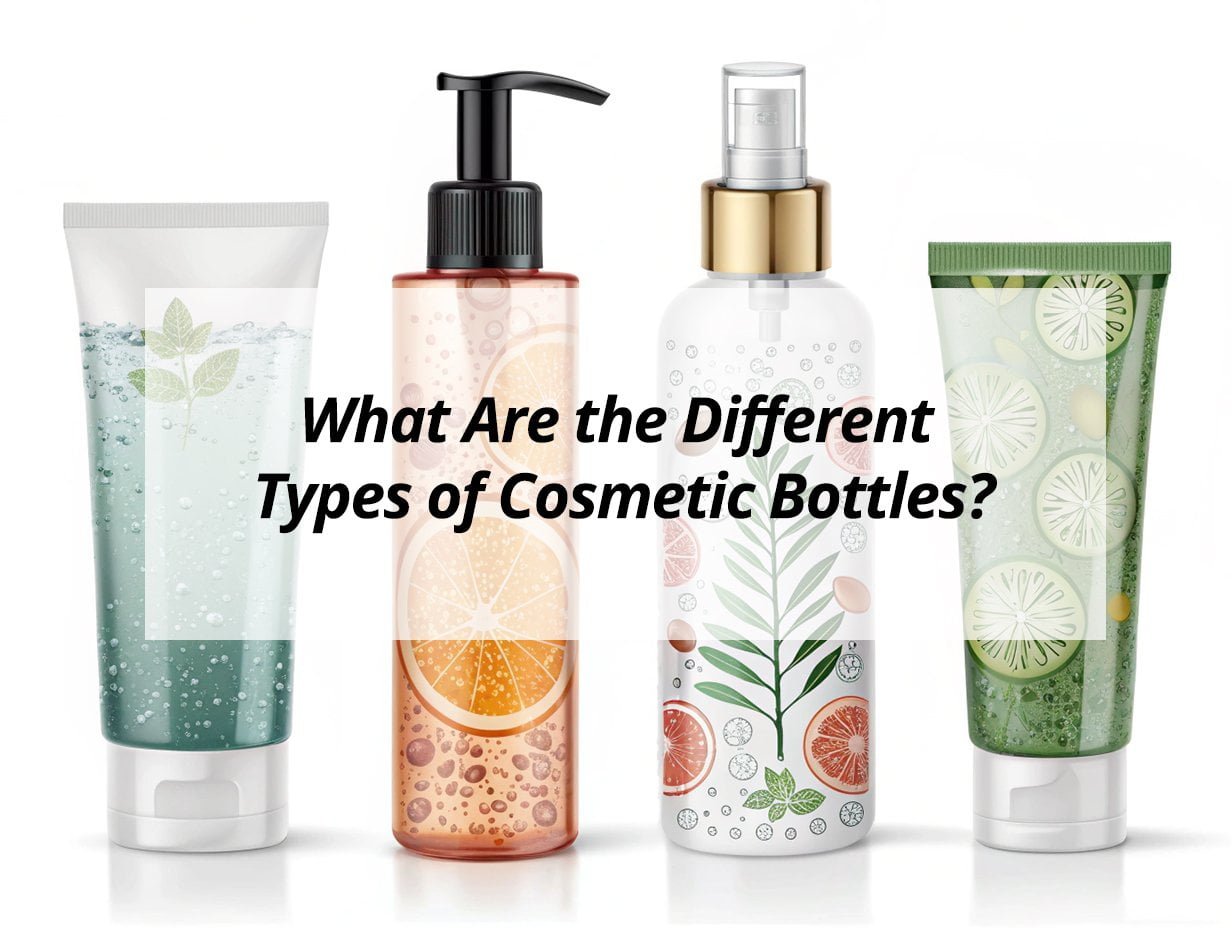
In today's competitive beauty industry, selecting the right cosmetic bottles can make or break a product’s success. The variety of options can often overwhelm brand owners and decision-makers.
Types of cosmetic packaging include dropper bottles, airless pump bottles, jars, and tubes, each offering unique benefits for different formulas and applications. Selecting the correct bottle type can significantly enhance user experience and satisfaction.
Understanding the nuances of each packaging type is crucial for aligning with brand strategy and consumer needs.
What are the different types of cosmetic containers?
Navigating through countless containers can be a daunting task for any brand striving for market dominance. The choice influences both product preservation and customer satisfaction.
Cosmetic containers1 include bottles, jars, tubes, and compacts. Each type offers distinctive advantages tailored for specific products, from liquids to creams and powders, making the selection vital for product success.
Understanding Container Choices
Understanding the types of containers helps in maximizing product preservation and functionality.
- Bottles: Essential for liquids and lotions. Variants like dropper and airless pump bottles ensure precise dosage and contamination prevention.
- Jars: Best for creams and balms. Their broad openings facilitate easy usage and application.
- Tubes: Suitable for gels and ointments. They enable controlled dispensing, maintaining product hygiene.
Key Considerations
- Material: Opt for plastics, glass, or metals based on sustainability and brand image.
- Design: Should match brand aesthetics to stand out on shelves.
- Functionality: Offers user-friendly features to enhance consumer experience.
Perspectives
- Sustainability: Increasingly crucial in material selection.
- Innovation: Drives differentiation in a crowded market.
What are the different types of bottles?
Bottles serve as the backbone of cosmetic packaging and offer versatility in design and function. Their role in the market is both foundational and transformative.
Different types of bottles include dropper bottles, airless pump bottles, spray bottles, and traditional screw cap bottles. Each style provides unique benefits and aligns with diverse cosmetic formulas and application methods.
Exploring Bottle Varieties
Detailed knowledge of bottle types enhances product efficacy and consumer satisfaction.
- Dropper Bottles: Ideal for serums and oils, allowing precise control over dosage and reducing product waste.
- Airless Pump Bottles: Great for creams. They prevent contamination, extending product shelf life.
- Spray Bottles: Intended for mists and toners. They provide an even application over large areas.
Advantages
| Bottle Type | Key Advantage |
|---|---|
| Dropper Bottles | Minimize waste, enhance application precision. |
| Airless Bottles | Maintain formula purity, reduce oxidation. |
| Spray Bottles | Optimize the user application process, delivering fine mist coverage. |
Perspectives
- Consumer Convenience: A primary factor influencing purchase decisions.
- Product Integrity: Maintained via innovative sealing and dispensing solutions.
What are the 5 main categories of professional skincare products?
Professional skincare products require specialized packaging that maintains quality and effectiveness. Proper packaging is a critical aspect of product success.
The 5 main skincare categories are cleansers, toners, treatments, moisturizers, and protectants. Each category demands specific bottle choices to optimize storage and usability, ensuring product efficacy.
Industry-Specific Packaging Needs
Choosing the correct packaging ensures preservation of each product type's integrity.
- Cleansers: Typically use pump bottles for swift, practical application.
- Toners: Often housed in spray or flip-cap bottles providing direct, even application.
- Treatments: Contained in dropper bottles for targeted, precise use.
- Moisturizers: Commonly in airless pump bottles, protecting against contamination and oxidation.
- Protectants: Generally in tubes or airless pumps, allowing controlled, hygienic dispensing.
Critical Characteristics
- Efficiency: Ease of application and functionality in user routine.
- Hygiene: Minimized contamination risk during product use.
- Brand Image: Aesthetic packaging enhances perceived product value.
Perspectives
- Market Trends: Eco-friendly choices gain popularity, shaping packaging decisions.
- Consumer Expectations: Drive innovation in product delivery and experience.
What are the four main types of packaging?
Diverse packaging types serve varied functions, from protecting cosmetics during transit to enhancing shelf appeal. Understanding these categories is fundamental to strategic product presentation.
The four main packaging types are primary, secondary, tertiary, and quaternary, each serving distinct purposes in protecting and marketing cosmetics. This hierarchy ensures products remain intact from manufacturing to consumer hands.
Packaging Hierarchy Unplugged
Each packaging level contributes distinct functionality crucial for market success and ensures product protection and presentation.
- Primary Packaging2: Comes into direct contact with the product. Ensures safety and usability.
- Secondary Packaging3: Adds an additional protection layer and provides space for branding and consumer information.
- Tertiary Packaging4: Facilitates bulk shipping and handling, often using pallets or large boxes.
- Quaternary Packaging: Integrates logistics and supply chain efficiencies, suited for extensive distribution networks.
Key Roles
| Packaging Level | Function |
|---|---|
| Primary | Direct engagement through consumer interaction. |
| Secondary | Enhanced appeal through branding and protection. |
| Tertiary | Simplified via distribution efficiency for bulk handling. |
Perspectives
- Innovation Influence: Shapes both primary and secondary design.
- Cost Management: Tertiary and quaternary packaging optimization aids in distribution efficiency.
My Insights: The Different Types of Cosmetic Bottles
Looking to elevate your cosmetic line's packaging? Understand the variety of bottle types to choose the best fit for your products.
Cosmetic bottles come in diverse types, including airless, dropper, pump, roller, spray, and jar containers. Each type serves specific functions and enhances the user experience, perfect for different formulations from serums to lotions.
Cosmetic Bottle Types
Overview of Bottle Types
-
Airless Bottles: Ideal for creams and gels, reducing air exposure to extend shelf life. They offer precise and hygienic dispensing.
-
Dropper Bottles: Perfect for serums and oils, enabling precise dosing. Often made of glass for a premium feel.
| Bottle Type | Best For | Benefits |
|---|---|---|
| Airless | Creams, gels | Prevents contamination, precise dosing |
| Dropper | Serums, oils | Accurate dosing, premium appeal |
Material Considerations
-
Plastic: Commonly PET or HDPE, widely recycled, great for everyday products like shampoos and lotions.
-
Glass: Offers luxury look, great for high-end products but heavier with higher transport costs.
-
Sustainability: Consider end-of-life options. Choose materials supporting recycling or reuse, avoiding multi-material laminates.
Incorporating the right bottle type enhances product protection and customer satisfaction, aligning with environmental goals through thoughtful material selection.
Conclusion
Choosing the right cosmetic bottles requires an in-depth understanding of the options available and their alignment with product specifications and brand goals. This alignment ensures functionality, brand consistency, and overall consumer satisfaction.
-
Explore this link to understand the various cosmetic container types and their unique advantages for product success. ↩
-
Understand the role of primary packaging in ensuring product safety and usability. ↩
-
Explore how secondary packaging enhances branding and provides additional protection. ↩
-
Learn about the importance of tertiary packaging in facilitating bulk shipping and handling. ↩