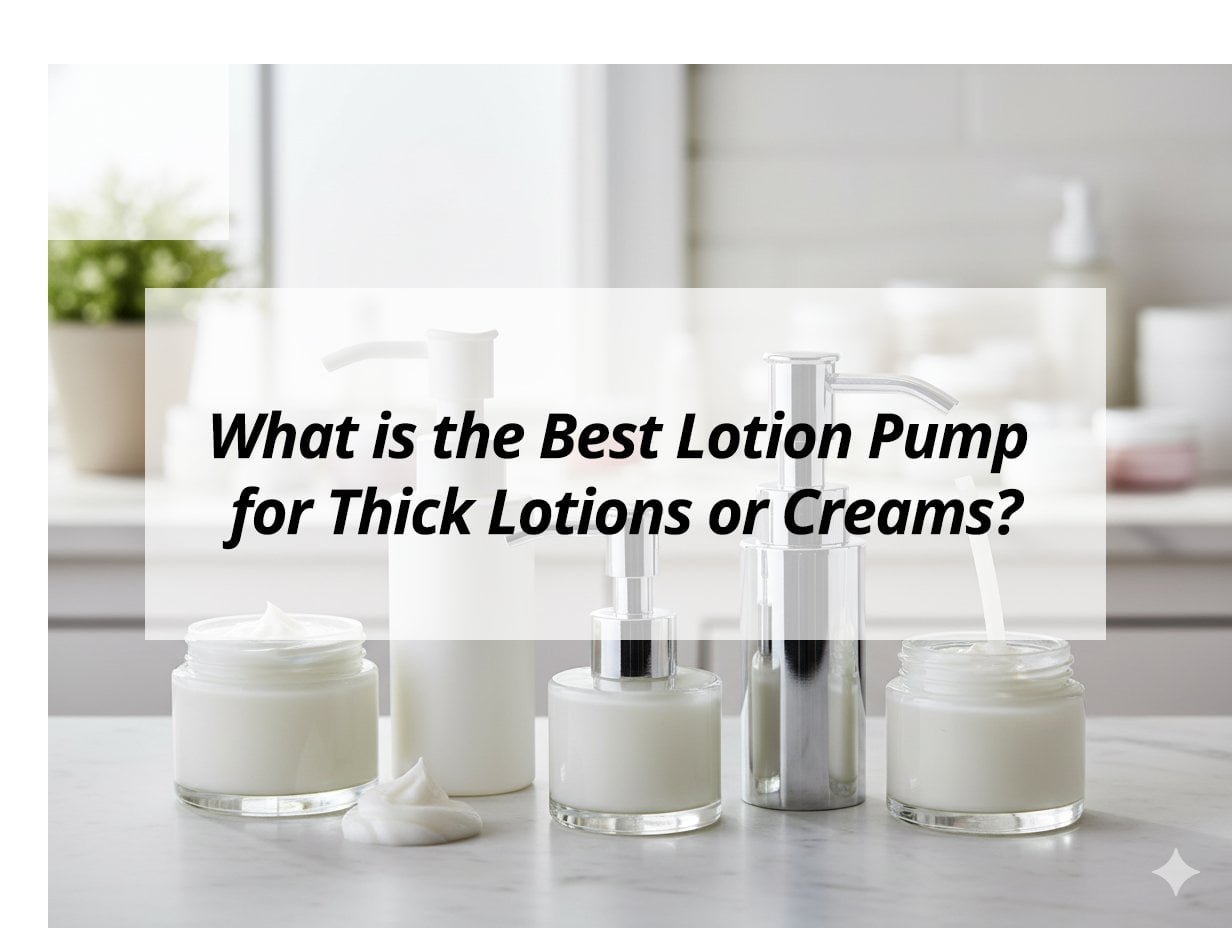
Thick lotions and creams present unique challenges for dispensing. The right pump makes all the difference in user satisfaction.
The best lotion pump for thick lotions or creams should have a robust mechanism and a wide output aperture. This design prevents clogging and ensures smooth dispensing with minimal effort. Opt for pumps that specifically accommodate high viscosity, increasing usability and customer delight.
Selecting the correct pump optimizes product delivery and enhances the customer experience. This thoughtful choice reflects a commitment to quality and efficient usage.
How to Transfer Thick Lotion to Another Bottle?
Transferring thick lotions can be daunting without the right approach. A strategic method is crucial for success.
To effectively transfer thick lotion, employ a wide-mouth funnel or a flexible spatula. Slightly warming the lotion increases fluidity, allowing for a controlled transfer. Take your time to avoid spills and ensure even distribution into the new container.
Understanding the transfer process minimizes mess and maximizes efficiency. Using the right tools can transform this task into a seamless operation.
Steps to Transfer Thick Lotion
-
Tools Preparation: Utilize a wide-mouth funnel1 and a spatula. These facilitate guided transfer without unnecessary waste.
-
Lotion Warming: Gently heat the lotion to increase its fluidity. This step simplifies the transfer process, making it more efficient.
-
Slow and Careful Transfer: Pour or scoop the lotion thoughtfully. Avoid rushing to ensure accuracy and avoid unnecessary mess.
By following these guidelines, you make the process smooth and efficient, whether for personal use or broader business applications.
What is Thicker, Cream or Lotion?
Determining the consistency between creams and lotions is essential for tailoring skincare solutions.
Creams generally contain more oil than lotions, making them thicker. They provide rich hydration, suitable for very dry skin. Lotions, being lighter, are designed for everyday use and absorb quickly. Knowing these differences aids in selecting the right product for specific skincare needs.
Understanding these distinctions helps in making informed choices that cater to individual skin needs, offering effective solutions tailored to different conditions.
Creams vs. Lotions: Key Differences
| Property | Cream | Lotion |
|---|---|---|
| Consistency | Thicker | Lighter |
| Oil Content | High | Low |
| Absorption | Slow, deep nourishment | Fast, surface-level moisture |
| Use | Dry, cracked skin | Daily, all-over body care |
A clear understanding of these differences helps in making the right product selection, ensuring customer satisfaction2 and skincare efficacy.
What is the Difference Between a Treatment Pump and a Lotion Pump?
Selecting the right pump requires understanding their distinct functions.
Lotion pumps are designed for products with moderate to high viscosity, offering consistent flow for lotions and creams. Treatment pumps provide precision for smaller amounts, used for serums and concentrated treatments. Functionality and product type are crucial in deciding which pump to use.
Choosing the appropriate pump is integral to delivering your product as intended, ensuring optimal usage and customer contentment.
Compare Pumps: Lotion vs. Treatment
-
Lotion Pump:
- Application: Suitable for lotions, thicker shampoos, and body creams.
- Design: Focuses on high-output for large volume dispensing.
- Feature: Ensures consistent product flow without blockages.
-
Treatment Pump:
- Application: Perfect for serums, oils, and concentrated treatments.
- Design: Emphasizes precision and controlled dosing.
- Feature: Minimizes product wastage, ideal for high-value items.
By navigating these differences, you can align your product's delivery with customer needs, ensuring satisfaction and product efficiency.
How to Get a Lotion Bottle to Pump?
Ensuring seamless operation of a lotion bottle pump can be complex but is achievable with the right steps.
Proper setup of the pump involves securing it tightly to the bottle and priming the pump mechanism. This means pushing down several times to eliminate airlocks. Effective priming ensures consistent product flow and user convenience.
Properly preparing the pump prevents customer frustration and improves the lifecycle of the product, maintaining satisfaction and quality.
Steps to Efficient Pump Setup
-
Pump Attachment: Secure the pump firmly onto the bottle to avoid leaks or improper function.
-
Priming the Pump: Push down the pump head several times. This step expels trapped air, initiating smooth product flow.
-
Inspection for Obstructions: Check for internal blockages if issues continue. Ensure all components are in place and functioning.
Adhering to these steps guarantees effective operation, aligning with customer expectations and product promises.
My insights: The Best Lotion Pump for Thick Lotions or Creams
Struggling with dispensing thick lotions? Discover the ideal pumps designed for high viscosity, ensuring smooth and efficient product use.
The best pumps for thick lotions are high-viscosity or airless pumps, featuring strong pistons, wider tubes, and optimized output. They prevent clogging and ensure easy dispensing while maintaining product integrity against air exposure.
Choosing the Right Pump for Thick Lotions
Key Pump Types:
-
High-Viscosity Lotion Pump: Designed with reinforced pistons and wider dip tubes, these pumps effectively manage denser lotions by reducing resistance and preventing clogging. Ideal for everyday thick lotions.
-
Airless Pumps: Utilize a vacuum mechanism with a rising disc instead of a dip tube. Perfect for premium creams needing high resistance handling and air exposure reduction.
Features That Make a Pump Ideal:
-
Strong Mechanism: Essential for pulling up thick products without user strain, featuring robust springs and larger pump chambers.
-
Wider Product Path: Reduces clogging by providing a larger product flow channel.
When to Choose Which Pump:
| Situation | Best Choice | Benefits |
|---|---|---|
| Very thick creams or ointments | Airless pump | Handles resistance, avoids air pockets. |
| Sensitive or active formulations | Airless pump | Limits oxygen exposure. |
| Everyday lotions | High-viscosity lotion pump | Familiar, reinforced design. |
To find the perfect solution, match the pump type to your product's viscosity and perform testing to ensure optimal performance3.
Conclusion
Understanding lotion pumps for thick products requires diligent consideration of design and function. This knowledge enhances product performance and consumer satisfaction, reinforcing reliability and trust in your brand's promise.