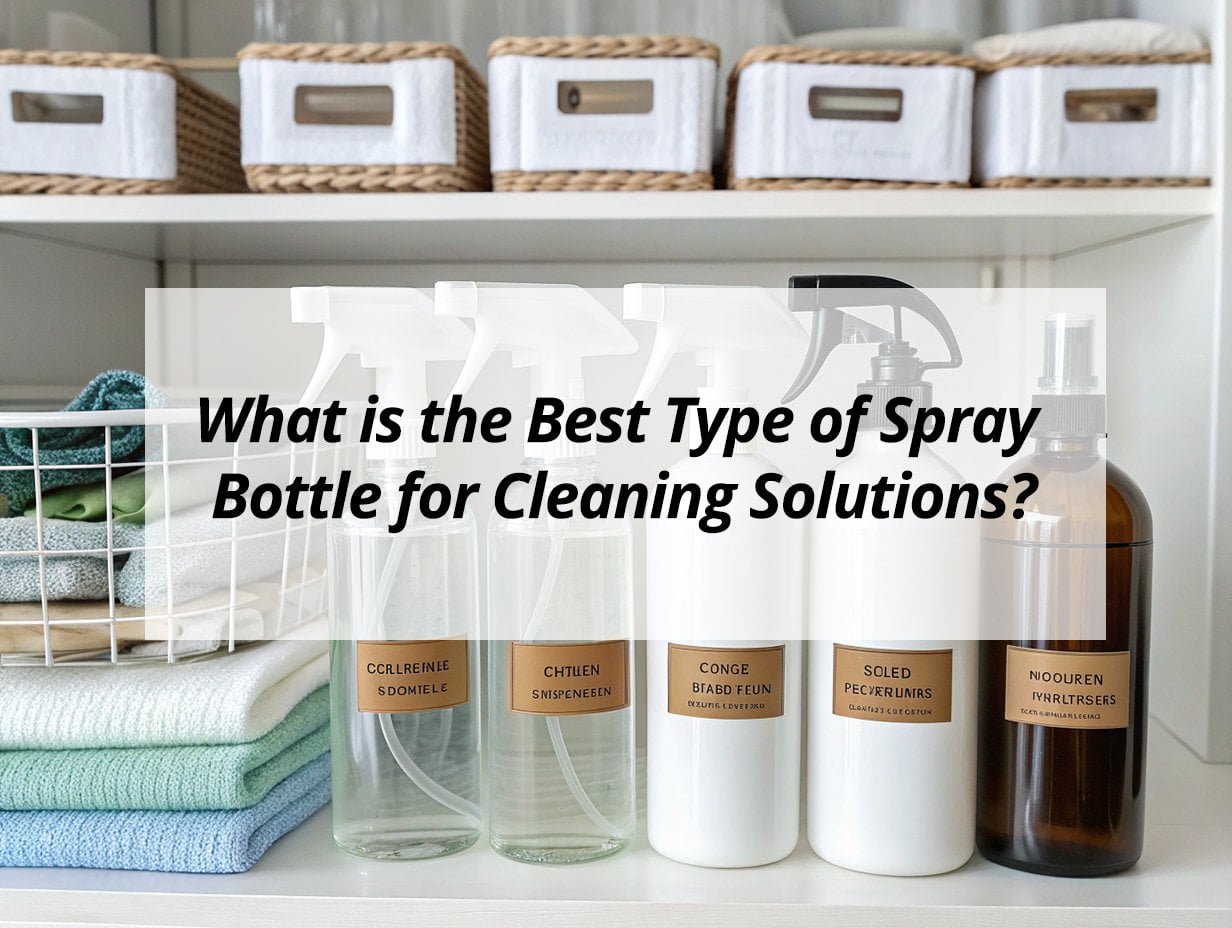
Keeping your spaces clean can be a daunting task without the right tools. Choosing the correct spray bottle can transform a tedious chore into an effortless endeavor.
The best spray bottle for cleaning solutions combines durability, chemical resistance, and user-friendly design. Opt for HDPE bottles with adjustable nozzles to ensure versatility and long-lasting use. These bottles provide effective performance, making them ideal for handling various cleaning tasks with ease and reliability.
Finding the ideal spray bottle means understanding the materials and features that best suit different cleaning solutions, ensuring a seamless and efficient cleaning experience.
Is it better to use glass or plastic spray bottles?
Choosing between glass and plastic spray bottles can be a perplexing decision, considering their varying applications and durability.
Plastic spray bottles, particularly those made from HDPE, are recommended for their resilience and wide chemical compatibility1. Meanwhile, glass bottles are superior for light-sensitive solutions2.
Glass vs. Plastic Spray Bottles
-
Durability: Plastic bottles, especially HDPE, are robust and less prone to breakage, making them ideal for handling everyday household cleaners. They can withstand the impact of harsh chemicals like bleach and vinegar without degrading.
-
Compatibility: Glass bottles, often paired with plastic or metal sprayers, are ideal for essential oils or light-sensitive mixtures. They offer superior protection against light but are heavier and more fragile.
-
Usability: Plastic bottles are lightweight, affordable, and suitable for general cleaning purposes. Glass, while less versatile for rough use, adds a touch of sophistication and is best used for specific needs like essential oil blends.
| Type | Durability | Compatibility | Usability |
|---|---|---|---|
| Plastic | High | Most cleaners | Lightweight |
| Glass | Moderate | Essential oils, UV-sensitive | Fragile |
Choosing between glass and plastic depends on the specific cleaning solutions and durability required for the task at hand. Plastic works for a broad range of applications, while glass is perfect for specific cases.
What material is best for spray bottles?
The material of a spray bottle significantly impacts its effectiveness, longevity, and safety for various cleaning applications.
HDPE is considered the best material for spray bottles due to its high chemical resistance and robustness. It efficiently manages multiple cleaning agents without degrading over time.
Choosing the Right Material
-
HDPE (High-Density Polyethylene): Known for its outstanding chemical resistance3 and durability, HDPE bottles are the go-to choice for versatile use. They're suitable for common cleaners, even those with acidic or basic properties, making them an essential choice for varied cleaning needs.
-
PET (Polyethylene Terephthalate): Offers a clear view of contents and moderate chemical resistance, making it suitable for more mild cleaning applications.
-
Amber Glass: Used primarily for solutions sensitive to light exposure, providing protection against UV degradation and ensuring the integrity of contents.
-
PE (Polyethylene) vs. PP (Polypropylene): PE works well for lighter cleaning needs, while PP offers enhanced resistance to higher temperatures and some chemical solutions.
| Material | Chemical Resistance | Durability | Ideal Use |
|---|---|---|---|
| HDPE | High | Strong | Harsh cleaners |
| PET | Moderate | Moderate | Light-duty cleaning |
| Amber Glass | Moderate | Fragile | UV-sensitive solutions |
Choosing the right material ensures that your cleaning tasks are both effective and safe, accommodating a broad range of needs.
Can I put isopropyl alcohol in a plastic spray bottle?
There might be concerns about storing alcohol-based solutions, like isopropyl alcohol4, in plastic bottles.
Isopropyl alcohol is safe in HDPE or PET spray bottles. These materials are designed to withstand alcohol exposure and prevent leaks or material degradation.
Alcohol and Plastic Compatibility
-
Bottle Material: HDPE and PET are highly suitable for containing alcohol-based solutions, ensuring no risk of material degradation or leakage, making them a reliable choice for such contents.
-
Nozzle Requirements: Ensure the nozzle is chemical-resistant to maintain efficiency and prevent clogging over repeated uses, crucial for maintaining the spray bottle's quality.
-
Safety Measures: Clearly label all bottles to prevent misuse or cross-contamination. Transparent bottles can facilitate monitoring of content levels to ensure optimal use and prevent excess consumption.
-
Transparent vs. Opaque: While transparent bottles are great for monitoring levels, opaque options are better for preserving sensitive content like isopropyl alcohol.
| Type | Compatibility | Considerations |
|---|---|---|
| HDPE | High | Versatile for various solutions |
| PET | Moderate | Offers clarity, but may degrade with strong solutions |
Understanding the material's compatibility with alcohol ensures safe storage and use, accommodating efficient cleaning management.
Why use amber glass spray bottles?
While popular clear and plastic options have their place, amber glass spray bottles offer distinct benefits for certain cleaning solutions.
Amber glass spray bottles protect light-sensitive solutions2 from potentially harmful UV exposure, maintaining their effectiveness and integrity. They're particularly suited for essential oils and delicate mixes.
Benefits of Amber Glass
-
UV Protection: Amber glass effectively shields contents from UV rays, crucial for maintaining the stability and effectiveness of essential oil blends and other light-sensitive formulas.
-
Aesthetic Appeal: These bottles deliver a classic and visually appealing aesthetic, perfect for both practical use and display, adding an elegant touch to custom cleaning collections.
-
Sustainability: Glass is inherently recyclable and reusable, offering an eco-friendly alternative to single-use plastics, aligning with environmentally conscious practices.
-
Safety and Hygiene: Glass resists absorption of odors and chemical interactions, ensuring the purest application, which is particularly important for kitchen or cosmetic usage where contamination must be minimized.
| Feature | Benefit |
|---|---|
| UV Protection | Prevents solution degradation |
| Recyclable | Sustainable and eco-friendly |
| Aesthetic Appeal | Attractive and suitable for gifting |
Considering amber glass ensures preservation, sustainability, and adds a stylish element to your cleaning supplies, catering to specific needs efficiently.
My Insights: Selecting the Optimal Spray Bottle for Cleaning Solutions
Are your cleaning tools holding you back? Discover the best spray bottle to enhance your cleaning efficiency.
The optimal spray bottle for cleaning solutions is a high-density polyethylene (HDPE) bottle with chemical resistance, an adjustable nozzle, and a reliable trigger for versatile, safe, and effective cleaning.
Understanding Spray Bottle Choices
Material Compatibility
- HDPE Bottles: Strong chemical resistance, ideal for most household cleaners.
- Glass Bottles: Reusable and chemical inert, but fragile.
Features and Safety
- Adjustable Nozzles: Offer fine mist to direct spray for precise application.
- Safety Details: BPA-free and leak-proof for comfort and health.
| Feature | Benefits |
|---|---|
| Chemical Resistance | Durable across a wide range of cleaners |
| Ergonomic Design | Comfortable for extended use |
| Transparency | Easy monitoring of solution levels |
Choosing the right spray bottle minimizes waste and enhances the application of cleaning solutions, providing both practicality and safety in various environments.
Conclusion
Choosing the right spray bottle means balancing material choice, durability, and compatibility with cleaning agents. HDPE and amber glass offer efficient and specialized solutions that meet varied cleaning needs effectively and safely.
-
Understanding chemical compatibility is crucial for selecting the right spray bottle material to ensure safety and effectiveness. ↩
-
Learn about light-sensitive solutions and the best storage practices to maintain their effectiveness. ↩ ↩
-
Learn about chemical resistance and why it's essential for selecting the right spray bottle for cleaning agents. ↩
-
Find out the safety and compatibility of storing isopropyl alcohol in plastic bottles like HDPE and PET. ↩