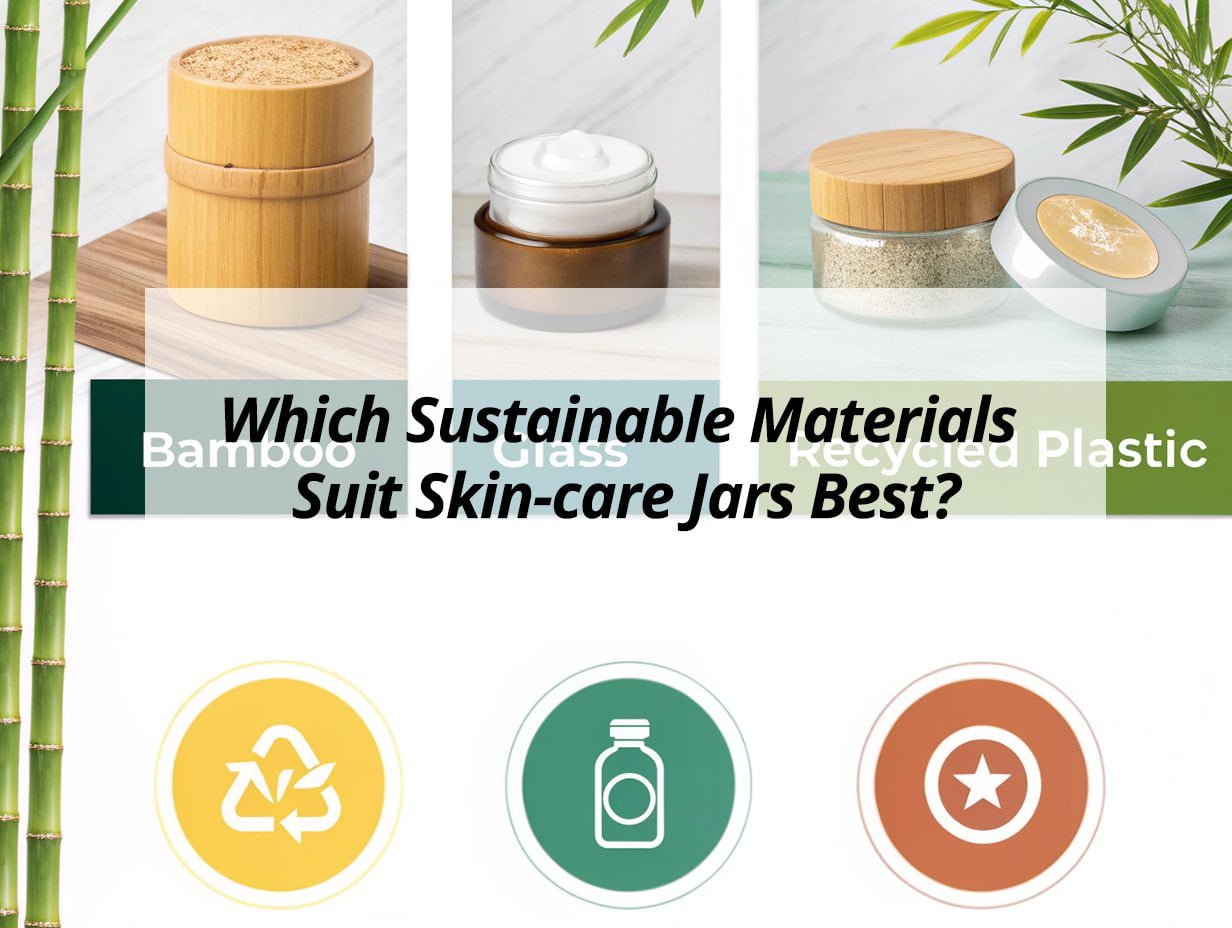
In an era of heightened environmental awareness, selecting the right materials for skin-care jars is crucial. It balances aesthetics, functionality, and sustainability to meet growing consumer expectations.
The best sustainable materials for skin-care jars include glass, aluminum, and bio-based plastics. These materials offer a blend of recyclability and reduced environmental impact, aligning with both product compatibility and sustainability goals.
Choosing the right materials ensures product safety and enhances brand reputation. Let's delve into the options available.
What is the best eco-friendly packaging for cosmetics?
Eco-conscious consumers are pushing brands to adopt packaging solutions that reduce environmental impact while maintaining quality and brand image.
Eco-friendly packaging options for cosmetics include recycled glass, aluminum, bamboo, and bioplastics. Each offers unique sustainability advantages, tailored to meet diverse product needs and aesthetic goals.
When choosing eco-friendly packaging1, brands must consider durability, recyclability, and life-cycle impacts.
Eco-Friendly Packaging
Embracing sustainable packaging involves a strategic mix of function, aesthetics, and minimal environmental impact. Here’s a closer look at key options:
Key Sustainable Materials
-
Glass:
- Benefits: Recyclable, provides a premium look, is chemically inert.
- Considerations: Heavier, potential for breakage, higher transport emissions.
-
Aluminum:
- Benefits: Lightweight, fully recyclable, excellent barrier properties.
- Considerations: Higher cost, specific compatibility needs.
-
Bioplastics:
- Examples: PLA, sugarcane-derived materials.
- Benefits: Lower carbon footprint, adaptable for recyclability.
- Considerations: Recycling depends on local infrastructure.
-
Bamboo and Renewable Composites:
- Benefits: Natural aesthetics, renewable.
- Considerations: May require coatings for moisture resistance.
| Material | Benefits | Considerations |
|---|---|---|
| Glass | Recyclable, premium look, inert | Heavier, potential for breakage |
| Aluminum | Lightweight, durable, recyclable | Higher cost, needs compatibility |
| Bioplastics | Lower carbon footprint, recyclable | Infrastructure dependent |
| Bamboo | Renewable aesthetic, natural touch | Moisture exposure limitations |
Choosing these options ensures alignment with green consumers, strengthening brand authenticity.
What is the most sustainable skincare brand?
As consumers prioritize ethical practices, brands focus on transparency and sustainability across product lines.
A sustainable skincare brand2 effectively balances eco-friendly packaging, ethically sourced ingredients, and open environmental initiatives, setting benchmarks within the green beauty space.
Leading brands embrace sustainability as a core value, leveraging innovative practices to set industry standards.
Sustainable Skincare Brands
Sustainable skincare brands distinguish themselves by embracing comprehensive eco-practices. Here’s how they maintain their status:
Hallmarks of Sustainable Brands
-
Eco-Friendly Ingredients:
- Sourcing: Ethically and sustainably sourced with minimal ecosystem disruption.
- Transparency: Clear disclosure of ingredient origins and sustainability efforts.
-
Innovative Packaging:
- Materials: Use of recycled, refillable, and reusable packaging to minimize waste.
-
Consumer Engagement:
- Education: Educate consumers about sustainability initiatives and how they can contribute.
| Brand Characteristics | Description |
|---|---|
| Eco-Friendly Ingredients | Sustainably sourced, minimizing ecological impact |
| Innovative Packaging | Recycled and refillable for longevity |
| Consumer Engagement | Educating on sustainability efforts |
Sustainable skincare brands satisfy not only product efficacy but also consumer values, garnering long-term loyalty and industry leadership.
What is the most sustainable material for product packaging?
Choosing the right packaging material is a vital step toward sustainability, offering both ecological and commercial benefits.
The most sustainable materials for product packaging include glass, aluminum, and bio-based plastics. These materials are recyclable, renewable, and reduce overall environmental impact.
Material selection requires rigorous evaluation of lifecycle impacts, consumer perception, and compatibility with product formulations.
Sustainable Materials for Packaging
Sustainable packaging encompasses materials that reduce environmental footprints, aligning with modern business ethics and consumer expectations:
Sustainable Material Innovations
-
Recycled Glass:
- Durability: Offers a strong and elegant packaging solution, extensively recyclable.
-
Biodegradable Plastics:
- Innovation: Includes materials like PLA, which break down naturally, reducing landfill contributions.
-
Cork and Bamboo:
- Aesthetic: Enhances natural branding with distinctive, renewable appeal.
| Material | Benefits |
|---|---|
| Recycled Glass | Durable, eco-friendly |
| Biodegradable Plastics | Reduces waste to landfills |
| Cork/Bamboo | Renewable, unique aesthetics |
Selection relies on integrating functional needs with environmental commitments, ensuring responsible consumer engagement.
Are glass jars3 eco-friendly?
Glass jars offer practicality and sustainability, ideal for brands concerned with eco-centric practices.
Glass jars are eco-friendly because they are fully recyclable and maintain a premium feel, making them suitable for skincare brands focused on sustainability and aesthetic integrity.
The use of glass enhances both functionality and consumer perception, aligning with eco-friendly initiatives.
Glass Jars as Eco-Friendly Options
Glass provides significant advantages as both a material choice and a branding tool:
Benefits of Using Glass
-
Recyclability:
- Feature: Endless recycling possibilities without quality loss, fostering a circular economy4.
-
Premium Appeal:
- Feature: Provides a luxurious aesthetic that enhances product value and consumer perception.
-
Inertness:
- Property: Non-reactive with formulations, thus preserving product integrity and efficacy.
| Feature | Advantage |
|---|---|
| Recyclability | Endless recycling possibilities |
| Premium Appeal | Enhances product presentation |
| Inertness | Preserves product effectiveness |
Glass jars effectively combine sustainability with a high-end look, appealing to eco-conscious consumers while elevating brand prestige.
My Insights: Sustainable Materials Suit Skin-care Jars
Choosing sustainable materials for skincare jars can enhance brand image and environmental impact. Let's explore the best options.
Glass, bamboo, and recycled PET (rPET) are top sustainable materials for skincare jars, balancing recyclability, aesthetics, and durability to align with brand goals and consumer expectations.
Material Options and Considerations
Key Sustainable Materials
-
Glass
- Pros: Premium look, highly recyclable.
- Cons: Heavy, potential breakage.
-
Bamboo
- Pros: Renewable, biodegradable.
- Cons: Outer material only; needs inner jar.
-
Recycled PET (rPET)
- Pros: Durable, supports recycling.
- Cons: Still plastic; dependent on recycling infrastructure.
Considerations for Material Choice
| Material | Benefits | Best For |
|---|---|---|
| Glass | Recyclability, premium appeal | Luxury brands targeting transparency |
| Bamboo | Eco-friendly aesthetics | Natural/organic brands |
| rPET | Circular use, durability | Mass-market products with sustainability focus |
Align material choice with target market recycling capabilities, product compatibility, and brand image to select the best options for your skincare jars.
Conclusion
By adopting sustainable materials like glass, aluminum, and bioplastics, skincare brands enhance product quality and meet consumer demands for eco-friendly solutions, reinforcing the commitment to environmental responsibility.
-
Explore this link to discover various eco-friendly packaging solutions that align with sustainable practices. ↩
-
Explore the characteristics that make a skincare brand truly sustainable and eco-friendly. ↩
-
Find out why glass jars are considered eco-friendly and their advantages in packaging. ↩
-
Understand the concept of a circular economy and its importance in sustainable packaging practices. ↩