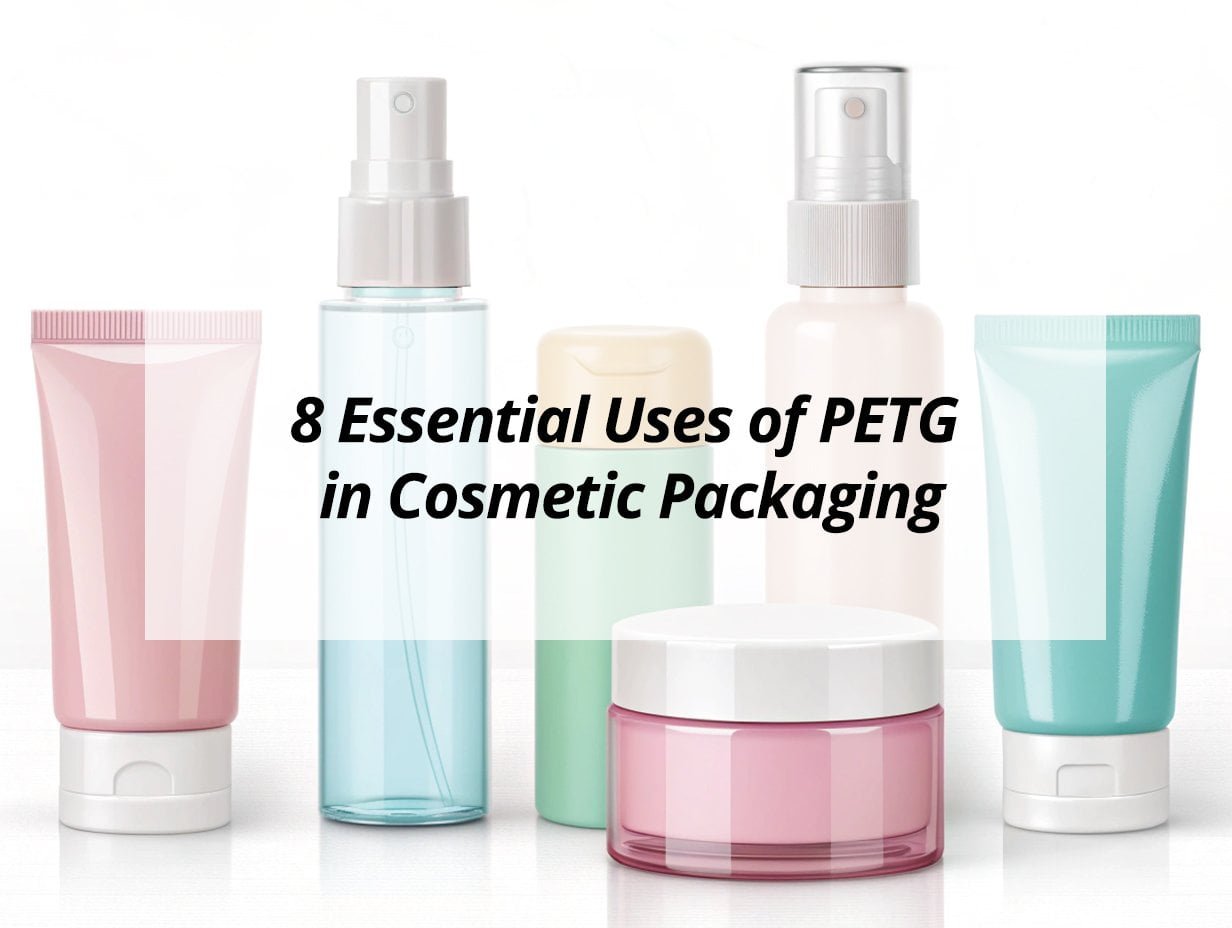
I choose materials that balance look, function, and cost. PETG often meets those needs. It gives glass-like clarity and strong impact resistance. It also shapes easily and works with many finishes.
PETG excels in cosmetic packaging for its exceptional clarity and durability. It adapts easily to various shapes, is chemically stable with numerous formulations, and supports sustainability through widespread recyclability when collected. Its versatility and aesthetic appeal make it a preferred choice for brands aiming for both style and eco-friendliness.
I will explain eight practical uses of PETG for cosmetics. I will combine market research and hands-on experience. I will note limits and how I apply PETG in real projects.
I start with bottles and end with travel sizes. Each use shows a clear reason why PETG fits the job.
What is PETG used for?
PETG works where clarity and toughness matter. I use it for visible parts and protective shells. It often replaces glass when breakage is a concern.
PETG is used for transparent bottles1, display shells, clamshells, and rigid components that need a premium look but lighter weight than glass.
I pick PETG when I need a glass-like look with better drop resistance and easy thermoforming.
Clarity, thermoforming, impact resistance2 and common bottle uses
I focus on four technical benefits and then show practical bottle uses. I keep the notes concrete and short.
Clarity and display value
PETG gives a near-glass transparency. That helps customers see the product. For serums, mists, and colored gels, this clarity improves shelf appeal. I use clear PETG for items where visual color or layer is part of the offer.
Thermoforming and shape freedom
PETG forms well in vacuum and thermoforming processes. I can make complex shells, molded trays, and custom shapes. That lets me design unique palettes and display windows without high tooling cost like for injection molds.
Impact and stress resistance
PETG resists impact better than acrylic or polystyrene. It stands up to drops during shipping. That reduces returns for breakage. I prefer PETG for large bottles or travel packs that face rough handling.
Chemical compatibility and stability
PETG shows good resistance to many cosmetic formulas. It does well with water-based serums, light oils, and most emulsions. For aggressive solvents I still test first. When formula compatibility passes, the result is stable, long shelf life.
PETG core advantages and application notes
| Property | Why it matters | Common applications |
|---|---|---|
| Clarity | Shows product color and texture | Serum bottles, clear tubes |
| Thermoformable | Complex shapes with low cost | Compacts, display shells |
| Impact resistance | Lower breakage in transit | Travel bottles, larger jars |
| Chemical resistance | Stable with many formulas | Lotions, serums, creams |
In my experience, PETG is my go-to when I want the look of glass without the breakage risk. I also use it to make rigid shells that protect inner components.
What is polyethylene glycol used for in cosmetics?
This question often pops up because PETG sounds similar to polyethylene glycol3. I clarify the difference and show where PEG is used.
Polyethylene glycol (PEG) is a cosmetic ingredient. It acts as a humectant, solvent, or texture agent. It is not the same as PETG, which is a packaging polymer.
I avoid confusing materials and ingredients when I plan packaging and formula fit tests.
PEG functions, safety notes, and why it matters for packaging choices
I split this into the role of PEG, safety and migration concerns, and how that affects packaging choice.
Main functions of PEG in formulas
PEG compounds act as solvents and humectants. They help mix water and oil phases. They also control texture and spread. Common PEG variants include PEG-7, PEG-100, PEG-20, and similar ethers. Brands use them in creams, cleansers, and serums for smooth feel and stability.
Safety and regulatory context
PEGs are widely used and generally safe when formulated properly. Some regulators require purity and absence of harmful byproducts. I always advise clients to confirm the supplier's quality data. That data helps when we check potential interaction with packaging.
Migration and packaging compatibility
PEGs are water-soluble and can interact with certain plastics. For PETG, the usual case is stable compatibility with many PEG-based formulas. Still, I run migration tests. I do this to confirm no leaching or odor changes. If PEG content is high, I test barrier needs and sealing materials.
PEG and packaging implications
| Topic | Key point | My action |
|---|---|---|
| PEG role | Humectant, solvent, texture agent | Validate formula needs |
| Safety | Generally safe, supplier data needed | Ask for COA and impurity analysis |
| Migration risk | Depends on formula and resin | Run migration and stability tests |
| Packaging fit with PETG | Usually compatible | Confirm with sample testing |
I always separate the chemistry of the formula from the packaging polymer. This prevents mistakes that can harm product stability.
What are PETG bottles used for?
PETG bottles cover many product types. I list typical uses and why PETG fits each.
PETG bottles are used for serums, facial toners, creams in jars, satin-finish bottles, and custom-shell airless bottles, especially where clarity and drop resistance are required.
I choose PETG bottles when product visibility and durability matter together.
Specific bottle types, airless systems, and decoration options
I break this into bottle categories, decoration methods, and production tips.
Clear serum and toner bottles
PETG works well for clear bottles that show product color and volume. For serums and toners I often use thin-wall PETG bottles with pump tops or spray nozzles. The result looks premium and ships better than glass.
Airless PETG bottles
Airless systems preserve sensitive actives. PETG makes a strong outer shell for these systems. The inner pump and tube may be other polymers, but the PETG shell gives clarity and toughness. I use PETG4 shells when a brand wants a visible, durable airless format.
Jars and creams containers
Thick-wall PETG jars offer the look of glass with less break risk. They take embossing and hot stamping well. For creams, I prefer a wide-mouth PETG jar with an inner liner or insert to protect the formula.
Decoration and finishing
PETG accepts silk-screen printing, UV printing, hot stamping, and electroplating (when plated properly). I use frosting or pearlescent coatings to get a softer look. For high-end lines, I combine clear PETG with a decorated sleeve or printed outer carton.
PETG bottle types and decoration
| Bottle type | Why PETG fits | Common decorations |
|---|---|---|
| Serum bottle | Clarity + impact resistance | Silk-screen, UV print |
| Airless shell | Tough, clear shell | Hot stamping, soft-touch |
| Jar (thick wall) | Glass-like feel, lighter | Emboss, frosted finish |
| Travel bottle | Light, durable | Shrink sleeve, label |
I routinely run drop tests and sealing tests for PETG bottles. That reduces quality issues after scaling production.
What is PETG packaging?
This question asks for the broad definition and ecosystem around PETG. I answer with practical scope and recycling notes.
PETG packaging covers thermoformed trays, clamshells, clear shells, bottles, jars, and decorative components. It is a clear, impact-resistant, and thermoformable polymer used where visibility and strength are priorities.
I use PETG to bridge the gap between glass aesthetics and plastic practicality.
Manufacturing methods, sustainability, and limitations
I explain how PETG is processed, its recycling profile, and the limits I watch.
Manufacturing methods for PETG packaging
PETG is made into parts via thermoforming, extrusion, and injection molding. Thermoforming makes clamshells and display shells. Injection molding suits caps and precision parts. Extrusion blow molding can be used for some bottle shapes. I choose the process based on shape complexity and wall thickness.
Decoration and printing on PETG
PETG takes many decoration methods. I often use silk-screen for opaque prints and UV digital printing for fine artwork. Hot stamping and metallization are possible but need proper surface prep. For premium looks, I combine PETG parts with decorated sleeves or labels.
Recyclability and end-of-life considerations
PETG is recyclable. Many programs accept PETG, but the stream is less mature than PET#1 in some regions. I push for clear labeling and, if possible, use recycled PETG. I also advise clients to choose mono-material assemblies to improve recyclability. Avoid mixed materials glued together if recycling is a goal.
Limitations and testing needs
PETG resists many formulas, but aggressive solvents or very hot fill processes can stress the material. I always run chemical compatibility, migration, and accelerated aging tests. For long shelf-life formulas, I validate permeability and UV sensitivity.
Table — PETG production and sustainability snapshot
| Topic | Notes | My recommendation |
|---|---|---|
| Processes | Thermoforming, injection, extrusion | Match process to part geometry |
| Decoration | Silk-screen, UV print, hot stamp | Test adhesion and finish |
| Recycling | Recyclable, variable collection | Use rPETG where supply allows |
| Limits | Heat, strong solvents | Run compatibility tests early |
I use PETG when I want a strong visual and tactile package that ships well and resists breakage. I pair it with clear recycling communication and testing.
My Insights: The Essential Uses of PETG in Cosmetic Packaging
Elevate your cosmetic packaging game with PETG, a versatile solution offering clarity, durability, and style for your products.
PETG is used for bottles, jars, tubes, and more, thanks to its excellent clarity, impact resistance, and chemical compatibility. It's perfect for showcasing products while ensuring longevity.
PETG Applications
Bottles, Jars, and Tubes
- Bottles: Ideal for lotions and serums, offering clear visibility and durability.
- Jars: Sleek packaging for creams, minimizing scuffs and maintaining product appeal.
- Tubes: Flexible yet strong, perfect for squeezable products.
Caps and Compacts
- Caps: Provide a tight seal, enhancing product longevity by preventing leaks.
- Compacts: Protect powders and makeup, offering both style and protection.
Additional Applications
- Clear Wraps and Pump Dispensers: Ensure product visibility and controlled dispensing.
- Sample Containers: Lightweight for travel, maintaining durability and preventing leaks.
| Application | Benefits |
|---|---|
| Bottles | Clarity and impact resistance |
| Jars | Sleek appearance and protection |
| Tubes | Flexibility and strength |
| Caps | Tight seal and longevity |
| Compacts | Protection and style |
| Clear Wraps | Visibility and protection |
| Pump Dispensers | Controlled dispensing |
| Sample Containers | Lightweight and durable |
PETG supports creative packaging solutions, resonating with both brands and consumers by delivering functionality and aesthetic appeal.
Conclusion
I use PETG when I need glass-like clarity, strong impact resistance, shape freedom, and reliable chemical performance. It fits bottles, jars, clamshells, and shells. I always test formula compatibility and plan recycling paths before scaling production.
-
Discover how transparent bottles enhance product visibility and appeal, making them a popular choice in the cosmetics industry. ↩
-
Understand the significance of impact resistance in packaging to reduce breakage and ensure product safety during transit. ↩
-
Find out the various functions of polyethylene glycol in cosmetics and its importance in product formulation. ↩
-
Explore the advantages of PETG, a versatile polymer known for its clarity and toughness, ideal for various packaging applications. ↩