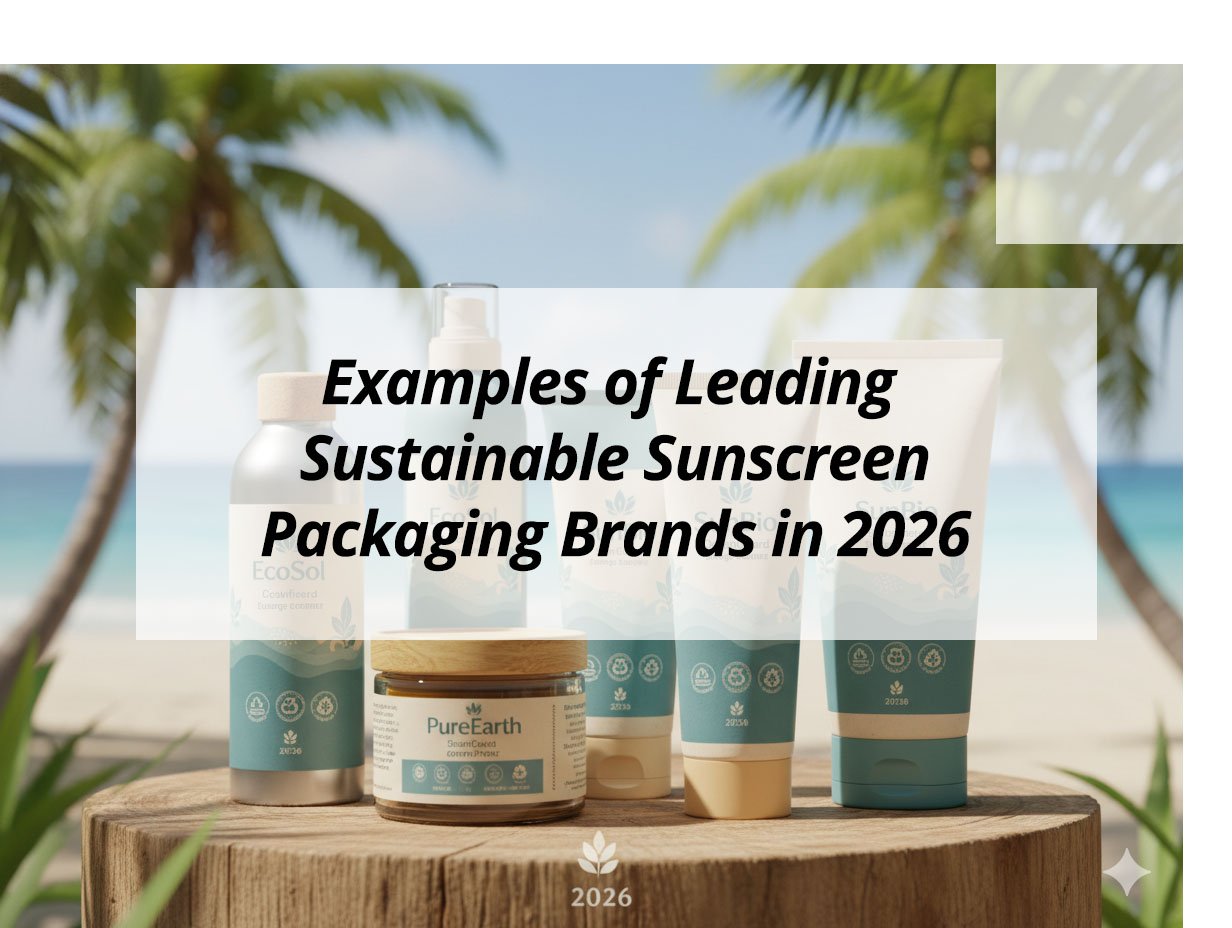
Many brands are shifting towards eco-friendly packaging. This change aims to lessen environmental harm. New materials and designs are emerging. These advancements help protect the planet and deliver quality products.
Many top brands use sustainable packaging in 2026. They focus on recycled content, refillable systems, and biodegradable materials. Companies like Aethic, Raw Elements, and Supergoop are examples. They show how products can be both effective and environmentally friendly.
The packaging industry is seeing significant evolution. The move towards sustainability is a major development. This benefits consumers and the environment. Let's explore some key examples in this area.
What is the best sunscreen in 2026?
Determining the best sunscreen in 2026 involves several considerations. Consumers often look for high protection, beneficial ingredients, and sustainable packaging. Finding a product that balances these aspects is increasingly important.
The best sunscreens in 2026 often combine high SPF, reef-safe formulas, and sustainable packaging. Brands such as Aethic Sôvée, Raw Elements, and Supergoop are notable. They provide effective sun protection that also prioritizes environmental responsibility. These factors make them leading choices.
The market for sunscreen products continues to evolve. Brands strive to differentiate themselves not only through product efficacy but also through their commitment to sustainability. This holistic approach is becoming a standard expectation from consumers.
How is "Best" Sunscreen Defined in Today's Market?
The definition of "best" sunscreen now extends beyond basic sun protection. Consumer preferences include environmental impact and product composition.
- Reef-Safe Formulations: Many regions now mandate sunscreens to be reef-safe. This means avoiding chemicals like oxybenzone and octinoxate, which harm marine ecosystems. Mineral filters, such as zinc oxide and titanium dioxide, are common alternatives.
- Broad-Spectrum Coverage: Effective sunscreens must protect against both UVA and UVB rays. UVA rays contribute to skin aging, while UVB rays cause sunburn. Both types of exposure can increase the risk of skin cancer.
- Sustainable Packaging Solutions: There is a strong demand for packaging that minimizes environmental impact. This includes options like glass bottles, aluminum tubes, and post-consumer recycled (PCR) plastic.
What are Key Ingredients in Leading Sunscreens?
Ingredient selection is crucial for both product safety and performance.
| Ingredient Type | Examples | Benefits | Considerations |
|---|---|---|---|
| Mineral | Zinc Oxide | Broad-spectrum, gentle | Can leave a white cast (modern formulas aim to reduce this) |
| Titanium Dioxide | Broad-spectrum, suitable for sensitive skin | May have a less sheer appearance | |
| Chemical | Avobenzone | Effective UVA protection | Some discussions about photostability |
| Homosalate | Strong UVB protection | Studies on skin absorption are ongoing |
Packaging choices must also support the integrity of these ingredients. For instance, some active components require packaging that offers protection from light or air.
Why is Packaging Critical for Top Sunscreens?
Packaging serves more than just a containment role. It communicates a brand's values and commitment to consumers.
- Material Innovations:
- PCR Plastic: This material is made from plastics recycled after consumer use. Its use reduces the demand for virgin plastic production.
- Glass: A highly recyclable material, glass often conveys a premium image. However, its weight can increase transportation costs, and it is prone to breakage.
- Aluminum: Lightweight and fully recyclable, aluminum is frequently used for tubes or aerosol cans.
- Bio-based Plastics: Derived from renewable sources such as corn starch, these plastics can be compostable or biodegradable.
- Refillable Systems: Many brands offer refill options, such as pouches or inserts. This allows consumers to reuse primary packaging, thereby reducing waste.
- Design for Recyclability: Packaging should be designed to be easily disassembled. This facilitates the recycling of different material components.
These packaging strategies are essential for brands aiming to meet consumer expectations for environmental responsibility.
What brands use sustainable packaging?
Many beauty brands are increasingly adopting sustainable packaging. This trend reflects a growing consumer awareness of environmental issues. Companies are developing innovative ways to package their products responsibly.
Numerous brands utilize sustainable packaging solutions today. These include REN Clean Skincare, Kiehl's, and Drunk Elephant. They incorporate materials like post-consumer recycled plastic, glass, and aluminum. Some brands also provide refillable options. These companies exemplify leadership in eco-friendly practices.
The shift towards sustainable packaging has become a significant focus within the cosmetic industry. Brands are actively seeking partners who can provide these specialized solutions to meet market demands.
What Materials are Popular in Sustainable Packaging?
Brands are exploring diverse materials to reduce their environmental footprint.
- Post-Consumer Recycled (PCR) Plastic: This plastic is derived from recycled consumer waste. Its use helps to decrease the production of new plastics. PCR plastic is widely adopted for bottles, jars, and tubes.
- Glass: Glass is infinitely recyclable and often gives products a luxurious appearance. It is used for creams and serums but is heavier, potentially increasing shipping expenses.
- Aluminum: Known for being lightweight and highly recyclable, aluminum is often used for sunscreen tubes and spray bottles.
- Bamboo: As a rapidly renewable resource, bamboo is biodegradable. It is used for caps, compacts, and other external packaging components.
- Bioplastics: These plastics originate from renewable biomass sources, such as sugarcane or corn starch. They can be compostable or biodegradable under specific conditions.
How are Brands Implementing Refill Programs?
Refill systems are a key component of sustainable packaging strategies, contributing to waste reduction.
- Refill Pouches: Brands offer pouches for liquid products, which use less plastic than new containers. Consumers transfer the product into their existing primary packaging.
- Refill Inserts: For solid or semi-solid products, brands provide inserts. This allows consumers to replace only the product component within a reusable outer container.
- Return-and-Reuse Schemes: Some brands have established programs where consumers return empty containers for cleaning and reuse by the company.
These refill initiatives are attractive to consumers who prioritize reducing their environmental impact. They also foster brand loyalty.
What are Some Leading Brands in Sustainable Packaging?
Many brands are making significant strides in sustainable packaging.
| Brand | Sustainable Practices | Packaging Examples |
|---|---|---|
| REN Clean Skincare | Utilizes recycled plastic, developed a "zero waste" bottle concept | Bottles made from 100% PCR plastic, some incorporating ocean plastic |
| Kiehl's | Offers refillable pouches, implements in-store recycling programs | Large refill pouches, designated in-store collection points for empties |
| Drunk Elephant | Employs airless pumps, uses PCR plastic for containers | Airless pump containers to preserve formula integrity, extensive use of PCR plastic |
| Ethique | Specializes in solid bar products, uses compostable packaging | Solid shampoo, conditioner, and body wash bars in compostable wrappers |
| ILIA Beauty | Incorporates PCR plastic, aluminum, glass, and recycled paper | Many products housed in PCR, aluminum tubes, glass bottles for liquid formulations |
Packaging manufacturers actively support these brands by providing custom sustainable solutions. This includes developing components from PCR plastic or bamboo, aligning with brand sustainability goals.
Who was first, Mary Kay or Avon?
The origins of Mary Kay and Avon are often subjects of historical interest. Both companies possess long legacies and have significantly influenced the beauty industry. Their respective founding dates mark important milestones.
Avon was established in 1886. Mary Kay was founded in 1963. Therefore, Avon predates Mary Kay by several decades. Both companies pioneered direct selling models, distributing beauty products globally and creating entrepreneurial opportunities.
The longevity of a brand often depends on its foundational principles and adaptability. Consistent quality and understanding market dynamics are crucial for sustained success.
When Did Avon Begin Operations?
Avon has a substantial history, tracing its origins to the late 19th century.
- 1886: David H. McConnell founded the California Perfume Company, the precursor to Avon.
- Sales Strategy: McConnell employed women to sell perfumes directly to consumers. This direct sales approach was innovative for its time, providing economic opportunities for women.
- Company Evolution: The company officially rebranded as Avon in 1939. It subsequently expanded into a global entity, offering a broad spectrum of cosmetics, skincare, and fragrances.
Avon's direct selling model was revolutionary, empowering many women as independent sales representatives.
When Did Mary Kay Begin Operations?
Mary Kay is a more recent addition to the beauty industry compared to Avon, established in the mid-20th century.
- 1963: Mary Kay Ash founded Mary Kay Cosmetics in Dallas, Texas. Her aim was to create a company that fostered women's empowerment.
- Guiding Principles: Mary Kay Ash's philosophy prioritized faith, family, and career. These values became central to her company's culture.
- Product Focus: The company concentrated on skincare and color cosmetics, also utilizing a direct selling distribution model.
Mary Kay became well-known for its unique incentive programs, which motivated its sales force.
What are the Key Similarities and Differences?
Both companies share a direct selling model but have distinct histories and operational approaches.
| Feature | Avon (California Perfume Company) | Mary Kay Cosmetics |
|---|---|---|
| Founding Year | 1886 | 1963 |
| Founder | David H. McConnell | Mary Kay Ash |
| Origin Location | New York | Texas |
| Initial Products | Perfumes, expanding to full beauty range | Skincare, color cosmetics |
| Sales Model | Direct selling (door-to-door) | Direct selling (independent consultants) |
| Core Mission | Empowering women through sales opportunities | Empowering women, guided by specific values |
These historical comparisons highlight different paths to success within the beauty industry, emphasizing innovation in both product and business models.
What is the trend in skincare products in 2026?
The skincare market is dynamic, with specific trends defining 2026. Consumers are seeking products that are beneficial for both personal well-being and the environment. There is also a strong demand for innovative ingredients and customized solutions.
Skincare trends for 2026 emphasize sustainability, personalization, and advanced ingredient science. Consumers are looking for eco-friendly packaging, tailored formulations, and active components like peptides and prebiotics. Additionally, "skinimalism" and technology-integrated skincare solutions are gaining prominence.
Market analysis frequently focuses on these emerging trends. Understanding them is crucial for brands to develop relevant products and packaging. Packaging solutions must adapt to support these new product features and consumer expectations.
What are Current Consumer Expectations?
Consumers are increasingly knowledgeable and have clear expectations for their skincare products.
- Clean Beauty Standards: This involves products formulated without certain contentious chemicals. Consumers prioritize natural ingredients and demand transparency from brands regarding product composition.
- Sustainability Focus: Beyond packaging, this encompasses ethical ingredient sourcing, reduced water consumption in manufacturing, and overall environmentally responsible production practices.
- Personalized Solutions: There is a growing desire for products specifically tailored to individual skin types, concerns, and needs. Artificial intelligence and advanced technology facilitate this personalization.
- Proven Effectiveness: Products must deliver tangible results. Consumers seek evidence of efficacy, often referencing clinical studies and verifiable outcomes.
Brands must address these multifaceted consumer expectations to remain competitive in the market.
What New Ingredients are Gaining Popularity?
The introduction of novel ingredients is a continuous aspect of skincare innovation.
- Peptides: These short chains of amino acids support collagen production and are recognized for their anti-aging properties, including wrinkle reduction.
- Prebiotics and Probiotics: These ingredients help maintain a balanced skin microbiome, which is essential for healthy skin and can alleviate irritation.
- Adaptogens: Derived from plants, adaptogens assist the skin in adapting to environmental stressors. Examples include ginseng and reishi mushroom.
- Bakuchiol: A plant-based alternative to retinol, bakuchiol offers similar benefits, such as improved skin texture, often with reduced irritation, making it suitable for sensitive skin.
| Ingredient Category | Key Benefits | Common Examples |
|---|---|---|
| Biomimetic | Mimics skin's natural biological processes | Peptides, Ceramides |
| Microbiome-Friendly | Promotes a healthy skin microflora | Prebiotics, Probiotics, Postbiotics |
| Botanical-Derived | Natural, often gentler alternatives | Bakuchiol, Adaptogens (e.g., Ashwagandha, Ginseng) |
| Environmental Protectors | Defends against pollution, blue light exposure | Antioxidants (e.g., Vitamin C, Ferulic Acid, Niacinamide) |
Packaging plays a vital role in preserving the stability and efficacy of these advanced ingredients, often requiring specialized designs like airless pumps.
How is Technology Influencing Skincare?
Technology is a transformative force in the skincare industry in 2026.
- AI-Driven Personalization: Artificial intelligence analyzes skin data to recommend specific products or even formulate custom skincare solutions through dedicated applications.
- Smart Skincare Devices: Tools like handheld skin scanners provide real-time data on skin health, guiding product selection and usage.
- Wearable Technology: Some devices are designed to deliver active ingredients directly to the skin or provide therapeutic benefits through technologies like microcurrents or LED light.
- Supply Chain Transparency: Blockchain technology is being utilized to trace ingredient origins, offering consumers greater transparency and fostering trust in product authenticity.
Advanced manufacturing processes are essential to produce the specialized packaging required for these technology-driven skincare products. This includes high-precision injection molding for intricate components.
My Insights: Examples of Leading Sustainable Sunscreen Packaging Brands in 2026
Concerned about environmental impact from sunscreen packaging? Leading brands like Alba Botanica, Raw Elements, and Mama KULEANA are innovating with biodegradable, refillable, and ocean-bound plastic designs to protect the planet.
Top sustainable sunscreen packaging brands in 2026 include Project Reef, Mama KULEANA, and Alba Botanica. These brands excel with recyclable, biodegradable, and refillable solutions, advancing eco-friendly packaging innovation.
Innovations in Sustainable Sunscreen Packaging
Sustainability is a defining trend in sunscreen packaging in 2026, with brands embracing biodegradable materials, refillable designs, and recycled plastics to reduce environmental impact. Below are key packaging innovations.
1. Compostable and Biodegradable Packaging
Brands like Mama KULEANA and Ethique have adopted biodegradable cardboard tubes and compostable containers, eliminating microplastic waste entirely. These solutions cater to eco-conscious consumers and align with global plastic reduction targets.
2. Recycled and Ocean-Bound Plastics
Project Reef stands out with its use of ocean-collected plastics in packaging, while Cōtz Sunscreen prioritizes 100% post-consumer recycled materials. These approaches help reduce landfill waste and plastic pollution while supporting renewable systems.
3. Refillable Packaging Innovations
Leaders in refillable packaging include Sun Bum, which integrates plant-based plastics and reusable systems, and Coola, which offers refillable sunscreen tubes sourced from sustainable materials such as sugarcane.
4. Recyclable Metal and Aluminum Tubes
Badger Balm and Raw Elements use recyclable aluminum tubes, pairing durable functionality with eco-conscious aesthetics. Aluminum’s higher recyclability makes it a preferred material for zero-waste advocates.
| Brand Name | Packaging Innovation | Impact Areas |
|---|---|---|
| Mama KULEANA | Compostable cardboard tubes | Microplastic-free, biodegradable |
| Project Reef | Ocean-bound plastics, recycled materials | Marine conservation, recycled use |
| Sun Bum | Refillable bottles, plant-based plastics | Waste reduction, reusability |
| Cōtz Sunscreen | 100% post-consumer recycled tubes | Circular economy, eco-packaging |
| Badger Balm | Recyclable aluminum tubes | Zero-waste, high recyclability |
| Coola | Sustainable sugarcane-sourced refillables | Renewable resources, longevity |
Brands like Mama KULEANA, Project Reef, and Sun Bum lead the charge in sustainable sunscreen packaging with groundbreaking materials and designs—setting new industry standards while ensuring planet-friendly SPF solutions.
Sustainable Packaging Trends Shaping Sunscreen Brands in 2026
In 2026, leading sunscreen brands are innovating across key areas of sustainability, including biodegradable packaging, recycled plastics, refillable systems, and reef-safe materials. Here’s how these trends define the future of eco-conscious sun care:
1. Eliminating Microplastic Waste
Compostable packaging has emerged as a top choice for brands aiming to eliminate plastic waste entirely. Mama KULEANA and Ethique champion cardboard and compost-ready containers that biodegrade safely without polluting oceans or ecosystems.
2. Promoting Circular Economy Practices
Recycled material usage is at the forefront. Project Reef leverages ocean-collected plastics, and Cōtz Sunscreen sources post-consumer recycled tubes, aligning with circular economy values. These processes extend material lifecycles and reduce reliance on virgin plastics.
3. Lowering Environmental Footprint with Refillable Tech
Refillable packaging advances sustainability through waste minimization. Coola and Sun Bum utilize renewable resources and create refill-friendly systems, enabling customers to reuse packaging rather than dispose of it.
4. Supporting Reef-Safe Sunscreen Merchandising
Several brands, such as Badger Balm and Raw Elements, focus on eco-friendly sunscreen formulations alongside sustainable packaging. Their dual effort ensures both product ingredients and packaging contribute to broader environmental goals.
| Packaging Type | Leading Brands | Key Environmental Benefit |
|---|---|---|
| Compostable | Mama KULEANA, Ethique | Eliminates plastic waste entirely |
| Recycled Plastics | Project Reef, Cōtz Sunscreen | Extends material lifespan, reduces waste |
| Refillable Systems | Coola, Sun Bum | Sustainable resource utilization |
| Aluminum/Recyclable | Badger Balm, Raw Elements | Durable, zero-waste packaging option |
Final Thoughts
Sunscreen brands in 2026 are setting benchmarks for sustainability, combining innovation with ethical practices. From biodegradable containers to refillable and recyclable systems, these packaging evolutions deliver eco-friendly solutions while empowering customers to support environmental conservation.
Conclusion
In 2026, the skincare and packaging sectors prioritize sustainability, personalized solutions, and technological integration. Brands are adopting eco-friendly packaging and custom products. These shifts are driven by new ingredients and advancements in technology.