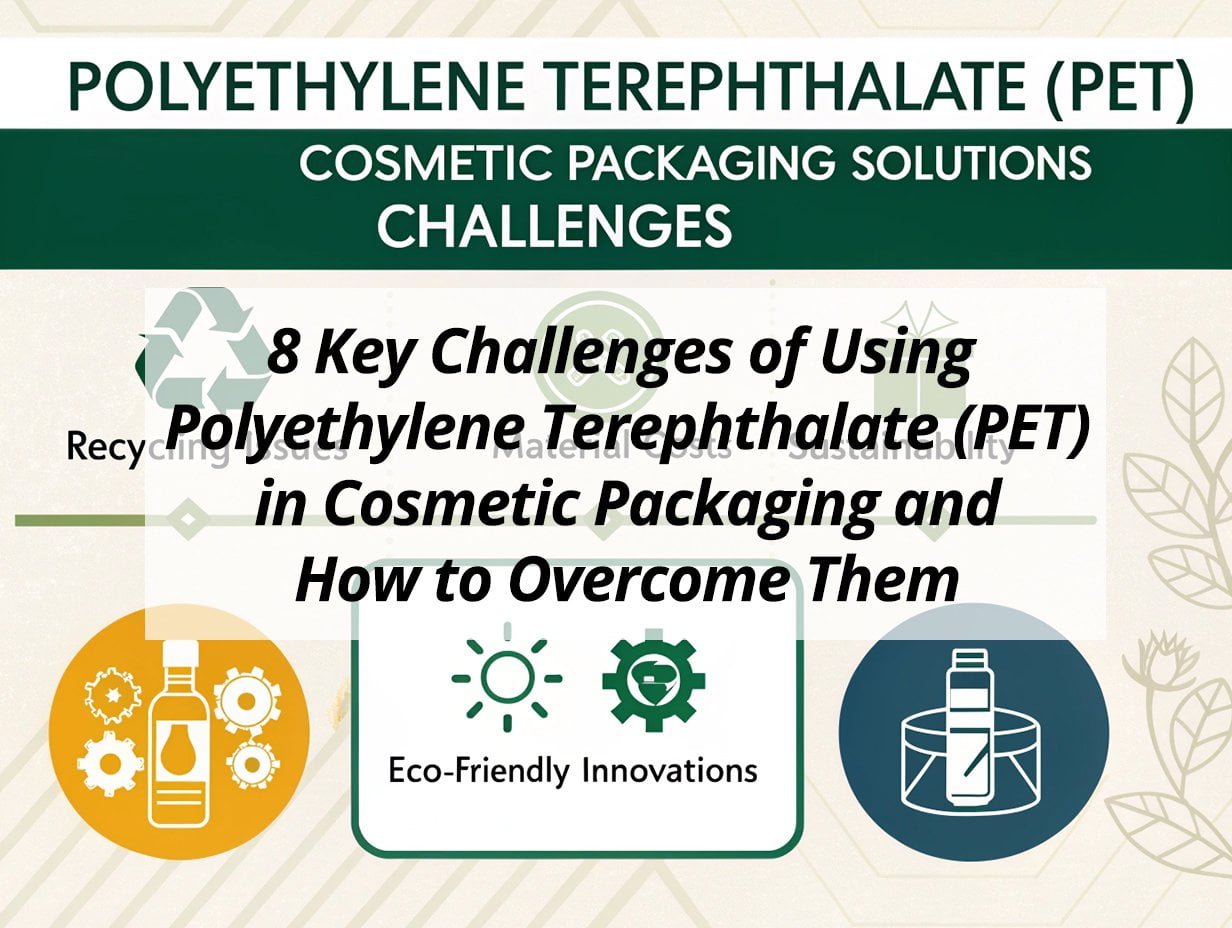
Navigating the landscape of cosmetic packaging demands strategic material selection. PET is widely used due to its desirable properties, yet it comes with challenges that require innovative solutions.
Addressing PET's challenges, such as thermal sensitivity and recyclability, can significantly enhance its use in cosmetics. While offering clarity and lightweight benefits, solutions to these issues expand its applications, making it a more sustainable and adaptable choice for packaging. This ensures PET remains valuable in cosmetic packaging innovations.
PET is crucial in cosmetic packaging, but addressing oxygen permeability and UV sensitivity challenges is essential for optimal performance.
What are the Problems with Polyethylene Terephthalate?
PET is favored in cosmetic packaging, but certain limitations must be addressed for optimal performance.
Key challenges include oxygen permeability, stress cracking, and UV sensitivity. Each of these must be mitigated to ensure product stability and shelf life.
Detailed Insights on PET Challenges
- Oxygen Permeability1: Can compromise the shelf life of sensitive products.
- Stress Cracking2: Certain formulations may cause the material to crack.
- UV Sensitivity3: Prolonged exposure can lead to discoloration.
Strategies for Improvement
Oxygen and Moisture Barrier Solutions
- Multilayer Structures: Incorporate to enhance barrier properties.
- Coatings: Use nanocomposite coatings to reduce permeability.
Stress Cracking Prevention
- Material Blends: Incorporate materials like nylon or EVOH for strength.
- Surface Treatments: Apply coatings to resist chemical attacks.
Key Takeaways
- Blending: Enhances mechanical strength.
- Coatings: Protects from environmental effects.
What are the Challenges of PET Recycling?
Recycling PET4 is essential for sustainability, yet it poses challenges that need to be surmounted for effective implementation.
The recycling of PET faces obstacles such as contamination and aesthetic degradation. Ensuring robust processes can improve recycling outcomes significantly.
Enhancing PET Recycling Processes
- Contamination Control5: Essential for maintaining material quality.
- Aesthetic Management: Addressing color variations in recycled products.
Recycling Improvement Tactics
Aspect Method Benefit Contamination Automated Sorting Systems Improved material purity Aesthetic Variation Color Stabilizers Consistent appearance in recycled PET
What is the Challenge for the Bioplastic Industry6?
The bioplastic sector shows promise but also faces hurdles that need strategic solutions for broader adoption.
Main challenges include high production costs and performance disparities compared to conventional plastics. Overcoming these barriers can set the stage for bioplastic innovation.
Addressing Bioplastic Barriers
- Economic Factors: Higher production costs pose challenges.
- Performance Issues: Matching traditional plastic durability is difficult.
Strategic Innovations
| Focus Area | Strategy | Goal |
|---|---|---|
| Cost Reduction | R&D Investment | Lower production costs |
| Sustainability | Development of Biodegradable Options | Align with environmental goals |
What are the Problems Encountered in the Use of Plastics in Packaging Drugs?
Ensuring safety and compliance in drug packaging is crucial, bringing unique challenges when using plastics.
Challenges include chemical compatibility and regulatory assurances. Mitigating these ensures optimal functionality and safety in pharmaceutical packaging.
Ensuring Safety and Compliance
- Chemical Compatibility7: Interactions may compromise drug safety.
- Regulatory Guidelines8: Adherence to standards is crucial.
Safe Packaging Strategies
Chemical Testing
- Rigorous Evaluation: Identifying potential interactions is essential.
- Specialized Liners: Use coatings to prevent adverse reactions.
Standards and Protocols
- Compliance: Ensuring materials meet global standards.
- Enhanced Testing: Necessary for verifying safety and efficacy.
Key Focus Areas
- Compatibility Testing: Critical for safety assurance.
- Regulatory Adherence: Essential for market compliance.
My Insights: Using Polyethylene Terephthalate (PET) in Cosmetic Packaging and How to Overcome Them
Using PET in cosmetic packaging presents challenges such as environmental impact and aesthetic limitations. Here’s how to tackle them.
To overcome PET challenges, enhance barrier properties, innovate designs, and leverage recycled materials. Focus on improving sustainability and consumer perception.
Addressing PET Challenges
Key Challenges and Solutions
-
Environmental Impact
- Challenge: PET contributes to plastic waste.
- Solution: Use recycled PET (rPET) and increase recycling efforts.
-
Permeability to Oxygen
- Challenge: Risk of ingredient degradation.
- Solution: Improve barrier properties with coatings/additives.
| Challenge | Solution |
|---|---|
| Aesthetic Limitations | Innovate color/finish options |
| Heat Sensitivity | Design to minimize temperature exposure |
| Chemical Resistance | Formulation adjustments for compatibility |
| Cost of rPET | Economies of scale and improved processes |
Overcome these challenges with strategic design and material use, ensuring compliance and sustainability while maintaining product integrity. Tailor solutions to specific formulations and market needs.
Conclusion
Addressing PET challenges involves comprehensive strategies, including advanced materials, improved recycling processes, and regulatory compliance, to enhance its usability in cosmetic and pharmaceutical packaging.
-
Understanding oxygen permeability is crucial for improving product shelf life and stability. ↩
-
Explore the causes of stress cracking to enhance the durability of plastic materials. ↩
-
Learn about UV sensitivity to protect products from discoloration and degradation. ↩
-
Discover the challenges in PET recycling to improve sustainability efforts. ↩
-
Effective contamination control is key to maintaining the quality of recycled materials. ↩
-
Understanding the challenges in the bioplastic industry can drive innovation and adoption. ↩
-
Chemical compatibility is vital for ensuring drug safety and efficacy in packaging. ↩
-
Familiarize yourself with regulatory guidelines to ensure compliance in drug packaging. ↩