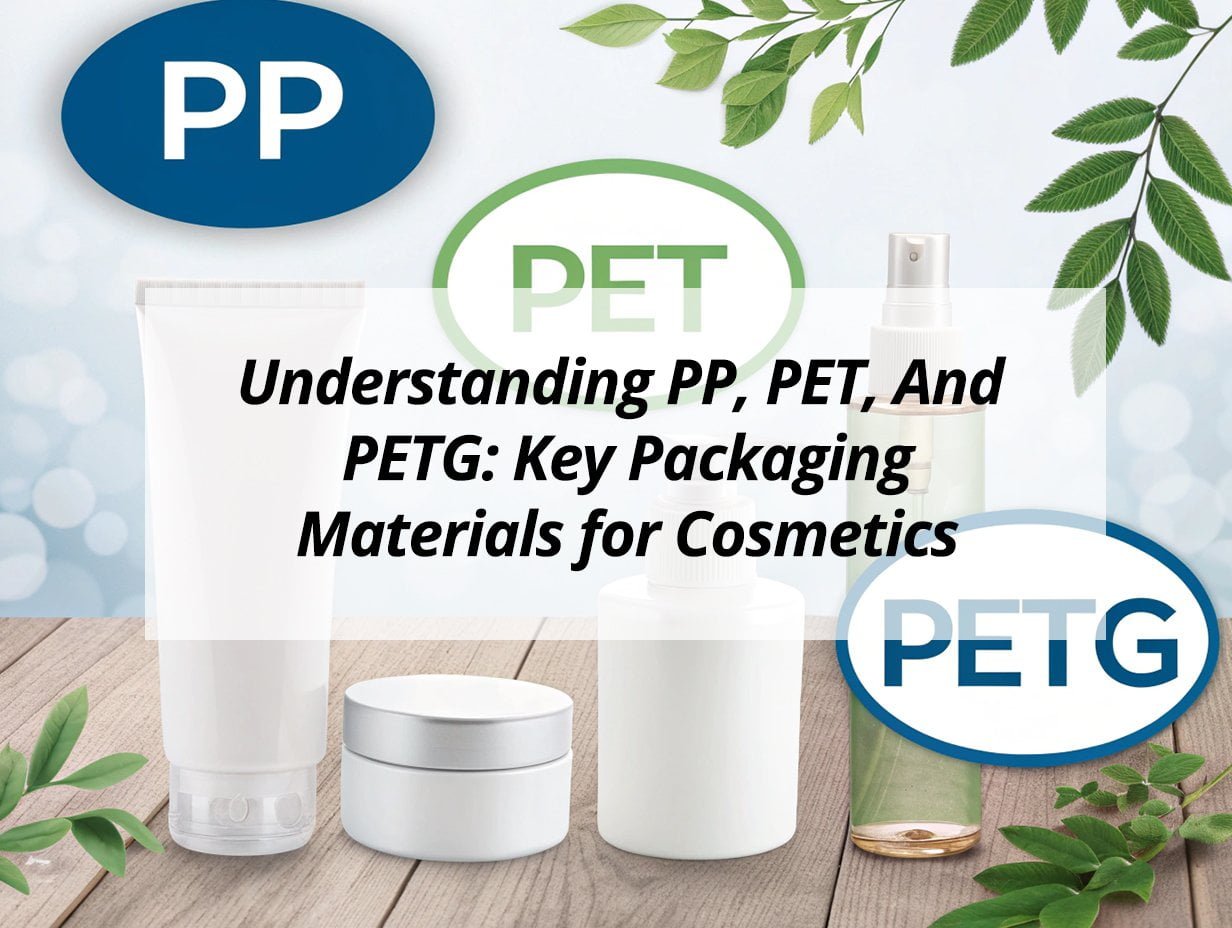
In cosmetics, packaging shapes brand perception. Understanding PP, PET, and PETG characteristics is crucial for effective product presentation.
PP, PET, and PETG are staple materials in cosmetic packaging, each offering unique properties. PP excels in chemical resistance and heat tolerance, PET is known for clarity and recyclability, while PETG combines transparency with impact resistance.
Choosing the correct material for your cosmetic products can profoundly affect your brand image and sustainability goals.
What is the difference between PP and PETG?
Deciding between PP and PETG can be a challenge due to their overlapping benefits. Both materials offer unique advantages depending on the application and aesthetic goals.
PP offers superior heat and chemical resistance, ideal for products requiring frequent handling. On the other hand, PETG provides exceptional clarity and is perfect for intricate designs, ensuring a premium look.
Analyzing PP vs PETG
| Property | PP (Polypropylene) | PETG (Glycol-modified PET) |
|---|---|---|
| Chemical Resistance1 | Excellent, suitable for harsh environments | Superior to many solvents, great for intricate packaging |
| Heat Resistance2 | High, suitable for hot-fill processes | Moderate, good for hot-fill applications |
| Clarity | Less transparent, more practical | High clarity, mimics glass aesthetics |
| Formability | Excellent for functional parts | Easily molded into complex shapes |
| Cost | Generally lower | Higher, reflects a premium choice |
Choosing between PP and PETG hinges on your needs. PP works well for cost-efficient, durable applications, while PETG is ideal for premium, visually appealing packaging.
What are the four main types of packaging?
Packaging plays a crucial role in product delivery, protection, and aesthetic appeal. Understanding the primary types of packaging helps brands optimize their product presentation.
The four main types of cosmetic packaging are bottles, tubes, jars, and pumps. Each type is designed to cater to specific needs, from liquids to creams.
Exploring Packaging Types
Crucial Factors:
- Bottles: Best for serums and toners, with PET offering clarity and PETG providing a premium feel.
- Tubes: Ideal for creams and gels; PETG brings flexibility and chemical resilience.
- Jars: For semi-solids, PET exudes elegance, while PP works well for secure closures.
- Pumps: Precision dispensing with PP's durability and PETG's luxury design.
Choosing the right packaging type involves balancing functionality with aesthetics, ensuring products reach customers in prime condition while elevating brand perception.
Is PP better than PET packaging?
The choice between PP and PET is crucial, as each has its unique strengths and is suitable for different applications, based on necessity and sustainability.
PP is better for heat resistance, making it suitable for products requiring hot-fill processes. In contrast, PET offers superior clarity and recycling benefits, making it ideal for transparent packaging.
PP vs PET Examination
Core Differences:
- Heat Resistance: PP excels in heat-tolerant environments, useful for particular filling processes.
- Clarity and Aesthetics: PET offers transparency for visual appeal, enhancing product presentation.
- Recyclability: PET is widely recyclable, promoting environmental considerations.
Take into account your product demands and brand objectives when choosing materials. PP works well for practicality, PET for aesthetics and eco-friendliness.
What is polyethylene terephthalate used in cosmetics?
Polyethylene terephthalate (PET) is a versatile and popular choice for cosmetics packaging, known for its multiple benefits.
PET is used extensively for bottles and jars in cosmetics, providing a combination of lightweight, impact resistance, and excellent clarity, which aligns well with aesthetic and recycling objectives.
Utilizing PET in Cosmetics
| Application | Benefit |
|---|---|
| Bottles | Ideal for toners and liquid products due to clarity |
| Jars | Perfect for creams and balms with rigid and premium appearance |
| Sustainability | Supports recycling initiatives with widespread recyclability |
| Printability | Offers excellent decoration capabilities, perfect for branding |
PET continues to be favored for its balance of visual appeal and environmentally-friendly attributes, making it suitable for an array of cosmetic products.
My Insights: Choosing Between PP, PET, and PETG for Cosmetic Packaging
Confused about selecting the right material for cosmetic packaging? You're not alone.
PP, PET, and PETG each offer unique benefits for cosmetics. PP is flexible and durable, PET is recyclable with excellent barrier properties, and PETG is ideal for complex designs and aggressive formulations.
Evaluating PP, PET, and PETG
Understanding these materials helps align packaging with product needs and sustainability goals:
Key Characteristics of Each Material
-
Polypropylene (PP)
- Properties: Durable, chemically resistant, and flexible.
- Common Uses: Squeeze tubes, caps, and closures.
- Recyclability: Moderate, poses fewer environmental stress cracks.
-
Polyethylene Terephthalate (PET)
- Properties: Highly transparent, lightweight, good moisture barrier.
- Common Uses: Bottles and jars for product visibility.
- Recyclability: Widely recyclable, reduces transport costs.
-
Glycol-Modified PET (PETG)
- Properties: Flexibility, high-impact resistance, suitable for solvents.
- Common Uses: Fragrance bottles, containers needing durability.
- Recyclability: Improved resistance to moisture, suitable for complex shapes.
| Material | Clarity | Impact Resistance | Chemical Resistance | Common Uses | Sustainability |
|---|---|---|---|---|---|
| PP | Opaque | Moderate | High | Caps, tubes | Recyclable |
| PET | High | High | Moderate | Bottles, jars | Highly recyclable |
| PETG | High | Very High | High | Specialty containers | Recyclable |
Choosing the right material involves assessing clarity, resistance, and environmental benefits to ensure the best fit for your cosmetic products.
Conclusion
Understanding the distinct qualities of PP, PET, and PETG packaging materials enables brands to optimize products for presentation, durability, and sustainability, enhancing both brand value and consumer satisfaction.