
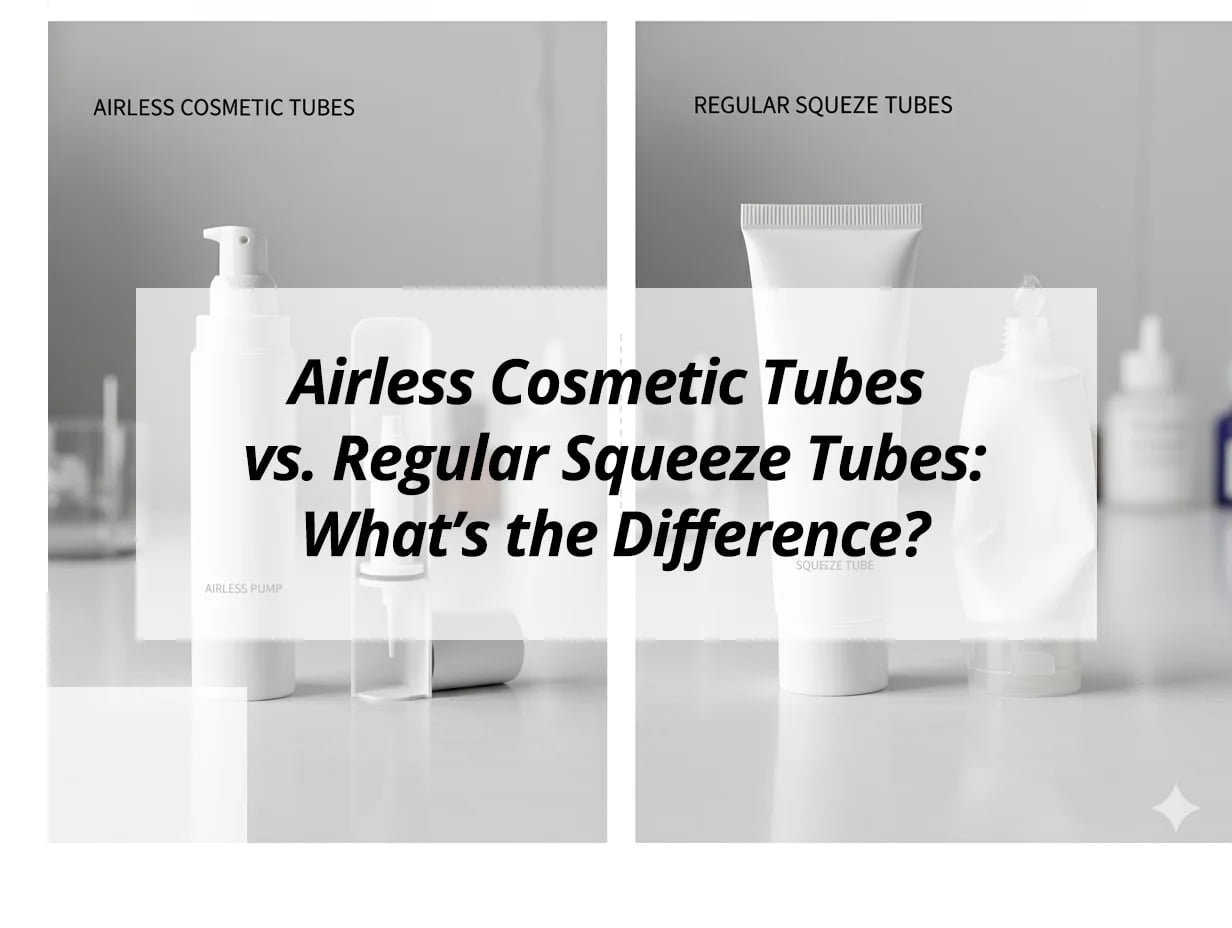
Choosing cosmetic packaging is hard. You want the best for your product. Airless tubes and squeeze tubes are both common. But they are very different.
Airless cosmetic tubes use a vacuum pump system. This keeps air out. Regular squeeze tubes let air in as product is used. Airless tubes protect sensitive formulas better. They also ensure nearly all product is dispensed. This difference is important for product stability and user experience.
I have worked with many brands. They often ask about these two types. Understanding the core mechanics helps in deciding. We want your product to be safe and fully used by customers.
What are the different types of squeeze tubes?
Squeeze tubes are everywhere. They are simple. They are also versatile. But they come in various forms.
Squeeze tubes are flexible containers. They dispense product when squeezed. The main types include mono-layer, multi-layer, and specialty material tubes1. Mono-layer tubes are basic. Multi-layer tubes offer more protection. Specialty tubes use eco-friendly or unique materials. Each type suits different product needs and brand goals.
I see many squeeze tube designs. Some are plain. Some are fancy. The material and layers make a big difference for your product.
Mono-Layer Squeeze Tubes
These are the most basic squeeze tubes2. They have only one layer of material.
- Material: Often made from polyethylene (PE). This can be HDPE (High-Density Polyethylene) or LDPE (Low-Density Polyethylene).
- Benefits: They are cost-effective. They are easy to produce. They are good for simple, stable formulas.
- Drawbacks: They offer limited barrier protection. They are not ideal for sensitive ingredients. Oxygen and light can pass through.
- Common Uses: Hand creams, body lotions, some hair gels.
Multi-Layer Squeeze Tubes
These tubes have two or more layers. Each layer gives a different benefit.
- Structure: They usually have an inner layer, a barrier layer, and an outer layer. The barrier layer is often EVOH (Ethylene-Vinyl Alcohol). EVOH is very good at blocking oxygen.
- Benefits: Excellent barrier protection against oxygen, moisture, and UV light. This helps keep sensitive ingredients stable. It extends shelf life.
- Drawbacks: They are more expensive than mono-layer tubes. They are also more complex to manufacture.
- Common Uses: Skincare serums, sunscreens, active ingredient creams, toothpastes.
| Tube Type | Layers | Key Material | Barrier Protection | Cost | Common Products |
|---|---|---|---|---|---|
| Mono-Layer | 1 | PE (LDPE, HDPE) | Low | Low | Hand cream, body lotion, simple gels |
| Multi-Layer | 2-5+ | PE + EVOH | High | Medium-High | Serums, sunscreens, active ingredient creams |
| Aluminum Laminate | 5 | PE + Aluminum + PE | Very High | High | Toothpaste, strong medicinal creams |
Specialty Squeeze Tubes
These tubes use unique materials or designs. They meet specific needs.
- PCR (Post-Consumer Recycled) Tubes: Made from recycled plastic. This helps with sustainability goals.
- Benefits: Environmentally friendly. Appeals to eco-conscious consumers.
- Drawbacks: Can be more expensive. Recycled content might affect color or clarity.
- Bio-Plastic Tubes: Made from plant-based materials. Examples include sugarcane PE.
- Benefits: Renewable resource. Reduces reliance on fossil fuels.
- Drawbacks: Higher cost. Limited availability compared to traditional plastics.
- Laminated Tubes: These tubes combine plastic and aluminum foil.
- Benefits: Provide superior barrier protection. They keep air and light out very well. They maintain product integrity.
- Drawbacks: Can feel less soft than pure plastic tubes. More complex to recycle.
- Common Uses: Products needing extreme protection, like certain pharmaceuticals.
When choosing a squeeze tube, think about your product's formula. Also, consider your brand's values. These choices impact both product quality and consumer perception.
What is an airless tube?
An airless tube3 is a modern packaging solution. It works differently from traditional tubes. It offers advanced protection.
An airless tube is a non-pressurized mechanical dispensing system. It uses a vacuum to push product upward. This eliminates the need for a dip tube. It also prevents air from entering the package. This design protects oxygen-sensitive formulas. It ensures product integrity. It also maximizes product evacuation, reducing waste.
I often explain to clients that airless is not just a tube. It is a system. Its engineering focuses on preserving product quality. It also makes sure users get every last drop.
How Airless Tubes Work
The mechanism of an airless tube is clever. It relies on a piston.
- Piston Mechanism: Inside the tube, there is a movable piston at the base. When the pump is pressed, a vacuum is created. This vacuum lifts the piston. The piston then pushes the product upwards.
- No Air Intake: As the piston moves up, it seals the product from the outside air. No air enters the tube to replace the dispensed product. This is a key difference.
- Controlled Dispensing: Each pump delivers a consistent dose of product. This helps users apply the correct amount every time.
Key Benefits of Airless Tubes
Airless tubes offer many advantages.
- Product Protection: This is the biggest benefit. The vacuum seal prevents oxidation. It protects against degradation from air and light. This is vital for formulas with delicate active ingredients, like Vitamin C or retinoids.
- Extended Shelf Life: By minimizing exposure to oxygen, the product's shelf life can be significantly extended. This is a major plus for brands.
- Maximized Product Evacuation: The piston pushes almost all the product out of the tube. This means less waste for the consumer. It also means better value perception.
- Enhanced Hygiene: No air means less chance of contamination. Fingers do not touch the bulk product. This improves the hygienic aspect of the packaging.
- Consistent Dosing: The pump delivers a measured amount. This helps users control application.
| Feature | Airless Tube | Regular Squeeze Tube |
|---|---|---|
| Air Exposure | Minimal (vacuum system) | High (air enters as product is used) |
| Product Protection | Excellent (prevents oxidation) | Limited (allows oxidation) |
| Product Waste | Very Low (high evacuation rate) | Moderate (some product remains in tube) |
| Hygiene | High (no air entry, no dip tube) | Lower (air entry, risk of contamination) |
| Dispensing | Consistent, measured dose | Variable (depends on user squeeze pressure) |
Considerations for Airless Tubes
While beneficial, there are points to consider.
- Cost: Airless tubes are generally more expensive to produce than regular squeeze tubes. This is due to their complex design.
- Filling Process: They require specialized filling equipment. This can add to production costs.
- Design Limitations: While flexible, some extreme tube shapes might be harder to achieve with the piston mechanism.
Airless tubes are a premium choice. They are best for high-value or sensitive cosmetic formulas.
Are airless pump bottles better?
The term "airless pump bottle" often refers to the same technology as airless tubes. Both use a piston and vacuum. The shape might be different. But the core benefits are the same.
Airless pump bottles are generally considered superior for preserving sensitive cosmetic formulations. They prevent air and external contaminants from interacting with the product. This leads to better product stability, extended shelf life, and enhanced hygiene. The consistent dispensing and high product evacuation rate also contribute to a better user experience and less product waste.
I have seen products last much longer in airless packaging. This is a strong point for brands. It ensures customers get the best quality product every time they use it.
Product Stability and Longevity
This is where airless packaging shines.
- Protection from Oxidation: Many active ingredients, like Vitamin C, retinol, and some peptides, degrade when exposed to air. Airless systems greatly reduce this exposure. This maintains the product's effectiveness.
- Prevention of Contamination: With no air entering the package, the risk of bacterial or fungal contamination from the environment is minimized. This is especially important for products with fewer preservatives.
- UV Light Protection: While the airless mechanism itself does not block UV, airless containers are often made from opaque materials. These materials help block harmful UV rays.
User Experience and Efficiency
Airless pumps also improve how users interact with the product.
- Complete Product Evacuation: The piston mechanism pushes almost all the product out. This means very little product is left behind. Customers feel they get full value for their money.
- Precise Dosing: Each pump delivers a consistent, measured amount. This helps users apply the recommended dosage. It prevents overuse or underuse.
- Hygienic Application: The user never touches the bulk product. This reduces the risk of contamination from fingers.
Comparing with Regular Pumps
Even regular pump bottles, which have a dip tube, are different.
- Regular Pumps: These draw product through a dip tube. Air enters the bottle to replace the dispensed product. This means the product is still exposed to air.
- Airless Pumps: No dip tube. The product is pushed up by a piston. No air enters the product chamber.
| Feature | Airless Pump Bottles | Regular Pump Bottles (with dip tube) |
|---|---|---|
| Air Exposure to Product | None (product sealed in vacuum) | High (air enters through dip tube opening) |
| Active Ingredient Stability | Excellent | Good, but susceptible to oxidation |
| Product Evacuation Rate | ~95-99% | ~70-85% |
| Hygiene (Internal) | High (no air means less contamination risk) | Moderate (air entry can bring contaminants) |
| Cost | Higher | Lower |
When Airless Might Not Be Necessary
Airless packaging is an investment. It is not always needed.
- Stable Formulas: Products that are very stable and not sensitive to air or light might not need airless packaging. Examples include simple moisturizers or cleansers.
- Lower Price Points: For very cost-sensitive products, the added expense of airless technology might not be justified.
However, for most skincare with active ingredients, airless pump bottles are a superior choice. They protect the product's integrity. They deliver a better user experience.
How do airless pump tubes work?
Airless pump tubes4 use a smart design. They keep the product fresh. They also make sure no product is wasted.
Airless pump tubes operate through a sophisticated vacuum and piston system. When the user presses the pump, it creates a vacuum pressure. This vacuum lifts an internal piston from the bottom of the tube. The piston then pushes the product upwards towards the dispenser. This process ensures the product is always sealed from external air, preventing oxidation and maximizing evacuation.
I think of it like a syringe. But instead of pulling air, it pulls the product up. This mechanism is key to its effectiveness. It keeps the product pure.
The Mechanism Step-by-Step
Let's break down how it works when you use it.
- Initial State: The tube is filled with product. A piston sits at the bottom. There is no air between the piston and the product.
- Pressing the Pump: When you press the actuator (the pump head), it releases a small amount of product from the nozzle.
- Vacuum Creation: As product leaves, a vacuum forms in the space below the pump head. This vacuum pulls the piston upwards.
- Product Delivery: The piston moves up, pushing the product directly towards the pump. This delivers a fresh, uncontaminated dose.
- No Air Entry: Crucially, no air enters the tube to replace the dispensed product. The piston creates a tight seal.
Key Components of an Airless Pump Tube
Understanding the parts helps explain the function.
- Actuator (Pump Head): This is the part you press. It releases the product.
- Pump Engine: The core mechanism that creates the vacuum and drives the piston.
- Outer Tube/Bottle: The main container that holds the product. Often made from plastic.
- Piston: A disc at the bottom of the tube. It moves upwards to push the product out.
- Base Cap: Seals the bottom of the tube.
| Component | Function | Material (Common) |
|---|---|---|
| Actuator | User interface for dispensing product | PP, ABS, SAN |
| Pump Engine | Creates vacuum, drives piston | PP, POM |
| Outer Tube | Holds product, provides protection | PE, PP, PET, PMMA |
| Piston | Moves product upwards, prevents air entry | PP |
| Base Cap | Seals the bottom of the tube, supports piston | PP |
Benefits for Product Integrity
The way airless pump tubes work directly leads to several benefits.
- Preservation of Efficacy: Active ingredients stay potent. They are not weakened by oxygen exposure. This ensures the product performs as intended throughout its use.
- Prevention of Contamination: The sealed environment protects against microbes. This is vital for maintaining the safety of the product, especially for natural or preservative-light formulas.
- Extended Product Life: Because the product is so well protected, its usable life can be longer. This is good for both the brand and the consumer.
The design of airless pump tubes represents a significant advancement in cosmetic packaging. It prioritizes product protection and consumer satisfaction. It offers a superior method for delivering delicate and valuable formulations.
My Insights: Understanding the Differences Between Airless and Regular Cosmetic Tubes
Confused about whether to use airless or regular tubes for your cosmetic products? Discover the key differences to make an informed choice.
Airless cosmetic tubes use a sealed pump system to prevent oxidation and contamination, ideal for sensitive formulas. Regular squeeze tubes are cost-effective and simpler to manufacture, suitable for stable products with less precise dosing needs.
Evaluating Airless and Regular Tube Advantages
How Each Tube Works:
-
Airless Tubes: Utilize a vacuum system to dispense product without introducing air, maintaining formula integrity.
-
Regular Squeeze Tubes: Rely on manual squeezing, which allows air back into the tube, affecting product stability.
Formula Protection and Hygiene:
-
Airless Tubes: Ideal for formulas with unstable actives (e.g., retinol), reducing contamination risk.
-
Regular Squeeze Tubes: Suitable for stable, well-preserved formulas but expose the product to air and possible skin contact.
User Experience and Cost:
-
Airless Tubes: Offer precise dosing, minimize waste, and provide a clean nozzle, but are more expensive to produce.
-
Regular Squeeze Tubes: Allow quick dispensing and are budget-friendly, perfect for everyday products.
Sustainability and Recyclability:
| Type | Pros | Cons |
|---|---|---|
| Airless Tubes | Protects sensitive formulas, precise dosing | Higher production costs, complex recycling |
| Regular Squeeze Tubes | Cost-effective, easy recycling | Less protection against contamination |
Choose the tube type based on product sensitivity, cost considerations, and sustainability goals to effectively meet your brand’s needs.
Conclusion
Airless cosmetic tubes protect sensitive formulas better than regular squeeze tubes. They prevent air exposure and reduce waste. This leads to higher product quality and a better user experience.
-
Find out how specialty tubes can meet unique product requirements. ↩
-
Explore the various types of squeeze tubes to find the best fit for your product needs. ↩
-
Explore the innovative design of airless tubes for preserving product quality. ↩
-
Explore the advantages of airless pump tubes for preserving product integrity and preventing contamination. ↩