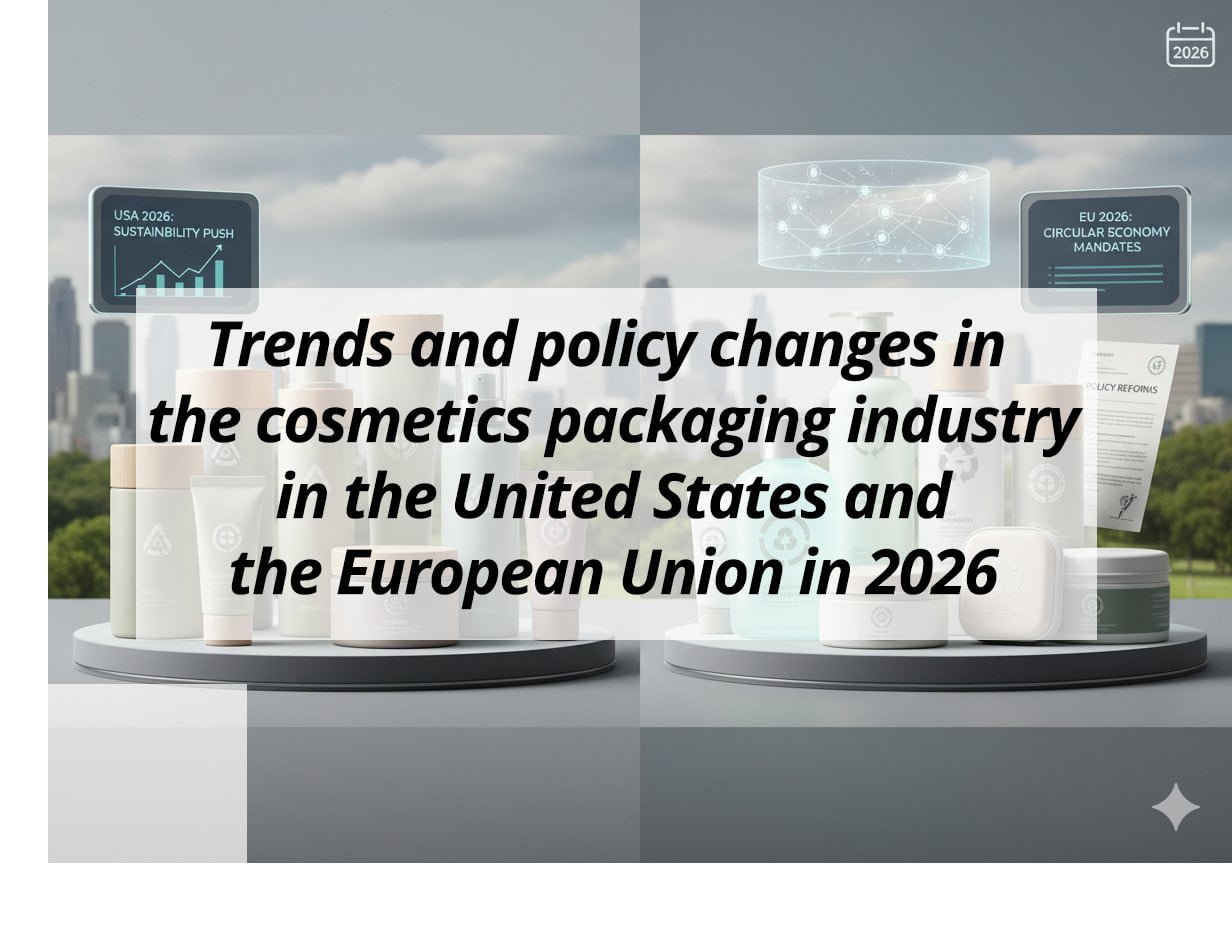
The cosmetic packaging sector is undergoing continuous evolution. Emerging trends and regulatory shifts significantly influence its trajectory. Understanding these developments is essential for industry stakeholders. This analysis examines the anticipated landscape for 2026.
In 2026, cosmetic packaging will be profoundly shaped by sustainability initiatives and advanced digital integration. Regulatory frameworks in the United States and the European Union will increasingly mandate higher recycled content, reduced plastic usage, and enhanced labeling clarity. Consumer preferences will drive demand for refillable, minimalist, and smart packaging solutions. These factors will fundamentally alter material selection, manufacturing processes, and global supply chains.
The industry faces dynamic changes. Adaptation is crucial for maintaining competitive advantage within the cosmetic packaging domain.
What are the packaging trends in 2026?
Packaging trends are a direct response to consumer demands and environmental imperatives. By 2026, these forces are expected to catalyze significant innovation in materials and design within the packaging sector.
Cosmetic packaging trends in 2026 will prioritize ecological responsibility, practical utility, and visual appeal. Prominent trends include the widespread implementation of refillable systems, minimalist design aesthetics, and increased utilization of sustainable materials such as glass, aluminum, and post-consumer recycled plastics. Digital functionalities, such as QR codes providing product information, are also projected to become more prevalent.
These evolving trends represent an acceleration of existing movements. Packaging manufacturers must strategically evaluate their production methodologies.
The Ascendance of Sustainable Packaging Materials
The commitment to sustainability continues to intensify. By 2026, there will be an observable increase in the adoption of environmentally friendlier materials for cosmetic packaging, moving away from conventional plastics.
- Post-Consumer Recycled (PCR) Plastics: The integration of PCR plastics will become a standard practice. Brands will be required to demonstrate a higher percentage of recycled content in their packaging solutions. This reduces virgin material consumption and waste generation. For instance, common items like lotion bottles may feature substantial PCR HDPE content.
- Glass and Aluminum: These materials offer infinite recyclability and are associated with premium branding. Their application will expand, particularly for high-end cosmetic products. Manufacturers will focus on optimizing glass designs for lighter weight to mitigate shipping emissions.
- Bio-based and Biodegradable Materials: Ongoing research in this area suggests that plant-derived plastics or compostable packaging may find increased use in specialized applications. However, challenges related to scalability and end-of-life infrastructure remain.
- Paper and Cardboard: The use of these materials will expand for secondary and tertiary packaging. Designs will become more sophisticated, offering robust product protection and readily integrating into existing recycling streams.
Innovations in Packaging Design and Functionality
Packaging serves a dual role: protection and consumer experience. In 2026, packaging designs are expected to feature enhanced intelligence and user-centricity.
- Refillable and Reusable Systems: This trend is a cornerstone of sustainable packaging. Consumers are increasingly seeking products that allow for repeat purchases of refills rather than entirely new units. Examples include lipstick cases designed for replaceable inner components.
- Minimalist Aesthetic: Clean lines, simple forms, and uncluttered visuals will dominate design preferences. This style often communicates product purity and sustainability. It also inherently promotes efficient material use.
- Smart Packaging Integration: The deployment of QR codes and Near Field Communication (NFC) tags will become widespread. These digital tools provide consumers with immediate access to detailed product information, including ingredients, sustainability credentials, and usage guidelines, thereby fostering greater transparency.
- Lightweighting Strategies: Efforts to reduce the mass of packaging materials will continue across all categories, including glass. This optimization lowers transportation costs and significantly decreases the carbon footprint associated with product distribution.
Regulatory Frameworks in the EU and US
Governmental policies are critical drivers of industry change, establishing the operational parameters for packaging manufacturers.
| Policy Domain | European Union (EU) | United States (US) |
|---|---|---|
| Plastic Reduction Mandates | Comprehensive directives aimed at reducing single-use plastics. Binding targets for recycled content in new packaging. | Legislation primarily at the state level; California is a leader in recycling mandates. Growing federal attention to circular economy principles. |
| Extended Producer Responsibility (EPR) | Broad implementation across member states, requiring producers to fund packaging collection and recycling. | Increasing adoption at the state level, shifting greater accountability for product packaging lifecycle to producers. |
| Labeling Requirements | Stringent regulations for environmental claims and material identification, ensuring clear consumer information. | Federal guidelines exist; states like New York are implementing clearer, standardized recycling labels. |
| Policy Harmonization | Efforts to achieve consistent environmental policies throughout all member nations. | Policies remain highly fragmented by state jurisdiction; a unified federal approach is less developed. |
These policy directives necessitate strategic investments in new technologies and materials by packaging suppliers, presenting both challenges and growth opportunities.
What is the beauty trend in 2026?
Beauty trends reflect broader societal values and consumer expectations. By 2026, these influences will shape the development of new product categories and associated packaging requirements. Consumers will increasingly favor products aligned with ethical and environmental principles.
In 2026, beauty trends will emphasize responsible consumption, bespoke product solutions, and advanced digital integration. Consumers will increasingly demand "clean" formulations and sustainable ingredients, valuing transparent disclosure and ethical sourcing practices. Personalized beauty, driven by artificial intelligence and data analytics, will expand significantly. The metaverse and augmented reality platforms will provide immersive retail experiences, impacting product presentation and influencing packaging innovation.
These trends permeate the entire value chain, from raw ingredient selection to the final appearance of cosmetic packaging.
Responsible Consumption and "Clean Beauty" Movement
Consumer demand for products that are both beneficial for personal well-being and environmentally sound is accelerating.
- Supply Chain Transparency: Brands will be required to offer clear visibility into their ingredient sourcing and manufacturing processes. Consumers expect detailed information regarding product origins and supply chain integrity.
- Sustainable Sourcing Practices: Ingredients will be procured through ethically sound and environmentally responsible methods, including adherence to fair labor standards and ecological protection. Examples include certified sustainable palm oil.
- Formulation Minimalism: A preference for fewer, highly effective ingredients will prevail. This approach reduces potential irritants and conveys a sense of purity. Products featuring concise, understandable ingredient lists will gain market share.
- Water-Efficient Formats: To address water scarcity, waterless formulations, such as solid shampoo bars or concentrated serums, will become more common. These formats also contribute to reduced packaging weight and volume.
Evolution of Personalized Beauty Solutions
The era of mass-market, undifferentiated products is giving way to highly individualized solutions.
- AI-Powered Customization: Artificial intelligence will increasingly analyze individual skin data to create bespoke product formulations, such as custom serums or foundations. Packaging solutions must adapt to accommodate smaller, personalized production runs.
- Modular Product Systems: Consumers may combine individual product components or boosters to create personalized formulations. Packaging designs will need to support these modular approaches, offering flexibility and compatibility.
- At-Home Personalization Devices: The proliferation of at-home devices for personalized skincare will continue. These devices may dispense custom formulas, making packaging for refill cartridges a critical market segment.
Digital Engagement and Immersive Retail Experiences
Technological advancements are redefining consumer interaction with beauty products, significantly influencing packaging strategies.
- Augmented Reality (AR) Try-Ons: Virtual try-on experiences using AR technology will become commonplace, directly impacting purchase decisions. Packaging designs must possess visual appeal for both digital and physical presentation.
- Metaverse Integration: Brands will establish virtual storefronts and product presences within metaverse environments. This opens new avenues for digital packaging concepts and interactive brand engagement.
- Social Commerce Influence: Social media platforms and influencers will continue to drive significant sales volume. Packaging must be visually appealing ("Instagrammable") to stand out in digital content and campaigns.
- Direct-to-Consumer (DTC) Channel Growth: The expansion of DTC sales necessitates specialized shipping packaging. Such packaging must ensure product integrity during transit and provide an engaging "unboxing" experience for the consumer.
What are the trends in the cosmetics industry?
Broader shifts within the cosmetics industry directly impact the demand and design of cosmetic packaging. By 2026, significant transformations in production, distribution, and consumer engagement are anticipated, redefining industry norms.
The cosmetics industry in 2026 will experience substantial growth in ethical practices, technological integration, and diversified product portfolios. There will be a pronounced emphasis on clean beauty standards, sustainable manufacturing processes, and inclusive product ranges. Digital platforms will reshape retail landscapes, with artificial intelligence driving personalization and virtual try-ons becoming standard features. Supply chains will prioritize transparency and enhanced resilience.
These overarching industry changes dictate specific requirements for cosmetic packaging. Suppliers must remain agile and responsive to these developments.
Ethical and Sustainable Production Paradigms
Brands face increasing pressure to adopt more responsible operational practices across their entire value chain.
- Circular Economy Adoption: The industry will progressively integrate circular economy principles, designing products and packaging for optimal reuse, recycling, or composting from inception. This approach minimizes waste generation.
- Carbon Footprint Reduction: Companies will actively pursue strategies to decrease greenhouse gas emissions across manufacturing and logistics. This directly influences the demand for packaging suppliers to offer lower-impact alternatives.
- Ethical Labor Standards: Consumer expectations for fair labor practices throughout the supply chain are rising. Brands will intensify auditing of their suppliers to ensure compliance with ethical guidelines.
- Water Stewardship: Global water scarcity concerns will drive brands to reduce water consumption in production. The development of waterless product formulations is a key strategy in this effort.
Advanced Technological Integration
Technology continues to revolutionize the beauty sector, enhancing product efficacy and enriching consumer experiences.
- AI in Product Development: Artificial intelligence tools will be increasingly deployed to assist in new formula creation, trend forecasting, and accelerating the product innovation cycle.
- Biotechnology and Fermentation: Advances in biotechnology will yield novel ingredients, offering sustainable alternatives to traditional compounds and reducing environmental impacts.
- Advanced Manufacturing Techniques: Technologies such as 3D printing and enhanced automation will transform production processes. This allows for faster prototyping of packaging designs and facilitates customized, small-batch manufacturing.
- Blockchain for Supply Chain Transparency: Blockchain technology will be utilized to track products from source to consumer, verifying authenticity and ensuring ethical sourcing. Consumers may access this information via QR codes on packaging.
Market Diversification and Inclusivity Initiatives
The beauty market is expanding to embrace a wider range of consumers, requiring brands to offer more inclusive product lines.
- Gender-Neutral Products: The concept of beauty transcending traditional gender boundaries will lead to the development of products designed for all individuals. Packaging designs will evolve to reflect this gender-neutral positioning.
- Expanded Shade Ranges: Foundations, concealers, and other color cosmetics will feature significantly broader shade ranges to cater to a more diverse spectrum of skin tones. Packaging may need to visually represent these diverse options.
- Age-Inclusive Beauty: Products will target a wider demographic beyond traditional anti-aging markets, focusing on healthy skin at every life stage. Packaging designs will need to appeal to a broad age range effectively.
- Cultural Sensitivity in Branding: Brands must demonstrate respect for diverse cultural contexts, including product naming and marketing strategies. Packaging designs should be carefully considered to ensure cultural appropriateness.
What are the future trends in packaging industry?
The entire packaging industry is confronting profound transformational forces. These overarching trends will directly influence the cosmetic packaging sector in 2026 and subsequent years.
Future packaging trends will be fundamentally shaped by global sustainability objectives, sophisticated digital technologies, and evolving consumer expectations. Core areas include a universal transition towards circular economy principles, substantial progress in smart packaging for enhanced consumer engagement and supply chain efficiency, and the widespread adoption of personalized, on-demand packaging solutions. Automation and artificial intelligence will optimize production processes.
These macro-level shifts extend beyond cosmetics, impacting all product categories. Cosmetic packaging suppliers must be prepared for comprehensive adaptation.
Circular Economy Principles and Waste Minimization
The shift from a linear "take-make-dispose" model to a circular economic framework is a dominant industry trend.
- Design for Recyclability and Reuse: Packaging will be engineered for easy disassembly, facilitating efficient recycling or refilling. Components like dispensing pumps will be designed for easier separation.
- Reusable Packaging Infrastructure Development: The establishment of expanded systems for collecting, cleaning, and refilling packaging will be crucial. This necessitates new logistical models and business operations, such as centralized cleaning facilities for containers.
- Waste Valorization: Waste materials will increasingly be viewed as valuable resources. Packaging waste will be reprocessed to create new products, reducing dependence on virgin raw materials.
- Material Standardization: Streamlining the types of plastics and other materials used in packaging simplifies sorting and recycling processes, thereby minimizing contamination.
Digitalization and Automation in Packaging
Technology will increasingly imbue packaging production and its end-user experience with greater intelligence and efficiency.
- Automated Production Technologies: Robotic systems will become more prevalent in packaging manufacturing facilities, enhancing efficiency and potentially reducing labor costs. This is particularly relevant for high-volume cosmetic packaging production.
- AI for Supply Chain Optimization: Artificial intelligence will be employed to manage inventory, forecast demand, and streamline logistics. This minimizes waste and improves delivery timelines for cosmetic packaging components.
- Digital Printing Solutions: Digital printing technologies enable rapid prototyping and small-batch production, facilitating greater personalization and design flexibility. This is ideal for customized cosmetic packaging.
- Serialization and Product Tracking: Unique digital codes on individual packages will enable robust product authentication and tracking. This aids in anti-counterfeiting measures and efficient product recall management.
Evolving Consumer Demands
Consumers are increasingly well-informed and discerning, driving continuous innovation within the packaging sector.
- Convenience Imperative: Packaging designs must prioritize ease of opening, use, and ultimate disposal or recycling. User-friendly features are paramount.
- Demand for Authenticity: Consumers seek genuine brand narratives. Packaging must effectively communicate brand values and heritage, fostering trust and connection.
- E-commerce Optimization: Packaging for online sales channels requires enhanced durability to withstand shipping rigors. The "unboxing" experience also becomes a significant factor in consumer satisfaction.
- Sustainability as a Baseline Expectation: Sustainability is no longer a premium feature but a fundamental requirement. Brands failing to offer environmentally responsible packaging solutions risk losing market relevance.
My Insights: Trends and Policy Changes in the Cosmetics Packaging Industry in the US and EU by 2026
Navigating regulatory shifts in cosmetics packaging? Learn how 2026 policies in the US and EU are shaping sustainable practices in the industry.
In 2026, the US and EU will see tighter regulations on cosmetics packaging, focusing on sustainability. The EU's comprehensive PPWR mandates recyclability and recycled content, while US policies vary by state, emphasizing eco-friendly practices and innovative design.
Navigating 2026 Policy Shifts in US and EU Cosmetics Packaging
EU Policy and Trends
- PPWR Regulations: The EU's Packaging and Packaging Waste Regulation mandates recyclability, reuse, and minimum recycled content, driving mono-material and refillable designs.
- Market Changes: Emphasis on biodegradable materials and refillable systems aligns with reduced carbon footprints and luxury designs.
US Policy Directions
- State Regulations: State-level policies like California’s SB 54 require recyclable packaging, pushing brands toward high PCR usage and simplified formats.
- Innovation Focus: Growth in recyclable and refillable packaging parallels demands for smart packaging with digital features.
Comparison Table
| Aspect | EU (2026) | US (2026) |
|---|---|---|
| Policy Levers | Mandatory recyclability and EPR harmonization | State-specific recyclability requirements |
| Design Implications | Mono-material, refillable formats | Simplified structures, PCR focus |
| Innovation Hotspots | Smart labels, bio-polymers | Consumer engagement via smart packs |
Understanding these regulatory and market trends is crucial for brands to align strategies with environmental goals and customer expectations, ensuring compliance and sustainability in the evolving cosmetics packaging landscape.
Conclusion
Cosmetic packaging in 2026 will be characterized by a strong emphasis on sustainability and advanced technology. Policies in the EU and US will drive eco-friendly practices. Consumers will prioritize refillable options, minimalist designs, and digital engagement features.