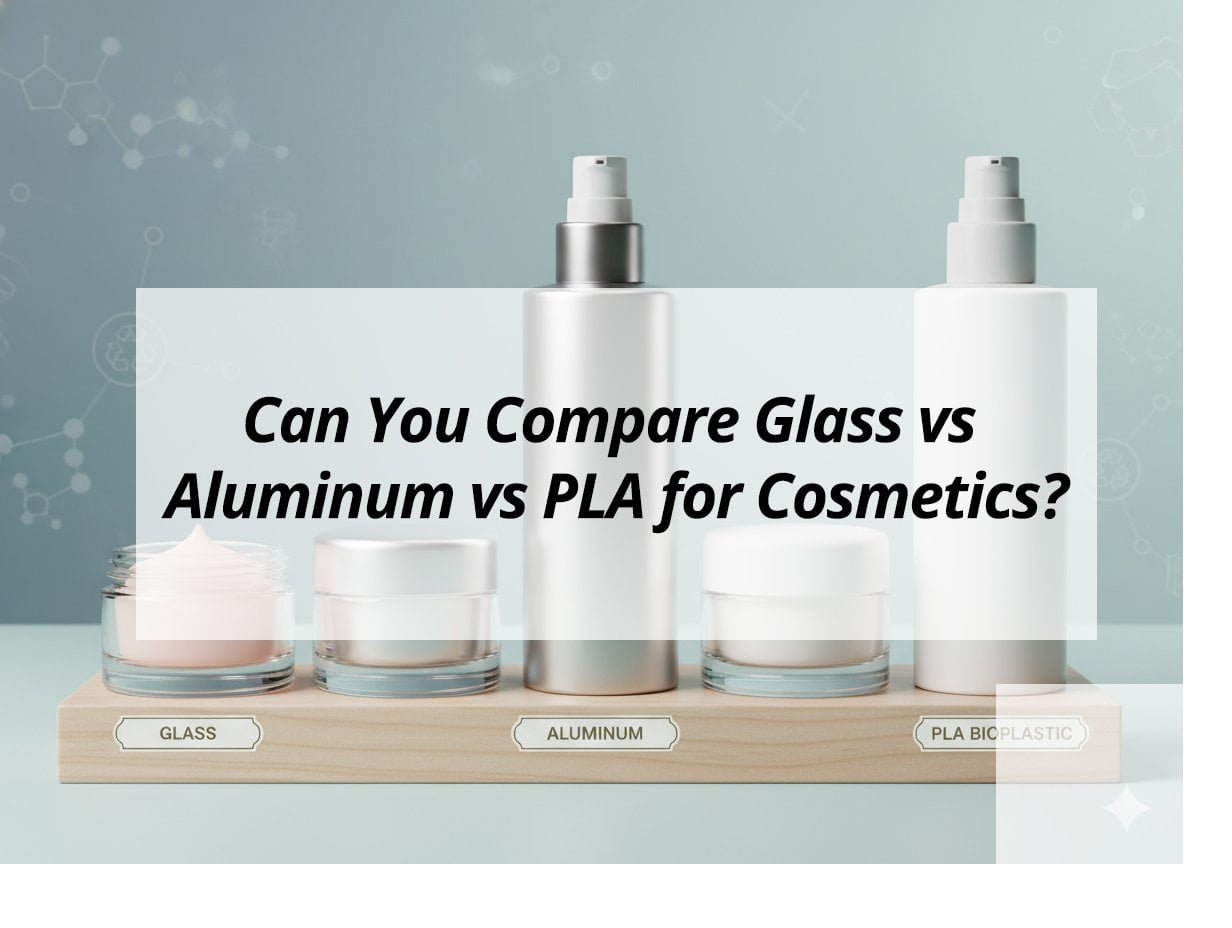
Are you trying to choose the ideal packaging material for your cosmetic products? The choice between glass, aluminum, and PLA is crucial. Each material offers distinct advantages and disadvantages for cosmetic packaging.
Yes, comparing glass, aluminum, and PLA (Polylactic Acid) for cosmetics reveals distinct characteristics. Glass offers a premium feel and excellent barrier properties, though it is heavy and breakable. Aluminum is lightweight, highly recyclable, and provides great protection but can be dented. PLA is a biodegradable plastic derived from renewable resources, offering a more sustainable option, but its barrier properties and durability may be less than glass or aluminum for some applications.
As a cosmetic packaging supplier, I guide clients through these choices daily. The "best" material depends on the product's needs, brand values, and target market. Balancing aesthetics, protection, and environmental impact is key.
What is the best plastic for cosmetics?
Are you trying to pick the right plastic for your cosmetic packaging? The choice of plastic greatly affects product stability, user experience, and overall brand image. Not all plastics are created equal for cosmetics.
The "best" plastic for cosmetics depends on the specific product, but common top choices include PET (Polyethylene Terephthalate) and HDPE (High-Density Polyethylene). PET is excellent for transparency and barrier properties, often used for clear bottles. HDPE offers durability, chemical resistance, and is typically opaque, ideal for creams and lotions. Both are safe, widely recyclable, and cost-effective, making them leading materials for skincare packaging wholesale.
When I advise clients looking for wholesale cosmetic bottles or skincare packaging wholesale, I always match the plastic type to the formulation. A good cosmetic jar manufacturer knows that the right plastic protects the product and enhances its appeal.
PET (Polyethylene Terephthalate)1
PET is a very popular choice for many cosmetic bottles.
- Transparency: It is clear and aesthetically appealing. This allows consumers to see the product.
- Barrier Properties: Provides good protection against oxygen and moisture. This helps preserve sensitive ingredients.
- Durability: It is shatter-resistant and lightweight.
- Recyclability: Widely recycled, often marked with the '1' resin code.
HDPE (High-Density Polyethylene)2
HDPE is a robust and versatile plastic.
- Chemical Resistance: Highly resistant to many chemicals. This makes it suitable for various cosmetic formulations.
- Durability: It is very strong and impact-resistant.
- Opacity: Typically opaque or translucent. This offers protection from light for light-sensitive ingredients.
- Recyclability: Widely recycled, marked with the '2' resin code.
PP (Polypropylene)3
PP is another common plastic, especially for caps and jars.
- Heat Resistance: Good resistance to heat. This makes it suitable for hot-fill processes.
- Chemical Resistance: Excellent chemical resistance.
- Flexibility: It has good flexibility, making it durable against stress cracking.
- Recyclability: Recyclable, marked with the '5' resin code.
Other Plastics (Less Common for Primary Bottles)
Some other plastics have specific uses.
- PVC (Polyvinyl Chloride)4: Less common now due to environmental and health concerns.
- Acrylic (PMMA)5: Often used for outer walls of double wall jars to create a luxurious, glass-like appearance. It is not always suitable for direct product contact.
- SAN (Styrene Acrylonitrile)6: Offers good clarity and rigidity. It is sometimes used for a clear, high-end look.
Is glass or aluminum better?
Are you weighing your options between glass and aluminum for your cosmetic packaging? Both materials are popular. Both offer distinct advantages that make them suitable for different types of beauty products and brand messages.
Neither glass nor aluminum is universally "better"; the choice depends on specific product needs and brand priorities. Glass offers a premium, heavy feel, excellent clarity, and strong inertness, ideal for high-end serums and creams. Aluminum is lightweight, shatterproof, provides superior light/oxygen barriers, and is highly recyclable, making it great for aerosols, tubes, or travel-friendly products. Each excels in different areas.
My experience shows that brands often use both. A luxurious face cream might go into glass, while a body spray would be in aluminum. It is about matching the material to the product's function and perceived value.
Aesthetic and Brand Perception
How each material looks and feels.
- Glass: Conveys luxury, purity, and transparency. Its weight gives a premium feel. It can be clear, frosted, or colored.
- Aluminum: Offers a sleek, modern, and often industrial aesthetic. It feels lightweight and cool to the touch. It is opaque.
Protection and Barrier Properties
How well each material protects the product.
- Glass:
- Inertness: Highly non-reactive. It does not leach chemicals into the product. This protects formula integrity.
- Barrier: Excellent barrier against air, moisture, and odors.
- Light: Clear glass offers no UV protection; dark or coated glass is needed.
- Aluminum:
- Barrier: Excellent barrier against light, oxygen, and moisture. This is vital for sensitive formulas.
- Inertness: Highly non-reactive with most cosmetic formulations.
- Shatterproof: Does not break if dropped.
Durability and Handling
Practical considerations for use and transport.
- Glass:
- Fragile: Prone to breaking if dropped. This can be a safety concern and leads to product loss.
- Heavy: Adds significant weight to packaging, increasing shipping costs and carbon footprint.
- Aluminum:
- Durable: Shatterproof and resistant to impact.
- Lightweight: Reduces shipping costs and is easy for consumers to handle and travel with.
- Dentable: Can be dented if subjected to heavy force.
Environmental Impact and Recyclability
How sustainable each material is.
| Feature | Glass | Aluminum |
|---|---|---|
| Recyclability | Infinitely recyclable, maintains quality | Infinitely recyclable, maintains quality |
| Recycling Infrastructure | Widely available | Widely available |
| Energy for Production | High for virgin glass, lower for recycled | High for virgin aluminum, very low for recycled |
| Recycled Content Use | Common to use PCR glass | Common to use PCR aluminum |
What is the most eco-friendly packaging for cosmetics?
Are you a brand striving for true sustainability in your product line? Finding the most eco-friendly packaging for cosmetics is a complex but crucial task. Many options exist, but some stand out more than others in their environmental benefits.
The most eco-friendly packaging for cosmetics often involves a combination of factors rather than a single material. Generally, packaging that is reusable (especially refillable systems), made from high percentages of post-consumer recycled (PCR) content (like glass or certain plastics), or is genuinely compostable, tends to be the most sustainable. Minimalist designs that reduce material use and carbon footprint also contribute significantly to being eco-friendly.
As a cosmetic jar manufacturer and cosmetic bottle supplier, I see a strong shift towards these solutions. Brands are looking for eco cosmetic packaging that not only looks good but also aligns with their environmental values. This means moving beyond just basic recyclability.
Refillable Systems
These are often considered the gold standard for sustainability.
- Reduced Waste: The primary container is reused many times. Only small, replaceable inserts are discarded.
- Lower Carbon Footprint: Manufacturing fewer main containers saves energy and resources.
- Consumer Engagement: Encourages a circular economy model among users.
Post-Consumer Recycled (PCR) Materials
Using materials that have already been recycled is highly effective.
- PCR Plastic (e.g., PCR PET, PCR HDPE): Reduces demand for virgin plastic. Uses less energy in production than new plastic.
- Recycled Glass: Glass is infinitely recyclable. Using recycled glass saves energy and raw materials.
- Circular Economy: Keeps materials in use and out of landfills.
Mono-Material Designs
Simplicity in materials aids recycling.
- Easier Recycling: Packaging made from a single type of plastic (e.g., all PP or all PET) is much easier for recycling facilities to process.
- Less Contamination: Avoids mixing incompatible materials that can disrupt recycling streams.
Lightweighting and Material Reduction
Using less of anything is always more sustainable.
- Minimalist Design: Packaging designed to be as small and light as possible.
- Concentrated Products: If a product is concentrated, a smaller package is needed. This saves material and transport costs.
Biodegradable and Compostable Materials
These offer an alternative end-of-life solution.
- Natural Breakdown: Materials that break down into natural substances without leaving harmful residues. These should be certified compostable.
- Reduced Landfill: Prevents materials from sitting in landfills for hundreds of years.
- Soil Enrichment: Some compostable materials return nutrients to the soil.
What are the disadvantages of glass packaging?
Are you considering glass for your cosmetic packaging? Glass offers a premium look and feel. However, it also comes with notable drawbacks. Understanding these disadvantages is important for making informed packaging decisions.
The primary disadvantages of glass packaging include its fragility, heavy weight, and higher shipping costs. Glass can easily break if dropped, posing safety risks and product loss. Its substantial weight increases transportation expenses and environmental impact. Furthermore, glass manufacturing is energy-intensive, and clear glass offers no UV protection, requiring additional coatings or dark colors for light-sensitive formulations.
When discussing wholesale cosmetic bottles with clients, I always present a balanced view. While glass has undeniable appeal, its practical limitations need careful consideration, especially for brands focused on logistics and consumer safety.
Fragility and Safety
Glass is inherently brittle and prone to breaking.
- Breakage Risk: Glass bottles and jars can shatter if dropped or subjected to impact. This leads to product loss and potential injury from shards.
- Safety Concerns: Broken glass is dangerous for both consumers and handling staff.
- Increased Returns: Higher rates of damage during shipping can lead to more product returns and customer dissatisfaction.
Weight and Logistics
The heavy nature of glass impacts several areas.
- High Shipping Costs: Glass is significantly heavier than plastic or aluminum. This directly increases freight costs, especially for skincare packaging wholesale in large volumes.
- Increased Carbon Footprint: Heavier shipments consume more fuel. This leads to higher transportation-related carbon emissions.
- Handling Difficulty: Bulk glass packaging is harder to handle manually during packing and unpacking.
Energy Consumption in Production
Manufacturing glass is an energy-intensive process.
- High Melting Point: Glass requires very high temperatures to melt. This demands a lot of energy.
- Environmental Impact: While recyclable, the initial production of virgin glass has a notable environmental footprint. Using recycled glass helps reduce this.
Lack of UV Protection (for Clear Glass)
Clear glass does not protect products from light.
- Ingredient Degradation: Sensitive ingredients in cosmetics can degrade when exposed to UV light. Clear glass offers no barrier.
- Need for Tinting/Coating: To protect light-sensitive formulas, glass must be tinted (e.g., amber, cobalt blue) or coated. This adds extra cost and complexity.
My Insights: Comparing Glass, Aluminum, and PLA for Cosmetics Packaging
Choosing the right packaging can make or break your cosmetic brand. Confused by options? Discover the strengths of glass, aluminum, and PLA to find the perfect fit.
Glass, aluminum, and PLA each offer unique benefits for cosmetics packaging. Glass provides luxury and excellent protection, aluminum offers lightweight durability and recyclability, while PLA delivers eco-friendliness with compostability.
Exploring Materials for Cosmetic Packaging
Key Properties:
- Glass: Chemically inert, offering excellent barrier properties and UV protection in tinted forms. Ideal for luxury products.
- Aluminum: Lightweight, highly recyclable, and resistant to corrosion. Provides strong barrier against light and air.
- PLA: A bioplastic from corn, boasting clarity and rigidity. Compostable under industrial conditions but sensitive to heat and moisture.
Comparison Table:
| Feature | Glass | Aluminum | PLA |
|---|---|---|---|
| Durability | Fragile, heavy | High, lightweight | Stiff, heat-sensitive |
| Eco-Friendliness | Fully recyclable | Infinitely recyclable | Biodegradable |
| Cost | High | Moderate | Low to moderate |
| Aesthetics | Luxurious, transparent | Modern, metallic | Glass-like clarity |
| Product Safety | Inert | Strong barriers | May react with oils/acids |
Best Applications:
- Glass: Suited for premium creams and serums.
- Aluminum: Great for travel-size lotions and air-sensitive products.
- PLA: Ideal for eco-friendly brands and low-heat, non-oily formulations.
Different materials cater to varying needs, impacting cost, aesthetics, and sustainability. Choose based on brand values and product requirements for optimal consumer engagement and environmental responsibility.
Conclusion
Comparing glass, aluminum, and PLA for cosmetics reveals tradeoffs in feel, protection, and sustainability. PET and HDPE are top plastic choices. Glass offers luxury but is heavy and fragile, while aluminum is lightweight and durable. The most eco-friendly packaging involves refillable or PCR materials. Each material choice requires careful consideration.
-
Explore the advantages of PET, including its transparency and barrier properties, essential for effective cosmetic packaging. ↩
-
Learn about HDPE's durability and chemical resistance, making it ideal for various cosmetic formulations. ↩
-
Discover how PP's heat resistance and flexibility make it suitable for caps and jars in cosmetics. ↩
-
Understand the environmental and health issues associated with PVC in cosmetics. ↩
-
Find out how acrylic can enhance the aesthetic appeal of cosmetic jars with its glass-like appearance. ↩
-
Learn about SAN's clarity and rigidity, making it suitable for high-end cosmetic looks. ↩