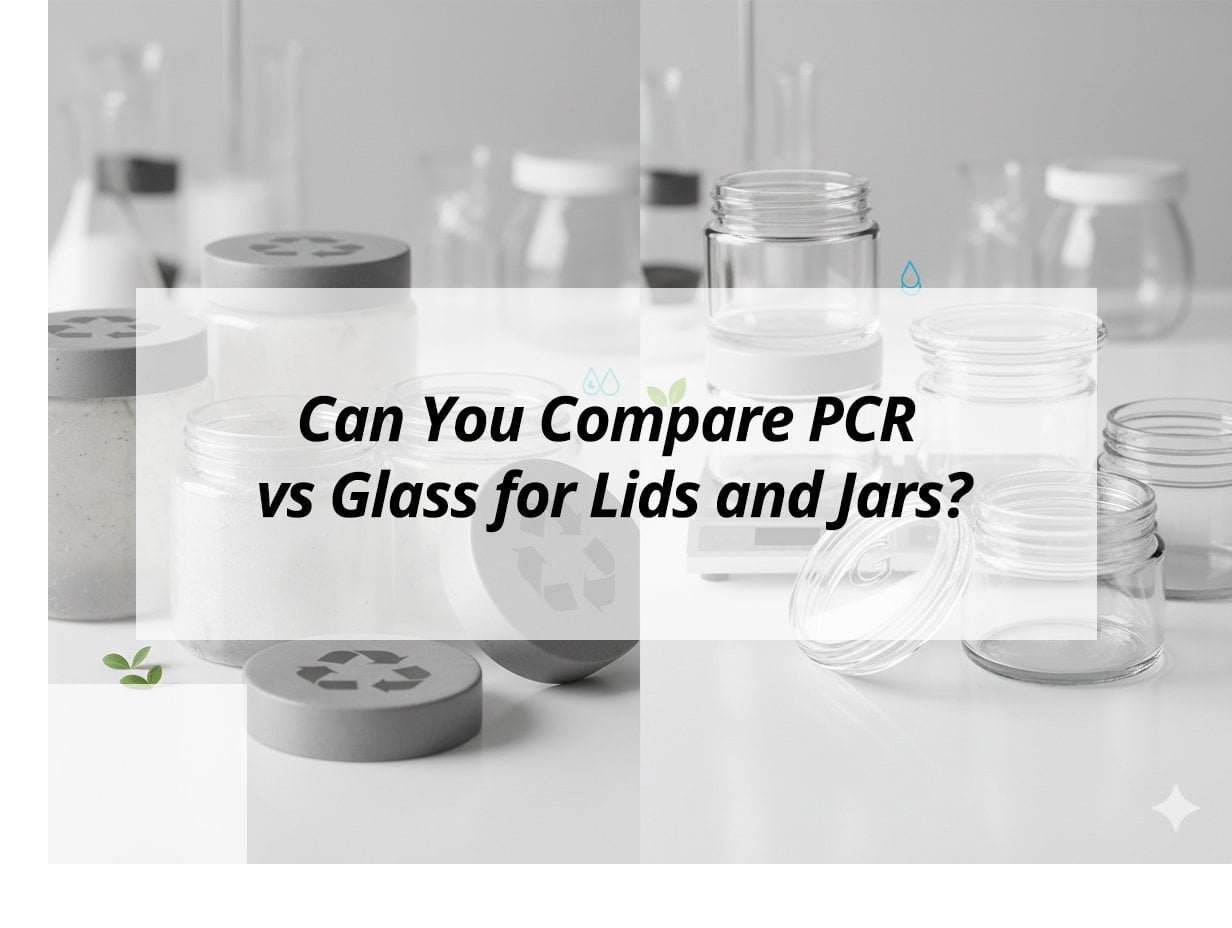
Choosing the right cosmetic packaging is a critical decision for any brand. When considering materials for lids and jars, PCR plastic and glass are two prominent options. Understanding their distinct properties is essential for an informed choice.
Comparing PCR and glass for cosmetic packaging involves evaluating multiple factors. Glass offers a premium aesthetic and excellent product protection. PCR, or Post-Consumer Recycled plastic, provides a sustainable alternative by repurposing existing plastic waste. The ideal selection hinges on brand positioning, product compatibility, logistical considerations, and environmental objectives.
The decision between packaging materials impacts product integrity, brand perception, and operational efficiency. Each material presents a unique set of advantages and disadvantages. A detailed comparison helps businesses align their packaging choices with their overall strategy.
What are the characteristics of glass that make it different from paper and plastic?
When you look at packaging materials, glass, paper, and plastic are very different. Each one has its own feel and uses. Glass is heavy and clear. Paper is light and easy to bend. Plastic is also light but very strong.
Glass has special traits that make it stand out from paper and plastic. It is strong and does not react with products inside. This means your product stays safe and pure. Glass also feels luxurious and looks good. But, it is heavy and can break easily. Paper is light and cheap, but it cannot hold liquids well. Plastic is light and does not break, but it can sometimes react with products. Also, plastic waste is a big problem.
Let me tell you more about these differences. I have seen many customers, like Mary, consider these points. They want to make sure the packaging fits their product.
Material Properties
| Feature | Glass | Paper | Plastic |
|---|---|---|---|
| Weight | Heavy | Very Light | Light |
| Transparency | High (can be clear or colored) | Opaque | High (can be clear or colored) |
| Durability | Fragile (can break) | Low (tears easily) | High (flexible, strong) |
| Reactivity | Non-reactive | Can react with moisture | Can react with some chemicals |
| Feel | Premium, smooth, cool | Natural, rough | Smooth, sometimes flimsy |
Environmental Impact1
Glass can be recycled many times without losing quality. This is a big plus. But, making glass uses a lot of energy. Paper comes from trees, which can be good if managed well. But, paper recycling can use water and chemicals. Plastic is a big concern. Most plastic is made from oil. It also lasts a very long time in landfills. Recycling plastic is hard, and it often becomes lower quality plastic. This is why things like PCR are so important. They try to fix the plastic waste problem.
Cost and Logistics
Glass is usually more expensive to buy than paper or plastic. It also costs more to ship because it is heavy. Paper is often the cheapest choice. Plastic is usually cheaper than glass and lighter to ship. But, the price of plastic can change with oil prices. When I talk with buyers, like Mary, they always bring up cost. They need good quality but also need to keep prices competitive for their business. This balance is always key.
What is a PCR jar?
You might hear about "PCR jars" more and more these days. But what exactly are they? Why are they important in the world of cosmetic packaging? Knowing this helps you make smart choices.
A PCR jar is a container made from Post-Consumer Recycled plastic. This means the plastic used to make the jar has already been used by a consumer, then collected and recycled. For example, a water bottle you finish might be recycled and later turned into a PCR cosmetic jar. Using PCR plastic reduces the need for new plastic. This helps lower carbon emissions. It also uses less energy and keeps plastic out of landfills.
I have seen many companies, especially in Europe, start to demand PCR materials. They want to show customers they care about the environment. This trend is growing, and it affects how we source materials.
How PCR Plastic is Made
Making PCR plastic is a process. First, people collect used plastic items. These items go to recycling centers. There, workers sort the plastic by type and color. Then, the plastic is cleaned and chopped into small flakes. These flakes are melted down and turned into small pellets. These pellets are what we use to make new PCR jars and lids. This entire process reduces waste and gives old plastic a new life. It is a good way to be more sustainable.
Benefits of Using PCR
Using PCR in your packaging has many benefits.
- Environmental Impact: It reduces the amount of new plastic made. This saves oil and energy. It also means less plastic waste goes into landfills or oceans. Many brands want to be seen as green, and PCR helps with that.
- Brand Image: Customers care about the environment. Using PCR shows your brand is responsible. This can attract more customers who think like Mary, who values quality but also likes to see responsible practices.
- Cost: Sometimes, PCR can be cheaper than virgin plastic, depending on market conditions. It also helps meet global sustainability goals.
Challenges with PCR
Even with all the good points, PCR has some challenges.
- Availability: It can be hard to get enough high-quality PCR material. The supply depends on how much plastic people recycle.
- Quality: PCR plastic might not always be as clear or consistent in color as new plastic. It can also have tiny imperfections. This is something buyers need to consider, especially if they want a very pristine look.
- Contamination: Sometimes, recycled plastic can have small amounts of other materials. This means it needs careful processing.
- Regulatory Issues: Different countries have different rules for using recycled materials in packaging. This means we need to be careful with certifications.
Types of PCR Materials2
| PCR Type | Source | Common Use |
|---|---|---|
| PET | Water bottles, soda bottles | Clear jars, bottles |
| HDPE | Milk jugs, detergent bottles | Opaque bottles, jars, caps |
| PP | Yogurt cups, food containers | Jars, lids, pumps |
These different types of PCR mean you can choose the best one for your product. For example, if you need a clear jar, PCR PET is often a good choice. For an opaque jar or lid, PCR HDPE or PP might be better. This flexibility is good for designers.
Is it better to use glass or plastic bottles?
This is a question many people ask, especially in the cosmetic industry. Both glass and plastic have strong points. They also have weak points. The best choice depends on your product, your brand, and your customers.
Deciding between glass and plastic bottles means looking at many factors. Glass offers a luxury feel and is non-reactive. This protects sensitive formulas. It is also infinitely recyclable. Plastic, especially PCR plastic, is lighter and less likely to break. It is also often more affordable. Your decision should align with your brand's values, target market, and logistics. For example, if your product is very high-end and heavy, glass might be suitable. If you need something for travel or a more budget-friendly option, plastic could be better.
When I talk with my buyers, this question comes up a lot. They want to know what is best for their brand and their customers, like Mary. They need a package that works well and sells well.
Advantages of Glass Bottles
Glass has many good points for packaging.
- Premium Look and Feel: Glass looks elegant and high-end. It feels smooth and cool in your hand. This can make your product seem more valuable.
- Non-Reactive: Glass does not react with chemicals. This means your product stays pure and stable. It is very good for sensitive formulas.
- Recyclability: Glass can be recycled over and over again. It does not lose its quality. This makes it a very sustainable option.
- Barrier Properties: Glass is an excellent barrier against air and moisture. This helps keep your product fresh for longer.
Disadvantages of Glass Bottles
But glass also has its downsides.
- Fragile: Glass can break easily. This means you need more careful handling during shipping. Breakage can lead to product loss.
- Heavy: Glass is much heavier than plastic. This makes shipping costs higher. It also makes the product heavier for the customer.
- Cost: Glass is generally more expensive to produce and buy. This can increase your product's overall price.
Advantages of Plastic Bottles (including PCR)
Plastic, especially PCR, has its own set of advantages.
- Lightweight: Plastic is much lighter than glass. This saves on shipping costs. It also makes the product easier for customers to carry.
- Durable: Plastic does not break easily. This reduces product loss during transport. It also makes the packaging safer for customers.
- Versatility: Plastic can be molded into many shapes and sizes. This offers more design options.
- Cost-Effective: Plastic is usually cheaper to make than glass. This helps keep product costs down.
- Sustainability (PCR): Using PCR plastic reduces the need for new fossil fuels. It also diverts waste from landfills. This is a big win for the environment.
Disadvantages of Plastic Bottles
Plastic also has its disadvantages.
- Environmental Concern (Virgin Plastic): New plastic is made from fossil fuels. It also takes a very long time to break down. This is a big problem for the planet.
- Reactivity: Some plastics can react with certain chemicals. This can affect the product inside. You need to choose the right type of plastic.
- Recycling Issues: Not all plastics are easy to recycle. Many types of plastic are not recycled well. This leads to a lot of waste.
Deciding Factors
| Factor | Glass | Plastic (including PCR) |
|---|---|---|
| Product Type | High-end, sensitive formulas | Everyday use, travel-friendly |
| Brand Image | Luxury, premium, eco-friendly (recycling) | Modern, sustainable (PCR), practical |
| Logistics | Higher shipping cost, fragile | Lower shipping cost, durable |
| Budget | Higher initial cost | Lower initial cost |
| Target Market | Customers seeking luxury and sustainability | Customers seeking convenience, value, and sustainability |
Ultimately, the choice depends on what is most important to you. Are you focusing on luxury feel? Or are you focused on being lightweight and cost-effective? I often guide my customers through these questions. They help them find the best fit.
Why do we no longer use glass bottles?
It might seem like glass bottles3 are everywhere, but in some areas, we see less of them. Why is this happening? What are the reasons behind moving away from glass in certain products? It is not a simple answer.
The shift away from glass bottles in some industries is due to a mix of practical and economic reasons. Glass is heavy, which increases shipping costs and carbon emissions during transport. It is also fragile, leading to breakage and product loss. Plastic, especially lightweight and durable options, offers a more cost-effective and efficient alternative for many applications. Even with its premium feel, the logistical challenges and environmental impact of transport can make glass less appealing for certain mass-market products.
I have seen this change firsthand in the market. Buyers are always looking for ways to improve efficiency and reduce costs.
Cost and Logistics
One main reason is the cost. Glass is heavier than plastic. This means it costs more to ship. If you ship many products, these costs add up fast. Also, glass breaks easily. This means more packaging is needed to protect it during transport. This adds to the cost and can lead to wasted products if bottles break. For companies focused on the bottom line, these costs are significant.
Environmental Concerns (Transport)
While glass is great for recycling, its weight creates another environmental problem: carbon emissions from transport. Heavier shipments use more fuel. This means more carbon dioxide goes into the air. For companies trying to reduce their carbon footprint, lighter packaging like plastic, especially PCR, can seem like a better choice, even with plastic's own issues. It is a complex trade-off between material and transport impact.
Safety and Convenience
Glass can be dangerous when it breaks. Sharp pieces can cause injury. For products used in places like bathrooms or by children, plastic offers a safer option. Also, plastic bottles are much lighter and easier to carry. This makes them more convenient for consumers. Think about travel-size products or products used on the go. Plastic is much more practical for these uses.
Innovation in Plastic
Plastic technology has improved a lot. We now have stronger, lighter, and more sustainable plastics, like PCR. These new plastics can sometimes mimic the feel or look of glass. They also offer better barrier properties. This makes plastic a more attractive alternative for many uses. For example, some advanced plastics can now hold sensitive formulas as well as glass does.
Market Trends and Consumer Preferences
Consumers are also changing. While some still prefer glass for luxury, many are looking for convenience and sustainability. They want products that are easy to use, lightweight, and eco-friendly. Brands respond to these trends. They choose packaging that meets these new demands. This means a careful balance between luxury, practicality, and environmental responsibility.
Summary of Reasons for Decline
| Factor | Impact on Glass Use |
|---|---|
| High Shipping Costs | Reduces cost-effectiveness for mass production |
| Fragility | Increases breakage, waste, and handling complexity |
| Weight | Leads to higher fuel consumption for transport |
| Safety Concerns | Less suitable for certain environments and users |
| Plastic Innovation | Provides viable, often superior, alternatives |
| Consumer Demand | Shifts towards lighter, more convenient options |
These reasons show that the move away from glass is not simple. It is a response to many pressures. Businesses want to be efficient. They want to be safe. They also want to be seen as responsible. This is why choices about packaging are so important.
My Insights: Comparing PCR vs Glass for Lids and Jars
Confused about which packaging material suits your cosmetic products best? Discover how PCR and glass can elevate your brand while addressing sustainability.
PCR plastic offers lower carbon footprints and shipping efficiency, while glass provides chemical inertness and luxurious appeal. Both materials can be customized for unique branding and cater to different sustainability narratives.
Evaluating Packaging Choices for Sustainability
Key Definitions:
- PCR Plastic: Made from recycled post-consumer resin, offering lightweight designs and reduced carbon impact.
- Glass: An inert material with infinite recyclability, ideal for luxurious presentation.
Environmental Impact:
PCR plastic jars can have up to 80% lower carbon impact compared to glass, due to reduced energy in production and transportation. Glass demands more energy but benefits from indefinite recyclability.
Comparison Table:
| Feature | PCR Plastic | Glass |
|---|---|---|
| Carbon footprint | Lower | Higher |
| Weight & shipping | Light, cost-efficient | Heavy, fragile |
| Recyclability | Degrades over time | Infinite without loss |
| Resource use | Reduced virgin resin | Saves raw materials |
| Durability | Shatter-resistant | Breakable |
| Product protection | Good barrier, but concerns of microplastics | Excellent barrier, inert |
Consumer Perception:
- PCR Plastic: Suitable for eco-conscious brands, reducing environmental impact while offering shatter resistance for travel sets.
- Glass: Preferred for premium branding, providing a natural and eco-friendly feel, popular in high-end skincare.
Choosing between PCR plastic and glass depends on brand priorities—whether emphasizing sustainability and cost-efficiency or luxury appeal and chemical purity. Both offer distinct advantages that can enhance product presentation and consumer engagement.
Conclusion
Choosing between PCR and glass for cosmetic packaging is a strategic decision. Glass offers luxury but has weight and breakage issues. PCR plastic is a lighter, more sustainable option. The best choice depends on balancing brand image, product needs, and environmental goals.
-
Explore the environmental implications of using glass and plastic in packaging. ↩
-
Discover the various types of PCR materials and their applications in sustainable packaging. ↩
-
Explore the reasons behind the decline of glass bottles in favor of alternatives, including economic and environmental factors. ↩