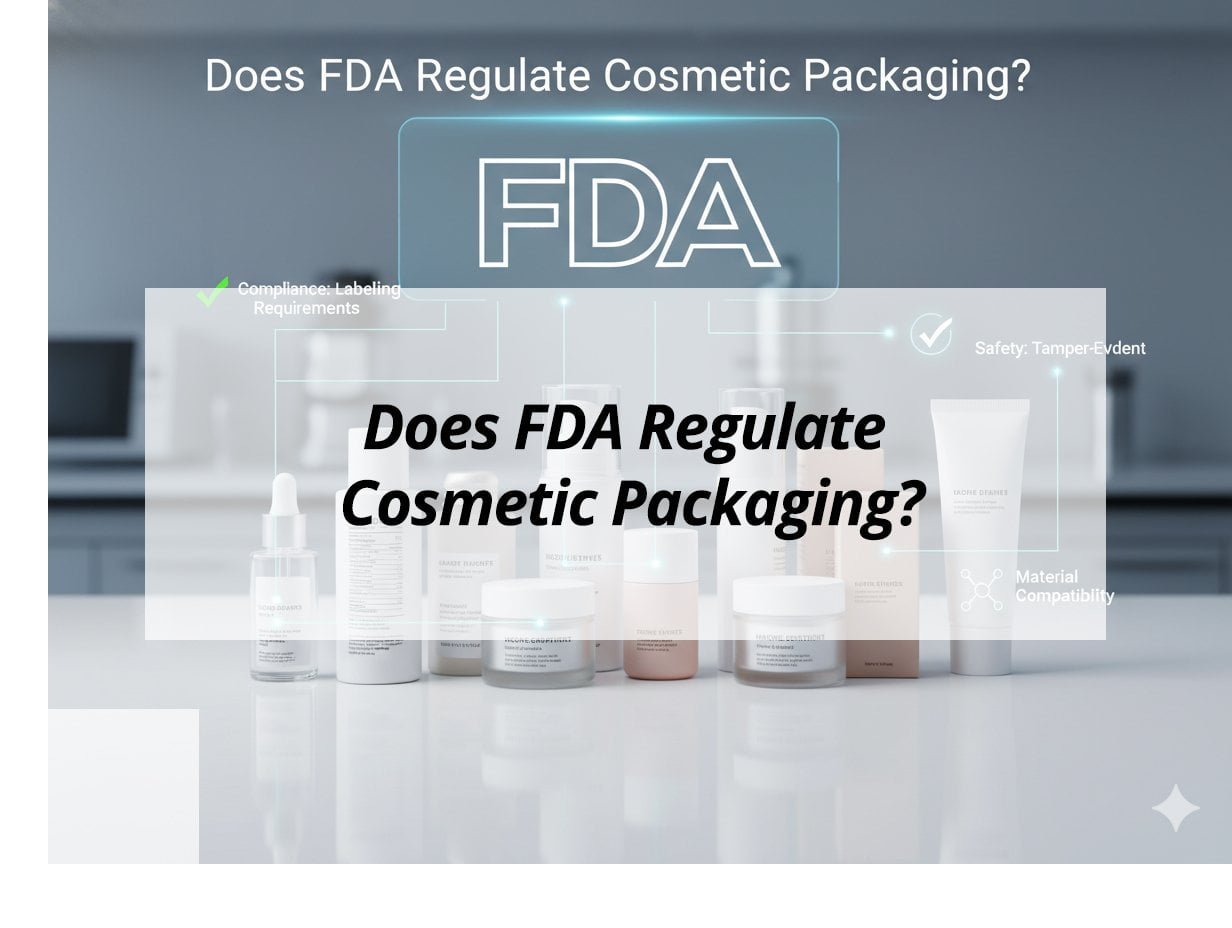
Navigating the world of cosmetic packaging can be tricky. Understanding FDA regulations is vital for ensuring compliance and consumer safety in the beauty industry.
The FDA enforces guidelines for labeling and safety in cosmetic packaging but does not directly regulate the designs premarket. Manufacturers must ensure packaging is safe and accurately labeled to comply with FDA standards, maintaining credibility and consumer trust while avoiding misleading information.
While the FDA focuses on labeling, knowing the boundaries of regulation can guide businesses in meeting safety and quality standards effectively. This adds value to customers and enhances brand reputation.
Does the FDA regulate labeling of cosmetics?
Labeling cosmetics accurately is a critical part of manufacturing. Misleading labels can result in severe consequences for brands, harming both reputation and consumer trust1.
The FDA strictly regulates cosmetic labeling2 to ensure consumer safety. Labels must not include false information. Proper ingredient disclosure and safety warnings are mandatory to meet the federal safety standards for transparency and accuracy.
Labeling Regulations
Understanding FDA labeling guidelines is crucial for compliance and building consumer trust. These core essentials ensure transparency and reliability:
- Compliance Requirements: Accurate ingredient lists, manufacturer details, and usage instructions are required. These elements inform consumers about product content and appropriate use.
- Prohibitions: Misleading claims about benefits or cures are prohibited. False advertisements can result in legal actions and damage to brand integrity.
- Safety Warnings: Proper allergen statements are essential to prevent allergic reactions. These labels protect consumers and demonstrate the brand's commitment to health and safety.
| Element | Important Details |
|---|---|
| Ingredient Listing | Mandatory listing of all ingredients in descending order of prominence. |
| Manufacturer Information | Detailed contact information including names and addresses. |
| Safety Disclosures | Includes necessary allergen and irritation warnings to protect consumers. |
These guidelines protect both consumers and manufacturers, preventing legal repercussions and maintaining trust. By adhering to these standards, brands can differentiate themselves as reliable and consumer-friendly.
Does FDA regulate packaging?
Packaging significantly affects product presentation and consumer appeal. The design and material choices can make a profound impact on both brand perception and compliance.
While the FDA doesn't directly regulate packaging, it oversees product safety. Packaging must not compromise safety or mislead consumers. This indirect regulation ensures products are marketed ethically and responsibly.
Packaging Guidelines
Packaging regulations may not be direct, but they are crucial for maintaining safety and compliance. The guidelines ensure that products are not only appealing but also safe:
- Material Safety: Packaging materials must not react negatively with the content. Compatibility maintains the product's integrity and efficacy.
- Non-contamination: Ensures that the packaging maintains the product's hygienic state, preventing contamination that could endanger consumer health.
- Label Accuracy: Labels should be robust and withstand packaging conditions without fading, keeping essential information legible.
Packaging is indirectly regulated through safety and contamination guidelines provided by the Food, Drug, and Cosmetic Act:
| Aspect | Details |
|---|---|
| Material Use | Uses safe materials that do not interact with the product. |
| Compliance | Prevents product contamination, ensuring consumer safety. |
| Label Integrity | Durable labels that remain legible throughout product life. |
Thus, while direct regulation is absent, compliance with safety standards is imperative. Proper packaging ensures consumer satisfaction and trust.
How does the FDA regulate the cosmetic industry?
In the competitive realm of cosmetics, understanding the scope of FDA regulation is essential for maintaining quality and legal compliance.
The FDA doesn't approve cosmetics before they hit the market but monitors them for safety. They take action against brands violating the Food, Drug, and Cosmetic Act, ensuring that products on the market are safe and properly labeled.
Industry Regulations
Exploring FDA's role helps businesses navigate cosmetic safety standards and meet consumer expectations. Key regulatory aspects include:
- Enforcement Actions: The FDA has the authority to issue safety recalls, warnings, or bans on products that do not comply with safety regulations.
- Voluntary Reporting: While not mandatory, brands are encouraged to report sudden adverse reactions, demonstrating transparency and responsibility.
- Good Manufacturing Practices (GMP)3: Although not enforced by regulation, following GMP is recommended for maintaining product quality and consumer trust.
Understanding how the FDA regulates cosmetics can enhance a brand's standing:
Key Regulatory Elements
- Monitoring: Regularly check for consumer-reported adverse effects to ensure products are safe for use.
- Enforcement: Non-compliance can lead to significant consequences including product seizures and bans.
- Voluntary Measures: Engaging in proactive reporting and recalls fosters trust and demonstrates commitment to consumer safety.
By aligning with FDA procedures, brands can ensure product integrity, safety, and adherence to legal standards, resulting in greater consumer confidence.
What products are not regulated by the FDA?
Understanding FDA's regulatory limits can guide businesses toward informed expansion opportunities while adhering to ethical marketing practices.
Dietary supplements, household products4, and cosmetic marketing practices fall outside FDA’s direct regulation. However, false claims and safety concerns are still monitored for violations, ensuring consumer protection.
Unregulated Products
Knowing which products lie outside the FDA's regulatory scope is crucial for strategy development and innovation. Key areas include:
- Supplements and Household Items: These products are mostly self-regulated, necessitating caution and ethical practices from manufacturers to ensure consumer safety.
- Marketing Claims: Although not directly monitored by the FDA, misleading claims can lead to actions under FTC guidelines, holding brands accountable for truthfulness.
- Ingredient Use in Cosmetics: Ingredients such as colors and additives have minimal FDA oversight, prompting brands to ensure purity and safety independently.
| Product Type | Oversight Details |
|---|---|
| Dietary Supplements | Not pre-approved; safety is monitored post-market to ensure they do not pose health risks. |
| Household Products | Primarily monitored through consumer safety complaints and voluntary recalls. |
| Marketing Practices | Governed by FTC for advertising truth, ensuring claims are honest and not misleading. |
Being informed about the regulatory landscape allows businesses to diversify while maintaining ethical and safety standards. This knowledge supports strategic decisions and helps avoid regulatory pitfalls.
My insights: FDA's Role in Regulating Cosmetic Packaging
Curious about FDA's regulations on cosmetic packaging? Discover the guidelines that ensure safety and truthful labeling in the beauty industry.
The FDA regulates cosmetic packaging by enforcing labeling requirements, safety standards, and material selection under the FD&C Act. While it doesn't approve packaging premarket, it ensures products are not adulterated or misleading.
Understanding FDA Guidelines for Cosmetic Packaging
Key Regulatory Aspects:
-
Labeling Requirements: Cosmetic packaging must comply with FDA's guidelines, ensuring accurate ingredient listings, usage instructions, and any necessary warnings. Misleading claims are prohibited.
-
Safety Standards: Packaging materials must be safe for consumers. The FDA monitors safety through post-market processes and can enforce action if violations occur.
Regulation Overview Table
| Regulation Aspect | Description | Purpose |
|---|---|---|
| Labeling | Accurate ingredient and instruction display | Prevent misleading information |
| Material Selection | Safe packaging materials | Ensure consumer safety |
| Enforcement Actions | Inspections and penalties for non-compliance | Maintain industry standards |
| Recent Legislation | Expanded FDA authority under MoCRA | Enhance regulation of cosmetics |
Modernization of Cosmetics Regulation Act (MoCRA)5:
Recent enhancements through MoCRA require facility registration and product listing, expanding FDA’s regulatory reach. Despite no premarket approval, the FDA plays a crucial role in maintaining cosmetic packaging compliance to safeguard consumer interests.
Conclusion
Understanding the FDA's role in cosmetic packaging and industry regulations helps brands ensure safety and compliance. Adhering to these standards fosters consumer trust and enhances brand credibility, ultimately contributing to industry leadership.
-
Learn strategies to enhance consumer trust through compliance and transparency. ↩
-
Explore the FDA's guidelines to ensure your cosmetic labeling meets safety and transparency standards. ↩
-
Learn how GMP can enhance product quality and consumer trust in your brand. ↩
-
Understand the regulatory landscape for household products to ensure safety. ↩
-
Explore how MoCRA enhances FDA's regulatory authority in the cosmetic industry. ↩