
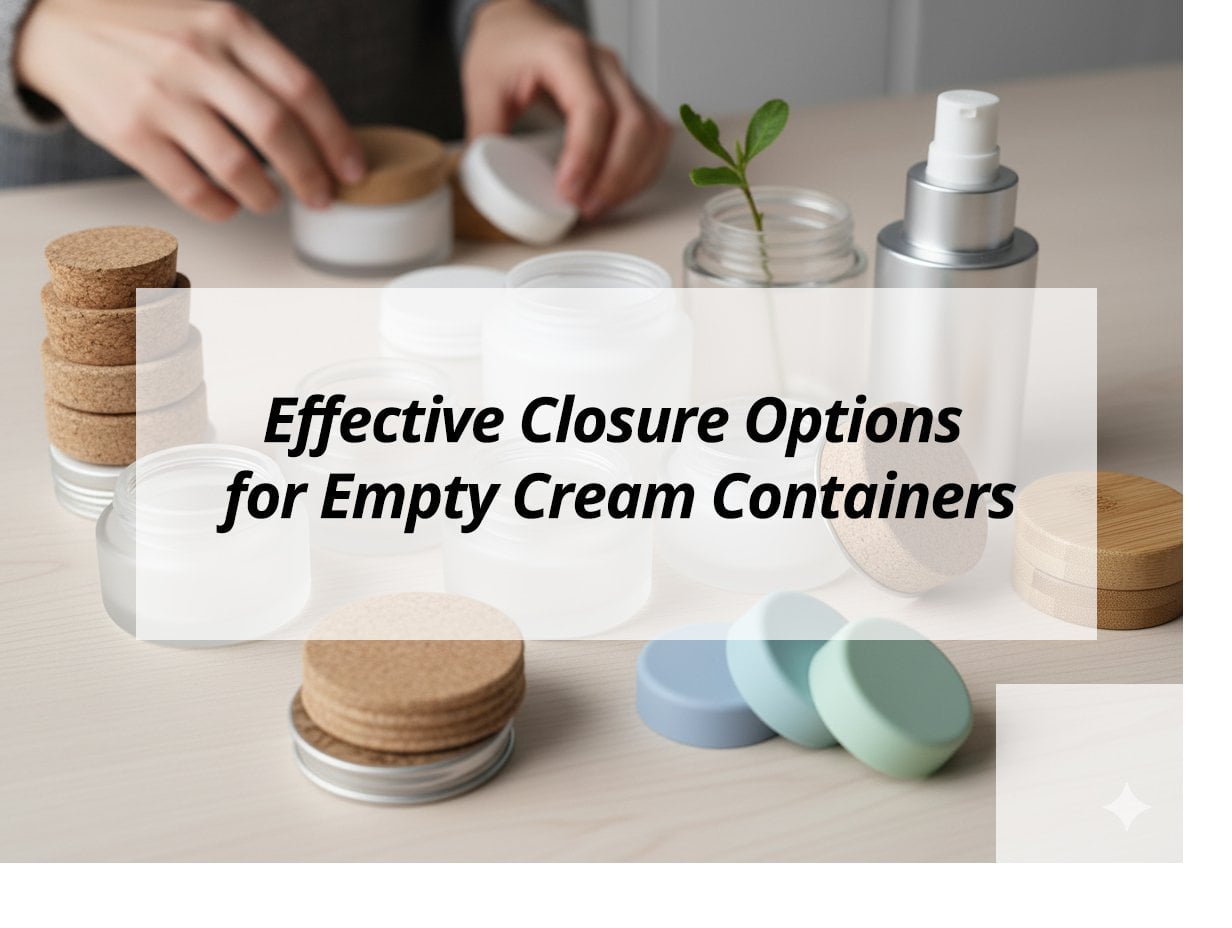
Selecting the right closures for cream containers is a critical decision in cosmetic packaging. A poor choice can lead to product spoilage or leakage. This results in financial losses and damage to brand reputation. Therefore, understanding the available options and making informed decisions is essential for product integrity.
Effective closure selection for empty cream containers focuses on product protection and user convenience. The ideal closure creates an airtight seal, prevents spillage, and enhances aesthetic appeal. This preserves the cream's freshness and ensures customer satisfaction. It also helps a product stand out in a competitive market.
This guide provides insights into various closure options for cosmetic creams. It covers types, quality assurance aspects, and material considerations. This information aims to support informed decision-making for brands.
What Are the Five Common Closures for Cosmetic Containers?
Identifying suitable closures for cream containers can be challenging. The closure must secure the product and maintain its freshness. It must also offer ease of use for consumers. Incorrect selection can compromise cream quality. This leads to lost sales and negative customer experiences. So, what are the primary closure options available for cosmetic cream jars?
The five common types of closures used in cosmetic and pharmaceutical containers are screw caps, snap-on caps, child-resistant closures, dispensing closures, and tamper-evident closures. Each type provides specific benefits for product protection and consumer interaction. Understanding these types is key to making an appropriate selection.
Below is an overview of effective closure types for cosmetic creams.
Screw Caps: Reliable and Simple
Screw caps are widely used. They offer straightforward operation, twisting on and off to create a secure seal. This design effectively prevents air ingress and product leakage. They are suitable for various cream formulations, including face creams and body lotions. Their reliability makes them a popular choice for many cosmetic products.
Snap-On Caps: Quick and Convenient
Snap-on caps allow for rapid opening and closing. They engage by pressing down until a click is heard. These closures are ideal for products requiring frequent access, such as hand creams or sunscreens. While less secure than screw caps for highly sensitive products, their convenience is beneficial for daily use items.
Dispensing Closures: Controlled Application
Dispensing closures enable precise product delivery. Examples include pumps and disc tops. Pumps are suitable for lotions and serums, while disc tops work well for thicker creams. These closures minimize product waste and maintain hygiene. Consumers appreciate the ease of controlled dispensing.
Tamper-Evident Closures: Enhancing Trust
These closures indicate if a product has been opened prior to purchase. Shrink bands or tear-off strips are common examples. Their presence reassures consumers that the product is new and uncontaminated. This feature is important for product quality and helps build consumer trust in a brand.
Child-Resistant Closures: Prioritizing Safety
Child-resistant closures are designed to be difficult for children to open. They often require a specific method, such as a push-and-twist action. These closures are important for creams containing potent ingredients that could pose a risk if ingested by children. Safety remains a primary concern in product packaging.
| Closure Type | Primary Advantage | Typical Applications |
|---|---|---|
| Screw Caps | Secure, airtight seal | Face creams, body lotions, jars |
| Snap-On Caps | Fast access, easy to use | Hand creams, sunscreens, everyday creams |
| Dispensing Closures (Pumps/Disc Tops) | Controlled dosage, hygiene | Lotions, serums, thicker creams |
| Tamper-Evident Closures | Product integrity assurance | All cosmetic creams, pharmaceuticals |
| Child-Resistant Closures | Prevents accidental opening | Creams with strong or hazardous ingredients |
What Are the Different Types of Container Closures?
Navigating the array of closure types can be complex. The chosen closure must fit the cream container and meet the product's specific requirements. An unsuitable choice can compromise product freshness. This negatively impacts business operations. So, what are the various categories of container closures available?
Container closures encompass a wide range of mechanisms beyond just the cap. These include sealing methods, material compositions, and functional designs. These factors collectively influence product protection and aesthetic appeal. The correct selection enhances product presentation and consumer satisfaction.
Here is an exploration of the various container closure options.
Basic Closure Designs
The most fundamental designs include screw caps and snap-on caps. These are widely adopted due to their simplicity and effectiveness, as discussed previously.
Specialized Closure Functions
These closures are engineered for particular applications.
Pumps and Sprayers: Efficient Delivery
Pumps are used for viscous liquids and lotions, while sprayers deliver fine mists. Both provide controlled product dispensing. This ensures accurate application and maintains product hygiene. They are frequently used for serums and light-textured lotions.
Droppers: Precision Dosing
Droppers are ideal for products requiring small, precise quantities. This applies to essential oils or concentrated serums. They allow for accurate application, preventing overuse of potent formulations.
Disc Top Caps: Clean and Controlled
Disc top caps feature a small opening activated by pressing one side, which then exposes a dispensing orifice. They are suitable for creams and gels, offering a clean and controlled release. Their design contributes to both product hygiene and visual appeal.
Methods of Sealing
The sealing mechanism of a closure is paramount.
Continuous Thread (CT) Closures
These are screw caps that utilize a threaded design to mate with corresponding container threads. This creates a tight, secure seal. They are commonly employed for jars and bottles, ensuring product integrity.
Snap-On Closures
These closures engage by snapping directly onto the container's opening. While offering quick access, they typically provide a less hermetic seal compared to continuous thread closures. They are suitable for products requiring frequent, easy access.
Materials for Closures
Closures are manufactured from diverse materials, each offering distinct properties.
Plastic Closures: Versatile and Economical
Plastics are the most prevalent materials for closures. They can be molded into various shapes and colors. They are lightweight and cost-effective. Numerous types of plastics are utilized in closure manufacturing.
Metal Closures: Premium Appearance
Metal caps, such as those made from aluminum, impart a high-end, sophisticated aesthetic. They offer a substantial feel and robust construction. While often reserved for luxury creams, they enhance product perception.
Other Materials: Niche Applications
Materials like rubber and cork are less common for creams. However, they serve specific sealing requirements for certain specialized products.
Selecting the appropriate closure involves evaluating product characteristics, budgetary constraints, and brand positioning.
| Closure Type | Sealing Mechanism | Typical Material | Primary Application Area |
|---|---|---|---|
| Screw Caps | Continuous Thread | Plastic, Metal | Jars, bottles, general creams |
| Snap-On Caps | Snap-on | Plastic | Quick-access lotions, gels |
| Pumps/Sprayers | Mechanical Dispensing | Plastic | Lotions, serums, mists |
| Droppers | Precise Dispensing | Plastic, Glass pipette | Oils, concentrated serums |
| Disc Top Caps | Hinged Snap-on | Plastic | Creams, gels, travel sizes |
| Tamper-Evident Closures | Indicative Seal | Plastic (with bands), Foil | All cosmetic products |
What Are the 4 Types of Closures in Quality Assurance?
Quality assurance is paramount in cosmetic manufacturing. Proper closure selection is a key component of this. The closure must safeguard the product and conform to all quality standards. Failure to do so can lead to product defects. This creates brand issues and consumer dissatisfaction. So, what are the four essential closure types considered in quality assurance?
In quality assurance, closures are assessed from multiple perspectives. These assessments ensure optimal performance, sealing efficacy, protective capabilities, and special features. Understanding these categories facilitates the selection of closures that meet stringent quality criteria. This also helps prevent product quality and safety issues.
Key aspects for evaluating closures in quality assurance are outlined below.
Primary Seal: Direct Product Protection
The primary seal is fundamental. It constitutes the part of the closure that makes direct contact with the container's opening. Its function is to prevent product leakage and ingress of air or contaminants. For screw caps, this often involves a liner. For snap-on caps, it is the tight fit against the container rim. A robust primary seal is crucial for product stability.
Secondary Seal: Enhanced Protection
Some closures incorporate a secondary seal. This provides an additional layer of protection, though not universally present. When included, it enhances security. An example is an induction seal, a foil membrane that adheres to the container's opening. This seal indicates prior opening and offers further leakage protection. It is particularly beneficial for high-value creams.
Functional Seal: User Experience
The functional seal pertains to the closure's operational performance and ease of use. This includes smooth opening and closing mechanisms and consistent product dispensing. For a pump, the functional seal ensures reliable operation. For a disc top, it guarantees complete closure of the dispensing orifice. A well-designed functional seal contributes positively to consumer experience.
Tamper-Evident Seal: Integrity Verification
This seal provides visible evidence if the product has been opened or compromised. Examples include shrink bands or tear-off strips. A visible break in the seal alerts consumers to potential tampering. This reinforces consumer confidence and product safety. It is a vital feature for all cosmetic products.
These four quality assurance points are critical in evaluating closure performance.
| Quality Assurance Closure Type | Primary Function | Illustrative Example |
|---|---|---|
| Primary Seal | Direct barrier against leakage/contamination | Cap liner, tight fit of snap-on |
| Secondary Seal | Additional protective layer | Induction foil seal, inner plug |
| Functional Seal | Operational performance, dispensing | Smooth pump action, reliable disc top |
| Tamper-Evident Seal | Verification of product integrity | Shrink band, tear-off strip |
What Materials Are Used for Making Closures for Pharmaceutical Containers?
The material selection for closures is as important as the closure type itself. Material properties influence protection, aesthetics, and tactile feel. An unsuitable material choice can lead to closure failure or adverse reactions with the cream. This can degrade product quality and brand image. So, what materials are most suitable for cosmetic cream closures?
Different materials possess distinct characteristics. Some offer high strength, others provide flexibility, and certain materials convey a luxurious impression. The choice depends on the cream's specific requirements and the brand's desired image. The correct material ensures both functional performance and visual appeal of the closure.
An overview of common closure materials is provided below.
Plastic Materials: Widely Used and Adaptable
Plastics are the most prevalent materials for closures. Various types of plastics are utilized, each with specific advantages.
Polypropylene (PP): Robust and Chemical Resistant
PP is a very common choice. It offers good strength and resistance to many chemicals. This makes it suitable for a wide range of creams. It is often used for screw caps and snap-on caps due to its stability and heat resistance.
High-Density Polyethylene (HDPE): Flexible and Durable
HDPE is known for its flexibility and durability. It is often used for flip-top caps and dispensing closures. It is a reliable material commonly found in lotion bottles.
Low-Density Polyethylene (LDPE): Soft and Squeezable
LDPE is softer and more pliable. It is appropriate for closures requiring a squeezable property, such as those for tubes or soft bottles. It is also used for components within pump mechanisms.
PET (Polyethylene Terephthalate): Clear with Barrier Properties
PET is valued for its clarity and good barrier properties, which help to minimize air permeability. While frequently used for bottles, it also finds application in certain cap designs, particularly where transparency is desired.
Metal Materials: Premium Aesthetic
Metal closures contribute to a high-end product presentation, conveying a sense of luxury.
Aluminum: Lightweight and Elegant
Aluminum is a lightweight metal with an elegant appearance. It is often used for screw caps on premium creams. It can be finished in various ways, such as brushed or polished, to achieve a sophisticated look.
Tinplate: Strong and Traditional
Tinplate, which is steel coated with tin, offers strength and a classic aesthetic. Its use for cosmetic cream closures is less common now but still appears in some specialty products.
Other Materials: Specialized Components
Certain components may utilize other materials.
Elastomers (Rubbers): For Enhanced Sealing
Rubbers are used for liners or gaskets within closures. They create a very tight seal, which is critical for preventing leaks. They are often integrated into plastic or metal caps.
Glass: For Dropper Pipettes
Glass is used for the pipettes in dropper assemblies. It is clear and inert, meaning it does not react with product ingredients. This makes it ideal for precise dispensing of serums.
The selection of closure material depends on product compatibility, budget, and brand identity.
| Material Type | Key Characteristics | Typical Closure Applications |
|---|---|---|
| Polypropylene (PP) | Strong, chemical resistant | Screw caps, snap-on caps |
| High-Density Polyethylene (HDPE) | Flexible, durable | Flip-top caps, dispensing caps |
| Low-Density Polyethylene (LDPE) | Soft, squeezable | Pump components, soft caps |
| PET | Clear, good barrier properties | Some caps, bottle closures |
| Aluminum | Lightweight, elegant | Premium screw caps |
| Elastomers (Rubbers) | Excellent sealing properties | Liners, gaskets within caps |
| Glass | Clear, chemically inert | Dropper pipettes |
My Insights: Effective Closure Options for Empty Cream Containers
Experiencing leaks and contamination with your cream containers? Discover the ideal closure options that combine security, convenience, and sustainability.
Optimal closure options for cream containers include screw-top lids for leak resistance, flip-top caps for convenience, snap-on lids for easy use, and airless pumps for contamination prevention. Choose based on your needs for security, hygiene, or ease of access.
Selecting the Right Closure for Your Cream Container Needs
Common Closure Types
- Screw-Top Lids:
- Benefits: Strong seal, ideal for long-term storage and shipping.
- Flip-Top Caps:
- Benefits: Convenient, one-handed use, suitable for daily access.
- Snap-On Caps:
- Benefits: Quick to open and close, great for travel sizes.
- Airless Pumps:
- Benefits: Maintains product integrity by preventing air exposure.
Enhancing Seal Integrity
- Liners and Discs:
- Purpose: Prevent leaks and maintain product hygiene.
- Pressure-Sensitive Liners:
- Purpose: Create tamper-evident seals upon screwing the lid.
- Shrink Bands:
- Purpose: Provide extra-tight, tamper-evident closures, though less eco-friendly.
Choosing Based on Usage
| Use Case | Recommended Closure |
|---|---|
| Long-Term Storage/Shipping | Screw-top lids with liners |
| Everyday Use | Flip-top or snap-on caps |
| Sensitive Creams | Airless pumps or tight screw caps with liners |
Select closures considering your specific requirements, balancing security, convenience, and sustainability for optimal product protection.
Conclusion
Choosing the right closure for cream containers is essential for product safety and brand perception. Understanding the various closure types, their quality assurance aspects, and material properties guides optimal selection. This ensures product freshness and contributes to consumer satisfaction.