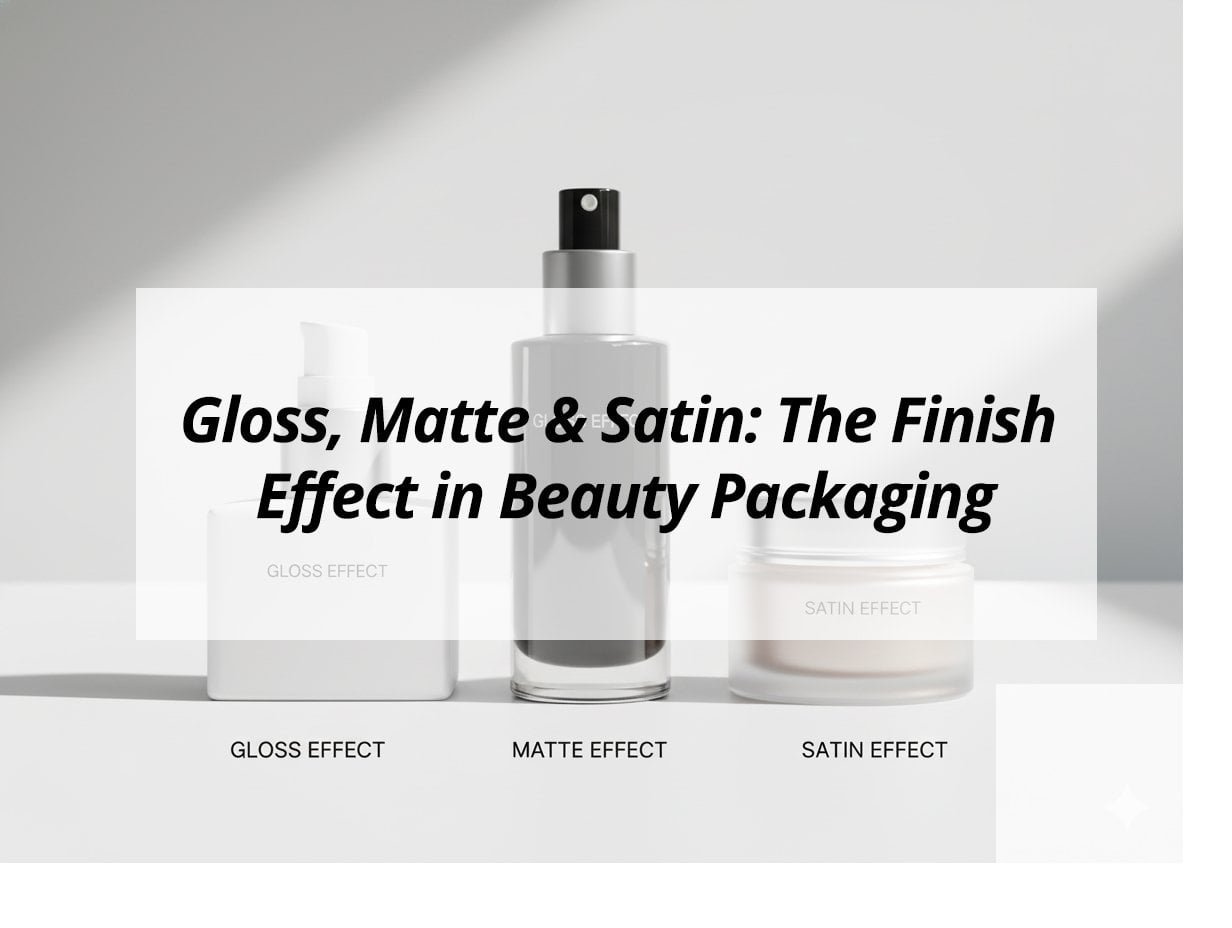
Do you ever wonder how cosmetic packaging gets its distinct look and feel? The finish effect plays a huge role in how a product is perceived. Choosing the right finish can make your product stand out.
The finish effect in beauty packaging, whether gloss, matte, or satin, refers to the surface appearance and texture. Each finish communicates a different brand message and offers distinct visual qualities. Gloss provides a highly reflective, luxurious shine; matte offers a non-reflective, sophisticated flatness; and satin delivers a soft sheen, a balance between gloss and matte. These choices significantly influence consumer perception and brand aesthetic.
When I work with brands on their packaging, the finish is always a key discussion point. It is not just about looks. It is about how the packaging feels in hand and what it says about the product inside. The right finish can truly elevate a product.
What is the difference between matte and glossy packaging?
Are you trying to decide between a sleek, shiny look or a soft, understated feel for your packaging? The choice between matte and glossy finishes is important. These two options offer very different aesthetic and tactile experiences.
The key difference between matte and glossy packaging lies in their reflectivity and texture. Glossy packaging has a highly reflective, smooth, and shiny surface that enhances colors and creates a luxurious look. Matte packaging, conversely, features a non-reflective, subdued, often slightly textured surface that offers a sophisticated, modern, and understated aesthetic. Each finish conveys a distinct brand image and consumer experience.
I always emphasize that packaging is the first interaction a customer has with a product. The finish sets the tone. A glossy finish can scream luxury, while a matte finish might whisper elegance. The choice truly defines the product's character.
Reflectivity and Appearance
This is the most obvious distinction between the two finishes.
- Glossy Packaging1: It reflects light intensely. This creates a bright, shiny, and often luxurious appearance. Colors appear more vibrant and saturated.
- Matte Packaging2: It has very low reflectivity. It absorbs light rather than reflecting it. This results in a dull, non-shiny, and subdued look where colors appear softer.
Texture and Tactile Feel
The way each finish feels to the touch is also different.
- Glossy Packaging: It feels extremely smooth and often slick to the touch. It gives a polished sensation.
- Matte Packaging: It can feel slightly textured, soft, or even velvety. It often has a more substantial or grippy feel.
Durability and Maintenance
Both finishes have different practical considerations.
| Feature | Glossy Packaging | Matte Packaging |
|---|---|---|
| Scratch Visibility | Can show fine scratches and scuffs more easily. | Tends to hide minor scuffs better, but deep scratches are noticeable. |
| Fingerprint Visibility | Highly prone to showing fingerprints and smudges. | Less prone to showing fingerprints, can mask them better. |
| Cleaning Ease | Easier to wipe clean due to smooth surface. | Can be slightly harder to clean due to texture. |
| Perceived Durability | Often perceived as robust due to hard, smooth surface. | Perceived as sophisticated, but sometimes less durable in feel. |
Brand Perception
The finish contributes significantly to a brand's image.
- Glossy Packaging: Often associated with luxury, high-end, modern, and vibrant products. It grabs attention.
- Matte Packaging: Conveys sophistication, elegance, naturalness, and a minimalist aesthetic. It feels understated.
What looks more professional, matte or glossy?
Are you trying to decide which finish will best represent your brand's professionalism? Both matte and glossy packaging can look professional. However, they convey different types of professionalism. The best choice depends on your brand's specific image and target audience.
Neither matte nor glossy packaging is inherently more professional than the other; instead, they convey different professional aesthetics. Glossy finishes often appear sleek, modern, and high-end, suitable for luxury or vibrant brands. Matte finishes tend to look sophisticated, elegant, and understated, appealing to minimalist or natural brands. The most professional choice aligns with the brand's identity and product message.
When discussing packaging, I always advise clients to think about their brand's personality. A bold, innovative brand might lean towards gloss. A refined, understated brand might prefer matte. Both are professional, but in their own way.
Glossy Professionalism
Glossy packaging conveys a specific type of professionalism.
- Modern and High-Tech: The shiny surface often suggests cutting-edge products. It speaks to innovation.
- Luxury and Prestige: High reflectivity is linked to premium quality. It suggests expense and high value.
- Vibrant and Bold: Colors pop more on glossy surfaces. This can convey confidence and energy.
- Clean and Polished: A pristine glossy surface looks immaculate.
Matte Professionalism
Matte packaging offers a different professional appeal.
- Sophisticated and Elegant: The subdued finish often feels refined. It speaks of timeless quality.
- Minimalist and Understated: Matte surfaces do not shout for attention. They convey quiet confidence.
- Natural and Organic: A non-reflective look can suggest natural ingredients or an earthy aesthetic.
- Serious and Thoughtful: The lack of glare can make the product seem more earnest.
Context is Key
The product and industry matter.
| Industry/Product | Common Finish (often perceived as professional) |
|---|---|
| Luxury Skincare | Both (gloss for premium, matte for high-end natural) |
| Vibrant Makeup | Glossy (for color pop and excitement) |
| Dermocosmetics | Matte or subtle satin (for clinical trust) |
| Organic/Natural Brands | Matte (for earthy, authentic feel) |
Target Audience
Who are you selling to?
- Youthful/Trendy: Might prefer glossy for its modern appeal.
- Mature/Discerning: Might prefer matte for its sophistication.
What is the difference between gloss, satin, and matte?
Are you confused by all the different finish terms for packaging? "Gloss," "satin," and "matte" are common words used to describe surface effects. Knowing the specific differences helps you select the perfect look for your product.
The difference between gloss, satin, and matte finishes lies in their level of reflectivity and smoothness. Gloss is the most reflective and shiny, offering a high-luster, smooth appearance. Matte is the least reflective, presenting a flat, non-shiny, often slightly textured surface. Satin falls between the two, providing a soft, subtle sheen that is neither fully shiny nor completely flat, offering a balanced, elegant look.
I often explain these nuances to my clients, as the choice can profoundly impact the final perception of their cosmetic products. It is about finding the right balance that aligns with the brand's identity and product positioning.
Reflectivity Level
This is the main distinguishing factor among the three.
- Gloss: Highest reflectivity. It is very shiny, almost mirror-like. Light bounces off cleanly.
- Satin: Medium reflectivity. It has a soft, subtle sheen. It is not as bright as gloss, but not flat like matte.
- Matte: Lowest reflectivity. It is non-shiny and flat. Light is absorbed or scattered, not reflected sharply.
Appearance and Visual Impact
How each finish looks to the eye.
- Gloss: Gives a vibrant, luxurious, and bold appearance. Colors appear deeper.
- Satin: Offers a sophisticated, elegant, and smooth look. It is often perceived as warm.
- Matte: Provides a modern, understated, and often natural aesthetic. Colors appear softer.
Texture and Tactile Experience
How each finish feels to the touch.
- Gloss: Very smooth and slick. It feels polished.
- Satin: Smooth, but often with a slight, almost imperceptible texture. It can feel softer than gloss.
- Matte: Can feel slightly rough, velvety, or chalky. It offers more grip.
Common Applications
Where you typically see these finishes used.
| Finish | Common Cosmetic Packaging Uses | Perceived Qualities |
|---|---|---|
| Gloss | High-end makeup, vibrant skincare, luxury perfume bottles. | Luxurious, vibrant, attention-grabbing. |
| Satin | Premium skincare, sophisticated lotions, elegant foundations. | Elegant, subtle, approachable, balanced. |
| Matte | Organic/natural brands, minimalist packaging, clinical lines. | Modern, natural, understated, sophisticated. |
What is the difference between matte and glossy labels?
Are you designing product labels and wondering about the best finish? Matte and glossy labels are two primary choices. Each has a different visual impact and functional property. Understanding these differences helps create effective packaging.
Matte and glossy labels differ primarily in their surface appearance and how they interact with light. Glossy labels have a smooth, reflective, and shiny surface that makes colors pop and provides a vibrant, high-end look. Matte labels, in contrast, feature a non-reflective, flat surface that offers a subdued, sophisticated, and often more natural aesthetic, which can also be easier to read under bright lights due to less glare.
For me, selecting the right label finish is as crucial as choosing the bottle itself. The label is often the main source of information and brand identity. It must perfectly complement the overall packaging design.
Appearance and Reflectivity
This is the most direct difference when looking at labels.
- Glossy Labels: They are very shiny and reflective. They catch the light well. This makes images and colors appear more vibrant and intense.
- Matte Labels: They have a flat, non-reflective surface. They absorb light, giving a subdued, soft, and sophisticated look. There is no glare.
Color and Detail Perception
How colors and fine details appear on each label.
- Glossy Labels: Enhance color saturation and vibrancy. They can make images look sharper and more dynamic.
- Matte Labels: Colors appear softer and more muted. They can give a more natural or vintage feel. Fine details might seem slightly less crisp than on gloss.
Tactile Feel and Durability
How the labels feel and how they hold up to wear.
- Glossy Labels: They feel very smooth and slick. They can be more prone to showing fingerprints and scuffs.
- Matte Labels: They can have a slightly textured or velvety feel. They are often more resistant to showing fingerprints and minor abrasions.
Readability
The ease with which text can be read.
- Glossy Labels: Can cause glare under bright lights. This can make them harder to read from certain angles.
- Matte Labels: Offer excellent readability in various lighting conditions because there is no glare. This is good for text-heavy labels.
Common Uses in Cosmetics
Where each label finish is typically seen.
- Glossy Labels: Used for high-end makeup, vibrant perfume bottles, and products where visual impact and color pop are essential.
- Matte Labels: Popular for organic, natural, minimalist, or clinical skincare brands where sophistication and clear readability are prioritized.
My Insights: The Impact of Finish Effects in Beauty Packaging
Choosing the right finish can elevate your brand's packaging—explore how gloss, matte, and satin finishes influence consumer perception.
Gloss, matte, and satin finishes play vital roles in beauty packaging, affecting appearance and brand perception. Gloss enhances vibrancy and energy, matte conveys sophistication and subtlety, while satin balances elegance with readability.
Understanding Finishes in Beauty Packaging
Key Characteristics:
-
Gloss: Offers a shiny, reflective surface that amplifies color vibrancy. Ideal for playful and high-energy products like lip glosses.
-
Matte: Provides a non-reflective, velvety texture, resistant to fingerprints. It conveys sophistication, suitable for natural or long-wear formulas.
-
Satin: Strikes a balance with moderate sheen and smooth touch, offering versatility and elegance for luxury packaging.
Comparison Table:
| Finish | Appearance | Texture | Color Effect | Best For Beauty |
|---|---|---|---|---|
| Gloss | Shiny, reflective | Slick, slippery | Vibrant, saturated | High-shine products |
| Matte | Muted, non-reflective | Soft, velvety | Subdued, sophisticated | Long-wear products |
| Satin | Balanced sheen | Smooth, soft | Moderate vibrancy | Versatile luxury packaging |
Strategic Applications:
Brands strategically match finishes to their products, with gloss for dewy and vibrant cosmetics, and matte for understated elegance. Combining different finishes can create unique designs, enhancing perceived value and aligning with consumer expectations. This thoughtful approach can significantly impact brand trust and market appeal.
Conclusion
The finish effect—gloss, matte, or satin—transforms beauty packaging, influencing perception and brand message. Gloss offers shine, matte brings sophistication, and satin provides a soft balance. Each choice profoundly impacts product appeal and professionalism.