Pressed and loose powders both offer unique benefits, but choosing the right one can be confusing. Each has distinct characteristics that cater to different needs.
Pressed powder cases offer portability and ease for touch-ups, ideal for those on the go. In contrast, loose powder containers provide precision and control, perfect for achieving professional, long-lasting finishes. Choosing the right type enhances your makeup routine based on lifestyle and desired effect.
Choosing the appropriate type is essential for achieving the desired makeup results, whether you're at home or on the go.
How Does Pressed Powder Differ From Loose Powder?
Navigating the world of cosmetic powders can be overwhelming, especially when considering pressed versus loose options. Each serves a specific purpose and excels in different settings.
Pressed powder is densified using binding agents and is highly convenient for travel, while loose powder is lightweight and offers more precision, ideal for setting makeup with a natural finish. Both have specific roles in enhancing beauty routines.
To fully grasp their differences, it’s important to consider their unique features and functionalities:
Characteristics
Pressed Powder
-
Structure: Utilizing binding agents1, pressed powders are compact and solid. This makes them less messy and easier to handle. Their format fits snugly into various cases, which makes them highly portable—a perfect companion for quick touch-ups2.
-
Usage: Ideal for those constantly on the move, pressed powders offer a swift application to control shine. Due to their solid form, they provide slightly heavier coverage, helping conceal minor blemishes and provide a more even complexion quickly.
-
Finish: Offers a matte to semi-matte finish3, it suits those looking for a polished appearance. The application can be built up for heavier coverage, although this might sacrifice some natural look.
Loose Powder
-
Structure: Finely milled with a feather-like consistency, loose powders lack binding agents, thus offering a lighter texture. They require careful handling due to their propensity to spill, needing controlled application methods.
-
Usage: Primarily used to set makeup, their light consistency provides a natural finish. Loose powders are the choice for makeup artists due to their ability to create a professional, long-lasting matte look.
-
Finish: Delivers a soft, natural finish which is less about covering imperfections and more about achieving a balanced complexion. It allows for precise control and layering without looking cakey.
Key Differences at a Glance
| Feature | Pressed Powder | Loose Powder |
|---|---|---|
| Portability | Highly portable, great for travel | Less portable, prone to spilling |
| Coverage | Medium to heavy | Light to medium, buildable |
| Application Ease | Faster, less mess | Requires careful application |
| Finish | Matte to semi-matte | Natural, soft matte |
Choosing between them largely depends on lifestyle needs and preferred makeup finish. For those seeking a less messy and more convenient option, pressed powders may be more suitable, whereas loose powders are perfect for a natural, professional look.
What is the Difference Between Pressed Powder and Loose Powder?
It’s easy to assume pressed and loose powders are interchangeable. However, they serve different purposes and excel in various applications.
Pressed powder offers convenience and ease of use, especially for touch-ups, while loose powder excels in setting foundation by providing a smooth finish. Neither is better than the other, but rather, they serve different roles in achieving desired cosmetic results.
Let's delve into their respective strengths and applications:
Strengths and Applications
Pressed Powder
-
Convenience: Compact and easy to carry, allowing for quick application anywhere. Its solid form minimizes mess, making it reliable for unexpected touch-ups to maintain a polished appearance.
-
Utility: Became a staple for quick fixes, particularly when dealing with oily skin textures. Pressed powder swiftly absorbs excess oil, keeping shine at bay and providing a quick solution for maintaining a matte look.
Loose Powder
-
Precision: Preferred in professional settings for its layering capabilities. Loose powder achieves even application, providing a lasting matte effect that resists fading under lights and stress.
-
Use in Professional Settings: Essential for setting foundations and achieving a longer-lasting makeup base. It offers a translucence and softness that complements dynamic lighting and photography without flashbacks.
Versatility and Suitability
| Aspect | Pressed Powder | Loose Powder |
|---|---|---|
| Versatility | High portability | Versatile applications in settings |
| Ideal for Beginners | Yes, straightforward application | No, requires skillful application |
| Preferred in Professional Use | Less commonly used | Preferred due to precision |
Understanding these differences allows you to tailor your choice according to your lifestyle and specific needs. Pressed powders are well-suited for casual users looking for convenience, while loose powders cater to perfectionists desiring delicately nuanced applications.
What are the Disadvantages of Pressed Powder?
Pressed powder might seem like the perfect solution for all-day makeup needs. However, there are drawbacks to consider.
The main disadvantages of pressed powder include potential cakiness and limited control over coverage. It may accentuate dry skin or fine lines if not applied correctly. Proper application techniques can mitigate these drawbacks, enhancing your makeup look.
Let’s delve into these disadvantages in detail to understand how to overcome them:
Common Challenges
Cakiness
-
Issue: Over-application or improper blending leads to a build-up, causing a cakey appearance. This effect is pronounced on oily skin, where excess powder clings along lines or in dense patches.
-
Solution: A light hand is essential. Employing a fluffy brush rather than a sponge can facilitate more controlled application, dispersing powder evenly across the face for a natural finish.
Emphasizing Texture
-
Issue: Applied too heavily, pressed powders may exaggerate flaws such as dry patches, fine lines, or uneven textures, especially on mature or dry skin types.
-
Solution: Preparatory work is crucial. By thoroughly hydrating and priming the skin before application, powder can be more evenly distributed, reducing the risk of accentuating unwanted textures.
Prevention Tips
Correct Tools and Techniques
-
Use Quality Tools: Leverage brushes or applicators specifically designed for blending, which prevent over-concentration of product in any area.
-
Adopt a Minimal Approach: Start with a small amount, layering gradually. This minimizes over-application while maintaining a smooth finish.
Compatibility and Skin Type
| Consideration | Strategy |
|---|---|
| Skin Type Suitability | Match powder type to skin needs |
| Product Choice | Choose quality products |
| Application Technique | Practice proper blending |
By understanding potential issues and incorporating best practices, pressed powder can remain an essential part of your makeup routine. It is especially beneficial for oily skin types seeking quick shine control without frequent touch-ups.
Can I Turn My Loose Powder Into Pressed Powder?
Reimagining products to suit personal needs can be a fun and practical approach. Many ask if loose powder can be transformed into pressed powder.
Yes, you can transform loose powder into pressed powder using a binding medium like alcohol or oil. Mix them to create a paste, then press into a pan. This process allows for custom concoctions tailored to personal preferences or travel needs.
Here’s how you can effectively convert loose powder into pressed:
Step-by-Step Guide
Materials Needed
- Loose Powder: Your favorite brand or formulation that you find effective for personal use.
- Binding Agent: Common household items like rubbing alcohol or lightweight carrier oils work best.
- Tools: Basic kitchen supplies—mixing bowl, spoon—and a compact for pressing.
Conversion Process
-
Mixing
- Combine Ingredients: Place loose powder into a bowl, gradually adding the binding agent. Aim for a consistency akin to thick mud, ensuring even distribution of the binder.
-
Pressing
- Transfer: Carefully spoon your mixture into a clean, empty powder container, distributing evenly across the pan.
- Compress: Use a flat surface (like a thick book) to press down firmly, ensuring it condenses well.
-
Drying
- Set: Leave the product undisturbed for 24-48 hours, allowing complete evaporation of the binding agent and a solidified finish.
Considerations
- Quality Control: Both powder and binding agents must be of top quality to preserve cosmetic value.
- Customization: This process lets you customize color and texture by blending different shades and bases.
Converting powders empowers personal creativity and customization, providing flexibility in your cosmetic toolset. It enables you to carry a curated palette wherever you go, adapting products to fit seamlessly into daily makeup rituals.
My insights: Comparing Pressed Powder Cases and Loose Powder Containers
Struggling to choose between pressed and loose powders? Let’s explore their differences in portability, application, and design.
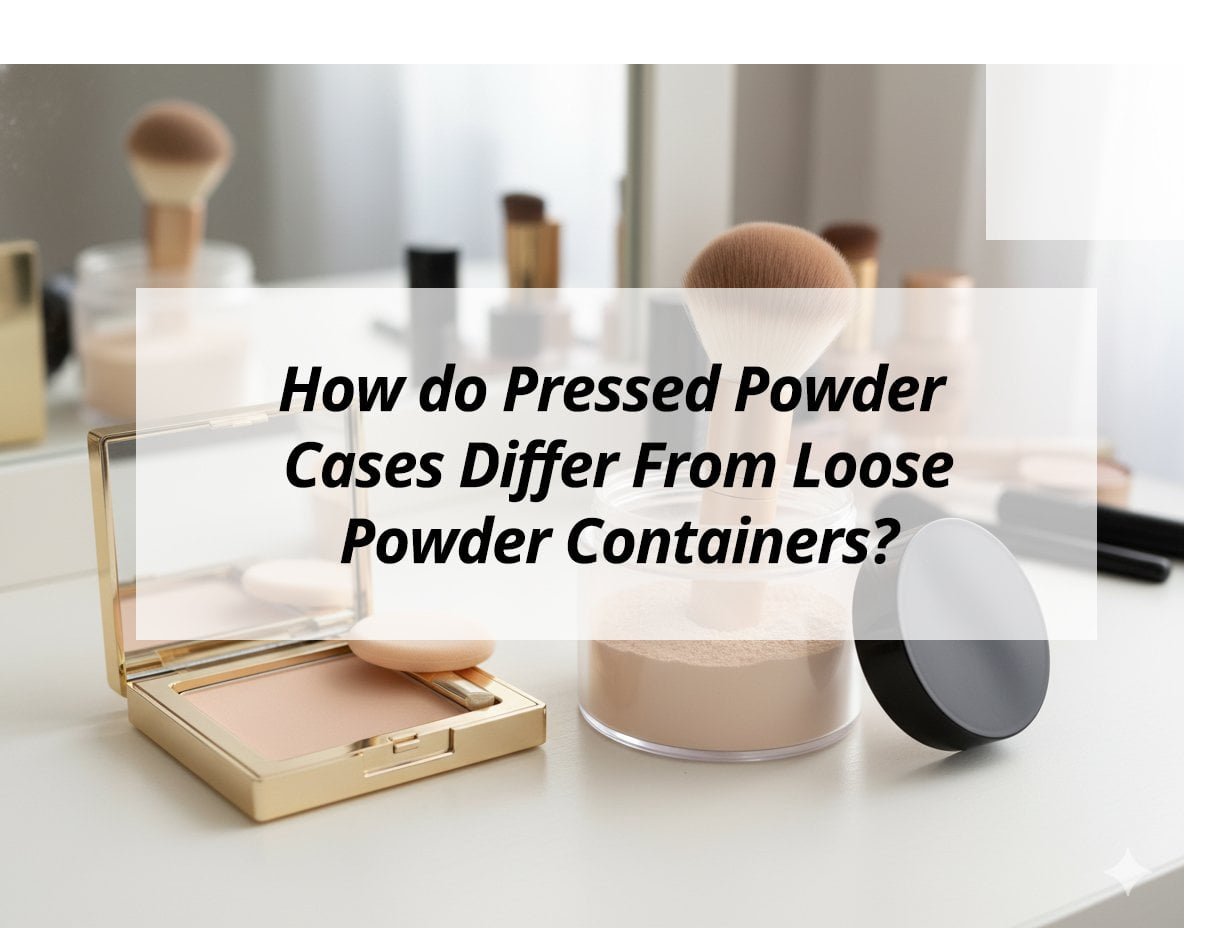
Pressed powder cases are compact and portable, minimizing spillage, and typically include mirrors and applicators. Loose powder containers4 offer a finer texture with sifters for layered application, but are less travel-friendly.
Detailed Comparison of Powder Case Designs
Packaging Design:
- Pressed Powder: Compact with built-in mirrors and applicators, ideal for direct use. Emphasizes durability and portability.
- Loose Powder: Features wide-mouth jars with sifters or screw-tops to control dispensing. Provides accessory flexibility like optional puffs.
Application and Coverage:
- Pressed Powder: Offers targeted, buildable coverage due to binders like wax or silicone. Requires pressing or swiping for application.
- Loose Powder: Provides lighter, translucent coverage suitable for brushing on or baking, with easier product pickup but potential mess.
Portability and Use Cases:
- Pressed Cases: Mess-free, travel-friendly, great for on-the-go touch-ups but may develop hard pan from oils.
- Loose Containers: Favor longevity and finer texture for oily skin, requiring secure closures for travel.
| Aspect | Pressed Powder | Loose Powder |
|---|---|---|
| Portability | Compact and travel-friendly | Larger and less travel-friendly |
| Application | Targeted coverage and ease of use | Sheer sets, ideal for layering |
| Design | Includes mirrors and applicators | Sifters or mesh screens for even distribution |
Understanding these differences helps tailor your choice to specific skincare needs and lifestyle preferences.
Conclusion
Understanding the differences between pressed and loose powders allows for informed choices that cater to personal makeup styles and needs, enhancing the overall beauty routine.
-
Learn about binding agents and how they affect the texture and application of cosmetic powders. ↩
-
Discover the best products for quick touch-ups to keep your makeup looking flawless all day. ↩
-
Find out how to achieve a matte finish with different makeup products for a polished look. ↩
-
Learn about the best powder containers that are travel-friendly and minimize mess. ↩