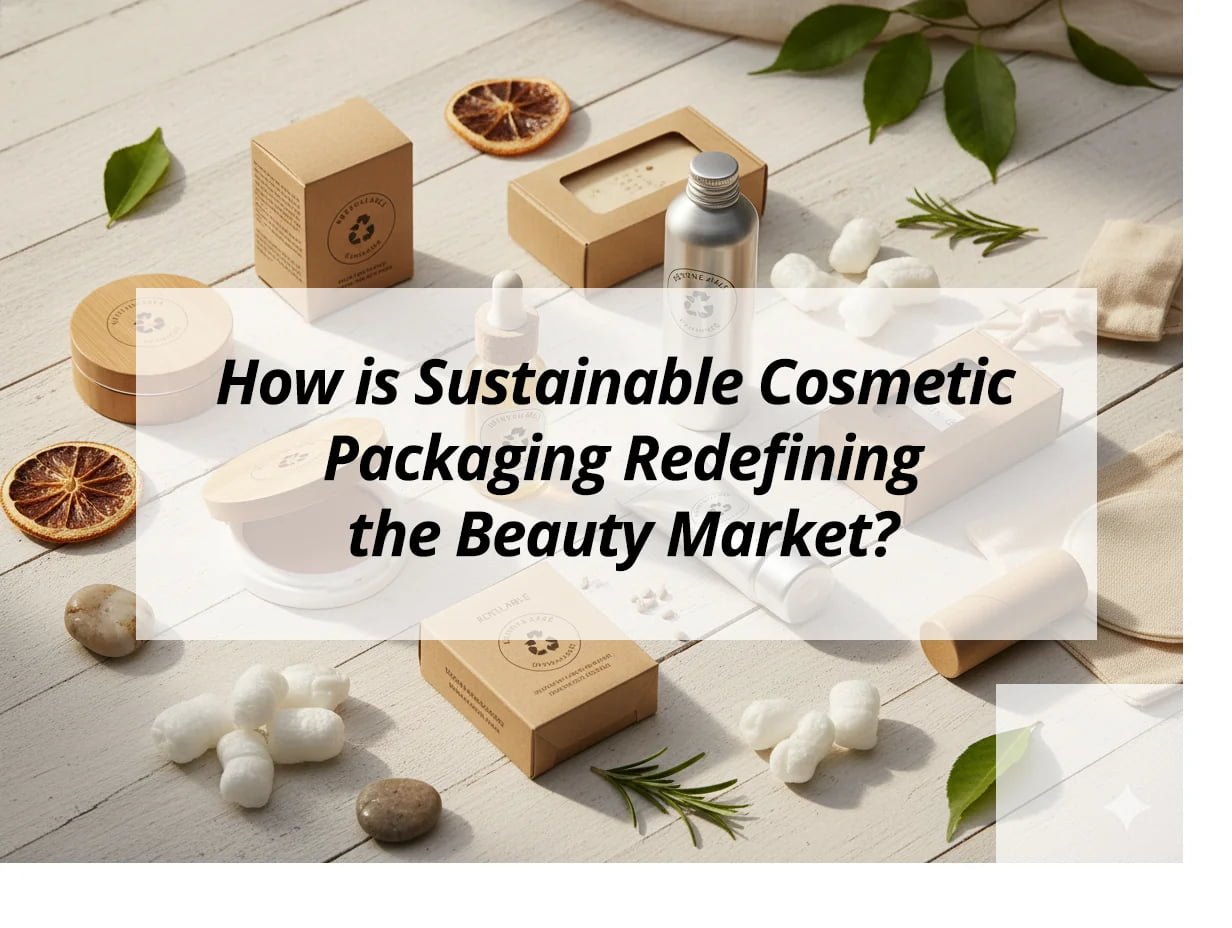
Concerned about the environmental impact of beauty products? Traditional packaging creates a lot of waste. This issue affects both brands and consumers.
Sustainable cosmetic packaging is redefining the beauty market by offering eco-friendly alternatives to traditional materials. It drives innovation in design and sourcing, reduces environmental footprint, and meets growing consumer demand for responsible products. This shift promotes a circular economy within the industry.
The move towards sustainable packaging is not just a trend. It is changing how beauty products are made and sold. This change is good for the planet and for business.
How is eco-friendly makeup packaging revolutionizing the beauty industry?
Traditional makeup packaging often ends up in landfills. This causes big environmental problems. How is eco-friendly makeup packaging1 changing the beauty industry for the better?
Eco-friendly makeup packaging is revolutionizing the beauty industry by reducing waste and promoting responsible consumption. It encourages brands to innovate with materials like PCR plastics, bamboo, and glass. This shift boosts brand image, attracts environmentally conscious consumers, and sets new industry standards for sustainability.
This change is more than just about new materials. It is reshaping how companies think about their products. It affects everything from design to marketing.
Reducing Environmental Impact
Eco-friendly packaging helps the environment in many ways.
- Less Waste: It uses materials that can be recycled, reused, or composted. This means less trash in landfills.
- Lower Carbon Footprint: Sustainable materials often require less energy to produce. This reduces greenhouse gas emissions.
- Resource Conservation: Using recycled content or renewable resources saves virgin materials.
Driving Innovation in Materials
The demand for eco-friendly options pushes new ideas.
- PCR Plastics: Post-consumer recycled plastics are widely used. They reduce the need for new plastic production.
- Bio-based Materials: Packaging made from plant-based resources, like corn starch or sugarcane, is becoming more common.
- Refill Systems: These allow consumers to buy a product once and refill it later. This greatly reduces packaging waste.
Meeting Consumer Demands
Customers care more about sustainability now.
- Ethical Choices: Many consumers choose brands that show environmental responsibility.
- Transparency: Brands that are open about their sustainable practices gain trust.
- Brand Loyalty: A commitment to sustainability can build strong customer loyalty.
Table: Comparison of Traditional vs. Eco-Friendly Makeup Packaging
| Feature | Traditional Packaging | Eco-Friendly Packaging |
|---|---|---|
| Materials Used | Virgin plastics, mixed materials | PCR plastics, glass, bamboo, aluminum, paper |
| End-of-Life | Landfill, incineration | Recycling, reuse, composting, refilling |
| Environmental Impact | High carbon footprint, resource depletion | Lower carbon footprint, resource conservation |
| Consumer Perception | Standard, often overlooked | Positive, responsible, innovative |
| Cost (Initial) | Generally lower | Can be higher (due to new processes/materials) |
| Brand Image | Standard, less differentiation | Enhanced, responsible, appealing to modern consumers |
This table shows key differences. It highlights how eco-friendly packaging improves environmental outcomes. It also enhances brand perception in the beauty market.
Why is sustainability important in the cosmetic industry?
The cosmetic industry faces growing pressure regarding its environmental and social impact. This includes everything from ingredient sourcing to packaging waste. Why is sustainability a vital concern for this industry?
Sustainability is crucial in the cosmetic industry because it addresses environmental degradation, resource depletion, and consumer demand for ethical products. Embracing sustainable practices helps reduce waste, conserves natural resources, enhances brand reputation, and ensures long-term business viability in a conscious market.
Adopting sustainable practices2 is not just about being responsible. It is a fundamental shift that improves operations. It also ensures relevance in today's market.
Addressing Environmental Degradation
The beauty industry traditionally uses many resources and creates much waste.
- Plastic Pollution: A large portion of cosmetic packaging ends up in oceans or landfills. This harms ecosystems.
- Water Usage: Manufacturing processes can use a lot of water. Sustainable practices aim to reduce this.
- Deforestation: Sourcing certain ingredients can contribute to deforestation. Sustainable sourcing protects biodiversity.
Resource Depletion
Finite resources are being used at an alarming rate.
- Non-renewable Materials: Petroleum-based plastics rely on finite fossil fuels.
- Biodiversity Loss: Unsustainable sourcing of natural ingredients can threaten plant and animal species.
- Energy Consumption: Manufacturing, transport, and disposal all consume energy. Reducing this is key.
Meeting Consumer Expectations
Today's consumers are more informed and demanding.
- Ethical Sourcing: Customers want to know ingredients are sourced responsibly.
- Eco-friendly Packaging: There is a strong preference for packaging that is recyclable, refillable, or reusable.
- Corporate Social Responsibility: Brands that show a commitment to broader social and environmental issues gain trust.
H3: Enhancing Brand Reputation and Competitiveness
Sustainability can be a major differentiator.
- Positive Image: Brands known for sustainability attract more customers.
- Market Share: Sustainable practices can open new markets and increase sales.
- Innovation: The drive for sustainability fosters new product development and packaging solutions.
Example: A Brand's Journey to Sustainability
I know of a small brand that started with conventional plastic packaging. As their business grew, they noticed customer inquiries about their environmental efforts. They switched to recycled PET bottles and refill pouches for their best-selling lotion. This change not only reduced their environmental footprint but also boosted their sales by 20% in the first year, showing how much consumers value sustainable options.
What is the most sustainable cosmetic packaging?
With so many options for eco-friendly packaging, it can be hard to know which is best. Different materials have different environmental impacts. What constitutes the most sustainable cosmetic packaging?
The most sustainable cosmetic packaging often involves a combination of factors: maximizing post-consumer recycled (PCR) content, promoting reusability and refillability, and ensuring clear recyclability. Materials like glass, aluminum, and certain plastics with high PCR rates are strong contenders, especially when part of a circular system.
There is no single "most sustainable" option. The best choice depends on the product, the supply chain, and end-of-life options. It requires a holistic view.
Key Principles of Sustainable Packaging
Several principles guide the choice of truly sustainable packaging3.
- Reduce: Use less material overall. Lighter packaging or concentrated products achieve this.
- Reuse: Design packaging for multiple uses. Refillable containers are a prime example.
- Recycle: Use materials that can be easily processed into new products. Clear labeling helps consumers.
Leading Sustainable Materials
Certain materials stand out for their environmental benefits.
- Glass: It is infinitely recyclable. It is also chemically inert, making it ideal for sensitive formulations. Glass often has a premium feel.
- Aluminum: It is lightweight and highly recyclable. It offers good barrier protection against light and air.
- Post-Consumer Recycled (PCR) Plastics: Using plastic that has already been recycled reduces demand for virgin plastic. This closes the loop.
- Bamboo/Wood: These are renewable resources. They offer a natural aesthetic. They are often used for caps or compacts.
The Role of Refillable Systems
Refill systems are a powerful way to reduce waste.
- Reduced Material Use: Once a primary container is purchased, subsequent refills use significantly less material.
- Consumer Convenience: Many consumers appreciate the ease and cost-effectiveness of refills.
- Long-term Solution: Refill models foster a circular economy, minimizing continuous production of new packaging.
Table: Sustainability Profile of Common Cosmetic Packaging Materials
| Material | Recyclability | Recycled Content Potential | Reusability / Refillability | Environmental Impact (Production) | Overall Sustainability Score |
|---|---|---|---|---|---|
| Glass | Excellent | High | High | Moderate | High |
| Aluminum | Excellent | High | Moderate | Moderate | High |
| PCR PET/PP | Good | High | Moderate | Lower (vs. virgin plastic) | High |
| Virgin PET/PP | Good | Low | Low | Moderate | Moderate |
| Bamboo/Wood | Compostable/Biodegradable | N/A | Moderate | Low | Moderate to High |
| Mixed Plastics | Poor | Low | Low | High | Low |
This table provides a snapshot of common materials. It evaluates them based on key sustainability metrics. This helps in making informed decisions about packaging choices.
What is the importance of sustainable packaging?
Packaging is often the first physical interaction a consumer has with a product. Its environmental impact is significant. Why is sustainable packaging so important in today's market?
Sustainable packaging is vital for environmental preservation, resource efficiency, and meeting evolving consumer and regulatory expectations. It reduces pollution, conserves natural resources, improves brand reputation, and fosters a circular economy. This helps brands thrive in an increasingly environmentally conscious world.
The importance of sustainable packaging extends beyond simply being "green." It affects business viability. It also impacts global environmental health.
Environmental Protection
Sustainable packaging actively works to protect our planet.
- Waste Reduction: It minimizes the amount of waste sent to landfills and oceans. This prevents pollution.
- Habitat Preservation: By reducing the need for virgin materials, it helps preserve forests and natural habitats.
- Climate Change Mitigation: Lower energy consumption during production and disposal reduces greenhouse gas emissions.
Resource Efficiency
Using resources wisely is a core benefit.
- Circular Economy: Sustainable packaging supports a system where materials are kept in use. This means less extraction of new resources.
- Reduced Consumption: Using recycled or renewable materials lessens the strain on Earth's finite resources.
- Energy Savings: Recycling often uses less energy than producing materials from scratch.
Consumer Trust and Brand Loyalty
Customers prefer brands that show responsibility.
- Positive Perception: Sustainable packaging signals a brand's commitment to ethical practices. This builds trust.
- Market Differentiation: In a crowded market, sustainable efforts can make a brand stand out.
- Ethical Consumerism: A growing segment of consumers actively seeks out products with sustainable packaging.
Regulatory Compliance and Future-Proofing
Governments are increasingly mandating sustainable practices.
- Evolving Laws: New regulations on plastic waste and packaging standards are becoming common. Sustainable practices help brands stay compliant.
- Risk Mitigation: Investing in sustainable packaging now can prevent future penalties or market access issues.
- Innovation Opportunities: The push for sustainability encourages new, more efficient packaging solutions.
H3: Economic Benefits
Sustainable packaging can also lead to financial advantages.
- Cost Savings: Reduced material weight can lower shipping costs. Efficient use of materials saves money.
- New Market Access: Meeting sustainability standards can open doors to new retail partnerships or international markets.
- Investor Appeal: Companies with strong ESG (Environmental, Social, and Governance) performance often attract more investors.
This explains why sustainable packaging is not just a trend. It is a fundamental shift in business operations. It provides benefits across environmental, social, and economic areas.
My Insights: How Sustainable Cosmetic Packaging is Transforming the Beauty Market
Curious about the impact of sustainable packaging in beauty? Learn how it's reshaping industry standards and consumer preferences.
Sustainable cosmetic packaging is redefining the beauty market by incorporating eco-friendly materials like biodegradable options, refillable systems, and recycled plastics. This shift meets growing consumer demand for green practices, enhancing brand loyalty and compliance with environmental regulations, while also reducing the industry's environmental footprint.
Key Drivers of Sustainable Cosmetic Packaging
Trends and Innovations:
-
Refillable Systems: Promote circular economy with reusable containers and inserts.
-
Biodegradable Materials: Use bamboo, cornstarch, and mycelium to naturally decompose.
-
Recycled Content: Employ ocean plastics and post-consumer materials to limit new resource use.
Market Impacts:
-
Increased Consumer Loyalty: Eco-conscious shoppers prefer brands with green initiatives.
-
Cost-Efficiencies: Long-term savings through reduced material use and simplified designs.
-
Regulatory Compliance: Adaptation to plastic bans and environmental mandates.
Brand Examples:
| Brand | Sustainable Practices |
|---|---|
| Lush | Plant-based wraps and compostable soaps |
| Noodees | Powdered washes in dissolvable pouches |
| Luxury Lines | Glass refills and aluminum packaging |
By embracing sustainable packaging, brands not only reduce their environmental impact but also enhance consumer trust and meet the evolving expectations of a more eco-conscious audience.
Conclusion
Sustainable cosmetic packaging is rapidly changing the beauty market. It offers vital environmental protection, meets consumer demands, and drives industry innovation. Embracing these practices is essential for future success.
-
Explore how eco-friendly packaging is transforming beauty brands and attracting conscious consumers. ↩
-
Explore essential sustainable practices that brands can adopt to reduce their environmental impact. ↩
-
Understand the critical role of sustainable packaging in promoting environmental health and brand success. ↩