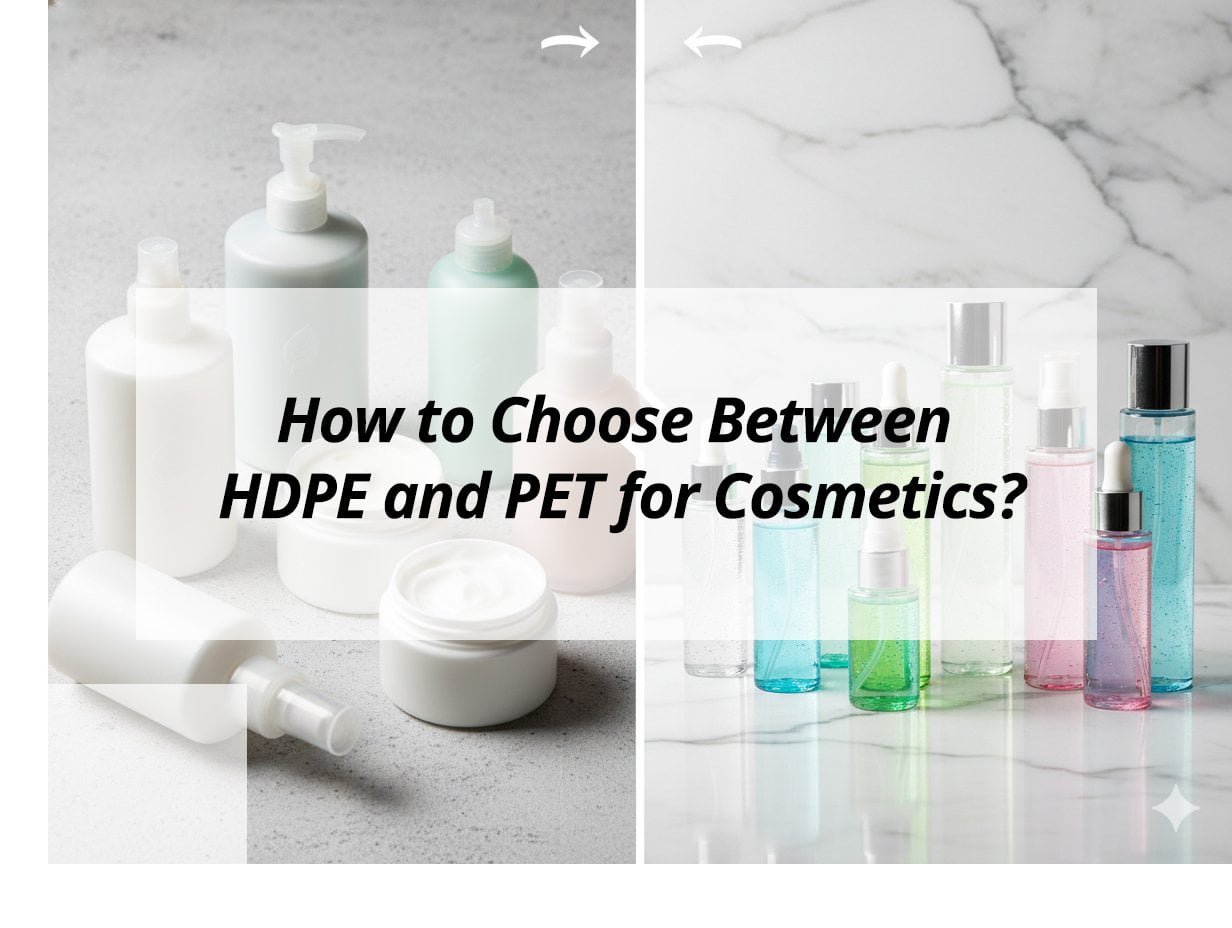
Choosing the right material for cosmetic packaging can be daunting. Understanding differences between HDPE and PET is crucial for effective decision-making.
HDPE and PET are top choices for cosmetic packaging. HDPE provides robust durability and chemical resistance, suitable for protective needs, while PET offers transparency and high recyclability, ideal for showcasing and eco-friendly goals. Your decision should align with your product’s requirements and sustainability objectives.
Selecting the ideal packaging material ensures product safety and appeals to eco-conscious consumers. Let’s delve deeper into the key aspects of each material to help you decide.
Which is better, PET or HDPE?
Deciding between PET and HDPE for your packaging needs can be challenging. Both materials have distinct qualities influencing your decision.
PET offers excellent clarity and recyclability, making it a popular choice for transparent, eco-friendly packaging. HDPE provides superior durability and resistance, suitable for products requiring protection from moisture and chemicals. Evaluate your product's specific needs to determine the best fit.
Let's break down the strengths and weaknesses of each material to determine which might suit your needs better.
PET vs HDPE: Key Comparisons
| Feature | PET | HDPE |
|---|---|---|
| Clarity | High clarity, ideal for showcasing products | Opaque; less clear, not for visual display |
| Recyclability | Highly recyclable, eco-friendly | Recyclable, but less eco-friendly than PET |
| Durability | Resistant, but less durable than HDPE | Superior impact resistance, highly durable |
| Chemical Resistance | Good, but not as robust as HDPE | Excellent chemical resistance1 |
PET is an excellent choice for products needing visibility and eco-friendly appeals. On the other hand, HDPE excels in protecting contents from external factors. Depending on the packaging requirements, either material can be suitable for different product types.
HDPE and PET Applications
- PET: Used widely in clear bottles, ideal for displaying colorful cosmetic products, such as lotions and liquids.
- HDPE: Common in opaque bottles, perfect for creams and shampoos that require a sturdier protective barrier.
Analyzing packaging requirements will guide you in selecting the best material to enhance your product's appeal and functionality.
Is HDPE safe for cosmetics?
Safety in cosmetic packaging is paramount. Understanding if HDPE meets these safety standards is essential for manufacturers and consumers.
HDPE is widely regarded as safe for cosmetic applications due to its chemical resistance and durability. It doesn’t react with cosmetic formulations, ensuring product integrity. HDPE's non-leaching properties2 make it a trusted choice for safe and reliable packaging.
More insights into its safety features can help assure its suitability for cosmetics:
Why HDPE is Safe for Cosmetics
- Chemical Resistance: HDPE resists reactions with active ingredients, maintaining product stability and safety.
- Non-Toxicity: Free from harmful additives, HDPE minimizes health risks associated with leaching.
- Regulatory Approval: Recognized by health agencies for use in personal care product packaging.
By ensuring HDPE’s reliability in maintaining product integrity3, manufacturers can confidently utilize it for cosmetics, reassuring both consumers and regulatory bodies of its safety.
What is the downside of HDPE?
While HDPE offers distinct advantages, it’s crucial to consider its limitations to make an informed choice.
HDPE's major drawback is its opacity, which limits its use for products requiring transparency. Additionally, its environmental impact4 is higher compared to PET due to lower recyclability rates. Understanding these limitations can guide sustainable and practical packaging decisions.
Breaking down these limitations can provide clarity:
HDPE Drawbacks in Packaging
- Opacity: The lack of transparency is unsuitable for products where visual appeal and content visibility are important.
- Environmental Concerns: Although recyclable, HDPE's recycling efficiency is lower than PET, affecting sustainable branding.
- Flexibility: Less flexible compared to some other plastics, limiting customization options.
It's essential to weigh these downsides against HDPE's benefits. If opacity does not suit your product line, exploring PET or other alternatives can align better with marketing and aesthetic goals.
What is the difference between PET 1 and HDPE 2?
Distinguishing between PET 1 and HDPE 2 is essential for making informed packaging choices.
PET 1 is typically clearer and preferred for displaying contents, while HDPE 2 is known for its sturdiness and resistance. The choice depends on whether visibility or durability is your priority. Knowing their distinct characteristics helps align packaging with brand goals.
Below is a detailed comparison for clearer understanding:
PET 1 vs HDPE 2 Comparison
| Property | PET 1 | HDPE 2 |
|---|---|---|
| Transparency | Excellent, highly transparent | Poor, opaque |
| Strength | Good, but less than HDPE 2 | Superior impact resistance |
| Recyclability | High, better for environment | Moderate, less eco-friendly than PET 1 |
| Common Use | Bottles for visible liquids, cosmetics | Opaque containers needing toughness |
By understanding these differences, choosing between PET 1 and HDPE 2 becomes straightforward, aligning packaging functionality with your product strategy.
My insights: Choose Between HDPE and PET for Cosmetics
Confused about choosing the right packaging for your cosmetics? Discover the advantages of HDPE and PET to make the ideal selection.
Choose HDPE for chemical resistance, impact strength, and light protection, ideal for shampoos and sunblocks. Opt for PET when seeking a clear, premium appearance with strong moisture barriers5, perfect for serums and toners.
Deciding Between HDPE and PET for Cosmetic Packaging
Core Material Differences:
HDPE is flexible, impact-resistant, and often opaque, shielding light-sensitive formulas like sunscreens. PET offers rigid, glass-like clarity, providing superior moisture and oxygen barriers to extend shelf life for sensitive products.
Formula Compatibility:
HDPE excels with oils, surfactants, and active-rich formulations, suitable for shampoos and lotions. PET is ideal for clear, water-based products such as toners and some serums, where visual appeal is crucial.
Aesthetics and User Experience:
For clear, premium looks, PET is unmatched, highlighting texture and color. HDPE is suited for functional products where squeezability and durability are priorities, like face washes and family-size lotions.
Sustainability and Cost:
Both materials are recyclable. PET benefits from established recycling streams and offers high-clarity recycled options. HDPE is often more cost-effective and versatile, ideal for budget-conscious lines.
Quick Decision Guide:
| Priority/Need | Better Choice | Reason |
|---|---|---|
| Chemical resistance | HDPE | Handles oils, actives robustly |
| Light-sensitive formulas | HDPE | Natural opacity protects from light |
| Clear, premium look | PET | Glass-like clarity, rigid walls |
| Moisture/oxygen barrier | PET | Extends shelf life for sensitive formulas |
| Squeezable containers | HDPE | Flexibility aids dispensing |
| Strong recycling infrastructure | PET | Established recycling streams and rPET options |
By understanding the strengths of HDPE and PET, brands can choose the right packaging to suit their product needs, balancing functionality, aesthetic appeal, and sustainability.
Conclusion
Understanding HDPE and PET differences ensures that your packaging choices align with product goals and sustainability aims. Assess each material’s unique features before deciding.
-
Explore the significance of chemical resistance in maintaining product integrity and safety. ↩
-
Learn how non-leaching properties ensure the safety of cosmetic products in HDPE packaging. ↩
-
Explore the ways packaging can protect product integrity and ensure consumer safety. ↩
-
Investigate the environmental implications of using HDPE versus PET in packaging. ↩
-
Learn about the role of moisture barriers in extending the shelf life of products. ↩