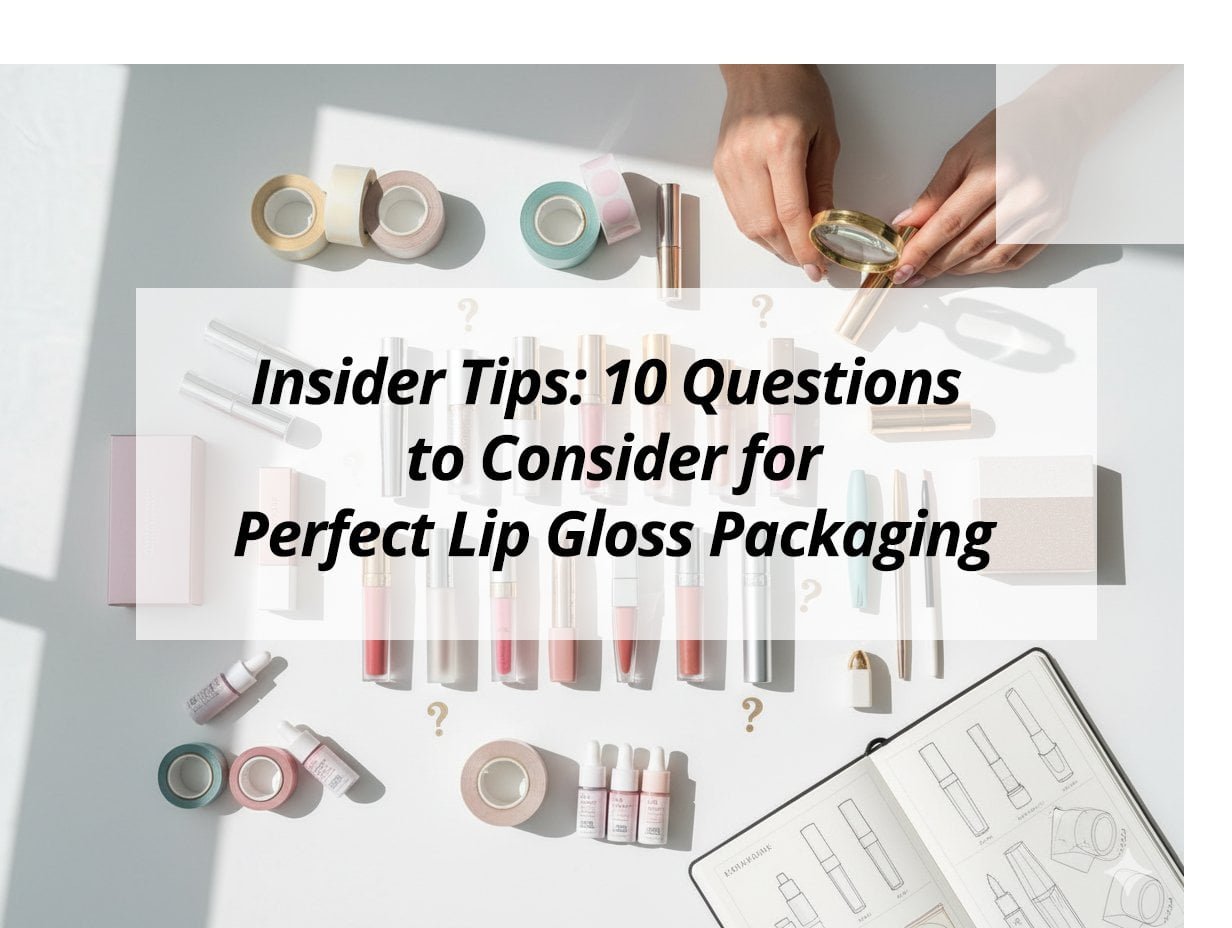
Choosing the right lip gloss packaging is hard. It can make or break a product's success. Bad packaging can cause leaks, damage, or simply not look good. How do you pick packaging that truly makes your lip gloss shine on the shelf?
Perfect lip gloss packaging combines aesthetic appeal with functional design. It must protect the product, prevent leaks, and offer a great user experience. Key factors include material quality, applicator type, size, and branding elements. Considering these points helps create packaging that attracts customers and keeps the product safe.
This is not just about looks. It is about practical considerations. It is about making sure your lip gloss reaches customers in perfect condition. Let us look at what goes into making these important choices.
What Makes a Good Lip Gloss?
Many brands want to create a popular lip gloss. But what makes consumers choose one over another? The product itself plays a big role. It is not just about the packaging.
A good lip gloss has a comfortable, non-sticky texture. It offers great shine and hydration. It should have a pleasant scent and taste. It also needs long-lasting wear. Pigmentation can range from sheer to opaque. High-quality ingredients are always important for performance and safety.
When I think about good lip gloss, I think about how it feels on the lips. I also think about how it looks and lasts. These are the things that make customers happy.
Texture and Feel
The texture of a lip gloss is very important. No one likes a sticky feeling.
- Non-sticky Formula1: A smooth, comfortable feel on the lips is key. It should not feel heavy.
- Lightweight: It should feel light. It should not feel like a thick layer.
- Smooth Application: It should glide on easily.
Shine and Hydration
Lip gloss is known for its shine. It should also help keep lips moisturized.
- High Shine: This is a main feature of lip gloss. It makes lips look fuller.
- Moisturizing Ingredients2: Ingredients like vitamin E, jojoba oil, or shea butter keep lips soft.
- Long-lasting Gloss: The shine should last for a reasonable time.
Scent, Taste, and Pigmentation
These sensory elements add to the overall experience.
- Pleasant Scent: Fruit, vanilla, or mint scents are popular. The scent should not be too strong.
- Subtle Taste: If there is a taste, it should be mild and pleasant.
- Color Range: A good line offers options. This can be sheer, glittery, or pigmented.
| Feature Category | Key Characteristics | Impact on Consumer Experience |
|---|---|---|
| Formula | Non-sticky, hydrating, long-wear | Comfortable feel, healthy lips |
| Appearance | High shine, versatile pigmentation | Fuller-looking lips, various looks |
| Sensory | Pleasant scent and taste | Enjoyable application, overall appeal |
| Ingredients | High-quality, safe ingredients | Product effectiveness, consumer trust |
What Needs to Be on a Lip Gloss Label?
The label on lip gloss packaging is more than just decoration. It carries important information. Failing to include necessary details can lead to legal issues. It can also confuse customers. What must you include on every lip gloss label?
A lip gloss label must clearly display the product name, brand name, and net weight or volume. It also needs a full ingredient list, directions for use, and warning statements. The manufacturer's or distributor's contact information, country of origin, and an expiration date or PAO symbol are also required.
These details are not optional. They are legal requirements in many markets. They also help customers make safe and informed choices. Missing any of these parts can create problems.
Essential Product Identification
Customers need to know what they are buying and who made it.
- Product Name: The specific name of the lip gloss.
- Brand Name/Logo: Clearly identifies your company.
- Net Content: The amount of product in milliliters (ml) or grams (g). This is often printed as 'Net Wt.' or 'Vol.'
Ingredient Transparency
Providing an ingredient list is legally required. It helps consumers, especially those with allergies.
- Ingredient List (INCI): Ingredients must be listed in descending order by weight. They should use the International Nomenclature of Cosmetic Ingredients (INCI) names.
- Allergen Warnings: Any common allergens should be clearly noted.
Usage and Safety Information
Customers need to know how to use the product safely.
- Directions for Use: Simple instructions on how to apply the lip gloss.
- Warning Statements: For example, "For external use only" or "Discontinue use if irritation occurs."
- Batch Number: Helps with product tracking if there is a recall.
Manufacturer and Expiration Details
These points build trust and allow for accountability.
- Manufacturer/Distributor Information: Name and address of the company responsible for the product.
- Country of Origin: Where the product was made.
- Period After Opening (PAO) Symbol: A small open jar symbol with a number (e.g., 6M, 12M). This tells how long the product is good after opening.
- Expiration Date: If applicable, a specific date for product expiry.
| Label Element | Purpose | Legal Requirement Status (General) |
|---|---|---|
| Product & Brand Name | Identification for consumer and brand recognition | Mandatory |
| Net Content | Quantity of product | Mandatory |
| Ingredient List | Transparency, allergy information | Mandatory (INCI format) |
| Directions for Use | Safe and effective application guidance | Recommended, often mandatory |
| Warning Statements | Consumer safety and liability | Mandatory for specific warnings |
| Manufacturer Info | Accountability and contact | Mandatory |
| Country of Origin | Sourcing information | Mandatory |
| PAO Symbol/Exp Date | Product shelf life and safety | Mandatory for most cosmetics |
How to Make a Perfect Lip Gloss?
Creating a lip gloss that stands out in the market takes careful planning. It involves more than just mixing ingredients. It requires attention to detail, from formula development to final presentation. What steps are essential for making a truly perfect lip gloss product?
Making a perfect lip gloss involves several key stages. First, define your target audience and desired product features. Then, develop a stable, high-quality formula with the right texture, shine, and wear. Select suitable packaging, including the bottle and applicator. Conduct thorough testing for safety and performance. Finally, ensure proper labeling and marketing to reach your customers.
Each step builds on the last, ensuring the final product meets both quality standards and consumer expectations. Skipping any part can lead to issues down the line.
Formula Development
This is the heart of your lip gloss. The ingredients dictate performance.
- Ingredient Selection: Choose high-quality base oils, waxes, emollients, and actives. Consider hydrating and nourishing components.
- Texture Balance: Aim for a non-sticky yet viscous consistency. This affects feel and application.
- Shine Level: Decide on the desired level of gloss, from subtle to high-impact.
- Color and Pigmentation: Select pigments or dyes to achieve the intended shade range. Ensure even dispersion.
- Scent and Flavor: Add cosmetic-grade fragrances and flavors. Test for consumer appeal.
Packaging Selection
The container and applicator are vital for user experience and product integrity.
- Bottle Material: Choose materials like PETG or AS for clarity and chemical compatibility.
- Applicator Type: Options include doe-foot, brush, or spatula applicators. Select one that provides smooth, even application.
- Leak Prevention: Ensure the stopper and cap create a tight seal to prevent leaks. This is critical for customer satisfaction.
- Design Aesthetics: The packaging design should match your brand image. Consider shape, color, and finish.
Testing and Quality Control
Rigorous testing prevents issues once the product is on the market.
- Stability Testing: Check how the formula holds up under different temperatures and conditions. Look for separation or color change.
- Compatibility Testing: Ensure the formula does not react negatively with the packaging materials.
- Safety Testing: Perform microbiological testing to ensure product safety.
- Performance Testing: Test wear time, feel, and overall user experience.
| Stage | Key Actions | Importance for Final Product |
|---|---|---|
| Concept & Research | Define target market, desired features, trends | Guides product development direction |
| Formula Development | Select ingredients, balance texture, add color/scent | Determines product performance and appeal |
| Packaging & Applicator | Choose bottle material, applicator type, ensure leak-proof | Influences user experience, product safety |
| Testing & Quality Control | Stability, compatibility, safety, performance tests | Ensures product reliability and consumer trust |
| Labeling & Compliance | Include all required information, meet regulations | Legal compliance, consumer information |
| Manufacturing | Scale up production, maintain consistency | Consistent quality across batches |
What Are Some Fun Facts About Lip Gloss?
Lip gloss has a long and interesting history. It has evolved from a simple product to a beauty staple. Beyond its practical use, there are many surprising details about its past and present. What are some of the lesser-known, interesting facts about lip gloss?
Lip gloss was first invented in 1930 by Max Factor, primarily for movie actors. It was designed to make lips appear shiny and full on screen. Its popularity grew significantly in the 1970s and 2000s, becoming a symbol of youth culture. Early formulas were often petroleum-jelly based. Today, modern lip glosses offer various finishes, from sheer to highly pigmented, with added skincare benefits.
These facts show how much lip gloss has changed. They also show its lasting impact on fashion and beauty trends over the decades. It is more than just a cosmetic item.
The Origins of Lip Gloss
Its birth was linked to the magic of Hollywood.
- Max Factor's Invention: Max Factor created the first commercial lip gloss in 1930. He wanted to make actors' lips look shiny and plump on black and white films.
- First Product: The original product was called "X-Rated." It was sold for the public later.
- Early Use: It was initially a tool for makeup artists. It soon became a popular item for everyday women.
Popularity Through the Decades
Lip gloss has seen waves of popularity, becoming a trend at different times.
- 1970s Boom: It became very popular with teenagers and young women. It was a key part of the disco era look.
- 2000s Resurgence: The early 2000s saw another huge spike in its popularity. Clear and glittery glosses were very trendy.
- Modern Day: It continues to be a favorite. It now comes in many forms, from plumping to long-wear.
Evolution of Formulas and Trends
From basic to advanced, lip gloss formulas have come a long way.
- Early Formulations: Often based on petroleum jelly or mineral oil. These gave shine but less hydration.
- Modern Ingredients: Today's glosses include nourishing ingredients. Examples are hyaluronic acid, peptides, and vitamins.
- Diverse Finishes: Beyond classic shine, there are matte glosses, plumping glosses, and color-changing options.
- Packaging Innovation: From squeeze tubes to wands, packaging has also changed.
| Fact Category | Key Detail | Significance in Lip Gloss History |
|---|---|---|
| Invention | Created by Max Factor in 1930 | Originates from Hollywood's film industry |
| Purpose | Designed to make lips appear shiny and full | Enhanced visual appeal on screen |
| First Product | Commercialized as "X-Rated" | Marked its public availability |
| Popularity Waves | Major peaks in the 1970s and 2000s | Reflects its recurring trend status |
| Formula Evolution | From petroleum jelly to nourishing ingredients | Improved comfort, wear, and benefits |
| Packaging Changes | Diverse applicators and materials over time | Enhanced user experience and aesthetics |
My Insights: Crafting the Ideal Lip Gloss Packaging
Struggling to find the perfect lip gloss packaging? Discover the key questions that ensure durability, appeal, and regulatory compliance.
For ideal lip gloss packaging, consider durability, visual appeal, and compatibility with the formula. Evaluate eco-friendliness and cost-effectiveness, explore unique applicator designs, and ensure compliance with safety standards for a successful product launch.
Crafting the Ideal Lip Gloss Packaging
Format, Size, and Aesthetic:
- Decide on the packaging type: jar, tube, or wand applicator based on customer use. Standard tubes are around 3 ml, while minis suit samples. Choose clear or frosted designs for aesthetic appeal.
Brand, Usability, and Safety:
- Ensure packaging matches brand identity, from minimalist to glam. Test for leak-proof qualities, and select an applicator suited to the formula’s viscosity and desired precision.
Materials, Sustainability, and Cost:
- Opt for eco-friendly materials like recycled plastics and conduct cost analyses on MOQ, lead time, and decoration impacts. Consider long-term sustainability in material choices.
Compliance and Future-Proofing:
- Guarantee label compliance with cosmetic regulations, leaving room for any future product expansions. The ability to extend packaging across product ranges aids brand cohesion.
Careful consideration of these aspects helps create lip gloss packaging that embodies brand identity, meets consumer expectations, and addresses environmental concerns, setting up a successful market entry.
Conclusion
Choosing the right lip gloss packaging is a complex task. It demands careful thought on formulation, labeling, and design trends. Understanding these elements ensures a successful product that truly stands out.