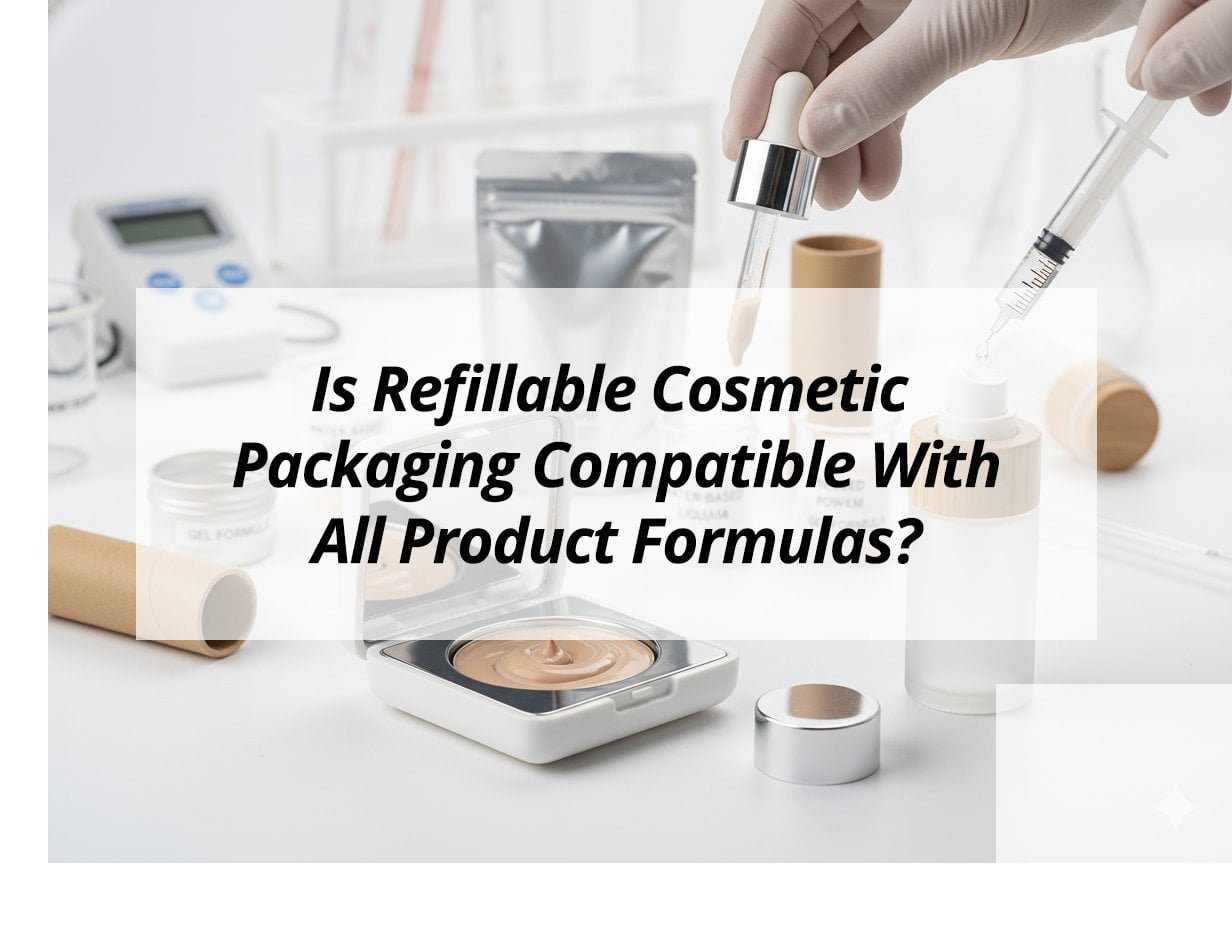
Refillable cosmetic packaging is gaining popularity. It promises less waste and more sustainability. But, can every type of cosmetic product fit into a refillable system? Are there limits to what formulas work with this eco-friendly option?
Refillable cosmetic packaging is not universally compatible with all product formulas. While suitable for many solid and stable liquid formulas, it faces challenges with highly sensitive, volatile, or viscous products due to material compatibility, hygiene, and dispensing complexities. Factors like preservation, oxidation risk, and refill mechanism design significantly influence suitability.
The move towards refillable systems is a big step for the beauty industry. Yet, understanding the technical limits is important. Let's look closer at how product formulas and packaging designs interact in this growing trend.
What is considered reusable packaging?
Many brands talk about reusable packaging. But what does that really mean in the cosmetic world? Is it just anything you can use more than once, or are there specific rules? Understanding this helps both companies and consumers.
Reusable packaging is designed to be used multiple times for the same or a similar purpose. In cosmetics, this includes containers that consumers can return to be refilled or refill themselves using product inserts. Key characteristics involve durability, ease of cleaning, and a design that supports multiple cycles of use without significant degradation. This reduces waste compared to single-use packaging.
Key Characteristics of Reusable Packaging
Reusable packaging1 must meet certain criteria to be effective. It is not just about using something again.
- Durability: The packaging must withstand repeated handling, cleaning, and refilling. Materials need to be robust.
- Design for Refill: It must be easy to refill, either by the consumer or by the brand. This often means modular components.
- Cleanability: For hygiene, especially with cosmetics, the container must be easy to clean thoroughly between uses.
- Safety: The material must remain safe and stable, not interacting negatively with the product over many uses.
Types of Reusable Systems
Reusable packaging can work in a few ways. Each has its own benefits and challenges.
| Type of Reusable System | Description | Example Cosmetic Product |
|---|---|---|
| Refill-at-Home | Consumer buys a refill pod/pouch to insert | Lipstick, pressed powder, moisturizer |
| Return & Refill | Consumer returns empty package to store/brand | Shampoo, liquid foundation |
| Closed-Loop System | Brand collects, cleans, and reuses packaging | High-end skincare bottles |
Reusable packaging is a central part of sustainable efforts in the beauty industry. It aims to reduce the environmental footprint.
Does L'Oréal use sustainable packaging?
L'Oréal is a big name in cosmetics. With their global reach, their packaging choices have a huge impact. Do they use sustainable packaging? How do they approach this complex issue across their many brands and products?
L'Oréal actively implements sustainable packaging strategies across its portfolio. Their efforts include reducing packaging weight and size, increasing the use of recycled materials like PCR plastics, and developing refillable and reusable options. They focus on eco-design principles to minimize environmental impact throughout the product lifecycle. These initiatives are part of their broader commitment to sustainability.
L'Oréal's Approach to Sustainable Packaging
L'Oréal has a multi-faceted approach to making its packaging more sustainable. They set clear goals and track their progress.
- Reduce: They aim to minimize the amount of packaging material used. This means lighter, smaller designs.
- Replace: They switch to more sustainable materials. This includes recycled content and bio-based plastics.
- Recycle: They design packaging to be recyclable where possible. They also support recycling infrastructure.
- Refill & Reuse: They introduce refillable formats for various products. This encourages consumers to keep and reuse containers.
Key Initiatives and Examples
Here are some specific examples of L'Oréal's work in sustainable packaging.
| Initiative Area | Description | Product Examples |
|---|---|---|
| Material Innovation | Increasing recycled plastic (PCR) content | Many shampoo, conditioner, and lotion bottles |
| Eco-Design | Optimizing packaging for reduced material and weight | Lighter jars, slimmed-down tubes |
| Refill Systems | Offering products with refillable options | High-end skincare creams, some foundations |
| Recyclability Focus | Ensuring packaging components can be recycled | Specific plastic bottles and jars |
Large companies like L'Oréal show that sustainable packaging is possible on a big scale. Their efforts can influence the entire industry.
What is refillable packaging?
Refillable packaging is a term heard often in beauty circles now. But what does it exactly mean? How is it different from just recycling a container? Understanding its definition is key to appreciating its role in sustainability.
Refillable packaging is a system where the primary container is kept by the consumer and replenished with a new product insert or by being refilled directly. This design prevents the disposal of the main container after a single use. It aims to reduce waste, lower carbon footprint, and often decrease material consumption compared to continuously purchasing new, disposable products.
The Mechanics of Refillable Systems
Refillable packaging works by separating the durable outer container from the consumable product.
- Durable Outer Container: This is the main package. It is made to last. It often has a premium feel and design.
- Product Insert/Refill: This is the part that holds the cosmetic formula. It can be a pouch, a small pod, or a new pan. This is what gets replaced.
- Mechanism: The design must allow for easy and hygienic replacement of the insert. This can involve simple clicks, twists, or magnetic closures.
Benefits of Refillable Packaging
Refillable systems offer several advantages beyond just reducing waste.
| Benefit | Description | Impact on Consumer/Environment |
|---|---|---|
| Waste Reduction | Less material thrown away | Lower landfill waste, resource conservation |
| Carbon Footprint Reduction | Reduced manufacturing of new primary packaging | Lower energy use, fewer emissions |
| Cost Savings (long term) | Refills often cost less than a new product | Economic benefit for consumers |
| Enhanced Brand Loyalty | Encourages repeat purchases of refills | Stronger customer relationships |
Refillable packaging is a practical solution. It helps both consumers and brands contribute to a more sustainable future.
How do you declare reusable packaging?
For businesses using reusable packaging, proper declaration is important. This involves clear labeling and communication. How do companies properly declare their packaging as reusable to consumers and regulators? What information is needed?
Declaring reusable packaging involves clear communication through labeling, marketing materials, and sometimes regulatory documentation. Brands must explicitly state that the packaging is designed for multiple uses, often by indicating "refillable," "reusable," or specific refill instructions. This helps consumers understand its purpose and how to participate in the reuse system, ensuring proper disposal or return of refills.
Essential Elements of Reusable Packaging Declaration
Clear communication is vital for consumers to understand and engage with reusable packaging.
- On-Package Labeling: Directly on the packaging, use clear symbols or text. Phrases like "Refill Me," "Reusable," or specific refill instructions are common.
- Marketing and Website: Provide detailed information on how the refill system works. Explain its environmental benefits.
- Product Description: In online stores or product catalogs, highlight the refillable nature as a key feature.
- Consumer Instructions: Include step-by-step guides for refilling, cleaning, or returning the packaging.
Considerations for Declaration
Different factors influence how reusable packaging is declared.
| Declaration Aspect | Key Information to Convey | Importance |
|---|---|---|
| Refill Mechanism | How to open, insert, or return the refill | Ensures correct consumer engagement |
| Material Type | What the main container is made of (e.g., glass, aluminum) | Helps with proper cleaning and durability expectations |
| Environmental Claim | What waste is reduced, or what impact is lessened | Motivates consumer choice, builds trust |
| Certifications | Any third-party certifications for sustainability | Adds credibility to claims |
Proper declaration ensures that consumers fully understand the reusable aspect of packaging. This helps maximize the environmental benefits of such systems.
My Insights: Assessing the Compatibility of Refillable Cosmetic Packaging
Wondering if refillable packaging suits all cosmetic formulas? Discover its limitations and the key considerations for compatibility.
Refillable cosmetic packaging is generally compatible with creams and powders but poses challenges for liquids and volatile ingredients. Compatibility varies by material, requiring airtight seals and stability tests to ensure product integrity.
Factors Influencing Refillable Packaging Compatibility
Formula Sensitivity:
-
Stable vs. Volatile Ingredients: Creams and powders work well, whereas air-sensitive or volatile ingredients may degrade, requiring specialized designs like airless pumps.
-
Viscosity Concerns: Thick lotions need durable dispensers; liquids risk leaks without proper sealing mechanisms.
Material and Design Considerations:
-
Chemical Interaction: Packaging materials must align with the product’s chemical properties. For example, aluminum requires protective linings to prevent reactions.
-
Custom Solutions: Designing custom packaging can improve compatibility, ensuring airtight seals and durability.
- Stability Tests: Conduct rigorous tests for heat, light, and repeated usage to ensure long-term safety and efficacy.
| Element | Key Considerations |
|---|---|
| Formula Type | Stable creams, volatile ingredients |
| Material | Chemical compatibility, durability |
| Design | Airtight mechanisms, custom innovations |
By addressing these factors, brands can better navigate the complexities of refillable packaging, balancing sustainability with product integrity.
Conclusion
Refillable cosmetic packaging promotes sustainability but has formula compatibility limits. It works well for many products, yet some sensitive or complex formulas pose challenges. Clear communication about reusable packaging is crucial for consumer engagement and environmental benefit.