Paper packaging can look eco-friendly at first glance. But cosmetic packaging must also protect products, support branding, and prove sustainability claims.
The 5 top trends in sustainable paper packaging for cosmetics are FSC and recycled paperboard, molded fiber inserts, cosmetic paper tubes, improved barrier coatings, and refill-ready paper systems. These trends help beauty brands reduce plastic dependence, improve recyclability, create premium tactile design, and prepare for stronger packaging regulations after 2026.
Sustainable paper packaging now needs to protect products, support premium design, reduce plastic, enable refills, improve shipping, and prove recyclability more clearly.
What Are the Top Sustainable Paper Packaging Trends for Cosmetics?
Paper packaging is moving beyond simple cartons. The most useful trends are the ones that reduce plastic while still protecting the cosmetic product.
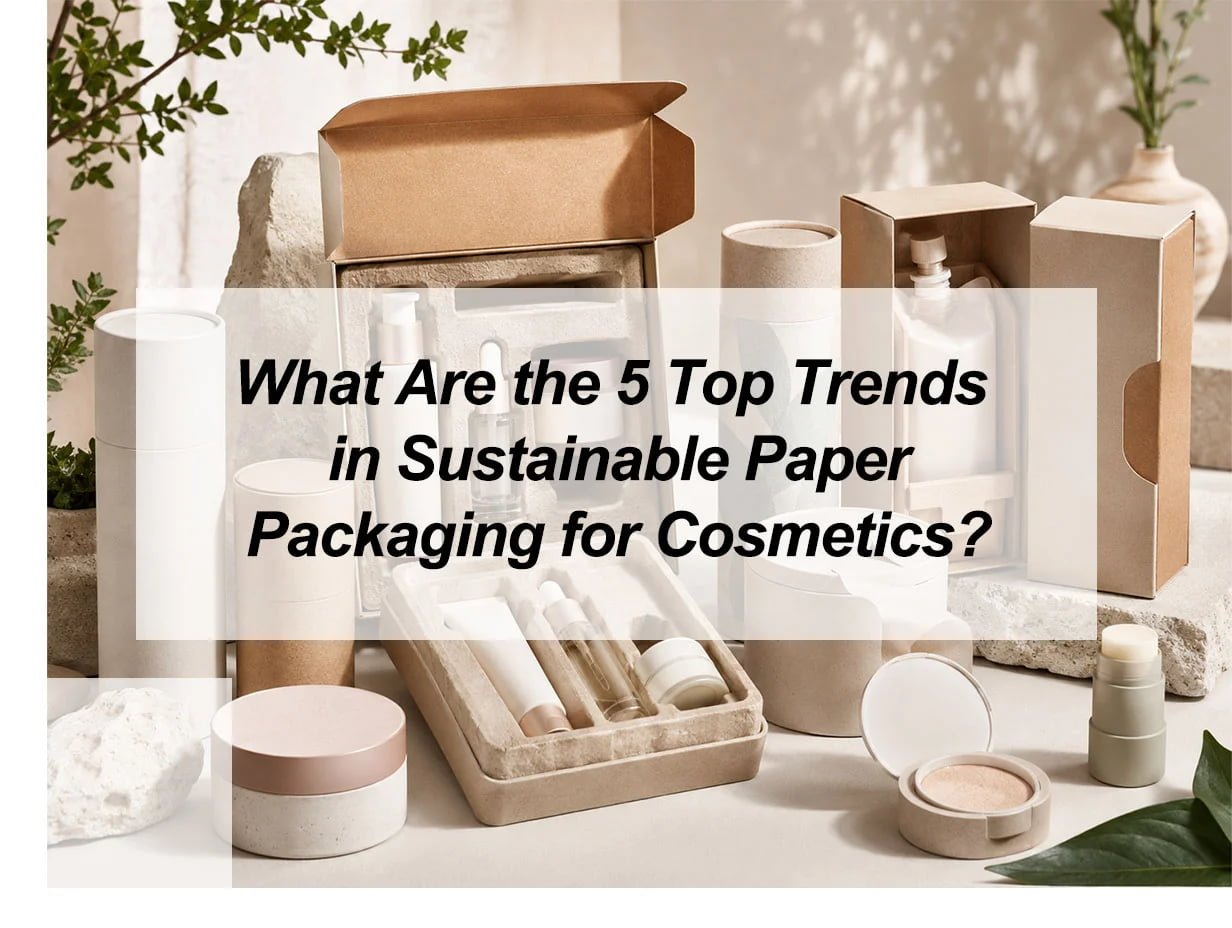
The top sustainable paper packaging trends for cosmetics are certified paperboard, recycled paper content, molded fiber inserts, paper tubes, barrier-coated paper, right-sized cartons, refill paper sleeves, and digital recycling guidance. These trends help brands use paper more carefully instead of choosing paper only for its natural appearance.
The first trend is proof-based paper sourcing. Brands are using FSC-certified paperboard and controlled fiber sources because customers and retailers want clearer material responsibility. FSC says businesses can obtain chain-of-custody certification when paper or packaging products use FSC-certified or controlled forest-based materials. This is useful because it gives brands a stronger basis for their paper packaging story.
The second trend is recycled paperboard. Recycled paper can reduce virgin fiber demand, but brands should not treat it as automatically perfect. Recycled paper may have color variation, odor concerns, lower stiffness, or different printing behavior. Cosmetic packaging often needs clean color, good structure, and a premium surface. So brands should test print quality, box strength, embossing, foil stamping, and transport performance before full production.
Trend Overview
| Trend | What It Means | Why It Matters |
|---|---|---|
| FSC paperboard | Certified or controlled forest-based paper | Gives stronger material proof |
| Recycled paperboard | Paper with recycled fiber content | Reduces virgin fiber pressure |
| Molded fiber | Pressed fiber trays, inserts, and supports | Can replace plastic inserts |
| Paper tubes | Tube-style paper packs and sleeves | Adds natural and tactile appeal |
| Barrier-coated paper | Paper with moisture or oil protection | Expands paper use cases |
| Refill-ready paper | Paper sleeves, cartons, and cartridges | Supports repeat purchase systems |
| QR recycling guide | Digital disposal and material information | Helps customers recycle correctly |
The third trend is molded fiber. Molded fiber can replace plastic trays and inserts in gift sets, skincare kits, fragrance sets, and makeup collections. This is useful because many cosmetic gift boxes still use plastic vacuum-formed trays. A molded fiber tray can hold products in place while giving the package a more natural look.
The fourth trend is paper tubes. Paper tubes can work for lip balm, solid perfume, deodorant, sample kits, and secondary packaging around bottles or jars. They can feel more premium than a flat carton because they have shape, texture, and hand feel.
The fifth trend is better barrier design. Paper alone is not enough for many cosmetic formulas. Wet products, oils, creams, serums, sunscreens, and fragrances usually need stronger barrier protection. This is why brands are exploring water-based coatings, bio-based coatings, liners, or hybrid structures. The challenge is that coatings may affect recyclability, so claims must be checked carefully.
Why Are FSC Paperboard and Recycled Paper Becoming More Important?
Sustainable claims now need evidence. A package that only looks natural may not be enough for buyers, retailers, or regulators.
FSC paperboard and recycled paper are becoming more important because cosmetic brands need visible, documentable sustainability choices. FSC certification can support responsible fiber sourcing, while recycled paperboard can reduce virgin fiber use. Brands should still check strength, surface quality, odor, color, printing, and cosmetic-grade requirements.
FSC paperboard is important because it helps brands communicate responsible fiber sourcing in a more structured way. It does not solve every packaging problem, but it gives a clearer starting point. If a cosmetic brand wants to use paper cartons, gift boxes, sleeves, inserts, and shipping mailers, FSC-certified or controlled material can help support procurement and marketing claims.
Recycled paperboard is also useful, especially for secondary packaging. It can work well for cartons, inserts, tubes, and mailer boxes. But the cosmetic industry has higher visual expectations than many other categories. A skincare carton may need a smooth white surface. A lipstick box may need sharp embossing. A luxury paper tube may need clean foil stamping. A gift box may need strong corners. Recycled paperboard must meet these needs before it can replace virgin paperboard.
Paper Material Selection Guide
| Paper Option | Best Use | Main Benefit | What to Check |
|---|---|---|---|
| FSC virgin paperboard | Premium cartons and luxury boxes | Clean print and certified sourcing | Fiber source and supplier certificate |
| FSC recycled paperboard | Cartons, sleeves, inserts | Lower virgin fiber use | Strength and surface quality |
| Kraft paperboard | Natural-style cosmetic boxes | Organic and simple look | Color consistency |
| Greyboard | Rigid boxes and gift sets | Strong structure | Outer wrap material |
| Molded pulp | Inserts and protective trays | Plastic insert replacement | Texture and dust control |
| Paper tube board | Tubes and cylindrical packs | Tactile brand experience | Glue, liner, and cap fit |
The challenge is that paper packaging often uses more than paper. A luxury carton may include lamination, metallic foil, UV coating, plastic window film, magnets, ribbon, glue, and inks. These additions can make the package feel premium, but they can also complicate recycling. A sustainable paper strategy should review the full structure, not only the main board.
Brands should also check supplier documentation. A paper supplier should be able to explain paper grade, fiber source, recycled content, coating type, ink type, glue type, and printing limitations. If the brand wants to claim FSC, recycled content, plastic-free, recyclable, or compostable, the evidence should be prepared before launch.
This is why paper packaging selection should be part of procurement, design, and compliance work together. Designers may focus on texture and color. Buyers may focus on cost and MOQ. Sustainability teams may focus on certification and recyclability. A good project brings all three together early.
How Can Molded Fiber and Paper Tubes Reduce Plastic in Cosmetic Packaging?
Plastic reduction does not always mean replacing the primary container. Paper can reduce plastic through inserts, trays, sleeves, and secondary structures.
Molded fiber and paper tubes can reduce plastic in cosmetic packaging by replacing plastic trays, rigid plastic inserts, sample supports, product sleeves, stick packaging, and gift-set structures. They work best when used for dry products, solid formats, secondary packaging, and protective components that do not need direct wet-formula contact.
Molded fiber is one of the most practical paper-based changes for cosmetic packaging. Many cosmetic sets still use plastic inserts to hold bottles, jars, compacts, or lip products. Molded fiber can do the same job with a more natural look. It can also fit e-commerce shipping because it cushions the product and reduces movement inside the box.
A 2026 sustainable cosmetic packaging guide notes that fiber-based packaging can use molded pulp, paperboard, or bamboo fiber for cosmetic containers, caps, or outer packaging, and that molded fiber often works for jar caps, cosmetic trays, or protective outer packaging. The same source also warns that fiber materials are generally unsuitable for direct cosmetic contact when moisture sensitivity, barrier protection, and fiber contamination are concerns.
Molded Fiber and Paper Tube Use Cases
| Format | Best Cosmetic Use | Why It Works |
|---|---|---|
| Molded fiber tray | Gift sets, skincare kits, fragrance sets | Replaces plastic insert trays |
| Molded fiber shipper | E-commerce beauty orders | Protects products during delivery |
| Molded fiber sleeve | Jar or bottle support | Reduces plastic holders |
| Paper tube | Lip balm, solid perfume, deodorant | Supports solid or dry formats |
| Paper outer tube | Serum bottle or jar secondary pack | Adds premium tactile packaging |
| Paper refill sleeve | Refill pods and cartridges | Supports refill systems |
Paper tubes are another strong trend. They can be used as primary packaging for certain solid products, or as secondary packaging for bottles, jars, and gift items. Paper tubes can feel more premium than simple folding cartons because they create a rounded, tactile, display-friendly shape. Some paper tube suppliers describe paper tubes as recyclable, biodegradable, and resealable options for many product applications, including direct and secondary packaging.
But brands should be careful. A paper tube may include an inner liner, plastic cap, lamination, glue, or foil layer. If the tube is used for a wet or oily formula, it may need extra barrier protection. If the cap is plastic or metal, the end-of-life story becomes more complex. If the tube is covered with heavy lamination, it may not fit a simple paper recycling claim.
The best approach is to use molded fiber and paper tubes where paper performs naturally well. Use molded fiber for trays, inserts, and shipping protection. Use paper tubes for solid formats, refills, and premium secondary packs. Use other materials when the formula needs strong moisture, oil, or oxygen protection.
How Can Barrier Coatings Make Paper Packaging More Useful for Cosmetics?
Paper is strong for boxes, but cosmetics often need protection from oil, moisture, air, fragrance, and handling. Barrier coatings try to close that gap.
Barrier coatings can make paper packaging more useful for cosmetics by adding moisture resistance, oil resistance, grease resistance, and better surface protection. However, brands should test coating performance, recyclability, shelf life, formula compatibility, and local disposal acceptance before calling coated paper packaging plastic-free or recyclable.
This is one of the most important paper packaging trends. Many brands want paper to replace plastic. But paper by itself absorbs moisture and oil. It can warp, stain, soften, or lose strength. Cosmetic formulas may contain water, oils, waxes, fragrance, pigments, alcohol, or surfactants. So direct-contact paper packaging needs more protection than a normal carton.
Barrier coating research shows that paper and board can use bio-based polymeric coatings to improve barrier properties, including moisture and oxygen resistance. A review of bio-based alternatives for paper and board barrier coating highlights materials such as nanocellulose, lignin nanoparticles, and bio-polyesters as promising candidates. This matters because future paper packaging may perform better than old kraft cartons, but it still needs testing.
Barrier Coating Decision Table
| Coating Need | Why It Matters for Cosmetics | What Brands Should Check |
|---|---|---|
| Moisture resistance | Creams, lotions, and bathrooms create moisture risk | Warp, swelling, and shelf life |
| Oil resistance | Balms, oils, makeup, and fragrance can stain paper | Grease marks and structure loss |
| Oxygen barrier | Some formulas are sensitive to oxidation | Formula stability |
| Heat-seal ability | Some refill packs need sealing | Seal strength and leakage |
| Print protection | Cosmetic packs face handling and transport | Rub and scratch resistance |
| Recyclability | Coatings can affect paper recovery | Local recycling rules and coating level |
The problem is claim language. “Paper-based” does not always mean “plastic-free.” “Recyclable” does not always mean recyclable in every market. “Bio-based coating” does not always mean compostable. Packaging Digest has warned that terms like mono-material and plastic-free can be misused for coated paperboard. This is why brands should be specific.
A brand can say the package uses paperboard with a water-based barrier coating if that is accurate. It can say the package reduces plastic compared with a previous design if the data supports it. It can say the package is recyclable where facilities accept that coated paper structure if that is true. But it should avoid broad claims that cannot be proven.
Barrier-coated paper is useful, but it is not magic. It can expand the role of paper packaging, especially for refill packs, dry products, semi-dry formats, and outer protection. But wet primary packaging still needs careful shelf-life validation and compatibility testing before commercial launch.
What Should Brands Check Before Choosing Paper Packaging for Cosmetics?
Paper packaging can reduce plastic and create a natural look, but poor structure can create damage, weak claims, and customer disappointment.
Before choosing paper packaging for cosmetics, brands should check product type, direct-contact risk, moisture exposure, coating structure, certification, recycled content, print quality, logistics strength, local recycling acceptance, label space, refill potential, and supplier documentation. Paper packaging should be selected by use case, not by appearance alone.
The first checkpoint is whether the paper touches the formula. If the product is a dry powder, solid stick, soap, balm in an inner liner, or secondary box around a primary container, paper may work well. If the product is a lotion, serum, sunscreen, oil, or cream, paper usually needs a barrier or another inner container. A paper outer shell can still reduce plastic, but the formula-contact layer must protect the product safely.
The second checkpoint is packaging structure. A folding carton is different from a rigid box. A molded fiber tray is different from a paper tube. A refill sleeve is different from a shipping mailer. Each structure has different strength, cost, MOQ, tooling, printing, and storage needs.
Paper Packaging Checklist
| Checkpoint | Question to Ask |
|---|---|
| Product type | Is the product dry, solid, semi-solid, or wet? |
| Contact layer | Does paper touch the formula directly? |
| Barrier need | Does the formula need oil, moisture, or oxygen protection? |
| Certification | Is FSC or recycled-content documentation available? |
| Coating | Is there lamination, plastic film, wax, or water-based coating? |
| Printing | Can the board support the desired color and finish? |
| Logistics | Can it survive shipping, humidity, and stacking? |
| Recyclability | Is it accepted in the target market recycling stream? |
| Label space | Can it carry ingredients, warnings, directions, and claims? |
| Supplier proof | Can the supplier provide material and quality documents? |
The third checkpoint is regulation. The EU PPWR replaces the previous Packaging Waste Directive and will begin to apply from mid-2026. It is designed to reduce packaging waste and improve packaging circularity. For brands selling into Europe, packaging design now needs to consider recyclability, waste reduction, reuse, refill, and labeling earlier in the process.
The fourth checkpoint is customer experience. Sustainable paper packaging should still feel good. It should open cleanly, protect the product, sit well on the shelf, and look strong in e-commerce photos. A rough molded fiber insert may fit an eco line, but it may not fit a luxury skincare set unless the surface is refined. A kraft paper tube may suit a natural lip balm, but it may not suit a high-end serum unless the design is upgraded.
Brands should not ask, “Can we replace plastic with paper?” They should ask, “Where does paper perform better, and where does another material still protect the formula better?” This question leads to better packaging decisions.
How Can Paper Packaging Support Premium Cosmetic Branding?
Sustainable paper packaging does not need to look cheap. With the right structure, it can feel natural, refined, and premium.
Paper packaging can support premium cosmetic branding through tactile textures, embossing, debossing, foil details, clean typography, soft-touch paper, molded fiber forms, paper tubes, and right-sized gift boxes. The key is to make the design feel intentional while avoiding unnecessary layers that weaken the sustainability message.
Luxury cosmetic packaging used to rely heavily on thick rigid boxes, glossy lamination, plastic inserts, magnets, ribbons, and metallic finishes. Some of these details still create a strong first impression, but they may conflict with sustainability goals. The new direction is more controlled. Brands can use fewer materials but better design.
Premium Paper Design Ideas
| Design Element | Brand Effect | Sustainability Watch Point |
|---|---|---|
| Embossing | Adds depth without extra ink | Usually cleaner than heavy decoration |
| Debossing | Creates subtle luxury | Works well on thick paperboard |
| Natural texture | Supports organic or clean beauty image | Check fiber consistency |
| Minimal ink | Creates quiet premium look | Easier to support recycling |
| Paper tube shape | Adds display value | Check liner and cap materials |
| Molded fiber tray | Feels custom and protective | Surface must match brand level |
| QR code | Adds digital content | Keep physical label clean |
Beauty packaging trends show that emotional and sensory impact still matter in 2026, even while brands face recyclability and regulatory needs. This means paper packaging should not remove brand emotion. It should express it differently.
A skincare carton can use soft ivory paper, fine embossing, and clear typography. A lipstick paper tube can use a matte natural surface with a small foil logo. A gift set can use molded fiber instead of a plastic insert but still feel elegant through shape and precision. A refill carton can use a clean layout and QR code to explain the refill process.
The best premium paper packaging is not overloaded. It feels clear, useful, and honest. It gives the customer a reason to keep, recycle, or reuse it. It also supports the product’s story without pretending that paper is perfect for every format.
My insights: What Are the 5 Top Trends in Sustainable Paper Packaging for Cosmetics
Paper packaging looks simple, but cosmetic products need more than a green-looking carton. Brands must balance beauty, protection, proof, and recyclability.
The 5 top trends in sustainable paper packaging for cosmetics are FSC and recycled paperboard, molded fiber inserts, cosmetic paper tubes, better barrier coatings, and refill-ready paper systems. These trends help brands reduce plastic use, improve packaging transparency, create tactile shelf appeal, and prepare for stricter packaging rules.
From Basic Paper Boxes to Smarter Cosmetic Packaging Systems
Sustainable paper packaging should not be treated as one material choice. It should be treated as a packaging system. A carton, sleeve, molded tray, tube, paper label, refill case, and shipping insert can all support different cosmetic needs.
| Trend | Best Use Case | Main Benefit | Main Checkpoint |
|---|---|---|---|
| FSC and recycled paperboard | Cartons, sleeves, gift boxes | Stronger sustainability proof | Certification and print quality |
| Molded fiber inserts | Trays, supports, gift sets | Replaces plastic inserts | Surface finish and strength |
| Paper tubes | Sticks, solid products, secondary packs | Natural and premium look | Inner lining and recyclability |
| Barrier-coated paper | Dry or semi-dry formats, refill packs | Better moisture and oil resistance | Coating and disposal claims |
| Refill-ready paper systems | Sleeves, cartridges, refill cartons | Supports repeat purchase | Refill habit and durability |
The best paper packaging choice depends on the product. A lipstick carton, skincare gift box, molded fiber tray, lip balm tube, and refill sleeve all need different material logic. Brands should check paper source, coating, glue, ink, decoration, logistics, and local recycling before final production.
Conclusion
Sustainable paper packaging for cosmetics works best when FSC paperboard, molded fiber, paper tubes, barrier coatings, and refill systems are matched to real product needs.