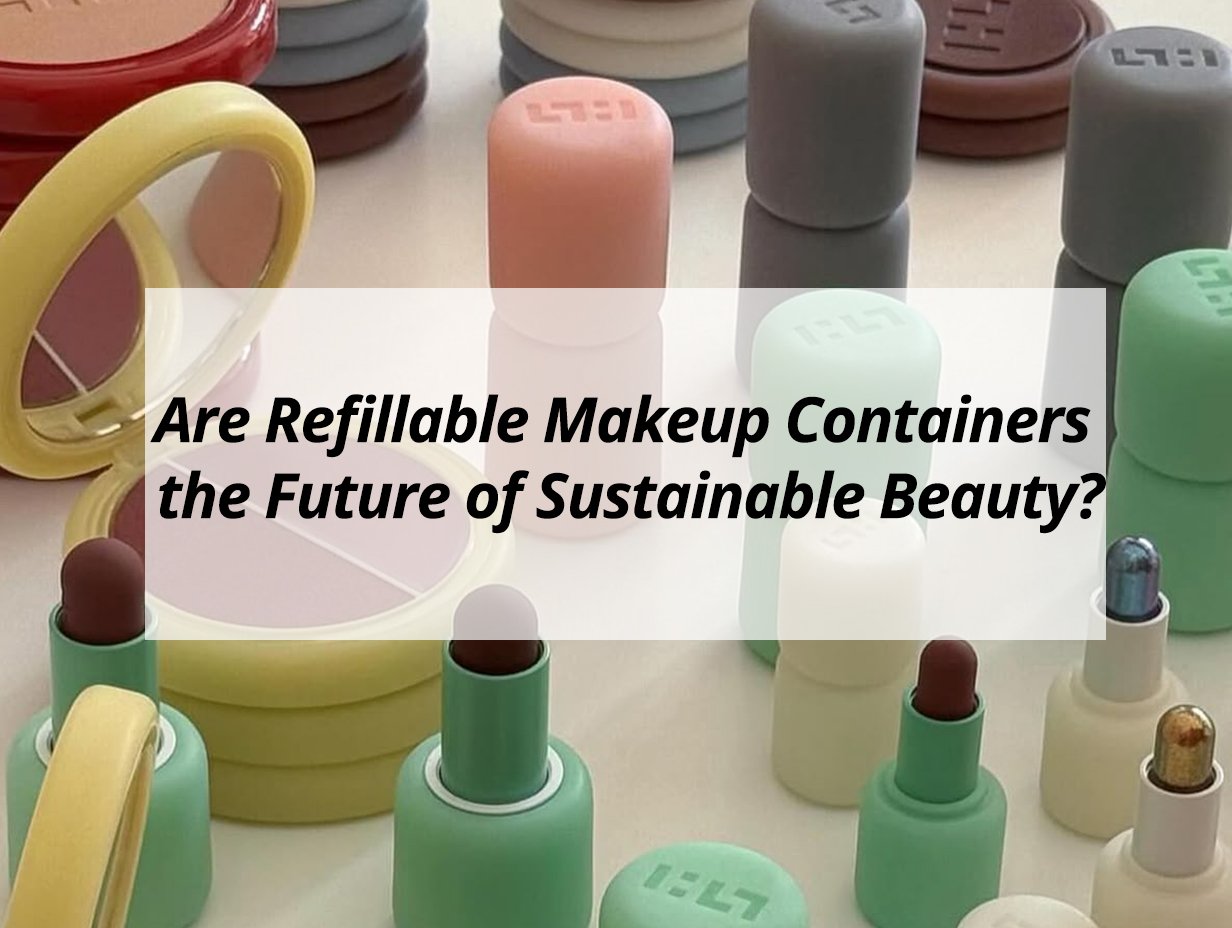
Refillable makeup containers can reduce repeated packaging, but their environmental value depends on durable outer packs, lighter refills, convenient purchasing, and repeated customer use.
Refillable makeup containers are likely to become an important part of sustainable beauty because customers can keep durable lipstick cases, compacts, jars, and other outer packages while replacing smaller refills. However, successful systems must reduce material, remain affordable, protect formulas, stay easy to use, and encourage customers to refill several times.
Refillable makeup must balance material reduction, durability, hygiene, convenience, refill availability, price, aesthetics, recycling, and repeat purchase. A refill system only works when people actually reuse it.
Why Are Refillable Makeup Containers Becoming More Popular?
Beauty brands are expanding refill systems because packaging waste, customer expectations, premium positioning, and circular-economy goals are increasingly shaping product development.
Refillable makeup containers are becoming more popular because they can reduce repeated packaging, support durable premium cases, create repeat-purchase systems, and respond to consumer interest in lower-waste beauty. Major beauty groups are expanding refill programs, but convenience, price, availability, and consumer education remain essential for mainstream adoption.
1. Consumers Are Looking for Less Packaging Waste
GlobalData reported in February 2026 that 73% of consumers in its global survey actively sought products that reduce packaging waste, while 74% regarded sustainable or environmentally friendly attributes as essential or desirable.
This helps explain the growth of:
- refillable compacts;
- refill lipstick cases;
- replacement cushion cartridges;
- refillable skincare jars;
- fragrance refills;
- flexible refill pouches.
Consumers may not demand every product be refillable, but waste reduction is becoming more visible during purchase decisions.
2. Major Beauty Companies Are Expanding Refill
L’Oréal launched its largest global refill campaign in June 2026.
The initiative includes:
- 4 divisions;
- 18 brands;
- 28 refillable products;
- skincare;
- fragrance;
- makeup;
- haircare.
L’Oréal says the program is designed to help close the gap between the 84% of consumers who say they want to make more sustainable choices and actual refill behavior.
Large-scale participation matters because refill requires more than package design.
It requires:
- manufacturing;
- inventory;
- retail display;
- e-commerce;
- consumer education;
- repeat availability.
3. Refill Supports Premium Packaging
A disposable package often creates pressure to control cost.
A reusable package gives brands another reason to invest in higher-quality design.
Brands can create:
- durable metal lipstick shells;
- decorative reusable compacts;
- engraved cases;
- premium refillable jars;
- collectible color editions.
This makes refill attractive to luxury beauty because the case can remain desirable after the original formula is gone.
4. Regulation Is Strengthening Circular Packaging
The EU Packaging and Packaging Waste Regulation began applying on a phased basis from August 12, 2026. The European Commission describes PPWR as a framework intended to reduce packaging waste, strengthen recycling, increase the use of secondary materials, and move packaging toward greater circularity.
Refill and reuse are therefore becoming part of a wider regulatory and circular-design discussion rather than simply a marketing trend.
Which Makeup Products Work Best With Refillable Packaging?
The strongest refillable makeup formats are products where the durable outer case contains substantially more material or value than the replaceable formula cartridge.
Lipsticks, powder compacts, eyeshadow palettes, cushion foundations, cream compacts, and selected makeup sticks work particularly well with refillable packaging. Their inner product pans, bullets, or cartridges can be replaced while the customer keeps the durable outer case, mirror, hinge, closure, and decorative components.
1. Refillable Lipstick
Lipstick is one of the most natural refill systems.
The consumer keeps:
- outer shell;
- cap;
- mechanism;
- decoration.
The refill contains:
- lipstick bullet;
- holder;
- minimal protective structure.
This format also allows brands to separate packaging from shade.
One reusable case can potentially accept multiple colors.
2. Powder Compacts
Powder compacts have strong refill potential because much of their packaging remains useful after the formula is gone.
The outer pack may contain:
- mirror;
- hinge;
- closure;
- premium decoration.
Only the powder pan needs replacement.
This works for:
- pressed powder;
- blush;
- bronzer;
- highlighter;
- eyeshadow.
3. Cushion Foundation
Cushion systems already use an inner-cartridge structure.
The customer can keep the compact and replace the cushion unit.
The main sustainability challenge is ensuring the replacement cartridge genuinely reduces packaging and does not simply recreate a full plastic compact inside another compact.
4. Mascara and Lip Gloss Are More Difficult
Mascara and gloss introduce hygiene challenges.
The system contains:
- bottle;
- formula;
- wiper;
- wand;
- applicator.
Reusing an old wand with new mascara could create contamination or performance concerns. Replacing the entire bottle, wiper, and brush reduces the material-saving advantage.
These categories require careful lifecycle analysis.
What Challenges Can Stop Refillable Makeup Packaging From Succeeding?
Refillable makeup can fail when the system creates inconvenience, weak financial value, hygiene concerns, excess material, unavailable refills, or confusing compatibility.
The main challenges for refillable makeup are consumer convenience, refill availability, pricing, hygiene, durability, product compatibility, complicated replacement, and insufficient material savings. A refill system may look sustainable on launch but create little benefit if consumers rarely refill it or the replacement cartridge uses nearly as much packaging as the original.
1. Convenience Is the Biggest Barrier
Mintel identifies convenience as one of the major barriers preventing refillable beauty from reaching mainstream adoption. Its 2026 analysis notes that almost 70% of U.S. consumers regard in-store refilling as inconvenient.
Consumers generally prefer systems that work at home.
This explains why removable cartridges and refill pouches often have an advantage over refill stations.
2. Refills Need Reliable Availability
A beautiful refillable lipstick becomes useless if the matching cartridge disappears after one year.
Brands need long-term planning for:
- shade compatibility;
- cartridge dimensions;
- online availability;
- store inventory;
- international supply;
- packaging generations.
A durable outer package should not become obsolete because the brand changes its refill dimensions.
3. Price Must Encourage Repeat Purchase
A refill should normally provide an obvious reason not to buy another complete product.
That advantage can include:
- lower price;
- less packaging;
- easier purchase;
- loyalty rewards.
If the refill costs almost the same as the complete package, many customers may simply choose the full product.
4. Hygiene Still Matters
Makeup touches:
- skin;
- lips;
- eyes;
- fingers;
- brushes.
A refill system needs to prevent unnecessary contamination.
Brands should evaluate:
- whether the refill can be inserted without touching the formula;
- whether the outer case needs cleaning;
- whether applicators should be reused;
- how products remain sealed before use.
5. Refill Can Create Packaging Complexity
A conventional compact might contain four parts.
A refillable compact could accidentally contain eight.
Additional parts may include:
- locking ring;
- removable cartridge;
- release button;
- adapter;
- decorative outer shell.
More parts can increase:
- cost;
- assembly;
- material diversity;
- recycling difficulty.
The refill structure must therefore be simplified.
How Should Brands Design Refillable Makeup Containers for Real Sustainability?
Brands should design the refill system around measurable material reduction, long outer-package life, simple replacement, formula protection, and reliable refill availability.
A sustainable refillable makeup container should use a durable outer package, a lightweight refill, simple compatible materials, secure locking, clean replacement, and minimal secondary packaging. Brands should calculate how many refill cycles are needed to reduce material use and confirm that customers can easily purchase, install, store, and dispose of replacements.
1. Measure the Material Difference
Brands should weigh:
- complete original pack;
- empty reusable outer pack;
- each refill;
- refill carton;
- protective insert.
Then compare two purchasing patterns.
Conventional model
5 complete compacts × full packaging weight
versus
Refill model
1 reusable compact + 4 refill cartridges
This provides a clearer sustainability argument than simply writing “refillable.”
2. Design for Several Cycles
A reusable package should survive repeated:
- opening;
- closing;
- dropping;
- cleaning;
- cartridge removal;
- cartridge installation.
Useful tests include:
| Test | Purpose |
|---|---|
| Refill insertion cycle | Checks long-term mechanism strength |
| Hinge cycle | Ensures compact survives repeated opening |
| Cap retention | Prevents loose closures |
| Drop test | Checks structural durability |
| Scratch test | Protects premium appearance |
| Formula compatibility | Prevents material reaction |
| Cleaning test | Confirms surface durability |
| Cartridge lock test | Prevents refill movement |
The environmental value improves as the reusable component lasts longer.
3. Reduce the Refill Structure
The refill should be treated as a material-efficiency project.
Avoid:
- decorative outer layers;
- heavy refill walls;
- unnecessary caps;
- oversized cartons;
- multiple trays.
The refill does not need to reproduce the luxury experience of the reusable case.
The reusable case already provides it.
4. Keep Replacement Intuitive
A strong system should need only a few steps:
open → remove → click refill → use
Customers should not need tools.
They should not need to:
- unscrew several components;
- transfer liquid manually;
- touch the formula;
- read long assembly instructions.
Sustainable Packaging Coalition research published in February 2026 found that simplicity, convenience, product availability, and familiar formats are central to consumer acceptance of refill-at-home beauty systems.
5. Make Refill Easy to Find
Use packaging and digital tools to help customers reorder.
A QR code can connect directly to:
- refill product page;
- compatible shade;
- refill instructions;
- recycling information;
- subscription option.
This removes friction between finishing the product and buying another refill.
Can Refillable Makeup Become Mainstream?
Refillable makeup has strong momentum, but mainstream adoption will depend on whether brands make refill systems easier than conventional purchasing rather than expecting customers to accept inconvenience.
Refillable makeup can become mainstream when refills are cheaper, easy to replace, widely available, hygienic, visually attractive, and materially smaller than original packaging. Current 2026 research shows growing consumer and industry interest, but convenience remains a major barrier, meaning refill must compete on customer experience as well as sustainability.
Signs Supporting Refill Growth
Several trends support expansion:
- large beauty companies are adding refill products;
- consumers want less packaging waste;
- luxury brands can use durable cases;
- regulation is encouraging circular packaging;
- refill can strengthen loyalty;
- online subscriptions simplify repeat purchase.
Amcor's 2026 European consumer study surveyed 2,749 consumers across six countries and found significant familiarity with refill solutions in personal care. Among respondents, 66% reported purchasing a refill pouch within the previous 12 months.
Makeup cartridges are different from personal-care pouches, but the research shows that refill behavior can become normal when the format is convenient.
Barriers Still Matter
Refill will struggle when:
- consumers cannot find cartridges;
- compatibility is confusing;
- replacement costs too much;
- hygiene feels uncertain;
- the outer package breaks;
- brands discontinue the system;
- environmental savings are unclear.
The British Beauty Council also notes that logistical friction and hygiene concerns remain real challenges as the industry moves from single-use packaging toward reuse.
Refill Will Be One Part of the Future
Not every package needs to become refillable.
A better future may use different approaches for different formats:
| Beauty Format | Likely Direction |
|---|---|
| Premium lipstick | Refill + reusable case |
| Powder compact | Replaceable pan |
| Eyeshadow | Replaceable pans |
| Cushion foundation | Refillable cartridge |
| Premium cream | Refillable inner jar |
| Mascara | Lightweight and simplified structure |
| Cosmetic tube | Mono-material PE |
| Low-cost makeup | Lightweight recyclable packaging |
| Travel product | Reduced-material small pack |
The question is therefore not whether refill will replace every cosmetic package.
It will not.
The more realistic future combines:
reduce + reuse + refill + recycle + recycled content
Refillable containers are strongest where repeated use genuinely avoids producing another complete package.
My insights: Are Refillable Makeup Containers the Future of Sustainable Beauty
Refillable makeup has strong sustainability potential, but its future depends on whether consumers actually keep the package, find refills easily, and reuse it repeatedly.
Refillable makeup containers can become a major part of sustainable beauty because they keep durable outer packaging in use and replace only smaller product cartridges. Their success depends on meaningful material reduction, easy replacement, affordable refills, strong formula protection, wide availability, durable construction, and enough repeat purchases to justify the original reusable package.
1. Refill Changes Packaging From a Product Into a System
Traditional makeup packaging usually follows a linear model:
manufacture → fill → sell → use → discard
Refillable makeup introduces another possibility:
manufacture → fill → use → refill → reuse → refill again
This changes what packaging developers are designing.
A lipstick case is no longer expected to survive only one lipstick bullet. A compact is no longer simply a container for one powder pan.
The outer package may need to survive several years.
That means brands must think about:
- stronger hinges;
- durable threads;
- reliable locking mechanisms;
- scratch resistance;
- replaceable inner cartridges;
- long-term color stability;
- refill compatibility;
- easy cleaning.
The packaging becomes an investment rather than disposable decoration.
2. Makeup Is Well Suited to Refill in Certain Categories
Not every cosmetic product needs refill packaging.
Some formats make much more sense than others.
| Makeup Product | Refill Potential | Why |
|---|---|---|
| Lipstick | Very high | Small inner bullet, durable premium outer case |
| Powder compact | Very high | Pan can be replaced easily |
| Eyeshadow palette | High | Individual pans can be replaced |
| Cushion foundation | High | Inner cushion cartridge can be exchanged |
| Cream compact | High | Removable cup can replace formula |
| Mascara | Medium | Hygiene and applicator replacement complicate reuse |
| Lip gloss | Medium | Wiper, wand, and contamination need review |
| Liquid foundation | Medium | Pump hygiene and formula compatibility matter |
| Eyeliner | Lower | Small format and drying risk complicate refill |
| Loose powder | Medium | Refill pouch possible, but transfer must stay clean |
Lipstick and compacts are particularly promising because the decorative shell often contains much more material than the actual refill.
3. The Outer Package Must Be Worth Keeping
A refill system only makes sense when the outer container lasts.
Imagine a premium compact containing:
- mirror;
- hinge;
- decorative shell;
- closure;
- metal decoration;
- branded surface.
Throwing the entire structure away every time the powder is finished repeats production of all those parts.
A refill system keeps the expensive portion.
The customer replaces only the smaller pan or cartridge.
This is where refill can generate its strongest material-saving logic.
4. The Refill Must Actually Be Smaller
One of the biggest mistakes is designing a refill that contains almost as much packaging as the original product.
A strong refill may use:
- a lightweight PP cup;
- a simple product pan;
- a thin flexible pouch;
- a minimal protective carton;
- a removable lipstick bullet.
A weak refill might contain:
- another thick jar;
- multiple plastic shells;
- oversized secondary packaging;
- decorative covers;
- several protection layers.
The calculation should be simple:
Original package + multiple refills should use less material than repeatedly purchasing complete packages.
5. Consumer Behavior Decides Whether Refill Works
Engineering alone cannot make refill sustainable.
Consumers need to use the system repeatedly.
Vogue reported in 2026 that sales of refillable beauty products grew 34% between 2024 and 2025, but awareness and adoption still remain uneven. Convenience, pricing, and established buying habits continue to limit growth.
This creates the biggest question for brands:
Will customers actually purchase the refill?
The answer depends on several factors.
| Customer Question | Strong Refill System |
|---|---|
| Where can I buy it? | Same stores and website as original product |
| Is it cheaper? | Clear financial advantage |
| Is replacement easy? | One simple action |
| Is it clean? | Minimal formula contact |
| Will it fit? | Clear compatibility |
| Can I identify my shade? | Strong shade coding |
| Is it always available? | Reliable refill inventory |
| Why should I refill? | Clear environmental and financial benefit |
The refill must feel easier than buying another complete product.
6. Refill Can Become a Loyalty Strategy
Refillable packaging creates an interesting business advantage.
Once a customer owns a beautiful lipstick case or compact, they already have part of the next purchase.
The buying pattern changes from:
finish product → compare competing brands → buy again
to:
finish product → buy compatible refill
This can strengthen retention.
The outer package becomes part of the brand ecosystem.
Brands can expand that idea through:
- seasonal refill shades;
- limited-edition outer cases;
- engraving;
- personalized cases;
- collectible designs;
- subscription refills;
- loyalty rewards.
Sustainability and commercial strategy can support each other.
7. Refill Could Redefine Luxury Makeup
Traditional luxury packaging often uses material weight to communicate value.
A compact may become heavier through:
- thick plastic;
- metal plates;
- magnets;
- decorative inserts;
- oversized walls.
Refillable luxury suggests a different idea.
Luxury can mean keeping something rather than throwing it away.
A durable case can feel valuable through:
- precise closure;
- smooth movement;
- strong hinge;
- quality surface;
- personalized engraving;
- replaceable interior;
- timeless design.
This moves premium makeup closer to accessories and personal objects.
8. Refill Is Not Automatically Sustainable
The word “refillable” alone does not prove lower environmental impact.
Brands should examine the complete system.
| Potential Benefit | Possible Problem |
|---|---|
| Reused outer case | Outer case is very heavy |
| Smaller cartridge | Cartridge still uses several materials |
| Reduced repeated packaging | Customer purchases only one refill |
| Premium durability | Complex metal and plastic construction |
| Refill loyalty | Refills become unavailable |
| Less waste | Extra refill cartons offset some savings |
| Recyclable cartridge | Local recycling does not accept it |
This means a refillable package should be evaluated over multiple product cycles.
9. Refill Should Work With Other Sustainability Strategies
Refill is not the only solution.
The best system may combine refill with:
- lightweighting;
- mono-material design;
- PCR resin;
- recyclable cartridges;
- reduced cartons;
- responsibly sourced paper;
- simplified decoration.
For example, a strong refillable compact could use:
durable PP outer case + replaceable PP pan + lightweight FSC carton
rather than a complex outer case made from five incompatible materials.
10. The Future Is Likely Hybrid
Sustainable beauty will probably not move completely toward refillable packaging.
Different products require different solutions.
| Packaging Situation | Better Sustainability Direction |
|---|---|
| Premium lipstick | Refillable case |
| Powder compact | Replaceable pan |
| Everyday mascara | Lightweight mono-material design may be more practical |
| Foundation tube | Mono-material PE |
| Liquid foundation | Lightweight PCR bottle |
| Luxury cream makeup | Refillable jar |
| Travel makeup | Lightweight compact design |
| Low-cost cosmetics | Material reduction and recyclability |
Refill should therefore be treated as one powerful tool inside a larger circular packaging strategy.
The future of sustainable makeup will likely combine refill + reduction + recycling + recycled content + better design.
Conclusion
Refillable makeup containers can shape sustainable beauty when durable cases, lightweight refills, easy replacement, affordable pricing, and reliable availability make repeated reuse the natural choice.