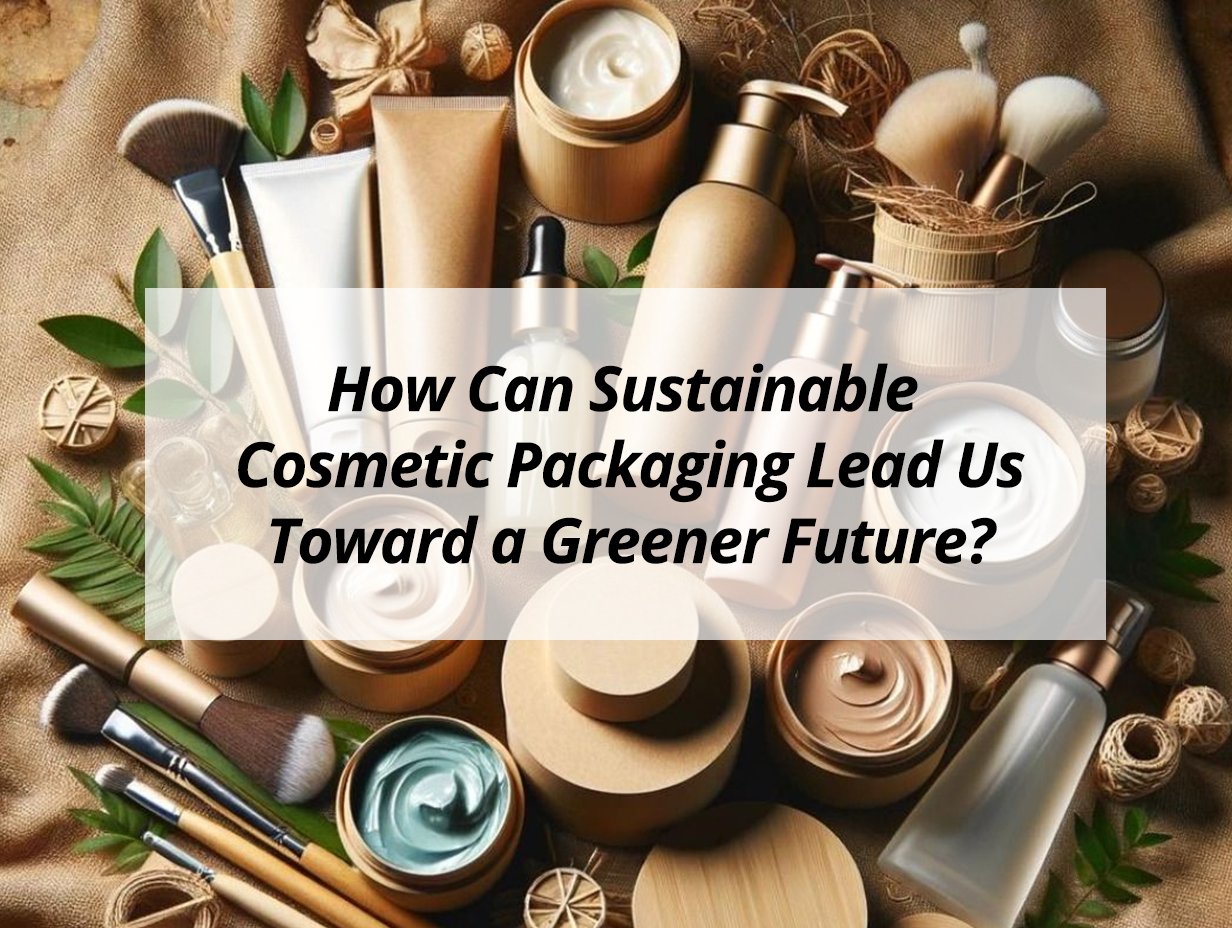
Beauty packaging can create unnecessary waste when materials, components, and decoration are designed without considering what happens after the product is used.
Sustainable cosmetic packaging can lead us toward a greener future by reducing material use, increasing recycled content, improving recyclability, supporting refill and reuse, choosing responsibly sourced materials, and giving customers clearer disposal information. The goal is not simply greener-looking packaging, but packaging that protects products while keeping valuable materials in use longer.
Sustainable cosmetic packaging must reduce waste while protecting formulas, supporting customers, meeting regulations, controlling costs, and making recycling, refill, or reuse more practical.
What Makes Cosmetic Packaging Truly Sustainable?
A sustainable package should create measurable improvements across its full life cycle instead of relying on one material, one logo, or one environmental claim.
Truly sustainable cosmetic packaging uses the right amount of material, protects the formula, reduces unnecessary components, supports recycling or reuse, contains verified recycled content where suitable, and gives customers clear disposal instructions. Brands should also consider production, transport, refill behavior, supplier data, and local waste infrastructure before calling packaging sustainable.
1. Use Less Material First
Recycling is important, but the first question should be simpler: can the package use less material?
Material reduction can include:
- thinner bottle walls;
- lighter jars;
- smaller caps;
- fewer decorative shells;
- right-sized cartons;
- fewer inserts;
- no unnecessary plastic windows;
- reduced empty space;
- simpler pumps.
Beauty packaging trends for 2026 emphasize system simplification and reduction. Industry experts are moving toward fewer components and simpler structures because complexity adds cost and can make recycling more difficult.
A lightweight PET bottle may sometimes use fewer resources than a thick decorative package marketed as sustainable. A simple folding carton may be better than a large rigid box with magnets, foam, ribbon, and several paper layers.
2. Design for Recycling
A package is easier to recycle when its components fit one established material stream.
This is why mono-material packaging is becoming important.
Examples include:
- all-PP jars;
- PP airless systems;
- PE squeeze tubes;
- HDPE tubes with compatible caps;
- simple PET bottles with compatible closures.
RecyClass has approved cosmetic HDPE tube designs where the body, shoulder, and flip-top cap use HDPE and compatible barrier technology. This shows that recyclability depends on the complete structure, not only the material name printed on a specification sheet.
3. Use Recycled Content Carefully
PCR plastic can reduce demand for virgin resin. But brands should ask:
- What percentage is PCR?
- Is it post-consumer or post-industrial?
- Can the supplier trace it?
- Does the formula remain compatible?
- Will the color change?
- Can the decoration still perform?
- Is the material suitable for the target market?
A claim such as “made with recycled plastic” should state the percentage when the package is only partly recycled. FTC guidance says recycled-content claims should be qualified when only part of the package uses recycled material.
4. Avoid Sustainability Theater
A green package can still be wasteful.
Examples include:
- oversized kraft cartons;
- bamboo shells around conventional plastic bottles;
- refillable packs with no refill distribution;
- “recyclable” pumps containing incompatible metal parts;
- paper bottles with complex plastic barriers;
- heavy glass used only to create luxury weight.
The better question is not “Does this look sustainable?” It is “What measurable packaging problem does this design solve?”
Which Sustainable Cosmetic Packaging Materials Can Reduce Environmental Impact?
No material is automatically the greenest choice. Each material has strengths, limitations, and different recycling or reuse conditions.
Useful sustainable cosmetic packaging materials include mono-material PE, PP, and HDPE, PCR plastic, recycled aluminum, lightweight glass, FSC-certified paperboard, and molded fiber. Brands should choose among them based on formula compatibility, material weight, recycling access, transportation, refill potential, decoration, and supplier documentation.
1. Mono-Material Plastic
Plastic receives strong environmental criticism, but simple plastic packaging can sometimes perform well when it uses little material and fits a reliable recycling stream.
PE can work for:
- squeeze tubes;
- flexible bottles;
- lotion packaging;
- cream packaging.
PP can work for:
- jars;
- airless systems;
- caps;
- compacts;
- lipstick mechanisms;
- pump components.
PET can work for:
- clear bottles;
- toner bottles;
- lotion bottles;
- skincare bottles.
The important factor is simplicity. A PET bottle with an acrylic shell, metal collar, silicone valve, metallic coating, and oversized label becomes much harder to explain at end of life.
2. PCR Plastic
PCR is useful because it keeps existing plastic materials in circulation.
Benefits include:
- less virgin resin demand;
- compatibility with familiar manufacturing processes;
- lower need to redesign filling equipment;
- visible progress toward recycled-content targets.
But PCR may introduce:
- slight gray or yellow tones;
- odor variation;
- darker natural color;
- processing differences;
- inconsistent surface appearance.
Beauty packaging trends now favor greater transparency around these imperfections instead of hiding them. The 2026 market direction increasingly rewards specific recycled-content information over vague sustainability language.
3. Aluminum
Aluminum can work for:
- skincare tubes;
- lipstick shells;
- refillable bottles;
- fragrance containers;
- cosmetic tins.
Its main advantages are high material value, recyclability, strong light blocking, and premium appearance. It can also support refillable systems.
However, aluminum packaging may require:
- inner coatings;
- dent testing;
- decoration testing;
- higher material cost;
- stronger transport protection.
The right choice depends on the complete life cycle, especially recycled aluminum content and local collection.
4. Paperboard and Molded Fiber
FSC-certified paper packaging can support responsible forest sourcing. FSC states that certified paper and packaging provide a way for brands to demonstrate responsibly sourced forest materials.
Paper performs especially well for:
- folding cartons;
- refill cartons;
- sleeves;
- gift boxes;
- molded inserts;
- shipping materials.
It does not automatically replace primary packaging for creams, serums, oils, foundations, or other wet formulas because those products often need stronger barriers.
| Material | Strong Use | Main Sustainability Advantage | Main Limitation |
|---|---|---|---|
| PE / HDPE | Tubes and bottles | Simple mono-material potential | Still depends on collection |
| PP | Jars, caps, pumps | Strong for mono-material systems | Decoration can complicate recycling |
| PCR plastic | Bottles, jars, tubes | Reduces virgin resin | Appearance and supply variation |
| Aluminum | Tubes, tins, refill packs | High recycling value | Cost, coating, and dents |
| Lightweight glass | Premium skincare | Reusable and recyclable | Shipping weight and breakage |
| FSC paperboard | Cartons and sleeves | Responsible fiber sourcing | Mostly secondary packaging |
| Molded fiber | Inserts and trays | Replaces plastic supports | Moisture sensitivity |
The greener choice is the material that performs its job with less waste and a realistic recovery path.
How Can Refillable, Reusable, and Recyclable Packaging Reduce Cosmetic Waste?
Circular packaging works only when the customer can use the system easily. A refill idea that customers avoid does not create meaningful waste reduction.
Refillable, reusable, and recyclable cosmetic packaging can reduce waste by extending the life of durable components, reducing repeated production of complete packs, and keeping materials in circulation. These systems work best when refills use less material, are easy to buy, fit customer habits, and have clear recycling or disposal instructions.
1. Keep the Most Complex Part
Many cosmetic packages contain one expensive or material-intensive outer component.
Examples include:
- lipstick cases;
- airless pumps;
- fragrance bottles;
- cream jar shells;
- compact cases;
- premium aluminum bottles.
A refill system can keep that outer package and replace only the part containing the formula.
This can work particularly well for:
- face creams;
- lipstick;
- fragrance;
- powder compacts;
- serums;
- body care;
- haircare.
2. Make the Refill Smaller
The refill should use less material than buying the complete package again.
A good refill may use:
- thin PP cartridges;
- lightweight pouches;
- replaceable pans;
- lipstick bullets;
- cream pods;
- concentrated product packs.
A weak refill may require almost the same amount of material as the original package.
3. Make Reordering Easy
The FTC says marketers should not make an unqualified “refillable” claim unless a real method exists for consumers to refill the package.
That means brands need:
- refill products in stock;
- clear replacement instructions;
- compatible SKU identification;
- an easy online reorder route;
- retail availability;
- a price advantage;
- simple installation.
4. Improve Consumer Instructions
Even recyclable packaging can become waste when consumers do not know what to do with it.
QR codes can help explain:
- how to separate components;
- where to recycle;
- how to replace a refill;
- which part should be kept;
- what each material is;
- where local collection differs.
Connected packaging is becoming more important in beauty because QR codes and other technologies can support recycling guidance, sourcing information, authentication, and refill instructions.
5. Remember That “Recyclable” Is Not “Recycled”
A technically recyclable package still needs:
- collection;
- sorting;
- processing;
- sufficient material value;
- a buyer for the recycled output.
This is why brands should avoid relying on recycling alone.
| Strategy | What It Reduces | Main Success Factor |
|---|---|---|
| Lightweighting | Material used per pack | Maintain performance |
| Refill | Repeat outer packaging | Customer refill adoption |
| Reuse | Single-use packaging | Durable design |
| PCR | Virgin resin demand | Reliable recycled supply |
| Mono-material | Recycling complexity | Compatible components |
| Right-sizing | Empty space and secondary material | Product protection |
| Clear disposal guidance | Consumer confusion | Local accuracy |
The strongest circular design combines several of these strategies instead of depending on one.
What Should Beauty Brands Prepare for as Sustainable Packaging Rules Become Stricter?
Sustainability is moving from voluntary branding toward more structured packaging requirements, evidence, and design accountability.
Beauty brands should prepare for stricter sustainable packaging rules by documenting materials, reducing unnecessary packaging, improving recyclability, testing refill systems, increasing recycled content where required, reviewing environmental claims, and collecting reliable supplier data. Packaging decisions should now include compliance and end-of-life planning before molds, artwork, and mass production are approved.
1. Prepare for PPWR
The EU Packaging and Packaging Waste Regulation entered into force on February 11, 2025 and began applying generally on August 12, 2026. It covers packaging regardless of material and sets requirements relating to manufacturing, composition, reusable or recoverable characteristics, waste management, and prevention.
The European Commission says the regulation is designed to move packaging toward:
- lower waste;
- more recycled plastic content;
- recyclability;
- clearer labels;
- reuse;
- refill;
- improved collection.
The Commission also states that all packaging is intended to become recyclable by 2030 under the new framework.
For cosmetic brands, this means packaging development needs more data.
2. Build a Packaging Material Database
Brands should know what each component contains.
A useful material file should include:
- bottle resin;
- cap resin;
- pump components;
- spring material;
- gasket;
- label;
- adhesive;
- coating;
- printing ink;
- carton;
- insert;
- PCR percentage;
- total package weight.
This information makes future redesign and compliance work much easier.
3. Ask Suppliers for Evidence
A supplier should be able to provide:
| Document | Why It Matters |
|---|---|
| Material data sheet | Confirms resin or substrate |
| PCR certificate | Supports recycled-content claims |
| FSC certificate | Supports responsible paper sourcing |
| Recyclability assessment | Reviews complete packaging structure |
| Formula compatibility test | Protects product quality |
| Weight specification | Supports material-reduction tracking |
| QC standard | Keeps production consistent |
| Change-control agreement | Prevents unapproved material changes |
4. Stop Using Broad Green Language
The FTC Green Guides caution against broad, unqualified claims such as “green” or “eco-friendly” because they are difficult to substantiate. Environmental claims should instead identify the specific benefit being claimed.
Instead of:
- eco-friendly bottle;
- planet-friendly packaging;
- green jar;
- sustainable tube;
brands can use specific statements such as:
- bottle made with 50% PCR PET;
- FSC-certified paper carton;
- refillable jar with replaceable PP inner cup;
- mono-material PE tube designed for recycling;
- packaging weight reduced by 20% from the previous version.
Specific claims are easier for customers to understand and easier for brands to defend.
5. Measure Before Making Claims
Brands should compare the new package with the previous one.
Useful metrics include:
- grams of packaging per unit;
- virgin plastic reduction;
- PCR percentage;
- number of components;
- refill-to-outer-pack ratio;
- shipping weight;
- carton volume;
- recycled paper percentage;
- number of material families.
A measurable improvement is stronger than an environmental slogan.
6. Design Sustainability Before Decoration
Decoration decisions can undo good material decisions.
A mono-material bottle may become harder to recycle after adding:
- metallic coating;
- incompatible sleeve;
- thick soft-touch layer;
- large foil area;
- mixed-material cap;
- decorative acrylic shell.
This is why sustainability should be reviewed before the final decoration specification is locked.
How Can Cosmetic Packaging Create a Greener Future Without Losing Brand Value?
Sustainable packaging does not need to look cheap, plain, or unfinished. Better design can use fewer materials while creating stronger brand value.
Cosmetic packaging can support a greener future without losing brand value by replacing material excess with better shape, texture, color, dispensing, refill experience, and digital storytelling. Premium value can come from thoughtful function and sensory design instead of heavy jars, oversized boxes, unnecessary layers, and difficult-to-recycle decoration.
1. Replace Weight With Design
Luxury does not always need a heavy package.
Brands can create value through:
- precise pump action;
- smooth closures;
- custom shapes;
- tactile surfaces;
- clear color systems;
- refined embossing;
- strong typography;
- refill mechanisms.
A lighter bottle with better details can feel more premium than a heavy bottle with no functional difference.
2. Make Sustainability Visible but Specific
PCR plastic may be slightly darker. Recycled paper may have visible fibers. Aluminum may show a natural metal surface.
Brands do not always need to hide these differences.
They can explain:
- why the resin looks different;
- how much recycled content is used;
- why a carton is smaller;
- why the jar is refillable;
- how the customer should dispose of each part.
This makes sustainability part of the product story.
3. Use Smart Packaging for Transparency
QR codes can extend a small package without adding more printed material.
A useful QR page can show:
- material composition;
- recycling instructions;
- refill video;
- FSC or PCR information;
- product authentication;
- ingredient education;
- refill reorder options.
2026 beauty packaging trends point toward QR, NFC, and RFID becoming more useful as tools for transparency, customer education, authentication, and sustainability communication.
4. Design for Real Customer Behavior
The greener package is the package customers actually use correctly.
A perfect refill system does not help if refills are difficult to buy. A recyclable package does not help if disposal instructions are confusing. A lightweight bottle does not help if it leaks and creates product waste.
The final packaging question should therefore be:
Can this design reduce material while protecting the formula and remaining easy for the customer to use, refill, reuse, or recycle?
If the answer is yes, the packaging is moving in a better direction.
My insights: How Can Sustainable Cosmetic Packaging Lead Us Toward a Greener Future
Sustainable cosmetic packaging should reduce real environmental impact, not simply replace conventional materials with packaging that looks greener.
Sustainable cosmetic packaging can lead us toward a greener future by reducing unnecessary material, increasing recycled content, simplifying structures for recycling, extending packaging life through refill and reuse, improving sourcing transparency, and helping consumers understand disposal. The strongest solutions protect formulas while using fewer resources and keeping valuable materials in circulation longer.
1. Sustainability Should Start With Reduction
The first step toward greener cosmetic packaging is often to use less material.
Brands can reduce environmental impact by:
- lightweighting bottles and jars;
- removing unnecessary decorative shells;
- reducing oversized cartons;
- eliminating plastic windows;
- simplifying inserts;
- reducing cap and pump weight;
- using smaller shipping boxes.
This approach is important because every gram removed reduces material before recycling, refill, or recovery even becomes necessary.
A simple lightweight PP jar can sometimes be a stronger sustainability choice than a complex package made from several supposedly eco-friendly materials.
2. Recyclability Depends on the Whole Package
A recyclable resin does not automatically create a recyclable cosmetic package.
A bottle may be made from PP, PET, or PE, but the final structure can also include:
- pumps;
- metal springs;
- silicone valves;
- labels;
- adhesives;
- coatings;
- decorative shells;
- hot stamping.
These parts can change how the package behaves during sorting and recycling.
This is why mono-material packaging is becoming more important. When the bottle, cap, pump, piston, and other main components stay within one compatible material family, recycling becomes easier to understand and potentially easier to process.
3. PCR Can Reduce Virgin Material Use
Post-consumer recycled plastic can help brands reduce their dependence on virgin resin without completely changing existing packaging formats.
PCR can work well in:
- PET bottles;
- PP jars;
- PE tubes;
- HDPE bottles;
- selected caps and closures.
However, recycled content should be treated as a measurable specification.
Brands should confirm:
- exact PCR percentage;
- source and traceability;
- batch consistency;
- formula compatibility;
- color variation;
- odor;
- processing performance.
A specific claim such as “made with 50% PCR PET” is much clearer than calling a bottle simply “eco-friendly.”
4. Refill and Reuse Can Extend Packaging Life
Refillable packaging can reduce waste when customers keep the durable outer package and replace only the formula container.
This model can work especially well for:
- cream jars;
- lipstick;
- fragrance;
- airless skincare;
- powder compacts;
- body care.
But a refill system only works when the refill creates a real reduction.
Brands should ask:
- Is the refill significantly lighter?
- Can customers replace it easily?
- Is the refill cheaper than buying another complete pack?
- Is it available in the same sales channels?
- Will the outer package survive repeated use?
A refillable jar that customers refill five times may create meaningful value. A refillable jar with unavailable or complicated refills may simply add more components.
5. The Best Material Depends on the Product
There is no single sustainable material that works for every cosmetic package.
| Material | Strong Sustainability Role | Main Consideration |
|---|---|---|
| PP | Jars, caps, pumps, airless systems | Simplify components for recycling |
| PE / HDPE | Tubes and bottles | Strong mono-material potential |
| PET | Lightweight bottles | Review color, labels, and PCR options |
| PCR plastic | Reduces virgin resin | Requires traceability and quality control |
| Aluminum | Recycling and refill positioning | Consider energy, coating, dents, and cost |
| Lightweight glass | Premium and reusable formats | Weight and breakage affect transport |
| FSC paperboard | Cartons, sleeves, inserts | Best for secondary packaging |
| Molded fiber | Trays and protective inserts | Moisture resistance needs review |
The greener choice is usually the material that protects the formula with the lowest realistic material and system impact.
6. Premium Packaging Does Not Need More Material
Sustainability does not mean cosmetic packaging must look basic or inexpensive.
Brands can replace material-heavy luxury signals with better design.
Instead of relying on thick walls, heavy bases, oversized boxes, and multiple decorative layers, premium value can come from:
- custom shapes;
- precise pump action;
- elegant color systems;
- tactile surfaces;
- high-quality typography;
- embossing;
- refill mechanisms;
- clean construction.
This creates a useful shift from “more material means more luxury” toward “better experience means more value.”
7. Consumers Need Clear Disposal Information
Even well-designed sustainable packaging can fail when consumers do not understand what to do with it.
Brands should make recycling or refill instructions simple.
For example:
- remove refill and keep outer jar;
- recycle PP cartridge where accepted;
- separate paper carton from bottle;
- return packaging through store collection;
- scan QR code for local disposal information.
QR codes can support this by giving more detailed information without covering the physical package with excessive text.
8. Sustainability Claims Need Evidence
A greener future also requires more accurate communication.
Broad phrases such as:
- eco-friendly;
- planet-safe;
- sustainable bottle;
- green packaging;
do not explain what has actually improved.
Specific claims are stronger:
- bottle made with 50% PCR PET;
- FSC-certified paperboard carton;
- refillable PP jar;
- packaging weight reduced by 20%;
- mono-material PE tube designed for recycling.
The goal should be to make sustainability measurable rather than emotional.
9. Regulations Will Push Better Packaging Design
Sustainable packaging is increasingly becoming a compliance issue as well as a branding issue.
Brands should now collect detailed packaging information such as:
- material type;
- component weight;
- recycled-content percentage;
- recyclability information;
- supplier certificates;
- packaging dimensions;
- refill structure;
- decoration details.
This makes it easier to redesign packaging when regulations or retailer requirements become stricter.
10. A Greener Future Comes From Better Systems
The biggest change will not come from one perfect material.
It will come from combining several improvements:
| Packaging Strategy | Environmental Benefit |
|---|---|
| Lightweighting | Reduces material use |
| Mono-material design | Simplifies recycling |
| PCR content | Reduces virgin resin demand |
| Refill systems | Reduces repeated full-package production |
| Reuse | Extends packaging life |
| FSC paper | Supports responsible fiber sourcing |
| Clear disposal guidance | Helps consumers use recycling systems correctly |
| Supplier documentation | Makes environmental claims more credible |
| Better design | Maintains premium value with less material |
The strongest sustainable cosmetic packaging strategy uses fewer resources from the beginning, protects the formula properly, stays practical for customers, and gives the package a realistic path after use.
A greener cosmetic packaging future will therefore depend less on finding one “perfect” material and more on making every design decision more efficient, measurable, circular, and transparent.
Conclusion
Sustainable cosmetic packaging can support a greener future by using less material, improving circularity, supporting refills, increasing transparency, and turning environmental goals into measurable packaging decisions.