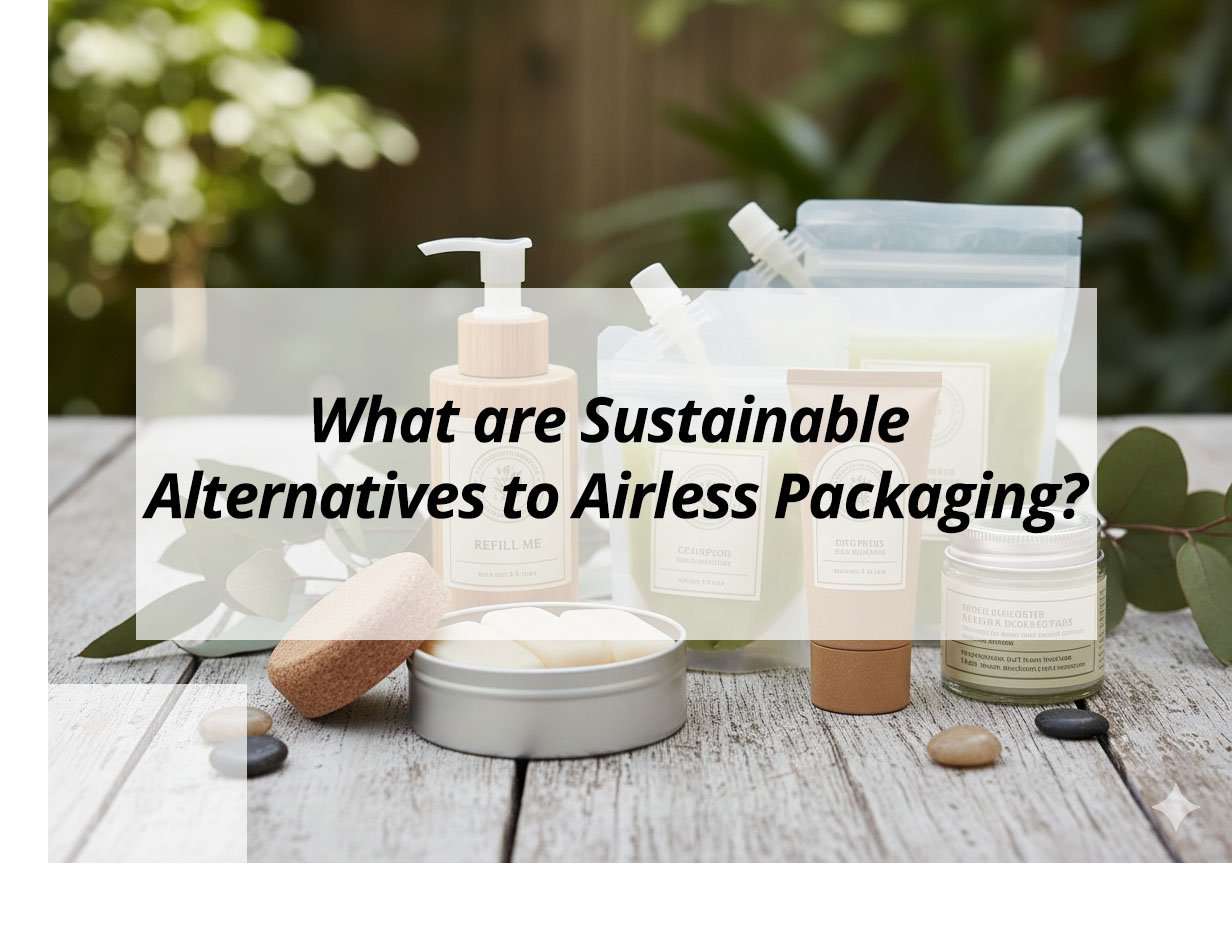
Are you looking for eco-friendly packaging solutions? Many businesses aim to reduce their environmental footprint. Finding effective sustainable choices can be a complex task.
Sustainable alternatives to airless packaging encompass refillable systems, mono-material designs, and options crafted from recycled content such as PCR plastics, glass, bamboo, or aluminum. These selections contribute to waste reduction, resource conservation, and often facilitate easier recycling or reuse, thereby enhancing environmental sustainability.
Consumer demand for greener products is growing. Brands prioritizing sustainability often gain a competitive edge. Shifting to sustainable packaging helps businesses meet consumer expectations and contribute positively to the environment.
What is the most environmentally friendly packaging?
Determining the most environmentally friendly packaging[^1] is a common concern for many brands. This question involves evaluating various factors.
The most environmentally friendly packaging is typically characterized by reusability, use of recycled materials, easy recyclability, or biodegradability. It also minimizes resource consumption during production and transport. Mono-material designs, especially those utilizing PCR plastic, glass, or aluminum, often stand out due to their high potential for circularity.
Assessing eco-friendly packaging requires a life cycle perspective. This includes material sourcing, manufacturing processes, transportation efficiency, and end-of-life management. For example, glass offers reusability and high recyclability. Aluminum is also highly recyclable and lightweight. Bamboo is a rapidly renewable resource. Each material presents distinct advantages.
Evaluating Packaging's Environmental Impact
Understanding the full environmental impact involves several stages.
- Material Sourcing: Are materials derived from renewable or finite resources? What is the impact of extraction?
- Manufacturing Energy: How much energy is consumed during production? Are sustainable energy sources used?
- Transportation Footprint: What is the carbon impact of moving materials and finished products?
- Disposal Options: Can the packaging be effectively recycled, reused, or composted after use?
Consider the common materials:
| Material | Advantages | Disadvantages |
|---|---|---|
| Glass | Reusable, highly recyclable, premium feel | Heavy, fragile, higher freight costs |
| Aluminum | Highly recyclable, lightweight, excellent barrier | Energy-intensive initial production |
| PCR Plastic | Utilizes existing plastic waste, lightweight | Still petroleum-based, potential for downcycling |
| Bamboo | Renewable, biodegradable, natural aesthetic | Supply chain considerations, often requires liner |
| Paper/Cardboard | Recyclable, biodegradable, customizable | Susceptible to moisture, less durable for liquids |
The Value of Mono-Material Designs
Mono-material packaging consists of a single type of material. This simplifies the recycling process. For instance, a bottle with a compatible plastic pump is more easily recycled than one with mixed materials like a metal spring. Simplicity in material composition greatly aids efficient recycling.
Implementing Refillable Systems
Refillable packaging offers a significant sustainability advantage. Consumers purchase a durable primary container once, then replenish the product using refills. This approach significantly reduces the demand for new primary packaging with each purchase. Such systems contribute to a circular economy by extending packaging life.
What are the 7 R's of sustainable packaging?
Seeking a structured approach to sustainable packaging? The 7 R's provide a comprehensive framework to guide efforts.
The 7 R's of sustainable packaging are: Remove, Reduce, Reuse, Recycle, Renew, Revenue, and Read. These principles offer a systematic methodology for businesses to minimize environmental impact through thoughtful packaging design, material selection, and effective end-of-life strategies, prioritizing waste reduction and resource efficiency.
These principles help in dissecting complex sustainability challenges into manageable actions. They provide clear guidance for improving packaging practices.
Deconstructing the 7 R's
Each principle addresses a different aspect of packaging sustainability.
- Remove: Can unnecessary packaging elements be eliminated? This often involves questioning traditional secondary packaging.
- Reduce: Can the amount of material used for packaging be minimized? Lighter and smaller designs conserve resources.
- Reuse: Is the packaging designed for multiple uses by the consumer or within a closed-loop system?
- Recycle: Is the packaging easily processed by existing recycling infrastructure? Are materials compatible with common recycling streams?
- Renew: Are the packaging materials derived from naturally replenishable resources, such as plant-based polymers or bamboo?
- Revenue: Does adopting sustainable packaging enhance brand value, attract environmentally conscious consumers, or lead to cost efficiencies?
- Read: Is critical information about the packaging's composition and disposal clearly communicated to consumers?
Applying the 7 R's to Cosmetic Packaging
When evaluating cosmetic packaging, these R's offer practical application points.
- Remove: Assess if outer cartons for products like lipstick tubes are truly necessary.
- Reduce: Investigate options for thinner walls in lotion bottles or lighter components in air cushion cases.
- Reuse: Explore designs for refillable cream jars or vacuum bottles that encourage repeated use.
- Recycle: Ensure materials used in lip gloss tubes or eyeliner tubes are widely accepted by recycling programs.
- Renew: Consider using bamboo or other bio-based materials for eyeshadow cases or compacts.
- Revenue: Analyze how sustainable choices can improve brand perception and potentially lower long-term material costs.
- Read: Provide clear, concise disposal instructions on all cosmetic packaging.
For example, incorporating PCR plastic helps address "Recycle" and "Reduce" by utilizing existing materials and often allowing for lighter designs. Focusing on superior quality for customized logo applications on these materials remains essential.
What are the most sustainable alternatives to plastic packaging?
Concerns about plastic waste are driving the search for non-plastic packaging solutions. Many businesses are actively exploring these alternatives.
The most sustainable alternatives to plastic packaging include glass, aluminum, bamboo, paper, and certified compostable materials. These options offer benefits such as reusability, high recyclability, or biodegradability, contributing to a reduced reliance on virgin plastics and a smaller environmental footprint.
The pervasive environmental impact of conventional plastics, including microplastic pollution and landfill accumulation, underscores the urgency for viable alternatives. This has led to increased innovation in material science and packaging design.
Exploring Non-Plastic Materials for Packaging
A deeper look into effective plastic alternatives.
- Glass: A premium material highly favored for cosmetic packaging. It is endlessly recyclable without loss of quality. Suitable for skincare bottles, jars, and other high-value products.
- Benefits: High recyclability, reusability, inert, provides a luxurious feel.
- Considerations: Heavier weight, fragility, higher transportation emissions.
- Aluminum: Lightweight and exceptionally recyclable. Common in tins, tubes, and some bottles.
- Benefits: Infinite recyclability, excellent barrier properties, lightweight.
- Considerations: Energy-intensive primary production, can dent.
- Bamboo: A rapidly renewable natural resource. Offers a distinct, organic aesthetic. Often used for outer components or caps.
- Benefits: Renewable, biodegradable, unique appearance, carbon sequestration.
- Considerations: Variable durability, often requires an inner liner for product compatibility.
- Paper/Cardboard: Versatile for outer packaging, boxes, and solid product containers. Widely recyclable and biodegradable.
- Benefits: Recyclable, biodegradable, lightweight, cost-effective for certain applications.
- Considerations: Limited moisture resistance, structural integrity can be an issue for some products.
- Post-Consumer Recycled (PCR) Plastics: While a plastic, PCR utilizes existing waste plastic, reducing the demand for new virgin plastic. It supports a circular economy model.
- Benefits: Diverts waste from landfills, reduces reliance on new fossil fuels, often compatible with existing designs.
- Considerations: Availability can fluctuate, requires robust collection and sorting infrastructure.
Hybrid Material Approaches
In some cases, combining materials offers optimal solutions. For example, a bamboo outer shell with a PCR plastic inner component. This leverages the benefits of each material. Such approaches aim to balance aesthetics, functionality, and sustainability. The focus remains on superior quality and customization for branding requirements.
What are some sustainable packaging ideas?
Seeking innovative concepts for sustainable packaging[^2] solutions? Businesses are increasingly looking for creative and effective ideas.
Sustainable packaging ideas frequently revolve around the core principles of reduction, reuse, and recycling. Key strategies include designing packaging for refill systems, utilizing mono-materials for simplified recycling, integrating post-consumer recycled content, exploring biodegradable options like bamboo, and adopting minimalist designs to minimize material usage.
Innovation in packaging design can differentiate a brand while demonstrating environmental responsibility. These ideas can inspire practical implementations.
Innovative Concepts for Sustainable Packaging
Specific ideas can drive significant progress in sustainability.
- Universal Refillable Systems: Extend refillability beyond large containers to include smaller or specialized products. This allows consumers to retain durable outer components indefinitely.
- Example: A robust, reusable glass bottle designed for various liquid cosmetic refills, such as lotions or toners.
- Benefit: Dramatically decreases the quantity of new packaging produced and consumed.
- Solid Product Formats: Transitioning from liquid to solid formulations can eliminate the need for many traditional packaging types, especially plastics.
- Example: Solid shampoo bars or cleansing sticks packaged in minimal, recyclable paperboard.
- Benefit: Reduces packaging weight and volume, often requiring simpler, more sustainable primary packaging.
- Bio-Innovative Materials: Explore emerging materials like mycelium (mushroom-based) or seaweed. These offer unique biodegradable properties and can be molded into various shapes.
- Example: Custom-molded protective inserts or compact cases made from mycelium.
- Benefit: Fully biodegradable, utilizes rapidly renewable natural resources, and offers novel aesthetics.
- Plantable Packaging: Incorporate seeds into paper-based packaging materials. After use, consumers can plant the packaging to grow herbs or flowers.
- Example: Product tags or outer sleeves for cosmetic products made from seed paper.
- Benefit: Provides a second life for packaging, engages consumers in an eco-friendly activity.
- Upcycled Industrial Waste: Utilize waste streams from other industries as raw materials for packaging. This creates value from materials that would otherwise be discarded.
- Example: Packaging components derived from recycled coffee grounds or agricultural byproducts.
- Benefit: Reduces landfill waste and conserves virgin resources across multiple industries.
Designing for a Circular Economy
The objective is to shift from a linear "take-make-dispose" model to a circular system where materials remain in use and retain their value. This design philosophy informs the development of sustainable cosmetic packaging. Offering options like various air cushion cases and cream jars, while ensuring custom branding, supports this goal.
Transparent Consumer Communication
Clearly communicating sustainability efforts and proper disposal instructions to consumers is paramount. Labels should unambiguously indicate if packaging is recyclable, compostable, or designed for refills. This empowers consumers to participate effectively in the product's end-of-life cycle.
My Insights: Discovering Sustainable Alternatives to Airless Packaging
Want to reduce environmental impact from packaging? Explore sustainable alternatives to airless solutions that maintain product integrity.
Sustainable alternatives to airless packaging include refillable systems, biodegradable materials, and recyclable or plant-based components. Options such as glass, aluminum, and bamboo packaging provide eco-friendly choices without compromising product protection.
Evaluating Sustainable Packaging Options for Reduced Environmental Impact
Alternative Packaging Solutions
| Type | Features | Benefits |
|---|---|---|
| Refillable Containers | Reuse outer shell, replace inner refills | Reduces single-use waste |
| Biodegradable Materials | Complies with composting regulations | Helps decrease landfill impact |
| Aluminum Packaging | Lightweight, highly recyclable | Effective for protecting sensitive formulas |
| Glass Packaging | High recyclability, premium feel | Attractive for brands focused on luxury and sustainability |
| Plant-Based Plastics | Derived from renewable sources | Decreases fossil fuel dependency |
-
Refillable Systems: These maintain airless functionality while promoting sustainability by swapping out only internal components, significantly reducing waste.
-
Material Innovations: Options like aluminum and glass offer high recyclability and reduction in plastic use, though they present challenges in weight and shipping emissions.
-
Practical Considerations: The success of sustainable packaging relies on factors such as material sourcing, recyclability, product compatibility, and overall system efficiency.
The choice of packaging should prioritize refillable designs first, followed by mono-material options, and recycled content. Balancing environmental benefits with performance needs is essential for effective sustainability in packaging.
Conclusion
Embracing sustainable packaging is essential in today's market. It provides environmental benefits and meets evolving consumer expectations. By applying principles like the 7 R's and adopting alternatives such as glass, aluminum, and refillable systems, businesses can make meaningful progress.