
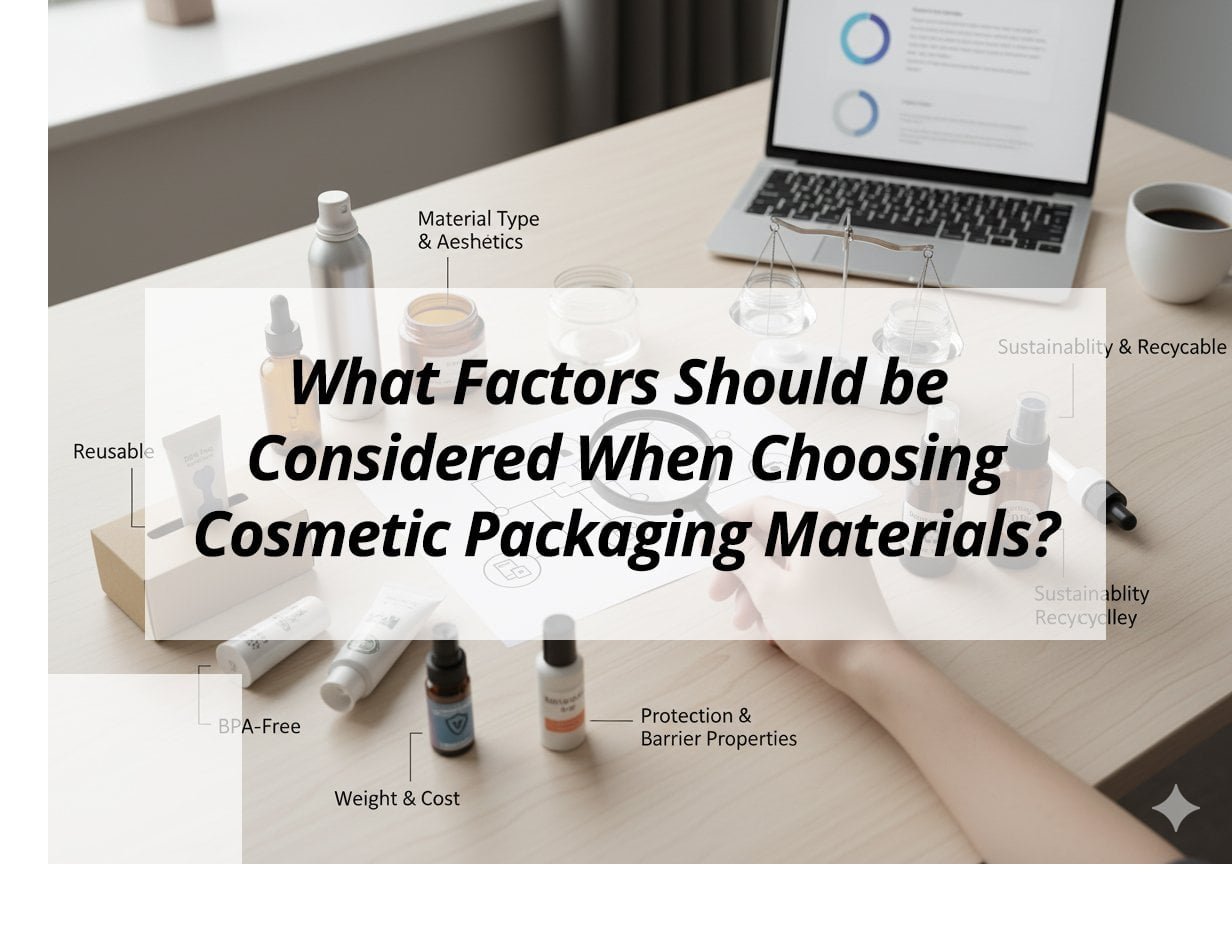
In the fast-evolving cosmetics industry, selecting the right packaging materials can make or break a product's success. Brands need to evaluate multiple factors to ensure they're making the best choices for both their products and their consumers.
Choosing the right cosmetic packaging materials involves evaluating sustainability, functionality, cost, and aesthetics. These factors ensure that the packaging not only protects the product but also appeals to consumers and aligns with brand values.
Understanding these elements is crucial for brands looking to stand out in a competitive market and satisfy eco-conscious consumers.
What are the factors that influence the choice of materials for packaging?
In today's environmentally conscious market, the decision on packaging materials goes beyond aesthetics and functions. It involves several layers of consideration that align with modern consumer expectations and regulatory standards.
The choice of cosmetic packaging materials1 is influenced by environmental impact2, durability, cost efficiency, and brand identity. Each factor plays a critical role in determining how the product will perform in the market.
These considerations reflect current consumer demands and regulatory pressures. Brands must strike a balance between innovation and sustainability, ensuring that their choices contribute positively to both business goals and environmental responsibilities. As sustainability becomes more ingrained in consumer purchasing decisions, companies investing in eco-friendly packaging are witnessing stronger customer loyalty and brand image.
Material Influences
Choosing materials requires a multi-faceted approach. The selection process must consider several critical factors:
Environmental Impact
Increasingly, consumers are aware of the environmental footprint of their purchases. This has led brands to opt for materials like recycled plastics or biodegradable options that minimize ecological damage. These materials align with the growing demand for sustainable and responsible consumerism.
Durability and Protection
The materials should protect the product from external conditions such as light, heat, and impact. Durability is essential for both ensuring the product’s safety and maintaining the brand's quality perception in the competitive market.
Cost Efficiency
Eco-friendly materials are desirable but must align with budget constraints. Analyzing the cost-benefit ratio is essential for maintaining a balance between financial viability and environmental responsibility.
- Environmental Impact: Focus on recyclability and biodegradability to reduce ecological footprint.
- Durability: Ensure resistance to damage and maintain product integrity over time.
- Cost Efficiency: Evaluate production and logistics expenses to optimize budget and reduce waste.
Aligning Brand Identity
Packaging is a critical touchpoint for consumers, making it essential that the materials chosen reflect the brand’s ethos. Ensuring that the packaging conveys the right message can significantly influence consumer perception and loyalty.
What factors should be considered when choosing the type of packing for a product?
Choosing the right type of packaging can significantly influence a product's effectiveness and market perception. Understanding the intricate requirements for various product types is instrumental.
When choosing the type of packaging, consider the product’s physical properties, target audience preferences, retail environment, and transportation needs. Each factor ensures optimal protection and appeal to consumers.
Brands must tailor their packaging not only to their product's needs but also to market demands and distribution channels. This customization can enhance product visibility, safety, and consumer satisfaction.
Packaging Choices
Physical Properties of the Product
Different products demand unique packaging solutions. For instance, liquids require leak-proof containers, while fragile items need robust and cushioned packaging to prevent breakage during handling and transport.
Target Audience
Consumer demographics and preferences are key in guiding packaging decisions. A luxury product might opt for sophisticated glass packaging to convey elegance, while a brand emphasizing sustainability might prioritize recyclable materials to resonate with eco-conscious consumers.
Retail and Transportation
Products must endure various handling and transit conditions from production to retail shelves. Efficient, strong, and compact packaging design reduces damage risk, ensures product integrity, and improves retail shelf optimization.
| Consideration | Details |
|---|---|
| Physical Properties | Liquid/solid, fragility, sensitivity |
| Target Audience | Demographics, preferences |
| Retail and Transportation | Shelf presence, handling durability |
Balancing Protection and Aesthetics
Brands need packaging that protects the product while also capturing the consumer's eye. Achieving this balance can boost consumer attraction and increase product credibility in the retail space.
What are the criteria for selecting packaging materials?
Efficient packaging material selection is crucial for brand integrity, consumer appeal, and long-term success. This process involves evaluating several criteria to ensure optimal performance and alignment with brand values.
Selecting packaging materials involves assessing compatibility with the product, sustainability credentials, production costs, and customer safety. These criteria ensure that the product is well-preserved and ethical standards are maintained.
Brands invested in long-term success must consider these critical areas to enhance reputation and ensure consumer loyalty. The right choice can lead to improved customer satisfaction, brand advocacy, and competitive advantage.
Material Selection Criteria
Compatibility with the Product
Materials should be chemically neutral and not react adversely with the product. This ensures the integrity and effectiveness of the product throughout its shelf life.
Sustainability
Prioritizing materials that are recyclable or made from renewable resources aligns with global sustainability goals and meets modern consumer expectations. This focus can also reduce waste and enhance brand image.
Cost and Safety
Balancing cost and safety is essential. Affordable materials increase profitability, while ensuring non-toxic, safe packaging materials protects consumers and complies with health regulations.
- Compatibility: Ensure no adverse chemical interactions and maintain product shelf life.
- Sustainability: Prioritize materials with high recyclability and a low carbon footprint.
- Cost and Safety: Focus on affordability and non-toxicity to protect consumers and meet regulatory standards.
Ensuring Regulatory Compliance
Compliance with local and international packaging regulations protects brands from legal challenges and enhances credibility. Meeting these standards ensures both consumer safety and trust in the brand.
What are the four factors to consider in packaging a product?
Effective packaging considers multiple dimensions to maximize product potential, ensure customer satisfaction, and uphold brand values.
The key factors in product packaging are protection, convenience, regulatory compliance, and brand alignment. These factors ensure that the packaging safeguards the product and strengthens brand reputation.
Successful packaging strategies are holistic, integrating all aspects to meet both business and consumer expectations. Thoughtful packaging enhances product appeal and fosters consumer loyalty.
Key Packaging Factors
Product Protection
Packaging must protect the product from environmental factors and physical damage. Integrity is vital to maintaining product quality from manufacturing to the consumer's hands.
Convenience
Consumers appreciate packaging that is easy to use and store. User-friendly designs enhance consumer experience, leading to higher satisfaction and repeat purchases.
Regulatory Compliance
Meeting legal standards avoids fines and secures trust with consumers and partners. Compliance also ensures that packaging does not harm users or the environment.
| Factor | Details |
|---|---|
| Product Protection | Integrity, contamination prevention |
| Convenience | Usability, accessibility |
| Regulatory Compliance | Legal requirements, certifications |
Aligning with Brand Values
Packaging should seamlessly reflect the brand’s mission and narrative, extending the brand story through both visual and functional elements.
My insights: Factors Should be Considered When Choosing Cosmetic Packaging Materials
Struggling with choosing the right packaging for cosmetics? Discover the factors that ensure safety, sustainability, and brand appeal.
When selecting cosmetic packaging materials, consider product compatibility, environmental impact, cost-effectiveness, consumer appeal, and regulatory compliance. Materials should protect and preserve the product while aligning with sustainability trends and brand identity.
Key Considerations for Cosmetic Packaging
Protection and Compatibility:
-
Product Integrity: Choose materials that shield cosmetics from light, air, and moisture, using UV-blocking or airless options for sensitive products.
-
Chemical Compatibility: Ensure packaging materials do not react with product ingredients to maintain efficacy and safety.
Sustainability and Material Choices:
-
Material Types: Options include recyclable glass, lightweight plastics like PET and HDPE, and biodegradable paperboard. Each choice impacts the environment differently.
-
Environmental Responsibility: Opt for BPA-free plastics and minimize the use of non-recyclable materials to enhance eco-friendliness.
Functionality and Aesthetics:
-
Consumer Convenience: Incorporate user-friendly designs such as pumps or droppers for ease of use.
-
Brand Appeal: Aesthetic elements like color and shape boost consumer attraction and reinforce brand identity.
Regulatory Compliance:
- Safety and Standards: Ensure materials comply with health regulations and avoid hazardous substances to meet safety requirements.
Material Selection Table:
| Factor | Key Considerations |
|---|---|
| Protection | UV, moisture, and air barriers |
| Compatibility | Non-reactive with product formulations |
| Sustainability | Recyclable or biodegradable materials |
| Functionality | Ease of use, durability during transport |
| Aesthetics | Consumer appeal through design |
| Regulation | Compliance with safety standards |
Balancing these factors ensures effective packaging that supports product quality, brand image, and environmental responsibility.
Conclusion
Choosing the right cosmetic packaging involves a detailed analysis of various factors, ensuring that both the product and brand are represented impeccably.