
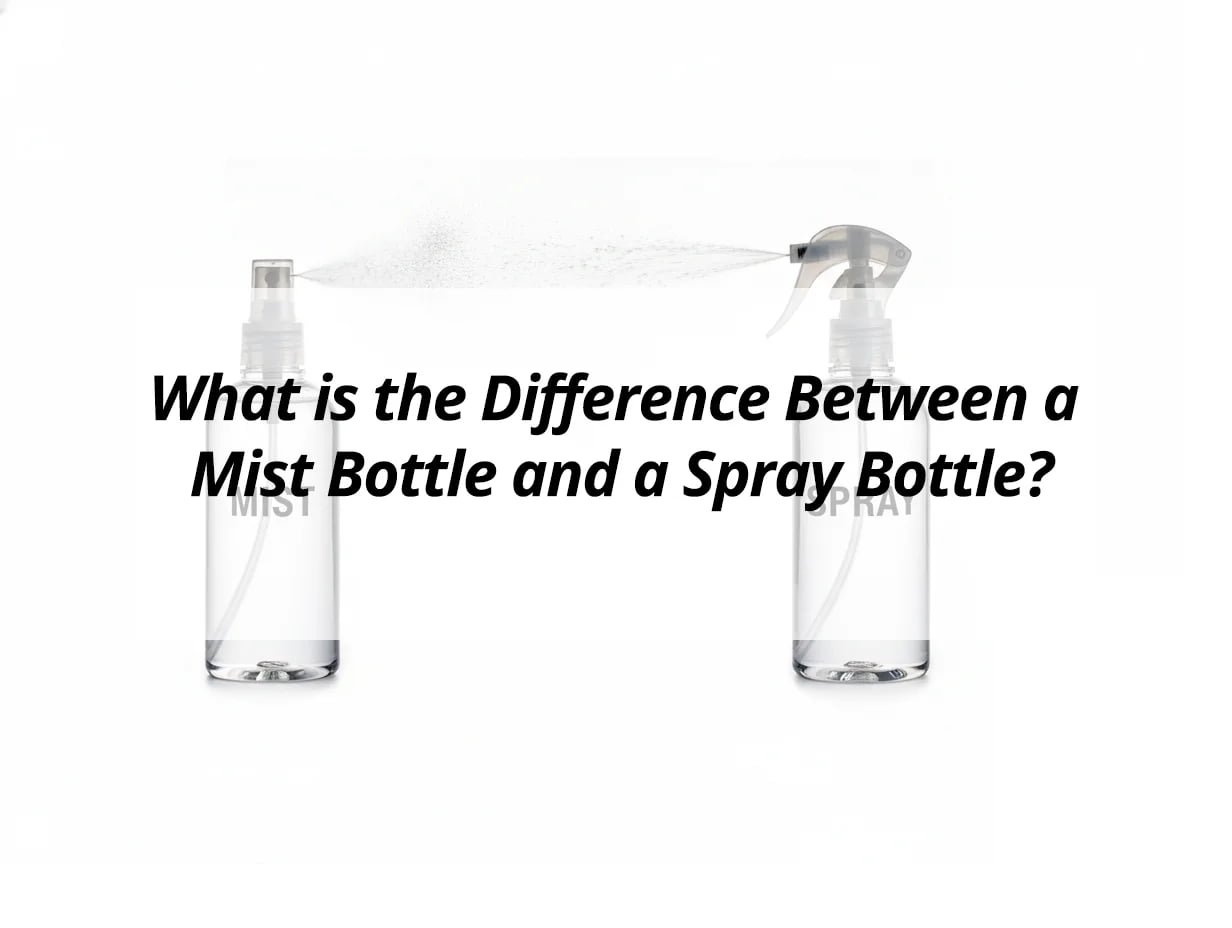
Many people use mist and spray bottles for daily tasks. However, these two types of bottles are distinct. Understanding their differences is important for proper application and desired results.
The primary distinction between a mist bottle and a spray bottle lies in the size of the liquid droplets produced. Mist bottles generate very fine, airborne particles. Spray bottles, in contrast, dispense larger, more direct liquid drops. This difference affects their suitability for various uses.
Choosing the correct bottle type is essential. Using a spray bottle when a mist bottle is needed can lead to uneven coverage or overuse of liquid. Conversely, a mist bottle may not provide enough coverage for tasks requiring a strong spray. This article will clarify these differences.
Is a Mister the Same as a Spray Bottle?
The terms "mister" and "spray bottle1" are often confused. While both dispense liquid, their mechanisms and outcomes are not identical. Recognizing these differences helps in selecting the appropriate tool.
No, a mister is not the same as a spray bottle. A mister creates extremely fine liquid droplets that hover in the air. A spray bottle releases larger, more directed drops that quickly settle on a surface. The design of their respective nozzles governs this fundamental difference.
The core distinction lies in how the liquid is atomized. Mist bottles feature nozzles engineered to break liquid into microscopic particles. These particles are light enough to remain airborne briefly, creating a gentle, uniform cloud. This effect is similar to a fine fog. Spray bottles employ nozzles that propel liquid with greater force. This action produces larger, more concentrated streams or wider fan patterns. These patterns cover areas rapidly but may offer less uniform distribution.
Key Distinctions in Performance
| Feature | Mist Bottle | Spray Bottle |
|---|---|---|
| Droplet Size | Very fine, almost imperceptible | Larger, visually evident drops |
| Coverage | Even, delicate, broad diffusion | More concentrated, potentially uneven |
| Application | Hydration, cooling, light fragrance | Cleaning, watering, hair setting |
| Nozzle Design | Fine mesh, small aperture | Larger opening, often adjustable |
| User Experience | Refreshing, subtle, gradual application | Direct, immediate, can saturate quickly |
Importance of Droplet Size
Droplet size is a critical factor for functionality. For cosmetic applications, a mist bottle is ideal for facial toners or setting sprays. It applies a light, quick-drying layer that does not disturb makeup. A spray bottle would likely saturate the skin and potentially smear cosmetics. In plant care, a mist bottle elevates ambient humidity around foliage, benefiting tropical plant species. A spray bottle might over-wet leaves, leading to potential issues like fungal growth. Understanding these nuances aids in making informed choices.
Are Mist and Spray the Same?
The question of whether "mist" and "spray" are interchangeable is common. While both involve dispensing liquid from a container, they describe distinct methods of liquid dispersion. Their functional purposes are quite different.
No, mist and spray are not the same. Mist refers to the dispersion of very small, fine liquid droplets that linger in the air. Spray refers to the expulsion of larger, heavier liquid droplets that travel directly and impact a surface with more force. The resulting sensation and effect differ significantly.
The differentiation between mist and spray is crucial across various applications. The term "mist" evokes a sense of delicacy and airiness. It describes the creation of a fine cloud of liquid, suitable for gentle hydration or a light coating. For instance, sensitive plants benefit from misting. It prevents over-saturation of their leaves. Conversely, "spray" implies the delivery of a more substantial volume of liquid. This is practical for tasks such as cleaning surfaces or applying hair products with greater coverage. The force used to expel the liquid also differentiates them. Mist bottles typically operate with lower pressure. This aids in producing fine diffusion. Spray bottles utilize higher pressure to project liquid as a stream or strong fan.
The Science Behind Droplet Formation
- Nozzle Configuration: Mist nozzles feature minute orifices. These atomize the liquid into micro-droplets. Spray nozzles possess broader openings, facilitating the passage of a greater volume of liquid.
- Pressure Dynamics: Mist bottles often employ lower internal pressure. This aids in achieving fine, dispersed output. Spray bottles utilize higher pressure. This propels the liquid in a more forceful stream or fan.
- Fluid Aerodynamics: The interaction of air with the liquid at the nozzle exit dictates droplet size. Mist systems are optimized for generating small, airborne particles. Spray systems are designed for more cohesive and direct liquid delivery.
Practical Implications
Consider everyday scenarios. A facial toner often requires a fine mist. This ensures gentle application and quick absorption. For cleaning windows, a robust spray is more effective. It covers the surface thoroughly and helps dissolve grime. Misusing these types of dispensers will not yield optimal results. Professionals in packaging procurement must understand these differences. This ensures they select the correct bottle type for their specific product formulations.
Can I Use a Spray Bottle to Mist My Plants?
Plant enthusiasts frequently inquire whether any standard spray bottle is suitable for misting plants. This seemingly simple question has important implications for plant well-being. Using an inappropriate bottle can detrimentally affect plant health.
While a spray bottle can apply water to plants, it does not achieve true misting. A spray bottle produces larger water droplets. These droplets may linger on plant leaves, potentially leading to issues such as mold or mildew. Effective misting requires a bottle designed to create very fine, delicate droplets.
The purpose of misting plants is to elevate the humidity in their immediate surroundings, not to water them directly. Many tropical plant species, such as ferns and orchids, thrive in high-humidity environments. A fine mist replicates the natural conditions of their native habitats. This gentle moisture helps plants absorb hydration through their foliage and assists in keeping leaves dust-free. Using a standard spray bottle, however, can saturate leaves with larger droplets. This over-saturation can block stomata and foster fungal diseases.
Why Fine Droplets Are Superior for Plants
- Humidity Regulation: Fine mist effectively increases the atmospheric humidity around a plant. This is a crucial environmental factor for many plant species.
- Leaf Integrity: Large water droplets resting on leaves can create prolonged wetness. This can promote the development of fungal pathogens or unsightly leaf spots.
- Optimal Absorption: Very small droplets are absorbed more efficiently by the plant's leaf surface. This provides gentle hydration without causing excessive wetness.
Best Practices for Plant Misting
| Aspect | Correct Misting (Mist Bottle) | Incorrect Spraying (Spray Bottle) |
|---|---|---|
| Droplet Size | Very fine, evaporates rapidly | Large, persists on leaf surfaces |
| Primary Goal | Elevate ambient humidity, provide foliar moisture | Direct hydration, surface cleaning |
| Application Frequency | Regular, as needed to maintain humidity levels | Infrequent, risks over-saturation |
| Plant Outcome | Supports tropical species, prevents dust accumulation | Can lead to fungal growth, potential sun damage |
Selecting the Right Dispenser for Horticulture
For dedicated plant care, investing in a specialized mist bottle is advisable. These bottles are often marketed for plant care or fine cosmetic applications. They ensure optimal delivery of moisture. The nozzle mechanism is paramount. When testing, the water should emerge as a delicate, ethereal cloud, not as a concentrated shower. This seemingly minor choice can significantly influence the health and appearance of plants.
What is a Mist Bottle?
Having clarified the distinctions, it is important to define what constitutes a mist bottle. Understanding its specific characteristics clarifies its diverse applications. This type of bottle serves many purposes across various industries.
A mist bottle is a container designed to dispense liquid as a very fine, ethereal cloud of minute droplets. It incorporates a specialized nozzle that atomizes the liquid efficiently. This produces a delicate, even layer. These bottles are commonly employed in sectors such as cosmetics, aromatherapy, and specific horticultural contexts.
The fundamental function of a mist bottle is to transform liquid into an exceedingly fine vapor. This differs from the output of a conventional spray mechanism. The technology embedded in a mist bottle involves a precision-engineered nozzle. This nozzle fractures the liquid into microscopic particles. These particles are sufficiently small to remain suspended in the air. This creates a uniform, soft coating on any targeted surface. The experience is akin to encountering a light, subtle fog. For cosmetic packaging, mist bottles are a popular choice. They facilitate a delicate and precise application of skincare products.
Design Features of a High-Quality Mist Bottle
- Atomizing Nozzle: This component is central to a mist bottle's function. It features a minuscule aperture. This aperture forces the liquid to fragment into extremely fine droplets.
- Pump Mechanism: The pump generates the necessary pressure to propel liquid through the nozzle. In mist bottles, this pump is calibrated for consistent, fine output.
- Material Composition: Quality mist bottles are constructed from materials such as PP, PET, or glass. These materials ensure product integrity and bottle durability.
- Ergonomic Design: Well-designed mist bottles are comfortable to handle and operate. They typically feature an intuitive grip and a smooth pumping action.
Common Applications of Mist Bottles
| Application Area | Typical Products/Uses | Rationale for Mist Preference |
|---|---|---|
| Cosmetics | Facial mists, setting sprays, toners, perfumes | Uniform application, rapid absorption, refreshing |
| Aromatherapy | Essential oil diffusers, room sprays | Gentle fragrance dispersion, prevents overpowering |
| Plant Care | Orchid mist, humidity boosters | Increases humidity without leaf saturation |
| Medical | Nasal sprays (specific formulations) | Targeted delivery, avoids excessive moisture |
| Personal Care | Hair refreshers, body mists | Light coverage, subtle sensory effect |
My Insights: Understanding Mist Bottle vs. Spray Bottle Differences
Confused about the difference between mist and spray bottles? Each serves distinct purposes, offering unique application experiences suited to different needs.
Mist bottles produce a fine, even mist for gentle applications, ideal for skincare. Spray bottles deliver a concentrated spray, suitable for cleaning and heavy-duty tasks. Mist bottles distribute smaller droplets over larger areas while spray bottles focus on targeted coverage.
Exploring the Variations Between Mist and Spray Bottles
Spray Pattern and Droplet Size:
- Mist Bottles: Utilize specialized nozzles to create tiny droplets (under 100 microns), offering a fog-like feel, perfect for skin and delicate tasks.
- Spray Bottles: Generate larger droplets (150–400 microns) for a concentrated stream, suitable for targeted applications like cleaning.
Liquid Amount and Coverage:
- Mist Application: Releases less liquid per pump, offering gentle, widespread application without soaking.
- Spray Coverage: Provides deeper saturation with more liquid per squeeze, ideal for thorough cleaning or gardening.
Usage and Liquid Type:
| Feature | Mist Bottle | Spray Bottle |
|---|---|---|
| Typical Uses | Facial mists, hair refreshers, perfumes | Cleaning, gardening, disinfectants |
| Comfort | Better for quick, light spritzing | Handles thicker liquids, may cause fatigue |
Mist bottles excel in beauty and hydrating tasks, while spray bottles are better suited for precise heavy-duty applications. Understanding these differences helps consumers choose the right bottle for their specific needs.
Conclusion
Mist bottles and spray bottles serve distinct functions due to differences in droplet size. Mist bottles produce fine, airborne droplets. Spray bottles dispense larger, more direct drops. Recognizing these differences is vital for effective application in cosmetics, plant care, and cleaning. This understanding ensures optimal performance for various liquid products.
-
Learn about the various spray bottle types and their specific uses for better selection. ↩