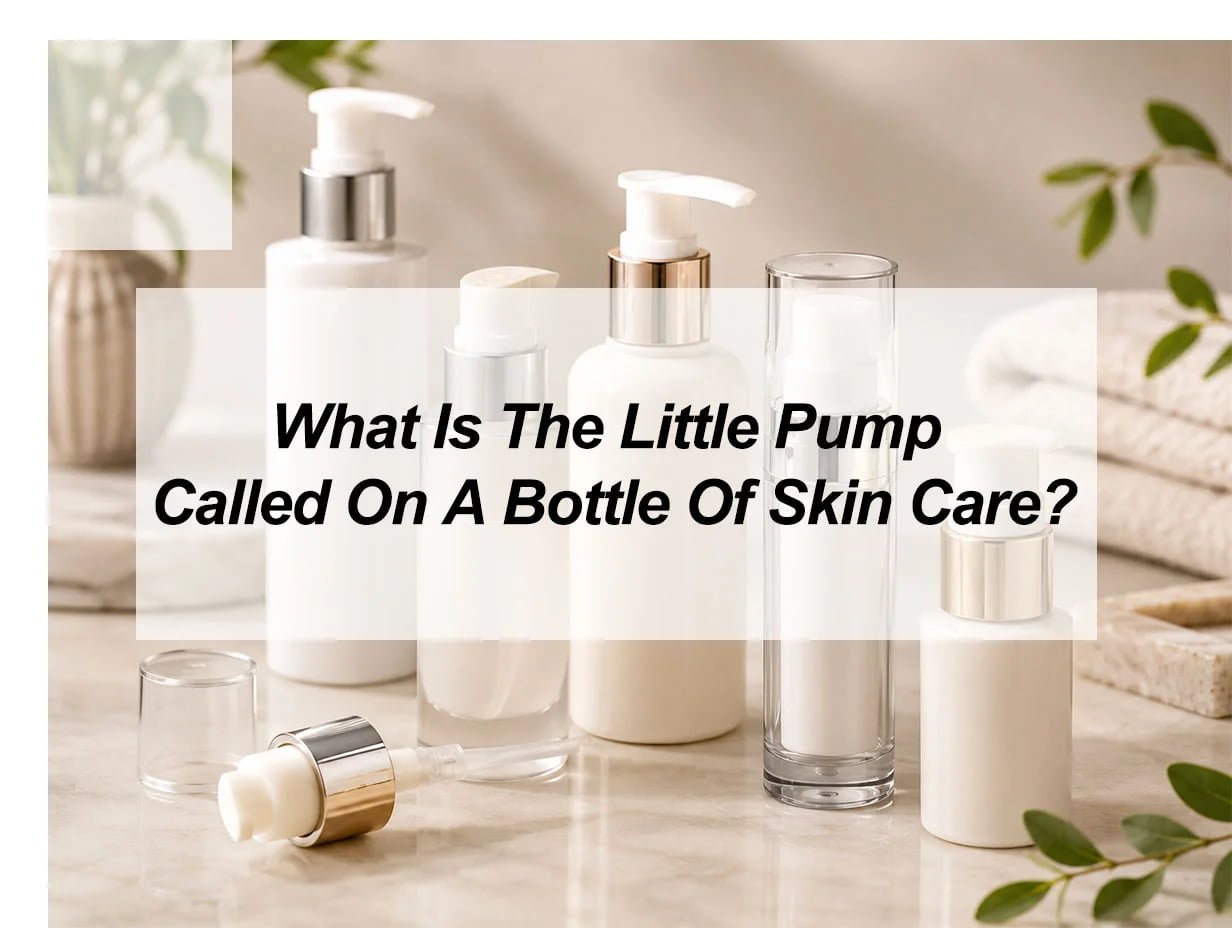
Many people notice the small pump on a skincare bottle but do not know its name. That small part can decide how clean, smooth, and premium the product feels.
The little pump on a bottle of skin care is usually called a lotion pump, pump dispenser, serum pump, treatment pump, or airless pump. The most common general name is lotion pump. If the bottle protects sensitive formulas without a dip tube, it is often called an airless pump.
This small part looks simple, but it does a lot of work. It controls dosage. It protects the product from messy contact. It affects leakage risk. It also changes how customers judge the quality of the whole skincare package.
What Is The Pump On A Skincare Bottle Called?
The pump on a skincare bottle is most commonly called a lotion pump or pump dispenser. For more specific packaging, it may be called a serum pump, treatment pump, or airless pump.
A lotion pump is the general name many suppliers use for skincare, body care, and personal care bottles. It fits products like lotion, moisturizer, cleanser, shampoo, conditioner, sunscreen, and hand cream. When the product is more delicate or premium, the packaging name often becomes more specific.
Common Names Buyers Should Know
| Pump Name | Where It Is Used | Simple Meaning |
|---|---|---|
| Lotion pump | Lotion, cleanser, shampoo, body care | A standard pump that dispenses liquid or semi-liquid product |
| Pump dispenser | General packaging term | A broad name for any bottle pump system |
| Serum pump | Serum, moisturizer, eye cream | A smaller and more precise skincare pump |
| Treatment pump | Cream, treatment lotion | A pump for thicker or more premium formulas |
| Airless pump | Sensitive skincare, anti-aging cream, foundation | A pump system that reduces air contact |
The word “pump” is enough for daily conversation. But it is not enough for sourcing. A buyer who says “small pump” may receive many different options. One supplier may show a lotion pump. Another may show an airless bottle. Another may show a fine mist pump or foam pump. These are not the same.
Why The Exact Name Matters
The exact name helps the supplier match the formula. A light serum needs a different pump from a thick cream. A face cleanser may need a larger output per press. A premium eye cream may need a smaller, more controlled dose. A natural formula may need better protection from air. A travel skincare bottle may need a locking pump head.
The pump also needs to match the bottle neck. Common closures have specific neck finishes, so the pump must fit tightly. If the closure does not match, the bottle may leak. If the dip tube is too short, product may remain at the bottom. If the dip tube is too long, the pump may not screw down correctly.
So the answer is simple at first: it is called a lotion pump. But the better answer is more practical: identify the formula, bottle structure, output need, and protection level before choosing the pump name.
What Is The Difference Between A Lotion Pump And An Airless Pump?
A lotion pump usually uses a dip tube to pull product from the bottle. An airless pump usually uses an internal piston or disc to push product upward without using a dip tube.
This difference matters because skincare formulas can be sensitive. Some products need basic dispensing. Others need better protection from air, oxidation, and contamination. That is why airless pump bottles are popular for serums, creams, foundations, and premium skincare.
Traditional Lotion Pump Structure
A traditional lotion pump often has a pump head, closure, gasket, housing, internal spring, piston, ball, and dip tube. When the user presses the actuator, the pump creates pressure and pulls product upward through the dip tube. When the user releases the head, the pump resets for the next dose.
| Feature | Lotion Pump |
|---|---|
| Product movement | Pulled upward through a dip tube |
| Best for | Lotion, cleanser, shampoo, conditioner, body care |
| Main benefit | Cost-effective and familiar |
| Main risk | May leave product behind if dip tube fit is poor |
| User feel | Easy and common |
Airless Pump Structure
An airless pump works differently. It often uses a piston inside the bottle. Each press creates a vacuum effect, and the piston moves upward as the product is dispensed. This helps push the formula toward the nozzle. It also reduces the amount of air that enters the package.
| Feature | Airless Pump |
|---|---|
| Product movement | Pushed upward by an internal piston |
| Best for | Serum, cream, foundation, sensitive skincare |
| Main benefit | Better product protection |
| Main risk | Higher cost and more structure requirements |
| User feel | More premium and controlled |
How To Choose Between Them
A lotion pump is often enough for simple formulas. It is practical, easy to source, and usually more cost-friendly. It works well for many daily-use skincare products. It is also easier for buyers to compare because the market is mature.
An airless pump is better when formula protection matters more. It can help reduce air exposure and product waste. It can also make the package feel more premium. But it usually needs more careful testing. The filling process, piston movement, actuator force, and sealing performance must work together.
In short, a lotion pump is a good standard choice. An airless pump is a stronger choice for sensitive, higher-value, or premium skincare formulas.
What Are The Parts Of A Lotion Pump Called?
The main parts of a lotion pump are the actuator, closure, gasket, housing, piston, spring, ball, and dip tube. Each part helps the pump dispense product smoothly and safely.
The actuator is the part the user presses. The closure connects the pump to the bottle. The dip tube reaches down into the product. The internal parts create pressure and move product from the bottle to the nozzle.
Main Pump Parts Explained
| Part Name | Simple Description | Why It Matters |
|---|---|---|
| Actuator | The top button or pump head | Controls how the product exits |
| Nozzle | The opening where product comes out | Affects direction and cleanliness |
| Closure | The cap that connects to the bottle neck | Prevents leakage and keeps the pump fixed |
| Gasket | A sealing ring inside the closure | Helps stop product from leaking |
| Housing | The internal pump body | Holds the moving parts |
| Piston | A moving part inside the pump | Helps create suction and pressure |
| Spring | Helps the pump return after pressing | Supports repeated use |
| Ball | Helps control product flow | Helps stop product from flowing backward |
| Dip tube | The long tube inside the bottle | Pulls product up from the bottom |
The Actuator Is What Most People Notice
When customers ask about the “little pump,” they often mean the actuator or pump head. This is the visible top piece. It is also the part the customer touches every time. A comfortable actuator can make a skincare bottle feel smooth and easy to use. A stiff actuator can make the product feel cheap or difficult.
Some actuators have lock-up or lock-down functions. This helps prevent accidental dispensing during shipping or travel. For e-commerce brands, this detail matters because leakage can lead to complaints, refunds, and damaged outer boxes.
The Dip Tube Is Small But Important
The dip tube is the thin tube inside many pump bottles. It reaches toward the bottom of the bottle and helps draw product upward. Its length must be correct. If it is too short, product remains unused at the bottom. If it is too long, it may bend too much or block the pump from fitting correctly.
For a skincare brand, this small detail can affect product waste and customer satisfaction. A buyer may focus on color, logo, and bottle shape first. But the dip tube, actuator, and closure can decide whether the package works well in real use.
Why Do Skincare Brands Use Pump Bottles?
Skincare brands use pump bottles because they offer controlled dosage, cleaner use, less direct contact with the formula, and a more professional product experience.
A pump bottle helps the user get product without dipping fingers into a jar or pouring from an open bottle. This makes the product easier to use and often feels more hygienic. It also helps the brand control how much product is used each time.
Key Benefits For Users
| Benefit | Why Customers Care |
|---|---|
| Controlled dose | Users do not waste too much product |
| Cleaner use | Fingers do not need to touch the formula inside |
| Convenience | One press is faster than unscrewing a cap |
| Better appearance | Pump bottles often look more professional |
| Less mess | Product exits through a controlled nozzle |
| Travel support | Locking pumps can reduce leakage risk |
Key Benefits For Brands
Pump bottles help brands build trust. A clean pump gives the product a more finished look. It also supports a better shelf image. When customers see a smooth pump, they often feel the product is more modern and more premium.
Pump bottles can also reduce overuse. If one press gives a measured amount, the user has a clearer routine. This matters for serums, eye creams, moisturizers, and treatments. A predictable dose makes the product feel more controlled.
When A Pump Bottle May Not Be Best
A pump bottle is not always the right choice. Very thick balms may not dispense well. Some formulas with particles may clog the pump. Some oil-heavy products may need compatibility testing. Some low-cost products may not support the added packaging cost.
A jar may still work for thick creams. A dropper may work for very light oils or targeted serums. A tube may work for sunscreen or hand cream. A mist sprayer may work for toner. A foam pump may work for foaming cleanser.
The best packaging does not come from choosing the most expensive pump. It comes from matching the pump to the formula, user habit, and retail position.
My Insights: What Is The Little Pump Called On A Bottle Of Skin Care
The little pump on a bottle of skin care is usually called a lotion pump, pump dispenser, serum pump, treatment pump, or airless pump. The most accurate name depends on the product formula and the bottle structure.
For most basic skincare products, “lotion pump” is the safe general answer. For premium formulas, “airless pump” or “serum pump” may be more accurate. For sourcing, the right name helps avoid confusion and wrong samples.
My Practical View
I see this small pump as more than a closure. It is part of the product experience. Customers press it before they feel the formula. That first press can feel smooth, clean, and premium. It can also feel stiff, messy, or cheap.
A good pump does three things well. It dispenses the right amount. It protects the product. It matches the formula. If any of these fail, the customer may blame the whole skincare product, not only the pump.
| Buyer Question | Why It Matters |
|---|---|
| What is the formula viscosity? | Thick and thin products need different pump structures |
| What output is needed per press? | Serum and cleanser need different dosage |
| Is the formula sensitive to air? | Sensitive formulas may need airless packaging |
| Does the bottle need a locking head? | Travel and shipping need leak control |
| What neck size is the bottle? | The pump must fit the bottle correctly |
| Is the product premium or mass-market? | Pump feel should match brand position |
The Best Answer For Search Intent
If a customer asks, “What is the little pump called on a bottle of skin care?” the direct answer is: it is usually called a lotion pump or pump dispenser. If the skincare bottle has no dip tube and uses a piston inside, it is called an airless pump.
This answer is helpful because it gives both the common term and the technical distinction. Many people only need the simple name. Buyers, designers, and brand owners need the more exact name.
Why This Question Is Useful For Packaging Buyers
This question often appears at the start of sourcing. A buyer may have a sample bottle and want to find the same part. The buyer may not know whether to search for pump head, lotion pump, serum pump, treatment pump, or airless pump. The wrong search term can waste time.
The best approach is to describe the pump by both name and function. For example:
- 24/410 lotion pump for skincare bottle
- airless pump bottle for facial serum
- serum pump with small output
- treatment pump for thick cream
- lockable lotion pump for travel skincare
These search terms are more useful than “little pump.” They help suppliers understand the real request. They also help buyers receive more accurate quotes and samples.
Conclusion
The little pump is usually a lotion pump or pump dispenser. For premium skincare, it may be a serum pump, treatment pump, or airless pump.