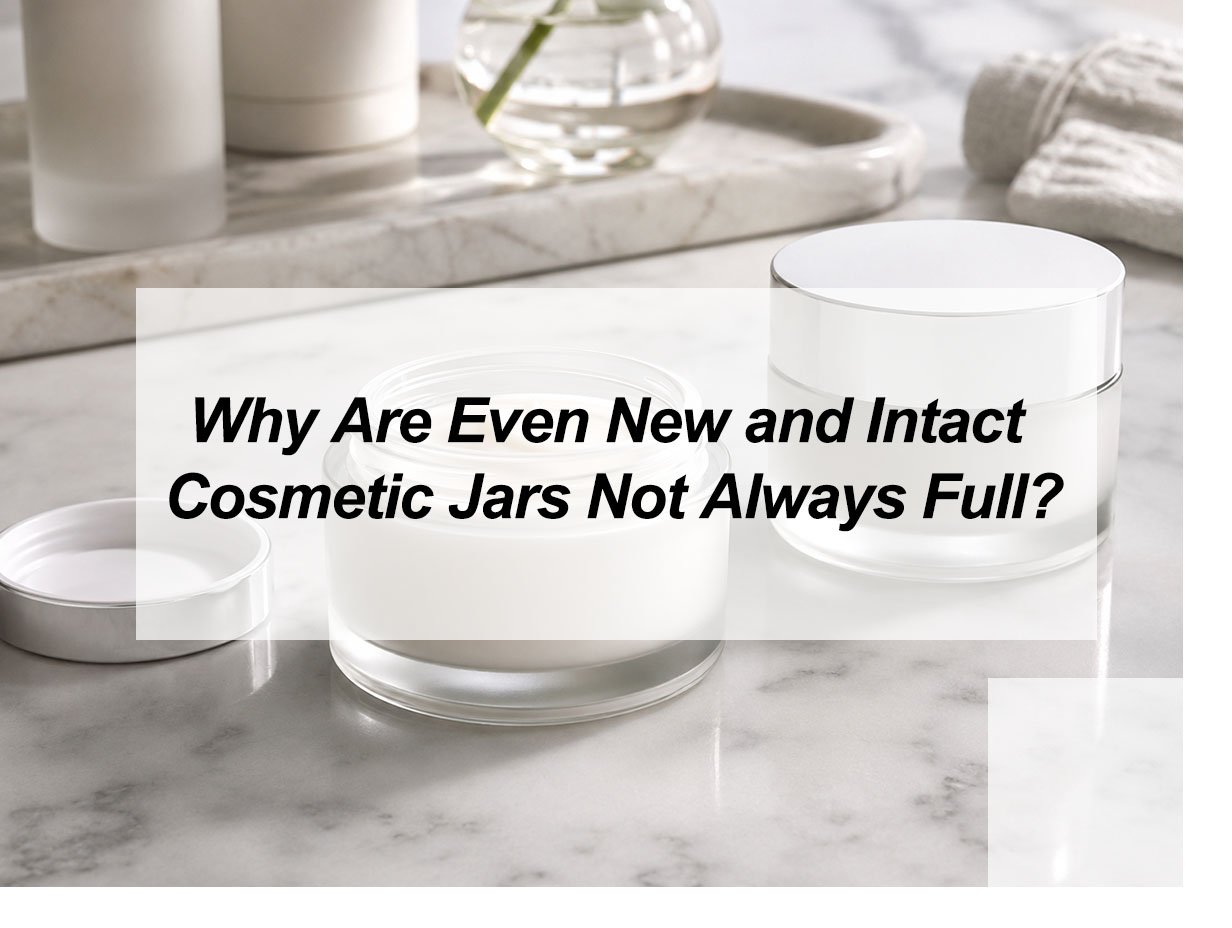
You open a new cream jar and feel confused. The seal is intact, but the product does not reach the rim. It can look wrong.
Even new and intact cosmetic jars are not always full because most jars are filled to their declared net content, not to the very top. The empty space is often functional headspace. It helps prevent overflow, leakage, pressure issues, product settling, and filling problems during production, sealing, shipping, and daily use.
This question matters because cosmetic packaging is visual. A jar can look generous from the outside, but the actual promise is the net weight or net volume printed on the package. I always treat the visible fill level as only one clue. The more useful question is whether the product meets its declared amount and whether the empty space has a real function.
Why Are Cosmetic Jars Not Filled to the Top?
A cosmetic jar is often not filled to the top because the package needs headspace. Without this space, thick cream can squeeze out when the lid, inner liner, or sealing disc is applied.
Cosmetic jars are commonly designed with a gap between the product surface and the lid area. This gap helps during capping, transport, temperature changes, and consumer use. It is not always a sign of missing product, especially when the declared net weight or volume is correct.
Net Capacity Is Not Brimful Capacity
The first thing I check is the difference between nominal capacity and brimful capacity. Nominal capacity is the intended fill amount. Brimful capacity is the maximum amount the jar could hold if filled to the very edge. Many cosmetic cream jars have more physical space than the labeled fill amount because they need room for closing, handling, and safe movement. One packaging source describes this as the difference between the stated fill line and the maximum top-fill capacity, noting that headspace prevents cream from being squeezed out during lid application.
| Term | Meaning | Why It Matters |
|---|---|---|
| Net quantity | The amount promised on the label | This is what the buyer pays for |
| Nominal capacity | The designed fill amount | This is the normal production target |
| Brimful capacity | The jar filled to the rim | This is not usually the sales promise |
| Headspace | Empty room above the product | This helps sealing, transport, and use |
Thick Creams Need More Room Than Thin Liquids
Cream jars often hold viscous formulas. These formulas do not always level perfectly after filling. They may trap air pockets, settle slowly, or form peaks during production. Filling equipment for jars often uses volumetric or net-weight filling rather than overflow filling, because wide-mouth jars are not always suitable for filling exactly to a visible level. Jar filling systems may use bottom-up filling to reduce air pockets and help thick products settle more evenly.
So a new jar can look less full even when the fill weight is correct. The cream surface may slope. The formula may have settled after shipping. The jar may also include a liner, wad, inner cap, or protective seal that needs room above the product. This is why judging only by eye can lead to the wrong conclusion.
Is an Underfilled Cosmetic Jar a Quality Problem?
An underfilled jar can be a quality problem, but not every visible gap means underfilling. The real issue is whether the jar contains less than the declared net quantity.
A cosmetic jar becomes a problem when the actual contents fall below the label claim beyond allowed variation, or when the container shape creates a misleading impression. A normal headspace is functional. A deceptive empty space is not. FDA rules require packaged cosmetics to carry an accurate net quantity declaration.
The Label Matters More Than the Rim
For cosmetic packaging, the label should state the net quantity of contents. FDA guidance says the principal display panel must include an accurate statement of the product quantity in terms such as weight, measure, numerical count, or a combination. For creams, balms, masks, and other semisolid or viscous products, weight is commonly more meaningful than visual fill height.
This is important because two jars with the same net weight can look different. A wide, low-profile jar may show a shallow product layer. A narrow jar may look fuller. A thick-walled glass jar may look large from outside but hold a modest amount inside. The customer sees the outside. The filling line measures the inside.
Functional Headspace vs Nonfunctional Slack Fill
There is a useful difference between functional headspace and nonfunctional slack fill.
| Type of Empty Space | Meaning | Buyer Reaction |
|---|---|---|
| Functional headspace | Empty space needed for protection, capping, filling, or settling | Usually acceptable |
| Nonfunctional slack fill | Empty space without a real packaging reason | Can look deceptive |
| False bottom or thick wall illusion | Design makes the product look larger than it is | High trust risk |
| Correct fill with poor communication | Product amount is right, but buyer feels misled | Branding problem |
California’s Fair Packaging and Labeling Act language defines slack fill as the difference between container capacity and product volume, and it treats nonfunctional slack fill as empty space that lacks listed valid reasons, such as product protection, machine requirements, or unavoidable settling.
For buyers, this means a jar should not be judged only by whether it looks full. It should be judged by net content accuracy, package transparency, reasonable design, and whether the empty space has a technical purpose.
What Is Headspace in Cosmetic Packaging?
Headspace is the empty space between the product surface and the underside of the lid or closure. It is small, but it plays a large role in cosmetic packaging performance.
In cosmetic jars, headspace gives the formula room to move, settle, expand, and survive handling. It also helps the filling and capping process run more safely. Without enough headspace, a cream jar can leak, smear, or create sealing problems.
Headspace Helps During Capping
When the cap is screwed on, the inner liner or sealing disc may press downward. If the jar is filled to the brim, the product can squeeze into the threads, contaminate the seal area, or leak into the outer cap. This looks messy and can reduce consumer trust. It can also slow down production because workers or machines may need to wipe jars before packing.
Headspace gives the product a buffer. It allows the closure to fit correctly. It also reduces the chance that cream will get into the thread area. For cream jars, this is especially important because residue around the thread can dry, collect dust, or make the jar feel used before it reaches the customer.
Headspace Helps During Shipping
Cosmetic jars move through filling lines, cartons, warehouses, trucks, ships, and sometimes hot storage environments. During this journey, formulas can shift. They can expand slightly with heat. They can also settle after vibration. A jar filled to the very top may look generous at the factory, but it may leak by the time it reaches the buyer.
This is why packaging engineers often design cosmetic jars with a practical buffer. The goal is not only a good first look. The goal is a product that arrives clean, sealed, and stable. For B2B buyers, this matters because a small leakage rate can create returns, damaged cartons, and delayed launches.
Headspace Also Affects Formula Stability
Packaging is part of formula protection. Air, light, heat, moisture, and contamination can influence how skincare products age. Cosmetic chemists and dermatology sources often point out that exposure to air, light, moisture, and microorganisms can affect product longevity, while repeated contact with fingers can increase contamination risk.
This does not mean more empty space is always better. Too much air exposure can be bad for sensitive ingredients. It means the correct headspace depends on the formula, closure, preservative system, and expected use. A simple body butter, a clay mask, and a retinol cream may need different packaging decisions.
How Can Buyers Tell If a Cosmetic Jar Is Underfilled or Correctly Filled?
The best way to judge a cosmetic jar is to compare actual product weight with the declared net content. Visual fullness alone is not enough.
Buyers should check the label claim, weigh sample jars, confirm tare weight, review fill tolerance, inspect sealing quality, and compare nominal capacity with brimful capacity. A clean, consistent gap is usually normal. Random low fills, leaking jars, or misleading walls need investigation.
A Practical Check Method
I use a simple method when reviewing cosmetic jars.
| Step | What To Check | Why It Helps |
|---|---|---|
| 1 | Read net weight or volume | Confirms the promised amount |
| 2 | Weigh unopened samples | Finds gross weight consistency |
| 3 | Weigh empty packaging | Confirms tare weight |
| 4 | Calculate net content | Shows real product amount |
| 5 | Inspect fill level consistency | Finds filling machine issues |
| 6 | Check cap and liner area | Finds overflow or leakage risk |
| 7 | Compare jar capacity | Shows whether design may mislead |
This method is simple, but it works. If ten jars from the same batch show similar gross weight and clean sealing, the visible gap is likely designed. If the weights vary widely, the filling process needs review.
Warning Signs Buyers Should Not Ignore
A jar deserves closer review when the fill level varies from unit to unit. It also deserves review when the package has a very thick base, false bottom, oversized outer wall, or opaque design that makes the product look much larger than it is. FDA’s cosmetics labeling guide notes that cosmetics can be considered misbranded if labeling is false or misleading, if required information such as net quantity is missing, or if the container or its fill is misleading.
What Brands Should Communicate
A brand can avoid confusion by making the net content clear and choosing a jar size that feels honest. It can also use transparent product pages, fill-line photos, or simple wording such as “filled by weight” when appropriate. This helps customers understand that the jar is not meant to be full to the rim.
For wholesale cosmetic packaging buyers, this is also a supplier communication issue. The buyer should confirm the intended fill weight, brimful capacity, recommended headspace, closure type, sealing method, and filling tolerance before mass production. These details look small, but they prevent complaints later.
My insights: Why Are Even New and Intact Cosmetic Jars Not Always Full
A new cosmetic jar looks sealed, clean, and untouched. But when it is not full, buyers may feel confused, worried, or even misled.
Even new and intact cosmetic jars are not always full because they are usually filled according to the declared net content, not the jar’s full brim capacity. The empty space is often functional headspace. It helps prevent overflow, leakage, product expansion, sealing issues, and filling errors during production, storage, shipping, and daily use.
Why Empty Space Can Be a Normal Part of Cosmetic Jar Design
The space above the cream is not always a sign of missing product. In many cosmetic jars, this space is planned during packaging design. A jar has two different capacities: the declared fill amount and the brimful capacity. The declared fill amount is what the customer pays for. The brimful capacity is the maximum space inside the jar.
Functional Headspace vs. Misleading Empty Space
| Packaging Factor | Why It Matters |
|---|---|
| Declared net content | Shows the real amount the buyer should receive |
| Headspace | Helps avoid overflow when the lid is closed |
| Thick cream texture | May settle or leave uneven surface after filling |
| Transport pressure | Reduces leakage during shipping |
| Compliance risk | Empty space should not mislead buyers |
A reasonable gap can protect the product and keep the package clean. But if the jar looks much larger than the actual fill and the empty space has no real function, buyers may see it as slack fill or misleading packaging.
Conclusion
A new cosmetic jar is not always full because correct packaging protects product quality, shipping safety, and label accuracy. The real test is declared net content.