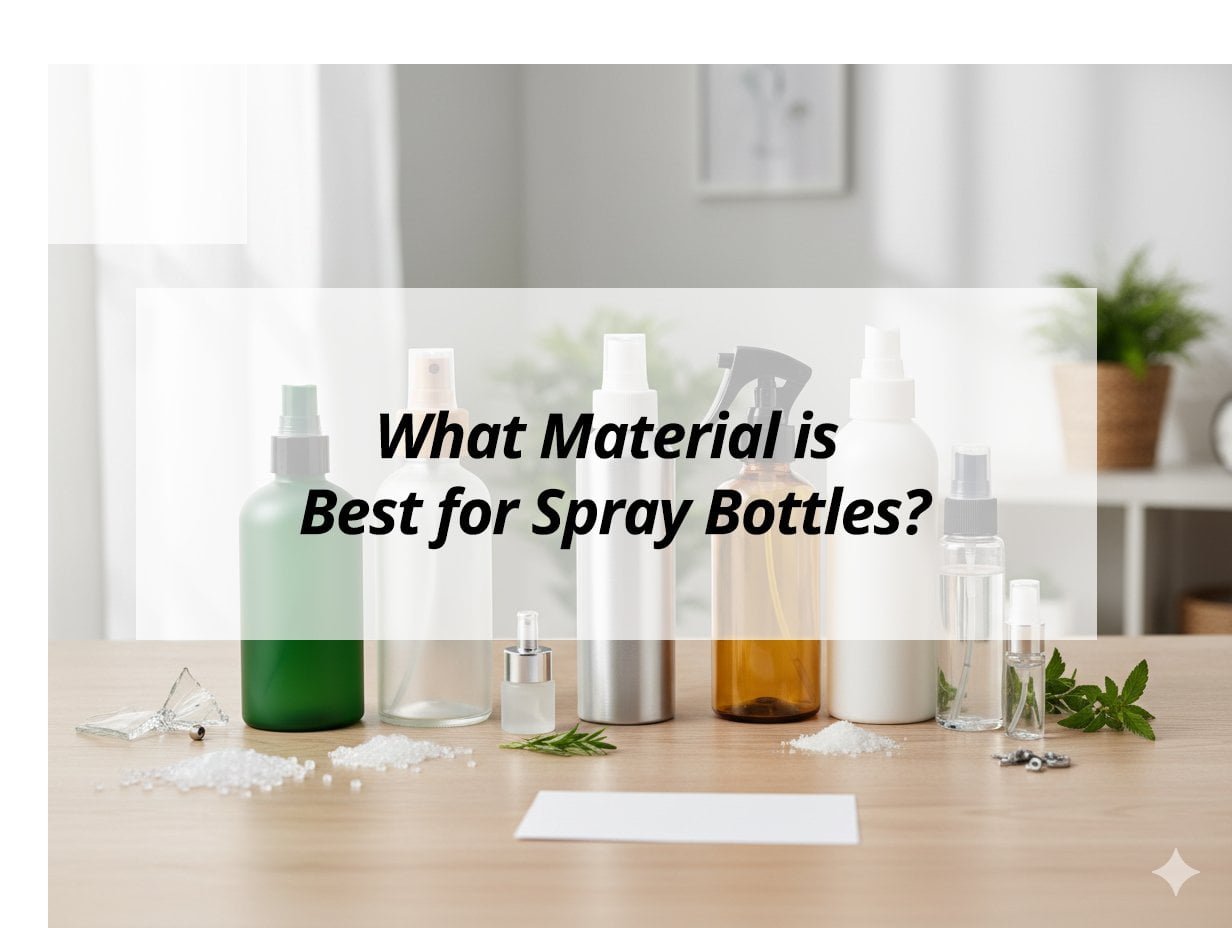
Choosing the right material for spray bottles is important. A poor choice can lead to leaks, product degradation, or pump failure. This guide helps you pick the best material for your spray bottle needs.
The best material for spray bottles depends on the product's chemical composition, desired durability, and aesthetic requirements. Common choices include PET, HDPE, and glass, each offering distinct advantages in terms of chemical resistance, impact strength, and UV protection, suitable for various liquid applications from cosmetics to cleaning solutions.
Understanding material properties helps ensure product integrity and consumer satisfaction. Let's explore the best options for spray bottles.
What is the best material for a spray bottle?
Many different materials are used for spray bottles. Each has specific benefits and drawbacks. Picking the wrong material can compromise product quality or shelf life. This can lead to wasted product.
The best material for a spray bottle is typically Polyethylene Terephthalate (PET) for general-purpose applications due to its clarity and barrier properties, or High-Density Polyethylene (HDPE) for stronger chemical resistance and durability. Glass is superior for sensitive formulations requiring inert packaging or a premium aesthetic, ensuring product stability and preventing chemical reactions.
Let's examine the most common materials used for spray bottles and their specific advantages. This will help inform your selection.
Common Materials for Spray Bottles
Different products require different materials. Understanding these materials helps make the best choice for your spray bottle.
| Material | Properties | Common Uses | Advantages for Spray Bottles |
|---|---|---|---|
| PET | Clear, lightweight, good barrier, rigid | Water bottles, soda, cosmetic sprays | Transparency, good barrier against oxygen, impact-resistant |
| HDPE | Opaque, durable, chemical resistant, flexible | Detergent, cleaning solutions, some cosmetic sprays | High impact strength, excellent chemical resistance, cost-effective |
| PP | Semi-rigid, heat resistant, chemical resistant | Bottle caps, squeezable bottles, some trigger sprays | Good chemical resistance, high heat tolerance |
| Glass | Inert, non-reactive, premium feel, heavy | Fine fragrances, essential oils, natural cosmetics | Product purity, UV protection (amber), luxurious aesthetic |
| Aluminum | Lightweight, opaque, durable, good barrier | Deodorants, hair sprays, fine mist sprays | Light protection, rust-resistant, sleek appearance |
PET is a popular choice for many cosmetic and personal care products. Its clarity allows the product to be seen, which is often desired. HDPE is known for its strength and chemical resistance, making it suitable for stronger cleaning solutions. PP is often used for the spray mechanisms themselves due to its flexibility and chemical resistance. Glass offers superior inertness, meaning it will not react with sensitive formulations. It also provides a premium feel. Aluminum is lightweight and provides excellent light protection, often used for aerosols or fine mist spray bottles.
Factors Influencing Material Choice
Several factors guide the selection of the best material for a spray bottle. These ensure the chosen material is suitable for the product and its intended use.
- Chemical Compatibility: The material must not react with the liquid inside. Strong acids or bases in cleaning products need HDPE or PP. Sensitive essential oils need glass.
- Desired Aesthetic: Clear products often use PET or glass. Opaque products, or those needing UV protection, may use HDPE, amber glass, or aluminum. A luxury product might choose glass.
- Durability & Impact Resistance: Products used in active environments might need HDPE for its impact resistance. Fragile glass is less suitable for such uses.
- Spray Mechanism Compatibility: The chosen bottle material must be compatible with the specific spray head (e.g., trigger spray bottle, fine mist spray bottle). The neck finish must match.
- Cost-Effectiveness: Material cost, manufacturing cost, and shipping weight all impact the overall price. HDPE is generally more cost-effective than glass.
- Sustainability Goals: Recyclability and use of recycled content (PCR plastics) are increasingly important considerations.
Choosing the right material is a balance of these factors. For example, a fine mist spray bottle for a delicate facial toner might benefit most from glass to preserve purity and deliver a premium experience.
Which is better for water bottles plastic or silicone?
While this question directly addresses water bottles, the comparison between plastic and silicone materials provides insights applicable to spray bottles regarding durability, safety, and functionality. Understanding these differences helps in broader material selection.
For water bottles, plastic (such as Tritan, HDPE, or PET) generally offers rigidity, clarity, and good impact resistance, while silicone provides exceptional flexibility, lightness, and superior shatterproof qualities. Both can be safe when using food-grade formulations, with the "better" choice depending on specific needs like structural integrity versus portability and extreme durability.
Let's compare these two material types in detail. This will highlight their respective strengths and weaknesses relevant to various container applications.
Comparative Analysis of Plastic and Silicone
Plastic and silicone exhibit distinct physical and chemical properties. These differences dictate their suitability for various types of containers, including spray bottles.
| Feature | Plastic (e.g., HDPE, PET, Tritan) | Silicone (Food-Grade) | Relevance to Spray Bottles |
|---|---|---|---|
| Rigidity/Flexibility | Rigid, maintains shape well | Highly flexible, often collapsible | Plastic provides structure for traditional spray bottles; silicone for squeezable travel or specialty sprays. |
| Durability | Good impact resistance, can crack or shatter (PET) | Extremely durable, tear-resistant, virtually unbreakable | HDPE plastic is very durable. Silicone is excellent for drop-proof travel bottles. |
| Weight | Lightweight to moderately lightweight | Very lightweight | Both are lighter than glass, reducing shipping costs. |
| Clarity/Opacity | Can be very clear (PET, Tritan) or opaque (HDPE) | Translucent or opaque, not typically optically clear | PET offers product visibility. HDPE/Silicone offer light protection if opaque. |
| Temperature Range | Specific limits; can deform with high heat (PET) | Excellent heat and cold resistance | Silicone is better for very hot or cold applications. |
| Chemical Inertness | Good resistance to many chemicals (HDPE, PP) | Highly inert, excellent chemical resistance | Both are generally good, but specific plastics vary more. |
| Tactile Feel | Hard, smooth | Soft, rubbery, often non-slip | Plastic for standard feel. Silicone for unique, soft-touch grip. |
| Cost Profile | Generally lower for mass production | Can be higher due to specialized manufacturing | Plastic is usually more cost-effective for bulk spray bottles. |
For typical spray bottles, the rigidity and structural integrity of plastic (like HDPE or PET) are usually preferred. This allows the bottle to stand upright and for the pump mechanism to function efficiently. Silicone's flexibility is excellent for squeezable applications or travel bottles where being unbreakable is paramount. However, its lack of rigidity makes it less suitable for most traditional trigger spray bottle designs.
Application of Insights to Spray Bottle Design
While the direct comparison is for water bottles, the material properties translate.
- Rigid Plastic (PET/HDPE): Ideal for standard fine mist spray bottle or trigger spray bottle applications. They provide the necessary structure for pump function and offer good protection.
- Silicone: More suitable for specialty or travel-sized spray containers. For example, squeezable travel spray bottles for hair products where the dispenser is a simple squeeze mechanism rather than a traditional pump.
- Chemical Resistance: For strong cleaning agents in a trigger spray bottle, HDPE's superior chemical resistance makes it a better choice than PET.
The decision hinges on the specific product, its intended use, and desired handling characteristics.
Why use amber glass spray bottles?
Amber glass spray bottles are very popular for certain products. This is not just for looks. There are specific functional reasons for choosing amber glass. Ignoring these reasons can lead to product degradation.
Amber glass spray bottles are predominantly used to protect light-sensitive contents from harmful UV and visible light radiation. The amber tint effectively filters out these wavelengths, preserving the stability, potency, and shelf life of formulations such particularly essential oils, herbal extracts, and other natural or organic cosmetic products.
Let's explore the key reasons why amber glass is chosen for spray bottles. This highlights its unique protective qualities.
Primary Benefits of Amber Glass
Amber glass offers a critical advantage: light protection. This makes it invaluable for certain types of products.
| Benefit | Description | Impact on Product Quality |
|---|---|---|
| UV Light Protection | The amber color filters out harmful ultraviolet (UV) light wavelengths. | Prevents light-induced degradation of sensitive ingredients, maintains potency. |
| Visible Light Protection | Also blocks certain ranges of visible light that can affect product stability. | Reduces oxidation and discoloration caused by light exposure. |
| Chemical Inertness | Glass is non-reactive, ensuring no leaching or interaction with contents. | Preserves product purity and prevents contamination. |
| Premium Aesthetic | The deep amber color conveys a natural, apothecary, or luxury feel. | Enhances brand image and perceived value, appeals to specific markets. |
| Barrier Properties | An excellent barrier against oxygen and moisture when sealed. | Extends shelf life of sensitive formulations. |
For example, essential oils are very sensitive to light. Exposure to UV light can quickly degrade their therapeutic properties. An amber fine mist spray bottle for an essential oil facial mist ensures the product stays effective longer. This is a vital protective feature.
Products Best Suited for Amber Glass Spray Bottles
Certain types of products benefit most from the protective qualities of amber glass.
- Essential Oil Blends: Their delicate compounds are highly susceptible to light degradation. Amber glass preserves their potency.
- Herbal Extracts & Hydrosols: Many natural plant-based ingredients are light-sensitive. Amber glass prevents them from breaking down.
- Natural/Organic Skincare: Products with fewer synthetic preservatives benefit from the enhanced stability amber glass provides.
- Vitamin C Serums: Vitamin C is highly unstable and degrades quickly with light exposure. Amber glass helps protect its efficacy.
- Homemade Cosmetics: For DIY enthusiasts, amber glass offers reliable protection for their creations.
Using an amber trigger spray bottle for a natural room spray, for example, helps keep the essential oils fresh. This ensures the scent and benefits last. The choice of amber glass is a functional decision first, and an aesthetic one second.
How to make a spray bottle stronger?
Spray bottles, especially plastic ones, can sometimes feel weak or break easily. Making them stronger is important for durability and product safety. A weak bottle can break, spill product, and disappoint customers.
To make a spray bottle stronger, select materials with higher impact resistance like HDPE or thicker PET. Design choices such as reinforced walls, ergonomic shapes that distribute stress, and a robust base also enhance durability. For glass bottles, thicker glass or protective coatings can increase strength against drops and impacts.
Let's explore practical ways to enhance the physical strength of spray bottles. This improves their longevity and reliability.
Material Selection for Enhanced Strength
The fundamental choice of material plays the biggest role in a spray bottle's strength.
| Material Option | Strength Enhancement Strategy | Benefit |
|---|---|---|
| HDPE (Plastic) | Choose higher density or thicker wall sections. | Excellent impact resistance, very durable, less prone to cracking. |
| PET (Plastic) | Opt for thicker PET, or a more robust grade. | Good impact strength, less brittle than standard PET, maintains clarity. |
| PP (Plastic) | Used often for caps and spray heads. | High fatigue resistance, good for repeated use. |
| Glass | Select thicker glass, or apply a protective coating. | Increased resistance to shattering, enhanced durability. |
| Aluminum | Inherently strong and durable. | Lightweight yet robust, rust-resistant. |
For a robust trigger spray bottle used in cleaning, HDPE is usually chosen for its high impact resistance. It can withstand drops and rough handling better than standard PET. For a fine mist spray bottle for a premium product, a thicker glass or a glass bottle with a protective silicone sleeve can add strength while maintaining a luxurious feel.
Design Features for Increased Durability
Beyond material, specific design elements can significantly contribute to a spray bottle's strength.
- Reinforced Walls: Making the bottle walls thicker or incorporating structural ribs improves resistance to crushing and impact.
- Ergonomic Shape: Shapes that distribute stress evenly, avoiding sharp corners or weak points, enhance overall durability.
- Robust Base: A wider, thicker base makes the bottle more stable and less likely to tip over. This reduces the chance of accidental drops.
- Integrated Neck Finish: A strong, well-designed neck finish ensures a secure fit for the spray pump. This prevents leaks and bottle damage.
- Protective Sleeves/Casing: For fragile materials like glass, adding a silicone sleeve or an outer plastic casing provides an extra layer of protection against impact.
For example, a fine mist spray bottle designed with a slightly curved body and a thicker base will generally be stronger than a purely cylindrical one with thin walls. These subtle design choices make a big difference.
My Insights: Choosing the Ideal Material for Spray Bottles
Not sure which material suits your spray bottle needs? Discover the best options for durability, safety, and versatility.
Select spray bottle materials based on usage: HDPE for chemical resistance, PET for cosmetics, glass for essential oils, and stainless steel for robust applications. Matching the material to your specific needs ensures safety and optimal performance.
Understanding Material Choices
Material Overview:
- HDPE: Ideal for household cleaners and garden chemicals due to its chemical resistance and durability.
- PET: Best for cosmetics and mild solutions with a clear, attractive appearance.
- Glass: Perfect for essential oils and fragrances, offering chemical resistance and UV protection.
Application-Specific Recommendations:
| Use Case | Recommended Material |
|---|---|
| Household Cleaning | HDPE with chemical-resistant triggers |
| Cosmetic Sprays | PET or PP fine-mist bottles |
| Essential Oils | Amber or cobalt glass bottles |
| Industrial Chemicals | HDPE with upgraded gaskets |
Considerations for Selection:
- Chemical Compatibility: Ensure the bottle material matches the chemical properties of contents to prevent leaks.
- Durability: Opt for thicker, industrial-grade materials for frequent use.
- Environmental Impact: Choose refillable, recyclable materials like HDPE or glass to reduce waste and promote sustainability. Customize the choice based on specific content needs for optimal results.
Conclusion
The best material for spray bottles depends on product needs. PET, HDPE, and glass offer different strengths for various uses. Understanding material properties, design features, and specific application benefits helps create strong, reliable spray packaging, from trigger spray bottles to fine mist spray bottles.