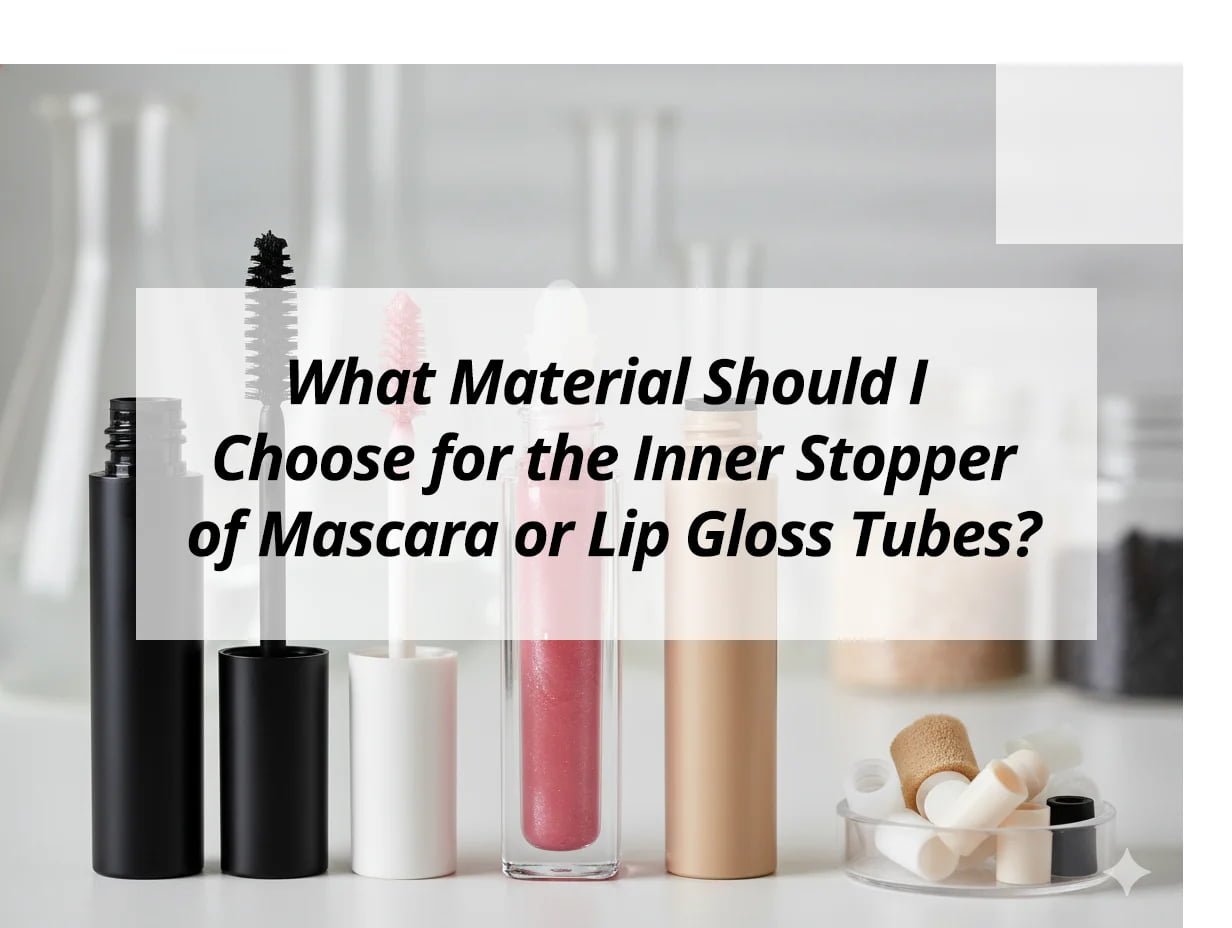
Have you ever struggled with messy mascara or lip gloss application? This issue often comes from a poorly chosen inner stopper. This small part greatly impacts product performance and freshness.
The best materials for mascara and lip gloss inner stoppers are typically LDPE (low-density polyethylene) or silicone. These materials offer the flexibility and chemical resistance needed to create an effective seal, prevent leaks, and control product dispensing. Choosing one ensures product integrity and a better user experience, directly addressing potential mess and waste.
Understanding the critical role of each component in cosmetic packaging is important. A well-designed inner stopper prevents leaks, minimizes product waste, and ensures user satisfaction. Let's examine how to make the best material selections. This keeps cosmetic products at a high standard.
What Needs to Be on a Lip Gloss Label?
Do you ever wonder what information lip gloss labels must display? This is a common question for many brands. Correct labeling ensures compliance with regulations and builds consumer trust.
Lip gloss labels require essential details. These include the product name, ingredients, net weight, and manufacturer information. These specifics ensure the product is safe and legally marketable. They also help consumers make informed purchasing decisions.
Observing various labeling practices over time highlights the importance of clarity and accuracy. Correct labeling is not only about regulatory adherence. It also reflects a brand's commitment to product integrity and consumer safety.
Why is Labeling Important?
- Legal Compliance: Every region has specific regulations for cosmetic labeling. Adherence is mandatory to avoid penalties or product recalls.
- Consumer Trust: Transparent labels foster trust. Consumers expect to know what ingredients are in their products. Honest labeling demonstrates a commitment to consumer well-being.
- Product Information: Labels provide vital product details. They list ingredients, usage instructions, and safety warnings. This helps consumers use the product safely and effectively.
What are the Key Elements of a Lip Gloss Label?
| Element | Description |
|---|---|
| Product Name | The designated name of the lip gloss. It should be legible and easily identifiable. |
| Net Quantity | Indicates the amount of product contained within. Typically expressed in milliliters (ml) or grams (g). |
| Ingredient List | All ingredients must be listed. They should be in descending order of concentration. This is important for allergy awareness. |
| Manufacturer Information | The name and address of the company responsible for the product. |
| Country of Origin | Specifies the country where the product was manufactured. |
| Batch Code/Lot Number | A unique identifier for traceability. It helps track specific production batches. |
| Expiration Date | Indicates the period for which the product remains effective. A "period after opening" (PAO) symbol may also be used. |
| Directions for Use | Simple instructions detailing how to apply the lip gloss. |
| Warnings/Cautions | Any necessary safety advisories, such as "for external use only." |
How Does Labeling Affect Business?
Effective labeling supports business growth. It prevents legal complications. It also instills confidence in consumers. Clear labeling is crucial for market access, especially in regions with stringent import regulations. Packaging designs should accommodate all required label details.
What to Do with an Empty Lip Gloss Tube?
Have you ever finished a tube of lip gloss and considered the fate of the empty container? Many discard them without thought. However, more sustainable options exist. These tubes can often find a new purpose.
When a lip gloss tube is empty, disposal is not the only option. Cleaning and reusing the tube is possible for various applications. Exploring recycling avenues also helps minimize waste. This contributes to environmental conservation efforts.
Considering sustainable practices is increasingly important. The volume of plastic used in cosmetic packaging is substantial. Exploring methods to extend the life of packaging materials is beneficial. Providing options for reuse or recycling aligns with growing consumer demand for sustainable products.
Why Should You Reuse or Recycle Empty Tubes?
- Waste Reduction: Minimizing discarded items reduces landfill volume. This benefits the environment.
- Resource Conservation: Recycling transforms old materials into new products. This conserves natural resources.
- Creative Utility: Reusing tubes encourages innovation. They can serve as containers for new creations or small items.
How Can You Reuse Empty Lip Gloss Tubes?
| Reuse Idea | How to Do It |
|---|---|
| Travel Containers | Thoroughly clean the tube. Fill it with small amounts of lotion, hand sanitizer, or custom lip balm for travel convenience. |
| DIY Lip Gloss/Balm | Create homemade lip gloss or balm. Use natural ingredients. Fill the cleaned tube with the newly prepared product. |
| Emergency Sewing Kit | Store a few needles, a safety pin, and some thread inside. This provides a compact solution for minor repairs. |
| Small Bead Storage | For crafting enthusiasts, these tubes are ideal for organizing tiny beads, glitter, or other miniature components. |
| Sample Holders | Utilize them to distribute samples of homemade cosmetics to acquaintances or potential clients. |
| Art Supplies | Fill with small quantities of paint for precise touch-ups or intricate art projects. |
How to Prepare Tubes for Reuse or Recycling?
- Thorough Cleaning: First, remove all product residue. Use a cotton swab and warm soapy water. Rinse completely. Allow it to air dry fully.
- Identify Recycling Symbols: Look for universal recycling symbols, typically a number within a triangle. Many cosmetic packages are made from common recyclable plastics like PP or PET.
- Separate Components: If feasible, disassemble different material types. For instance, detach the applicator wand from the cap and tube if they are made of distinct materials. This aids the recycling process.
Cleaning and reusing tubes is a straightforward process. This small action significantly contributes to environmental efforts. Packaging designed for durability supports reuse and recycling initiatives, enhancing its overall value.
Are Mascara Tubes Recyclable?
Have you ever questioned whether empty mascara tubes can be recycled? This is a frequent inquiry. Many individuals aim for greater environmental responsibility but are unsure about cosmetic packaging recyclability.
Most mascara tubes are made from plastics such as PP (polypropylene) or PET (polyethylene terephthalate). These plastics are generally recyclable in many regions. However, the small size of the tubes and residual product can pose challenges for standard recycling facilities.
Sustainability considerations are increasingly vital. When discussing product lifecycles, end-of-life options for packaging are a key concern. Understanding how packaging can be recycled or otherwise processed after use is important for comprehensive product planning. This includes not just the initial manufacture but also the subsequent environmental impact.
Why is Recycling Mascara Tubes Challenging?
- Size Constraints: Mascara tubes are small. They may fall through sorting equipment at recycling centers.
- Product Residue: Complete removal of mascara residue is difficult. Leftover product can contaminate other materials in the recycling stream.
- Material Mix: Some tubes incorporate various plastic types or metallic elements. These components need separation for effective recycling.
What Can You Do to Recycle Mascara Tubes?
- Clean Thoroughly: Before recycling, clean mascara tubes. Use warm water and a small brush to remove all product. Ensure they are completely dry.
- Verify Local Regulations: Recycling guidelines differ by location. Consult your local recycling facility. They can specify accepted plastic types and preparation requirements.
- Participate in Special Programs: Certain cosmetic brands offer dedicated recycling initiatives. They collect empty mascara tubes and other makeup packaging. Look for these programs online or at retail locations.
Alternatives to Standard Recycling
| Alternative Method | Description |
|---|---|
| Brand Take-Back Programs | Numerous beauty brands implement programs where consumers can return empty packaging to stores. These brands then manage the recycling. |
| Specialized Recycling Services | Companies often partner with organizations to recycle challenging items. Options may include mail-in or designated drop-off points. |
| Creative Reuse | Instead of recycling, clean the wand for alternative uses. These include grooming eyebrows, cleaning small spaces, or for art projects. |
The focus in cosmetic packaging production is on utilizing high-quality, commonly recyclable materials like PP and PET. Designs also aim to facilitate easier cleaning. This supports efforts toward recycling or reusing packaging after its initial use.
How to Refill a Lip Balm Squeeze Tube?
Have you ever considered refilling a lip balm squeeze tube1 rather than purchasing a new one? This practice offers a way to conserve resources and reduce waste. The simplicity of this process is often underestimated.
Refilling a lip balm squeeze tube is straightforward. It involves thoroughly cleaning the tube. Next, melt the desired lip balm mixture. Then, carefully transfer it back into the tube. This method is both economical and environmentally conscious.
Practical solutions are valuable. Packaging specialists often seek ways to enhance product utility for their clients. Reusability is a significant feature. The demand for refillable options highlights a consumer preference for sustainable and value-driven products. This indicates that refillability is a lasting market desire.
Why Refill Your Lip Balm Squeeze Tube?
- Environmental Benefit: Less waste translates to fewer tubes in landfills. This positively impacts the environment.
- Cost Savings: Producing your own lip balm is typically more economical than purchasing new tubes.
- Personalization: You can formulate your own lip balm. This allows control over ingredients, scents, and colors. It is ideal for individuals with specific skin sensitivities.
- Reduced Plastic Consumption: Refilling extends the lifespan of existing tubes. This lessens the need for new plastic tube purchases.
What You Need to Refill a Lip Balm Squeeze Tube?
- Empty Lip Balm Squeeze Tube: Ensure it is completely clean and dry.
- Lip Balm Base: This can be a commercial base or a homemade blend of ingredients such as beeswax, shea butter, coconut oil, and essential oils.
- Heat-Safe Container: A small glass measuring cup or beaker is suitable.
- Syringe or Pipette (Optional): These tools assist in precise filling.
Step-by-Step Guide to Refilling Your Tube
- Clean the Tube: Wash the empty tube thoroughly with warm, soapy water. Use a small brush for internal cleaning. Rinse completely and allow it to dry fully, ensuring no moisture remains.
- Prepare Your Lip Balm:
- If using a commercial base, gently melt it in a heat-safe container. A double boiler or low-heat microwave setting can be used.
- If making your own, combine ingredients in the heat-safe container. Heat until fully liquid and homogenous.
- Pour into the Tube: Once the lip balm mixture is liquid, carefully pour it into the clean squeeze tube. A syringe or pipette can facilitate a neater fill. Fill almost to the top, leaving a small gap.
- Allow to Cool: Position the filled tube upright. Let the lip balm cool and solidify completely. This may take several hours, or it can be expedited by refrigeration.
- Cap and Use: Once solid, reattach the cap. The refilled lip balm is then ready for use.
Refilling presents a practical choice. It offers economic benefits. It also contributes to environmental protection. Packaging durability supports refilling practices. This extends product utility and minimizes environmental impact.
My Insights: Selecting the Ideal Material for Mascara and Lip Gloss Stoppers
Struggling with leaks and chemical reactions in your packaging? Discover how to choose the perfect stopper material for optimal performance.
Choose materials like LDPE, TPE, or NBR for mascara and lip gloss stoppers. LDPE suits mild formulas, while TPE and NBR handle oil-rich or solvent-heavy cosmetics. Ensure compatibility and performance through careful selection.
Material Selection for Cosmetic Stoppers
Material Options:
- LDPE: Ideal for standard formulas due to its semi-rigid, cost-effective nature. Suitable for water-based or basic anhydrous products.
- TPE: Offers flexibility and sealing, great for oil-rich or solvent-heavy cosmetics.
- NBR: Used for aggressive formulas, effectively resisting chemical degradation.
Selection Criteria:
| Formula Type | Recommended Material |
|---|---|
| Water-Based Products | LDPE for basic wipes and seals |
| Oil/Solvent Rich | TPE or NBR for enhanced resistance |
| Sustainability Focus | Mono-polyolefin systems (using LDPE or PCR) for recyclability |
Steps for Decision Making:
- Compatibility Testing: Evaluate materials against formula components, especially long-wear or waterproof ingredients.
- Sustainability Considerations: Aim for mono-material systems for easy recycling.
- Performance Assurance: Conduct accelerated aging tests to ensure long-term stability and seal integrity.
Customization based on specific formula types and sustainability goals leads to optimal packaging solutions, preventing leaks and enhancing product longevity.
Conclusion
Selecting the appropriate inner stopper material is vital for mascara and lip gloss. It prevents leaks and maintains product integrity. Reusing or recycling empty tubes is a simple yet impactful way to contribute to environmental sustainability. Refilling tubes offers a cost-effective method to reduce waste and personalize products.
-
Refilling is an eco-friendly practice that saves money and reduces waste. ↩