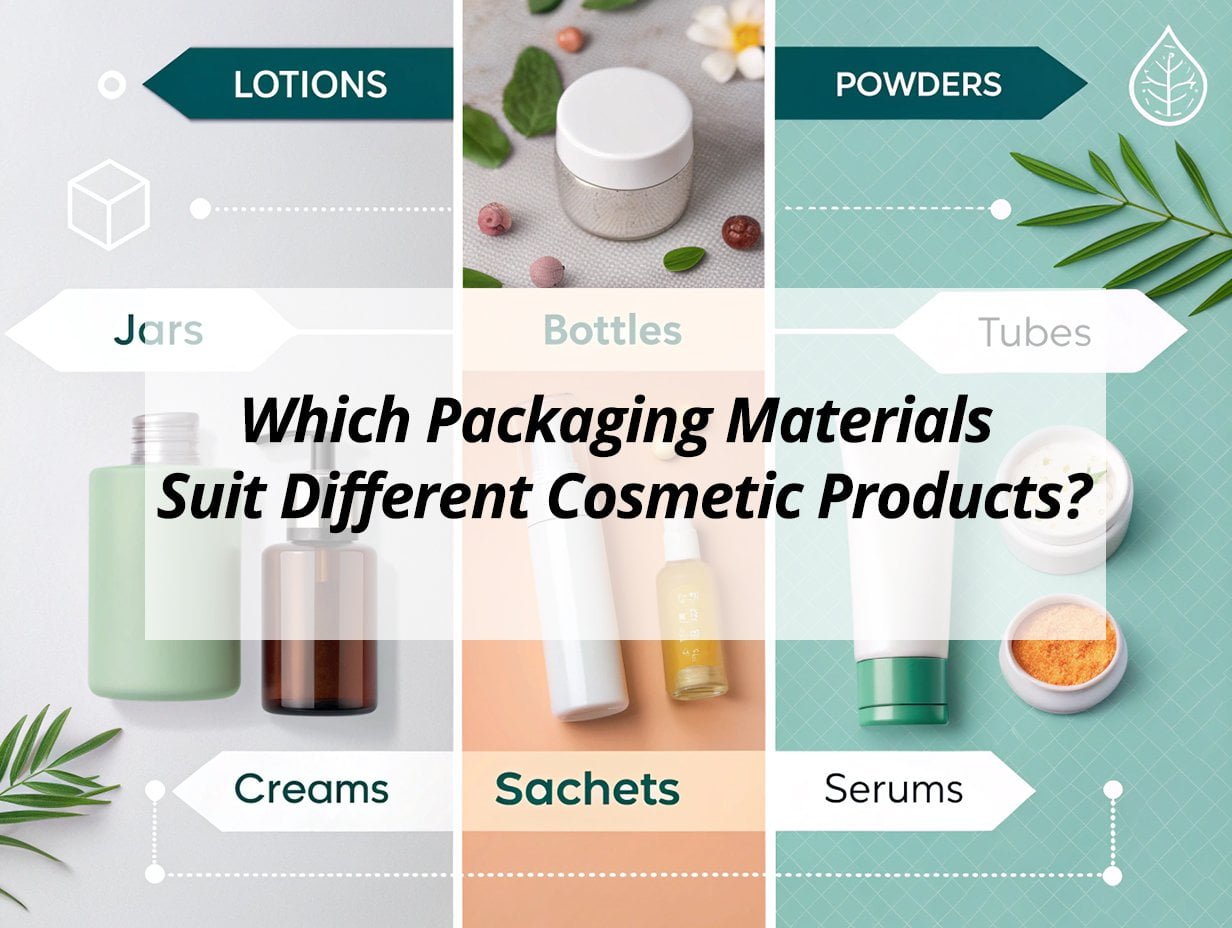
In the world of cosmetics, packaging isn’t just about aesthetics. It plays a crucial role in the product's functionality, safety, and sustainability.
Different cosmetic products demand tailored packaging materials to preserve product integrity, enhance user experience, and meet sustainability goals. The ideal selection balances material performance, cost-effectiveness, and environmental consciousness, ensuring that packaging not only protects and promotes but also aligns with eco-friendly consumer expectations.
Manufacturers must balance chemical compatibility, consumer expectations, and sustainability when choosing beauty product packaging materials.
What type of packaging is used in cosmetics?
Choosing the right packaging material is essential for preserving a product's quality and appeal.
Cosmetic packaging1 typically includes glass, plastic, aluminum, paperboard, and more, each offering unique benefits for different cosmetic products.
Understanding the types of packaging is crucial:
-
Glass: Ideal for luxury creams and serums, offering a premium feel and excellent chemical resistance.
-
Plastic: Versatile and lightweight, commonly used for lotions and shampoos.
-
Aluminum: Preferred for sprays and aerosols due to its airtight nature.
-
Paperboard: An eco-friendly option for soaps and powders.
Cosmetic Packaging Types
Each packaging material has its pros and cons. Here’s a breakdown:
| Material | Best For | Considerations |
|---|---|---|
| Glass | Serums, essential oils, premium products | Fragile, high transport costs |
| Plastic | Lotions, creams, sprays | Chemical compatibility, recyclability |
| Aluminum | Sprays, mists | Heavier, costlier, needs protective coating |
| Paperboard | Soaps, powders | Not suitable for liquid products |
Selecting the right packaging requires a careful evaluation of the product's nature and brand positioning.
What are the alternatives to plastic packaging for cosmetics?
The search for sustainable packaging is now a priority for many brands.
Alternatives to plastic include glass, aluminum, biodegradable materials, recycled content, and innovative composites to reduce environmental impact.
In the quest for eco-friendly solutions, several alternatives stand out:
-
Glass & Aluminum: Provide premium aesthetics and environmental sustainability.
-
Biodegradable Materials: Great for natural cosmetics but require compatibility testing.
-
Recycled Content: Appeals to environmentally conscious consumers.
Exploring Sustainable Alternatives
Choosing alternatives involves considering factors like sustainability, performance, and aesthetics:
Glass and Aluminum
- Benefit: High-end look and feel, excellent preservation of contents.
- Challenge: Heavier and potentially more expensive.
Biodegradable and Recycled Materials
- Benefit: Reduction of environmental footprint.
- Challenge: Limited compatibility with certain formulations.
Integrating these alternatives requires balancing sustainability with cost and performance considerations.
Does FDA regulate cosmetic packaging?
Ensuring consumer safety is a top priority in the cosmetic industry.
The FDA does regulate some aspects of cosmetic packaging, focusing on safety and labeling to prevent consumer deception.
FDA regulations focus on safety and accurate representation:
-
Packaging Safety: Ensures materials do not leach harmful substances into products.
-
Labeling Accuracy: Prevents misleading claims about the product’s contents and benefits.
Unpacking FDA Regulations
Understanding FDA guidelines involves navigating safety, labeling, and marketing aspects:
Safety Standards
- Materials: Must be non-reactive and safe for consumer use.
- Testing: Required to ensure no harmful contaminants.
Labeling and Marketing
- Accuracy: Labels must accurately reflect product benefits and contents.
- Compliance: Adherence to FDA guidelines builds consumer trust.
Ensuring compliance not only protects brands legally but also strengthens consumer confidence.
What is the most sustainable cosmetic packaging?
Sustainability is a compelling factor driving consumer choices and brand identity today.
The most sustainable packaging options include biodegradable materials, recycled content, and refillable systems, aligning with eco-conscious consumer demands.
Sustainable packaging2 involves innovating beyond traditional materials:
-
Biodegradable Options: Ideal for products targeting green consumers.
-
Recycled Content: Using post-consumer materials to reduce waste.
-
Refillable Systems: Promote reusability, reducing packaging waste over time.
Delving into Sustainable Innovations
Sustainability in packaging can significantly impact brand perception and success:
Biodegradable and Recycled Solutions
- Impact: Drastically reduce environmental footprint.
- Adaptation: Requires changes in supply chain and consumer behavior.
Refillable Packaging
- Advantage: Encourages brand loyalty via reusable systems.
- Implementation: Needs infrastructure for returns and refills.
Navigating sustainability is essential for brands seeking to appeal to eco-conscious consumers and remain competitive.
My Insights: Tailoring Packaging to Cosmetic Needs
Combining research insights, cosmetic packaging must align with product chemistry, market trends, and sustainability goals.
Choosing materials like glass for luxury, aluminum for protection, and biodegradable options for sustainability maximizes brand potential and consumer satisfaction.
Here are the strategic recommendations for manufacturers like JCCosmopack:
Strategic Insights
| Aspect | Recommendation |
|---|---|
| Material Choice | Opt for glass for luxury items, and biodegradable materials for sustainable lines. |
| Consumer Appeal | Leverage recycled content and refillable systems to attract eco-conscious buyers. |
| Regulatory Compliance | Ensure packaging materials meet FDA standards for safety and labeling accuracy. |
Understanding Market Needs
- Luxury vs. Everyday Use: Select materials like glass and aluminum for high-end brands, while using biodegradable or recycled options for everyday products.
- Customization and Branding: Utilize materials that offer easy customization for brand logos and unique aesthetics.
- Regional Considerations: Align product offerings with regional needs, such as Southeast Asia's demand for sustainable and refillable options.
Balancing Cost and Sustainability
- Hybrid Approaches: Consider combining materials (e.g., glass with a plastic liner) to balance cost, aesthetics, and functionality.
- Investment in Innovation: Stay ahead by exploring emerging materials like bioplastics and smart packaging solutions.
Embracing these insights can enhance brand reputation, drive consumer loyalty, and align with global sustainability goals.
Conclusion
Selecting the right packaging materials for cosmetics ensures efficacy and aligns with evolving consumer expectations toward sustainability and brand uniqueness.