
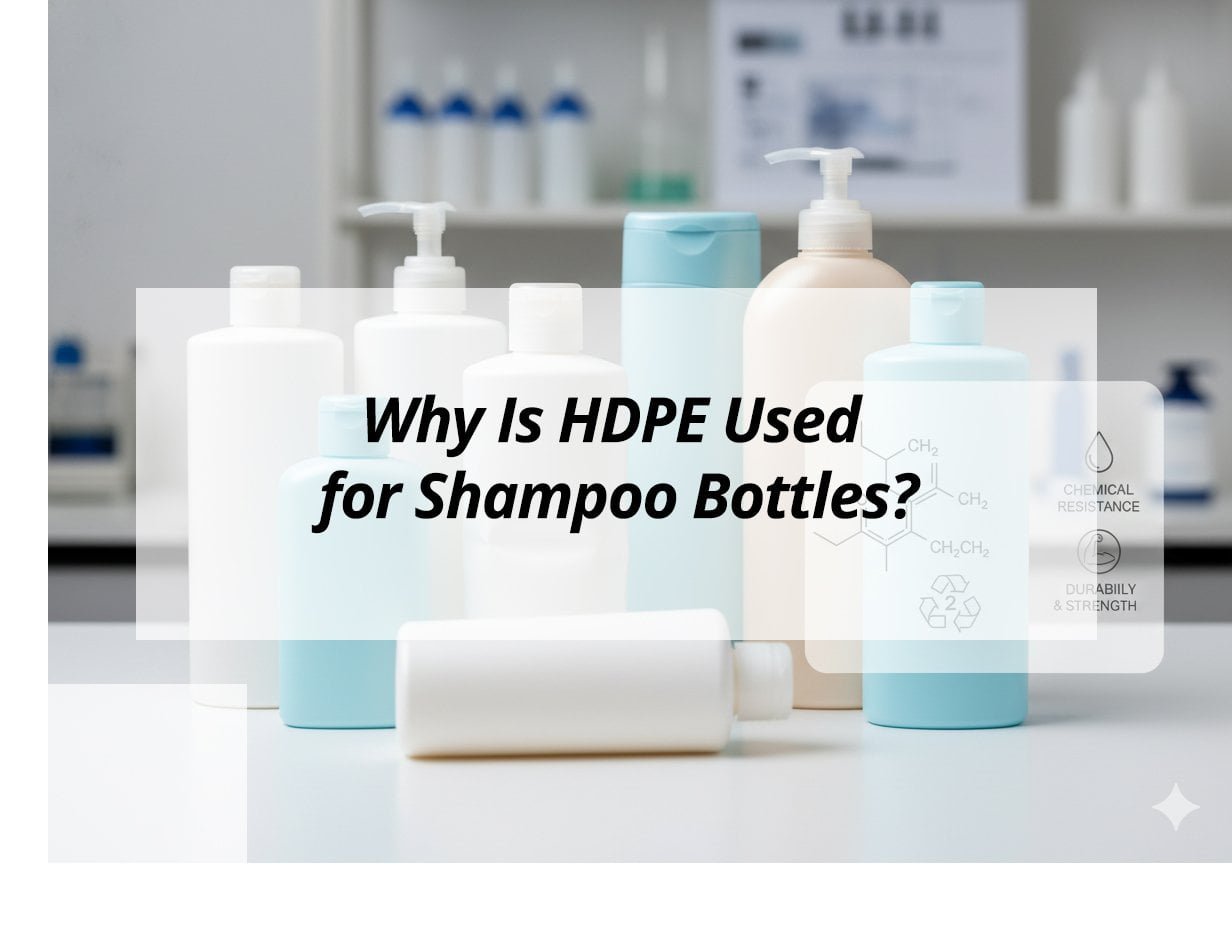
The material used for shampoo bottles is chosen for specific reasons. Understanding these material choices is important for packaging solutions.
HDPE is chosen for shampoo bottles due to its key properties. It is durable, lightweight, and resists many chemicals. This plastic also creates an effective barrier against moisture. These combined features ensure liquid products are contained safely and maintain their quality over time.
This article explores why HDPE is a primary choice for packaging. It examines its properties and practical benefits. This information helps clarify its widespread application.
Why Is HDPE Suitable for Bottles?
The selection of specific plastics for bottle manufacturing is based on their unique properties. Not all plastics offer the same advantages. HDPE possesses distinct characteristics that make it highly suitable.
HDPE is very suitable for bottles due to its strength and chemical resistance. It demonstrates high impact resistance. It also effectively protects its contents. These attributes make it an excellent choice for many liquid products.
HDPE, or High-Density Polyethylene, has a molecular structure with tightly packed chains. This structure gives it a high strength-to-density ratio. This means it is robust yet relatively light. This combination is highly beneficial for bottles. It allows for reduced shipping weight while maintaining sufficient durability for handling.
Key Properties of HDPE
Several inherent properties contribute to HDPE's suitability for bottle manufacturing.
- Durability: HDPE bottles are resistant to physical impact. They do not easily crack or shatter if dropped. This characteristic helps protect the product contained within.
- Chemical Resistance: HDPE exhibits resistance to a wide range of chemicals. This is important for products like shampoo, which contain various ingredients. The bottle material does not react with the product.
- Moisture Barrier: HDPE forms an effective barrier against moisture. It prevents external water from entering and liquid contents from leaking out. This is a critical feature for liquid products.
Benefits in Bottle Design
The properties of HDPE translate into practical benefits for bottle design and functionality.
| Benefit | Description |
|---|---|
| Lightweight | Contributes to lower shipping costs and reduced transportation emissions. |
| Cost-Effective | An economically viable plastic, making packaging solutions more affordable. |
| Recyclability | Widely accepted in recycling programs, aiding in waste reduction efforts. |
| Versatility | Can be readily molded into a diverse range of shapes and sizes. |
| Impact Resistance | Safeguards product contents from damage caused by drops or rough handling. |
These benefits establish HDPE as a practical and efficient material. It meets the requirements of both manufacturers and end-users.
Are Shampoo Bottles HDPE?
Observing the recycling symbol on the base of a shampoo bottle can provide information about its material composition. This symbol often includes a number indicating the plastic type.
Most shampoo bottles are made from HDPE. This plastic is selected for its inherent strength and its capacity to securely contain liquids. It represents a common and reliable material choice for personal care product packaging.
A majority of shampoo bottles are indeed made from HDPE. This can typically be verified by locating the recycling symbol with the number 2. This symbol is commonly found on the bottom of the bottle. HDPE is favored because it can effectively hold various liquid formulations without degradation or reaction. Shampoo formulations often contain surfactants, fragrances, and conditioning agents. HDPE remains inert to these components, ensuring product stability and user safety.
Reasons for HDPE Use in Shampoo Bottles
Specific factors underpin the widespread use of HDPE for shampoo bottles.
- Product Safety: HDPE does not leach harmful substances into the shampoo. This ensures the chemical integrity and safety of the product for consumers.
- Leak Prevention: The robust barrier properties of HDPE are effective in preventing leaks. This is especially important for liquid-based consumer products.
- Ease of Labeling: HDPE surfaces are conducive to various labeling and printing techniques. This enables clear display of brand information and product details.
- Squeezability: HDPE possesses sufficient flexibility to be squeezed. This feature aids consumers in dispensing the product efficiently.
Comparison with Other Plastics
While other plastic types exist, HDPE offers distinct advantages for shampoo bottle applications.
- PET (Polyethylene Terephthalate): PET is often clear and used for beverage bottles. While offering transparency, HDPE generally provides greater rigidity and opacity, which can protect light-sensitive products.
- PP (Polypropylene): PP is known for its durability and chemical resistance. It is frequently used for caps and closures. However, for the main bottle body, HDPE's overall balance of properties is often more advantageous.
What Is the Best Material for Shampoo Bottles?
Selecting the optimal material for shampoo packaging is a critical decision. It impacts factors such as product integrity, manufacturing costs, and environmental considerations.
HDPE is frequently considered a leading material for shampoo bottles. It offers an excellent balance of durability, chemical resistance, and cost-effectiveness. Its good recyclability also contributes to its appeal as a sustainable packaging option.
When determining the "best" material, a comprehensive evaluation of multiple factors is necessary. A singular ideal solution may not exist for all contexts. However, for shampoo bottles, HDPE consistently performs very well. Its combination of properties makes it a strong candidate. For example, packaging must protect the product during transit and on retail shelves. It also needs to be user-friendly for consumers. HDPE effectively addresses these diverse requirements.
Key Factors for "Best" Material Selection
The choice of the "best" material is influenced by several crucial considerations.
- Product Compatibility: The packaging material must not interact negatively with the shampoo's ingredients. This ensures the product's efficacy and safety.
- Cost-Effectiveness: Material cost directly influences the final product's retail price. HDPE is generally an economical choice.
- Consumer Experience: The bottle design must facilitate easy opening, closing, and product dispensing. The squeezable nature of HDPE enhances this experience.
- Environmental Impact: Factors such as recyclability and resource consumption are increasingly important. HDPE is widely recyclable in many regions.
Material Options and Their Trade-offs
Different packaging materials present distinct advantages and disadvantages.
| Material | Pros | Cons |
|---|---|---|
| HDPE | Durable, chemical resistant, widely recyclable | Opaque appearance (limits product visibility) |
| PET | Clear, lightweight, recyclable | Less rigid than HDPE, potentially more brittle |
| PP | Durable, heat resistant, chemical resistant | Less commonly used for main bottle body, often for closures |
| Glass | Premium aesthetic, fully recyclable | Heavy, fragile, higher transportation costs |
| Aluminum | Lightweight, recyclable, premium feel | Susceptible to denting, generally higher material cost |
Considering these comparative aspects, HDPE frequently provides the most balanced and practical solution for shampoo bottles.
Why Is HDPE Used for Milk Bottles?
There is a logical connection between the material used for milk jugs and shampoo bottles. Their material choice serves similar protective functions.
HDPE is used for milk bottles because it is strong, lightweight, and approved for food contact. It creates an effective barrier against light. This helps preserve the milk's freshness. These properties are essential for perishable food products.
The advantages of HDPE for shampoo bottles largely extend to milk bottles. Milk is a perishable product that requires protection from light and air exposure. HDPE effectively provides this protection, helping to maintain milk freshness and safety. The opaque nature of HDPE is particularly beneficial here, as light can rapidly degrade milk quality. By blocking light, HDPE contributes to extending the shelf life of milk. This is a vital characteristic for food packaging.
Essential Properties for Milk Packaging
HDPE's specific properties are fundamental for the safe packaging of milk.
- Food Safety: HDPE is certified for direct food contact. It does not transfer harmful substances to the milk. This is a paramount consideration for any food packaging material.
- Light Barrier: Milk contains nutrients sensitive to light degradation. The opaque quality of HDPE blocks light transmission. This preserves the milk's nutritional value and extends its usable period.
- Leak Protection: Milk bottles require reliable leak-proof integrity. HDPE's strong barrier capabilities ensure the contents remain securely sealed.
- Durability and Handleability: Milk jugs, especially larger sizes, need to be sufficiently robust to endure handling and transportation. HDPE provides this necessary durability.
Comparison to Other Food Packaging
While other materials are used for food packaging, HDPE often presents superior characteristics for milk.
- Glass Bottles: Glass is a traditional milk packaging material. However, its weight and fragility make it less practical for modern large-scale distribution networks.
- Cartons (Paper-based): Cartons are commonly used for milk and typically consist of multiple layers, including paper, plastic, and sometimes aluminum. While lighter, their multi-material composition can sometimes complicate recycling compared to single-material HDPE.
- PET Bottles: PET is often clear, which makes it less suitable for milk. Milk specifically requires protection from light exposure.
HDPE's combination of safety, protective attributes, and cost-effectiveness positions it as an excellent choice for milk bottles.
My Insights: Advantages of Using HDPE for Shampoo Bottles
Wondering why shampoo bottles are made of HDPE? This material offers durability, chemical resistance, and recyclability, ensuring safe and sustainable packaging for everyday use.
HDPE is chosen for shampoo bottles due to its strength, chemical resistance, and lightweight nature. It offers durability and cost-effectiveness, easily molded into various shapes, and is recyclable, supporting environmental sustainability.
Exploring the Benefits of HDPE for Shampoo Packaging
Material Properties and Benefits:
- Strength and Durability: HDPE is a stiff thermoplastic with excellent impact resistance, preventing breakage and leakage during handling and transportation.
- Moisture Protection: Its water vapor barrier helps maintain shampoo quality in humid environments, keeping the product intact.
Chemical Compatibility:
- Resistance: HDPE resists chemicals like surfactants and fragrances found in shampoos, ensuring container integrity and preventing contamination or reaction over time.
Manufacturing and Cost Efficiency:
| Aspect | Advantage |
|---|---|
| Ease of Production | Supports varied designs via extrusion blow molding |
| Economic | Lightweight and low-cost, reducing material and transport expenses |
Environmental Considerations:
- Recyclability: Being a widely recyclable material, HDPE contributes to sustainability efforts, offering better end-of-life management options.
These attributes make HDPE an ideal choice for shampoo bottles, balancing functionality with environmental consciousness.
Conclusion
HDPE is a preferred material for shampoo bottles due to its strength, chemical resistance, and cost-effectiveness. It offers product protection, lightweight design, and recyclability. This makes it an effective solution for containing various liquid products safely.