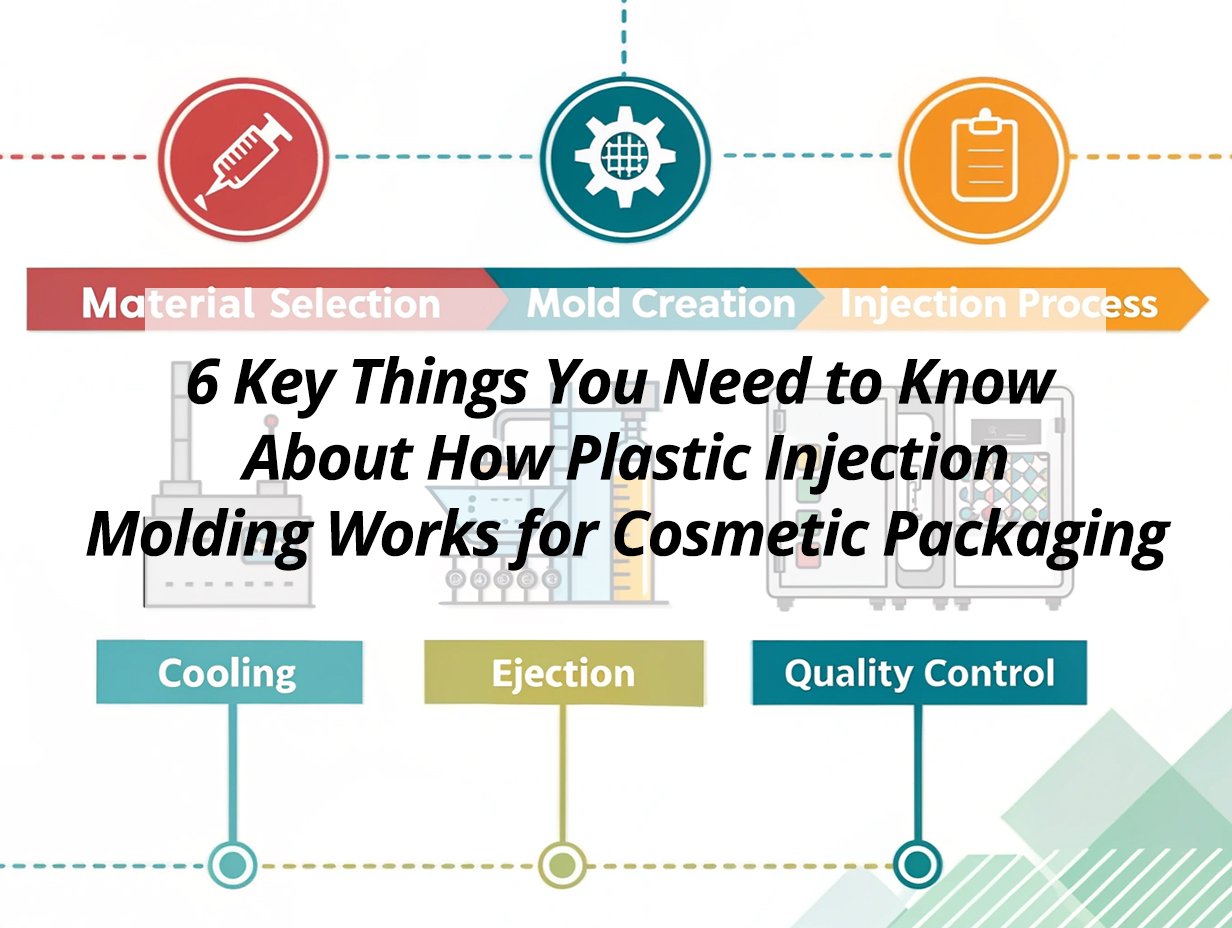
In today's competitive cosmetics market, knowing the manufacturing details can set your brand apart. Learn how plastic injection molding plays a crucial role in packaging.
Plastic injection molding is crucial for cosmetic packaging production, offering precision and consistency. By injecting molten plastic into molds, it creates components efficiently and cost-effectively, ensuring uniformity and high-quality results for various packaging needs. This process supports scalable production while maintaining superior standards.
Understanding this process can help you make better decisions about your packaging supply chain, ensuring quality and cost-effectiveness.
What are the 5 steps of injection molding?
Mastering injection molding can enhance production efficiency. What are its main steps?
The five basic steps of injection molding include clamping, injection, dwelling, cooling, and ejection. These steps ensure that cosmetic packaging components are produced with precision and consistency.
These steps provides insight into how they work together to produce high-quality cosmetic packaging.
The Injection Molding Steps
Injection molding is a detailed process that involves:
-
Clamping: The mold halves are closed securely by the clamping unit to prepare for the injection. This stage ensures everything is perfectly aligned to prevent leakage once the material is introduced. At JCCosmopack, we check the clamp pressure settings carefully to avoid mold damage.
-
Injection: The molten plastic is precisely injected into the mold through a nozzle. The speed and pressure of the injection can be adjusted depending on the complexity of the mold design. The nuances of this phase directly affect the surface finish and the structural integrity of the final product.
-
Dwelling: Pressure is maintained for a specific duration to ensure the mold is completely filled and packed. It's a critical step that influences the density and dimensions of the final piece. Adjusting the dwelling time is part of our quality control process to avoid shrinkage.
-
Cooling: As the mold cools, the molten plastic solidifies into the shape of the mold. The cooling rate can impact the material properties, so it's essential to control this step for ideal outcomes. The cycle time is optimized to ensure that cooling doesn't slow down the whole manufacturing line.
-
Ejection: The mold opens, and the finished packaging part is ejected by pins. Proper ejection prevents damage to the product and allows for continuous production. Ejector systems are inspected regularly to ensure consistent function.
These steps are crucial in achieving high-volume production without compromising quality. Understanding these steps can aid in troubleshooting production issues and optimizing the manufacturing process. By mastering these stages, you can ensure consistency and precision in your packaging, which is essential in maintaining brand reputation.
What is the basic knowledge of injection molding?
Why is injection molding integral to production? Let's explore the basics.
Injection molding is fundamental in manufacturing because it enables the mass production of intricate and precise parts. This makes it essential for producing consistent cosmetic packaging at scale.
Let's dive into the essentials.
Injection Molding Fundamentals
Injection molding is valuable due to:
-
Material Choices: A vast range of plastics is available, allowing for flexibility in choosing materials based on product needs. These can range from recyclable plastics to those with specific aesthetic properties, enabling companies like ours to offer eco-friendly options.
-
Scalability: This process allows for high-volume production, which is crucial for meeting market demands economically. At JCCosmopack, scalability translates into shorter lead times, benefiting customers like Mary, who face tight market windows.
-
Precision: The process can produce intricate designs with tight tolerances, ensuring each packaging unit is identical. This precision is vital for maintaining brand consistency across global markets, enhancing brand loyalty.
-
Process Efficiency:
Aspect Benefit Material Use Minimal wastage due to precise injection methods. Cycle Time Short cycles boost production rates, saving time and costs.
The efficiency in material and cycle time means reduced overheads and improved margins, allowing us to offer competitive pricing. This balance of quality and cost-effective manufacturing is central to our appeal to price-sensitive buyers like Mary.
How does plastic injection molding work?
Understanding this process can dramatically impact your production quality. How does it function?
Plastic injection molding works by melting plastic and injecting it into a mold. This mold is then cooled, solidifying the plastic into the desired shape of cosmetic packaging parts.
Explore how this process functions.
The Working of Injection Molding
The process begins with:
-
Material Preparation: Plastic pellets are heated until molten and mixed to ensure color consistency. This preparation phase is vital to achieving uniformity in color and texture across product runs.
-
Molding Process:
-
Injection: The molten plastic is injected into precision-designed molds. The pressure and rate are finely tuned to match the design intricacies required.
-
Setting Mold Parameters: It's critical to maintain uniformity across batches. Parameter setting requires skilled operators who can anticipate changes in environmental conditions and adjust accordingly.
-
-
Cooling Phase: The mold is cooled to solidify the plastic, creating a rigid structure. Cooling times are optimized to ensure quick turnover without warping, crucial for maintaining the structural integrity of cosmetic containers.
-
Part Ejection: The mold opens, and the finished part is ejected for quality inspection. Each piece is checked against defect criteria to ensure that the final product upholds brand standards.
Each of these phases is meticulously controlled to maintain high-quality standards. When implemented effectively, the versatility of this process allows it to adapt to various cosmetic packaging designs, ensuring brand identity is maintained with every production run. This precision and adaptability are why injection molding is indispensable in the cosmetic packaging industry, especially when catering to discerning markets such as Mary’s.
What are the 5 types of plastic molding?
Why do different molding techniques matter? Discover their distinct uses.
The five types of plastic molding are injection molding, blow molding, compression molding, rotational molding, and extrusion molding. Each offers unique benefits for specific product needs.
Understand their unique roles.
Types of Molding and Their Applications
Each type of molding is suited for different requirements:
-
Injection1 Molding: Ideal for precision parts and high-volume production, such as lipstick tubes and mascara cases. At JCCosmopack, this method allows us to meet strict design specifications consistently.
-
Blow Molding2: Best for creating hollow products, like bottles for lotions and creams. This technique offers the advantage of forming uniform, thin walls necessary for containers that need to be lightweight yet strong.
-
Compression Molding3: Effective for producing durable parts like compact cases. This method is particularly useful when working with materials that require a uniform pressure application.
-
Rotational Molding4: Useful for creating large, hollow items with uniform wall thickness. It’s less common in cosmetics but perfect for specific niche applications.
-
Extrusion Molding5: Perfect for continuous shapes, such as long tubes for mascaras. This type can rapidly produce very long parts, making it ideal when length is a criterion.
Each molding type has its unique applications, allowing manufacturers to choose the most suitable method based on their cosmetic packaging needs. This versatility enables innovation and customization, ensuring efficient production processes while maintaining high standards. By understanding these various techniques, we can provide tailored solutions for any market requirement.
My insights: The Key Things You Need to Know About How Plastic Injection Molding Works for Cosmetic Packaging
Unlock the secrets behind cosmetic packaging—understand how plastic injection molding creates precise, efficient, and sustainable solutions for beauty products.
Plastic injection molding for cosmetic packaging involves melting and injecting polymer pellets into molds. This automated process offers precision, efficient mass production, versatile material selection, complex designs, and high-quality control for durable, sustainable packaging.
Understanding Plastic Injection Molding
Plastic injection molding is a fundamental process in cosmetic packaging production:
| Aspect | Description |
|---|---|
| Process Overview | Polymer pellets are melted and injected into molds under high pressure to form shapes. |
| Mold Design | Comprises two halves for precise shaping and ejection, enabling intricate packaging designs. |
| Efficiency | Fast production cycles ensure cost-effective, high-volume manufacturing. |
| Material Selection | Utilizes various thermoplastics, tailored for flexibility, durability, and aesthetics. |
| Design Complexity | Supports single or multi-part assemblies with features like hinges and snap-fit closures. |
| Sustainability | Facilitates recyclable materials, promoting eco-friendly packaging solutions. |
Strategic Insights
-
Precision in Production: Injection molding delivers detailed and consistent cosmetic packaging, meeting stringent industry standards.
-
Material Versatility: Brands can select materials based on specific product requirements, balancing durability with aesthetic appeal.
-
Economic and Environmental Impact: The efficiency and recyclability of injection molding align with sustainable packaging goals, reducing costs and supporting eco-conscious branding.
By mastering plastic injection molding, cosmetic companies can achieve superior packaging designs that enhance product appeal and market competitiveness while addressing sustainability challenges in the beauty sector.
Conclusion
Injection molding is key in producing high-quality, consistent cosmetic packaging. Understanding its steps and types maximizes production efficiency and quality, aligning with both market demands and brand identity.
-
Explore the injection phase to learn how it affects product quality and design precision. ↩
-
Explore blow molding to understand its unique applications and benefits in packaging. ↩
-
Learn about compression molding's effectiveness for producing durable parts in cosmetics. ↩
-
Discover the applications of rotational molding and its benefits for specific products. ↩
-
Understanding extrusion molding can help in producing continuous shapes efficiently. ↩